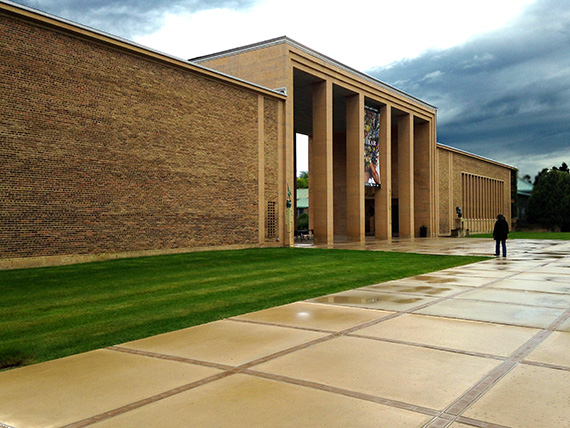
Have you ever walked into a room and felt instantly at ease? Or maybe the opposite happened. You stepped into a space that looked perfect on paper—expensive furniture, flawless lighting—but it felt cold. Empty. Like a stage set waiting for actors who never show up. That feeling isn’t an accident. It’s a failure of context.
We spend so much time talking about "style." Mid-century modern. Farmhouse chic. Industrial loft. But style is just the skin. The bones? That’s context. And nobody understood the bones quite like Roy Slade.
Slade wasn’t just a designer. He was a painter. A teacher. An administrator who led major art institutions. He saw the world through layers. When he looked at a home, he didn’t just see walls and floors. He saw history. Light. The way a person moves through their day. In 2026, as we strip away the noise of fast trends and look for meaning in our spaces, Slade’s approach feels more relevant than ever. It’s not about shouting. It’s about listening.
The Artist’s Eye: Seeing Beyond the Surface
Roy Slade started his life in Cardiff, Wales. He studied art. He painted. This matters. Most designers start with floor plans. Slade started with composition. He understood that a room is a canvas, but it’s a living one. You can’t just slap paint on it and hope it sticks.
Think about his time in the British Army. He taught painting in Singapore. Imagine that contrast. The rigid structure of military life mixed with the fluid, expressive nature of art. It taught him discipline, sure. But it also taught him adaptability. You work with what you have. You respect the environment.
When he moved to America in 1967, he brought this sensibility with him. He became Dean of the Corcoran School of Art. He wasn’t just managing budgets. He was curating experiences. This background meant he never treated a home as a blank slate. He saw it as a continuation of a story. The existing light. The view from the window. The creak of the floorboards. These weren’t problems to fix. They were clues.
Today, we often rush to demolish. We want the new. Slade would have asked, "What is already here?" It’s a subtle shift. But it changes everything. Instead of forcing a trend onto a space, you let the space tell you what it needs. It’s quieter. Less ego. More truth.
Context Is Not Just Background Noise
People throw around the word "context" like it’s simple. It’s not. In academic circles, like those discussed in JSTOR articles, context is a "problem." It’s messy. It’s hard to pin down. But in design, it’s the anchor.
Context isn’t just the architecture. It’s the culture. It’s the weather. It’s the way your family eats dinner. Do you rush? Do you linger? A dining table isn’t just wood and legs. It’s where conversations happen. If you design a formal dining room for a family that eats takeout on the couch, you’ve failed. Not because the room is ugly. But because it ignores the reality of their lives.
Slade understood this intuitively. He knew that objects don’t exist in a vacuum. A chair isn’t just a chair. It’s a place to rest after a long day. It needs to feel welcoming. It needs to fit the scale of the room and the body of the person sitting in it.
This is where many modern designs go wrong. They look great in photos. But they don’t work in life. They ignore the human element. Slade’s philosophy reminds us to look at the whole picture. Not just the object, but the space around it. The air. The silence. The context.
The Transition from Institution to Intimacy
Slade spent years in high-level academic roles. Director. Dean. Professor. These are titles of authority. But his design work feels intimate. Why? Because he learned to listen.
In institutions, you deal with big ideas. Abstract theories. But in a home, you deal with specific realities. The sun hits the kitchen counter at 8 AM. The hallway is narrow. The kids run through the living room. Slade bridged this gap. He took the rigor of institutional thinking and applied it to the warmth of domestic life.
He didn’t impose grand visions. He facilitated comfort. This is a key part of his legacy. Design isn’t about the designer’s signature. It’s about the user’s experience. It’s about making space for life to happen.
Consider his paintings. Works like "Sea and Sky" from 1972 show a mastery of simplicity. Crayon and graphite. No fuss. Just essential forms. He brought this same minimalism to his design thinking. Strip away the unnecessary. Keep what serves the purpose. Let the context breathe.
In 2026, we’re seeing a return to this idea. People are tired of clutter. Tired of performative luxury. They want spaces that feel real. Slade’s transition from the public sphere to the private home offers a blueprint for this. It’s about scaling down. Getting personal. Respecting the intimacy of the everyday.
Silence as a Design Element
We live in a loud world. Notifications. Traffic. News. Our homes should be the antidote. Slade’s philosophy embraces silence. Not empty silence. But full silence. The kind that lets you think.
This is the "quiet power" mentioned in recent aesthetic discussions. Think about the shows we watch, like Succession. The power isn’t in the shouting. It’s in the stillness. The architectural minimalism. The control. Slade anticipated this. He knew that space has weight.
When you design with context, you create pauses. A window seat that invites you to stop and look out. A hallway that slows you down before you enter the main room. These aren’t accidents. They’re deliberate choices. They use the context of the building to shape behavior.
Slade would argue that noise—visual or auditory—distracts from authenticity. If a room is too busy, you can’t connect with it. You can’t connect with yourself. By simplifying the design, you amplify the context. The light becomes more important. The texture of the wood. The sound of rain on the roof.
This doesn’t mean sterile. It means curated. Every object has a reason to be there. If it doesn’t serve the context, it goes. It’s a rigorous process. But the result is a space that feels calm. Grounded. Human.
Designing for Actual People, Not Theoretical Users
There’s a trap in design. We design for the "ideal" user. The person who never spills coffee. Who always folds their laundry. Who sits perfectly upright. But real people are messy. They’re tired. They’re complicated.
Recent discussions in design circles emphasize "context-sensitive design." It starts with asking the right questions. Before the budget. Before the vision. Who lives here? How do they live? Slade was a master of this. He didn’t design for a magazine cover. He designed for life.
This means accepting imperfection. A scratch on the table tells a story. A worn rug shows where people walk. Slade’s background in fine art taught him to value texture and history. He didn’t try to hide age. He celebrated it.
In 2026, this is crucial. We’re moving away from disposable culture. We want things that last. Things that age well. Designing for actual people means choosing materials that patina. Furniture that comforts. Layouts that flow with natural habits, not against them.
It’s about empathy. You have to step into someone else’s shoes. Feel what they feel. See what they see. Slade did this because he was a teacher. He spent his life trying to understand how people learn and grow. He applied that same curiosity to design. The result? Spaces that feel like they’ve always been there.
Roy Slade passed away in 2022. But his ideas are alive. Maybe more than ever. As we navigate a digital-heavy world, the need for physical authenticity grows. We crave connection. To our homes. To our surroundings.
His philosophy isn’t a strict set of rules. It’s a mindset. Look at the context. Respect the history. Listen to the silence. Design for the real, not the ideal. It’s simple. But it’s hard. It requires patience. Humility.
Today’s designers are picking up this torch. They’re focusing on sustainability. On local materials. On stories. This is Slade’s legacy. It’s not about a specific look. It’s about a way of seeing.
We can all apply this. You don’t need to be an architect. Just look at your own space. What does it need? What’s already working? What feels forced? Start there. Let the context guide you.
It’s a journey. Not a destination. And it’s worth taking. Because when you get it right, your home doesn’t just look good. It feels good. It feels like you.
So, where do you start? Maybe with a single room. Strip it back. Look at the light. Ask yourself why each object is there. Does it serve the context? Or is it just noise?
It’s a quiet process. But the power is immense. It transforms a house into a home. And in a noisy world, that’s a gift.