You know that feeling when you walk into a house and the air just feels… heavy? It’s not necessarily hot or cold, but it’s stale. Maybe it smells faintly of last night’s dinner, or perhaps it’s just thick with humidity that makes your skin feel sticky. We’ve all been there. In the past, we’d just crack a window. But in 2026, with energy codes tighter than ever and utility bills still stinging, keeping windows open isn’t always the best move. Especially if it’s ninety degrees outside or ten below zero.
Modern homes are built like thermoses. They’re incredibly efficient at holding temperature, which is great for your wallet but terrible for your lungs if you don’t have a plan for air exchange. That’s where the Energy Recovery Ventilator, or ERV, comes in. It’s not just another gadget to clutter up your utility closet. It’s the lung of your home. And honestly? If you’re building new or retrofitting an older place, ignoring this tech is a mistake you’ll feel in your sinuses and your energy bill.
The Tight House Paradox
Here’s the thing about modern construction. We’ve gotten really good at sealing leaks. Caulk, spray foam, tight-fitting windows—it’s all designed to keep conditioned air inside and weather outside. This is fantastic for efficiency. You spend less on heating and cooling. But there’s a catch. When you seal a house this tightly, you trap everything inside. Not just heat, but moisture, cooking fumes, volatile organic compounds (VOCs) from furniture, and even carbon dioxide from breathing.
Think about it. A family of four exhales a surprising amount of moisture and CO2 every day. Add in shower steam, boiling pasta water, and off-gassing from that new sofa, and you’ve got a cocktail of indoor pollutants. In older, drafty homes, this stuff would escape through cracks in the walls. In a 2026-standard home, it has nowhere to go. It just builds up. This leads to poor indoor air quality (IAQ), which can trigger allergies, asthma, and just general malaise. You might find yourself waking up with a headache or feeling sluggish, not realizing it’s because your home is suffocating you.
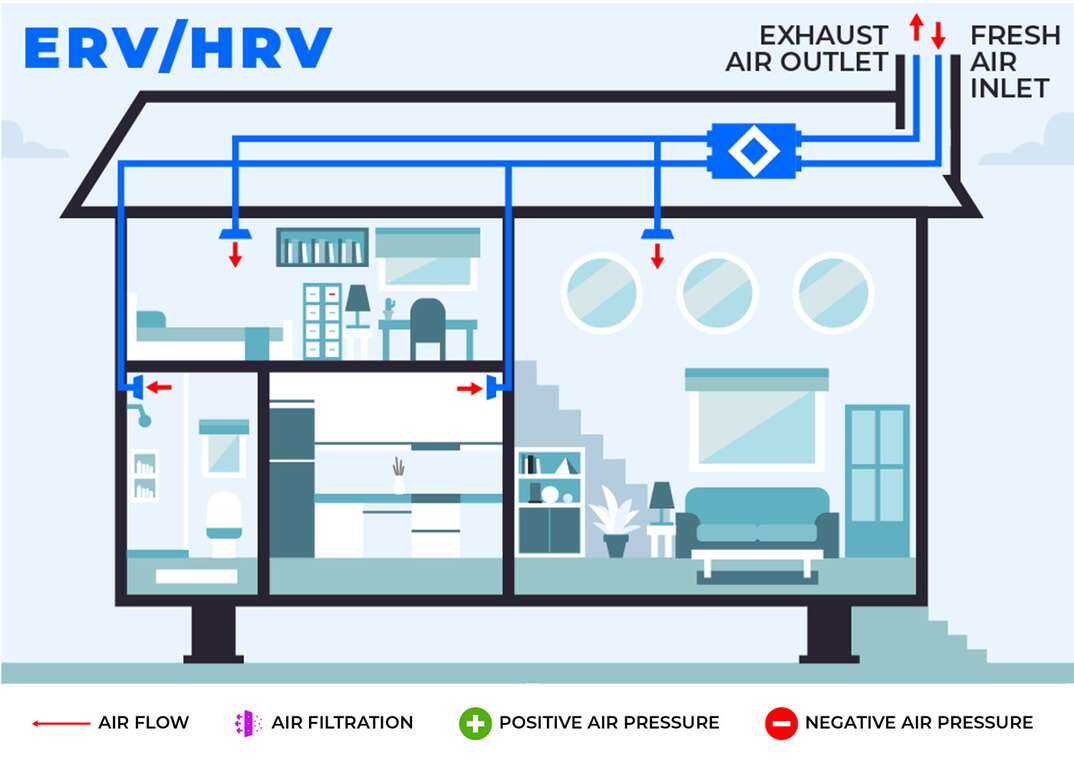
This is the "tight house paradox." We build homes to be efficient, but in doing so, we make them unhealthy unless we add mechanical ventilation. You can’t just rely on opening windows anymore. It’s inconsistent, lets in pollen and wildfire smoke (which is a bigger issue now than ever), and wastes energy. You need a system that brings fresh air in and pushes stale air out, continuously, without letting all your expensive heated or cooled air escape. That’s the baseline requirement for any modern living space.
How an ERV Actually Works
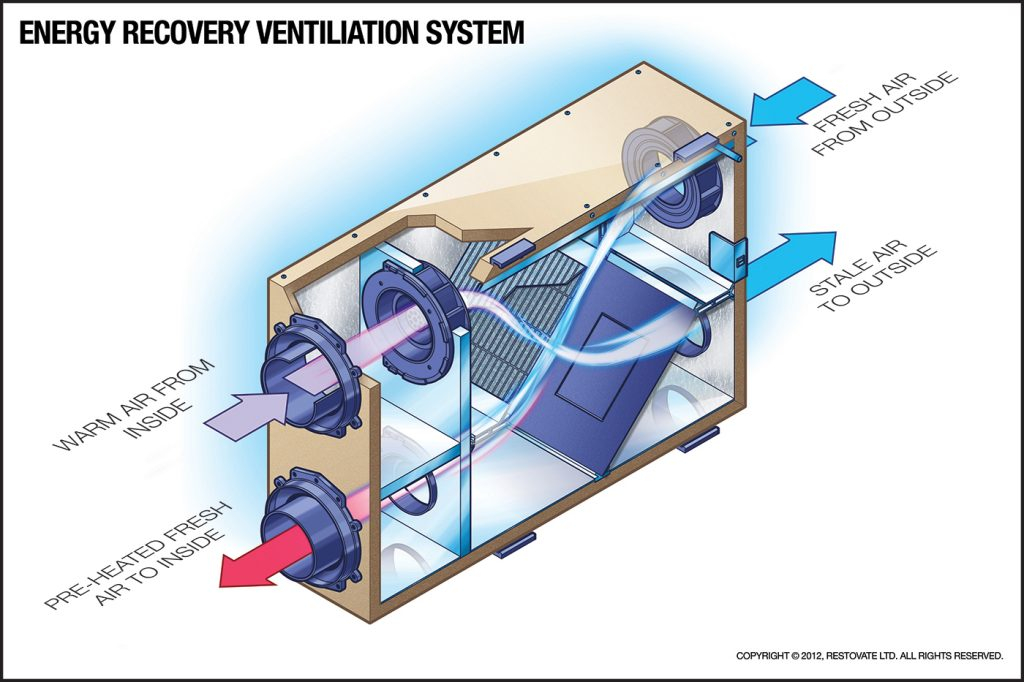
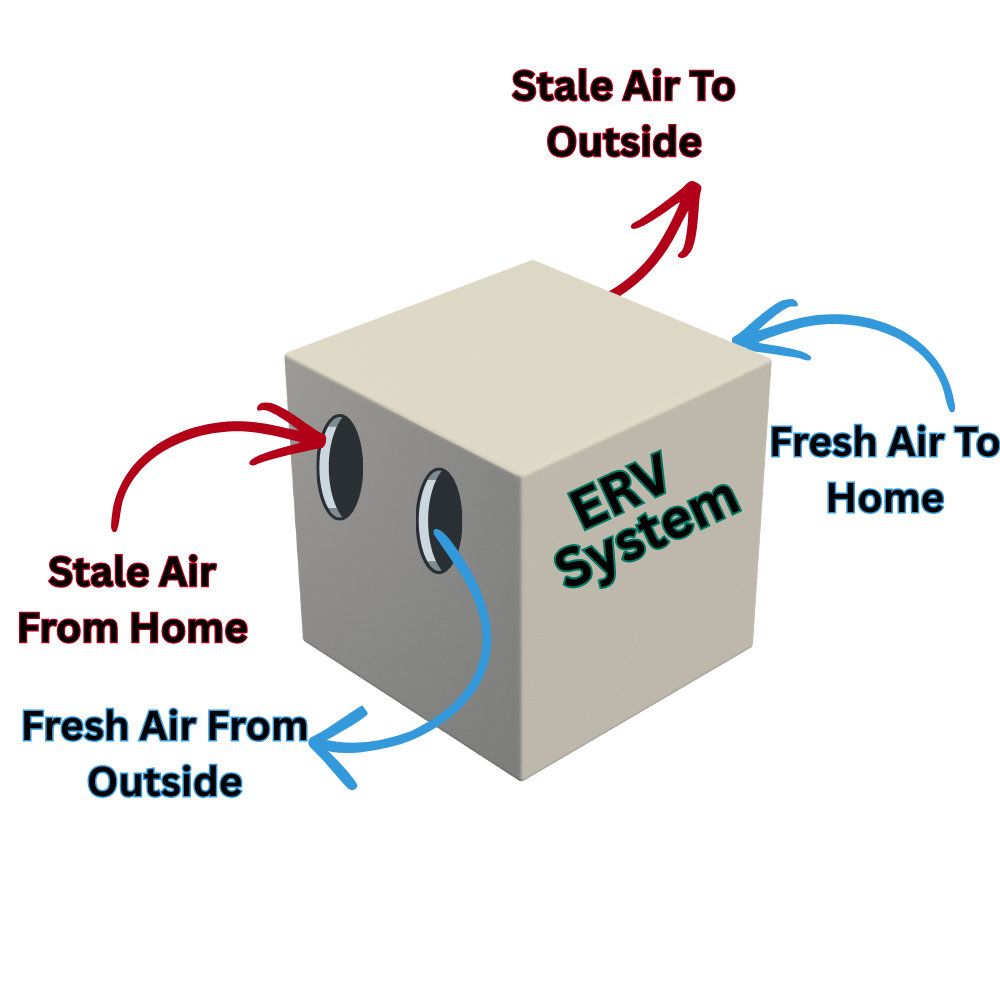
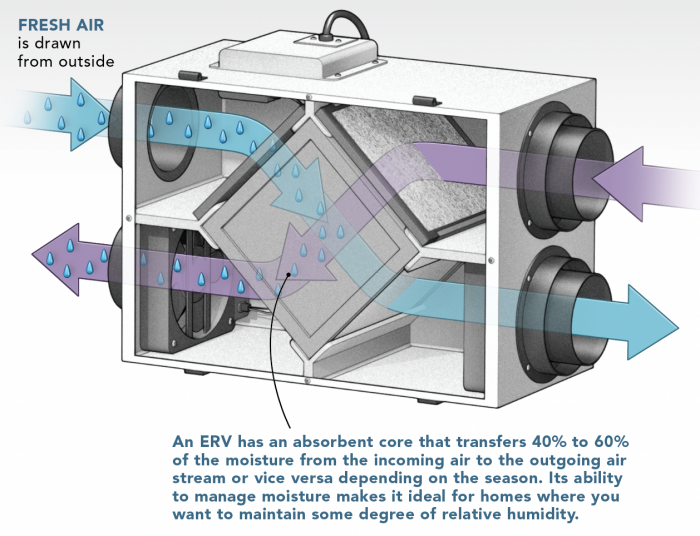
So, what exactly is an ERV? At its core, it’s a box with two fans and a special core. One fan pulls fresh air in from outside; the other pushes stale air out. These two airstreams pass close to each other inside the core, but they never mix. Instead, they exchange energy. This is the magic part. In the winter, the warm, moist air leaving your home transfers some of its heat and humidity to the cold, dry incoming air. In the summer, the hot, humid outside air gives up some of its heat and moisture to the cool, dry air being exhausted.
It’s subtle, but effective. You aren’t just swapping air; you’re conditioning the new air using the energy already in your home. This is different from just cracking a window, where you lose 100% of your conditioned air. With an ERV, you might recover 70-80% of the energy. That means your HVAC system doesn’t have to work as hard to bring that new air up to room temperature. It’s a huge efficiency boost. Plus, by managing humidity, it keeps your home comfortable. No more swampy summers or desert-dry winters.
The technology has come a long way too. Older units were bulky and loud. The models available in 2026 are sleek, quiet, and smart. Many connect to your home’s Wi-Fi, allowing you to monitor air quality and adjust ventilation rates from your phone. Some even integrate with smart thermostats, ramping up ventilation when they detect high CO2 levels or humidity spikes. It’s set-it-and-forget-it comfort. You get fresh air without the penalty of higher energy bills. It’s basically free comfort, once it’s installed.
ERV vs. HRV: Knowing the Difference
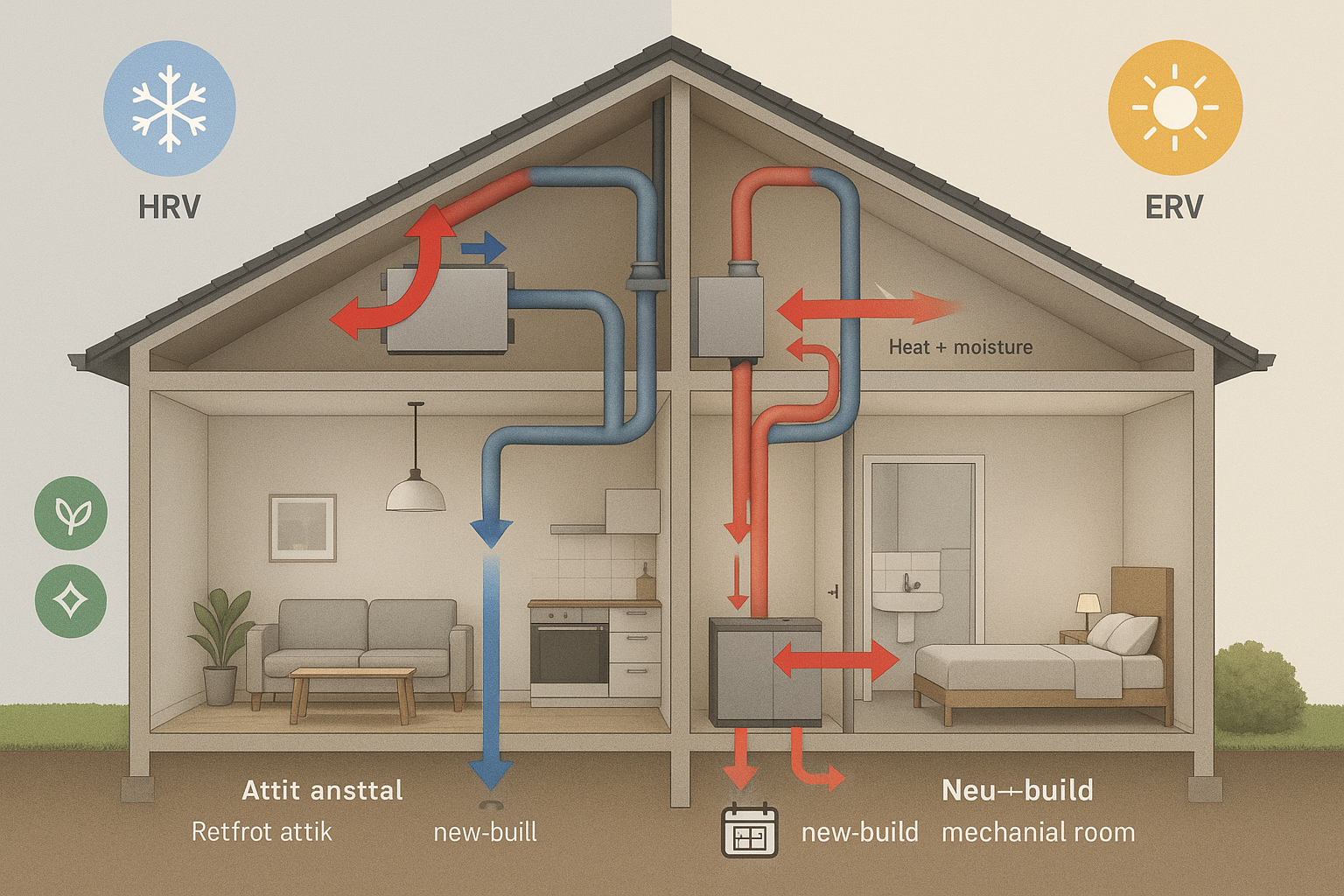
You’ll often hear people talk about ERVs and HRVs in the same breath. HRV stands for Heat Recovery Ventilator. They look similar and do similar jobs, but there’s a key difference: moisture transfer. An HRV only transfers heat. An ERV transfers both heat and moisture. This distinction matters a lot depending on where you live. If you’re in a very cold, dry climate, an HRV might seem appealing because it keeps the incoming air dry. But here’s the twist: in many cold climates, homes get too dry in winter. An ERV helps retain some of that indoor humidity, making the air feel warmer and more comfortable on your skin.
On the flip side, if you live in a hot, humid place like the Gulf Coast or parts of the Southeast, an ERV is non-negotiable. An HRV would bring in all that outdoor humidity, forcing your air conditioner to work overtime to dehumidify. An ERV strips much of that moisture out before the air enters your living space. This reduces the load on your AC and prevents mold growth. In 2026, with humidity extremes becoming more common due to climate shifts, the ERV’s ability to manage moisture is arguably more valuable than its heat recovery.
So, how do you choose? It comes down to your local climate and your home’s specific needs. Generally, if you struggle with dry air in winter, go with an ERV. If you battle high humidity in summer, definitely go with an ERV. HRVs are still useful in specific scenarios, like extremely cold regions where you want to aggressively remove moisture to protect the building structure, but for most residential applications today, the ERV is the more versatile and comfortable choice. It balances the equation better for human comfort.
Health Benefits Beyond Just Breathing
We tend to think of ventilation as just about oxygen. But it’s about so much more. Indoor air can be two to five times more polluted than outdoor air, according to various studies cited by health organizations. This includes VOCs from paints and cleaners, allergens like dust mites and pet dander, and even biological contaminants like mold spores. An ERV constantly dilutes these pollutants by bringing in filtered fresh air. Most modern ERVs come with high-quality filters that catch particulate matter, including wildfire smoke and pollen, before it enters your home.
Consider the impact on sleep. High CO2 levels in bedrooms can disrupt sleep quality, leading to grogginess and poor concentration the next day. By ensuring a steady supply of fresh air, an ERV keeps CO2 levels low. You might not notice it consciously, but your body does. You wake up clearer. You feel more rested. It’s a subtle shift, but over time, it adds up to better health. For families with children or elderly members, whose respiratory systems are more sensitive, this constant air exchange is a protective barrier.
There’s also the mental aspect. Stale, stuffy air can make a home feel oppressive. Fresh air feels invigorating. It lifts the mood. When your home smells clean and feels crisp, it becomes a sanctuary rather than just a shelter. In 2026, as we spend more time working and living indoors, the quality of that indoor environment directly impacts our productivity and mental well-being. An ERV isn’t just a mechanical component; it’s a wellness tool. It supports a healthier lifestyle by making the air you breathe safer and more pleasant.
Installation and Cost Considerations
Let’s talk money. Installing an ERV isn’t cheap. You’re looking at equipment costs plus labor. For a typical single-family home, the total installed cost can range from $1,500 to $3,000 or more, depending on the complexity of the ductwork and the model chosen. If you’re building new, it’s much easier and cheaper to integrate because the ducts can be planned from the start. Retrofitting an existing home is trickier. You might need to run new ducts, which can mean cutting into walls or ceilings. However, there are ductless or "point-source" ERV options for retrofits that are less invasive, though they might not ventilate the whole house as evenly.
But here’s the perspective shift: view it as an investment, not just an expense. The energy savings from reduced heating and cooling loads can offset a portion of the cost over time. More importantly, consider the cost of not having one. Poor air quality can lead to health issues, which carry their own financial burdens. Mold damage from excess humidity can cost thousands to remediate. An ERV helps prevent these problems. It protects your home’s structure and your family’s health. In many places, there are also rebates or tax credits available for installing energy-efficient ventilation systems, so check with local utilities.
Maintenance is another factor. It’s not zero-effort. You need to change the filters every few months, just like your furnace. The core itself might need cleaning every year or two, depending on the model. Neglecting this can reduce efficiency and even become a source of contamination. But compared to the hassle of dealing with a moldy basement or persistent allergies, the maintenance is minimal. It’s a small price to pay for the benefits. And with newer models featuring washable filters and self-cleaning cycles, upkeep is getting easier.
Why is this so relevant in 2026? Because standards are changing. Building codes are increasingly requiring mechanical ventilation in new constructions. What was once a luxury is becoming a requirement. By installing an ERV now, you’re future-proofing your home. You’re meeting upcoming regulations before they’re enforced. This can increase your home’s resale value. Buyers are smarter now. They look for features that promise lower operating costs and better health. An ERV is a selling point. It signals that the home is modern, efficient, and healthy.
Technology is also evolving. Smart home integration is standard now. Your ERV can talk to your weather station, adjusting ventilation based on outdoor conditions. If pollen counts are high, it can ramp up filtration. If it’s raining, it might adjust humidity settings. This level of automation ensures optimal performance without you lifting a finger. It’s part of the broader trend toward intelligent, responsive homes that care for their occupants. Ignoring this tech puts your home behind the curve.
Furthermore, as climate change intensifies weather extremes, the resilience of your home matters. Wildfire seasons are longer. Heatwaves are more intense. An ERV with good filtration provides a safe haven during these events. It allows you to keep windows closed and air clean. It’s a buffer against the outside world’s increasing unpredictability. Investing in an ERV is investing in peace of mind. It’s knowing that no matter what’s happening outside, the air inside is under control. It’s a small step toward a more sustainable and secure living environment.
In the end, an ERV is about balance. It balances energy efficiency with human health. It balances comfort with cost. It’s not the most glamorous upgrade you can make to your home. You won’t show it off to guests like a new kitchen. But you’ll feel it every single day. In the clarity of your mind, the ease of your breathing, and the comfort of your skin. As we move further into 2026, the question isn’t whether you can afford an ERV. It’s whether you can afford to live without one. Your home is your shelter. Make sure it’s breathing properly.