You’ve probably stood in your backyard, staring at that empty corner, dreaming of the day you’ll hear the soft clucking of your own hens. It’s a lovely dream. But then you start looking at plans, and everyone talks about square footage. “Four square feet per bird,” they say. “Ten if you want them happy.” And sure, space matters. Nobody likes living in a closet. But have you ever walked into a house that was huge yet felt cold, dark, and unwelcoming? That’s exactly what happens when we focus only on size and ignore the soul of the coop.
A walk-in coop is more than just a shed with roosts. It’s a habitat. It’s a sanctuary. In 2026, as more of us turn to backyard farming not just for eggs but for connection with nature, we’re learning that chickens are complex creatures with nuanced needs. They don’t just need room to stretch their wings; they need air that doesn’t sting their eyes, light that respects their circadian rhythms, and surfaces that don’t harbor invisible killers. If you’re building or buying a walk-in structure this year, you owe it to your flock to look past the tape measure. Let’s dig into what actually makes a coop work.
The Breath of Life: Mastering Ventilation Without the Draft
Let’s talk about air. It’s the most overlooked element in coop design, and frankly, it’s the number one reason people lose birds to respiratory issues. You might think sealing up a coop keeps it warm in winter. Wrong. It turns it into a gas chamber. Chickens produce an astonishing amount of moisture through their breath and droppings. In a sealed space, that moisture turns into ammonia. You know that sharp smell when you clean a litter box? Imagine that, but concentrated, all day, every day. It burns their lungs. It damages their eyes. It makes them susceptible to diseases like bronchitis and coccidiosis.
So, how do you fix it? You need high ventilation. Not low. Low vents create drafts that chill the birds directly. High vents, placed near the roofline or under the eaves, allow the warm, moist air to escape while keeping the sleeping area draft-free. Think of it like a chimney effect. The bad air rises and leaves; fresh air comes in gently from elsewhere. In recent years, experts have started recommending adjustable louvers or windows that can be opened in summer and partially closed in winter, but never fully shut. If you can smell ammonia when you walk in, your ventilation is failing. Period.
Here’s the tricky part: balancing airflow with predator proofing. Those high vents need hardware cloth, not chicken wire. Rats and weasels can squeeze through shocking small gaps. I’ve seen folks use mesh with half-inch openings, which is good for hawks but useless against a determined rat. Stick to quarter-inch hardware cloth. It’s tougher, it lasts longer, and it keeps the tiny invaders out while letting the breeze flow. Your chickens won’t thank you for it verbally, but you’ll see it in their bright eyes and clean feathers.
Lighting Logic: Mimicking Nature’s Rhythm
Chickens are solar-powered creatures. Their entire biology—from egg production to molting—is tied to the length of the day. In the wild, they wake with the sun and roost when it gets dark. In a backyard coop, artificial lighting can mess this up completely if you’re not careful. Many beginners slap in a bright LED bulb on a timer and wonder why their hens are stressed or laying weirdly shaped eggs. Light isn’t just about visibility; it’s about signaling safety and rest.
The key is subtlety. If you need light for winter egg production (which is optional, by the way—hens need a break too), use a dimmable red or amber bulb. White light is harsh. It disrupts their sleep cycles and can increase aggression and pecking orders disputes. Red light is calming. It allows you to see what’s going on without startling them. And timing matters. Don’t just turn lights on and off instantly. That causes panic. Use a dimmer switch or a gradual-on timer so the light fades in and out, mimicking dawn and dusk. It’s a small detail that makes a huge difference in their stress levels.
Also, consider natural light sources. Windows aren’t just for looks. They provide UV light, which helps chickens synthesize vitamin D3. This is crucial for strong eggshells and bone health. But windows need to be placed carefully. Too much direct sunlight in summer turns a coop into an oven. Position windows on the east side to catch the morning sun, which helps dry out the bedding after the night’s moisture. Avoid west-facing windows if you live in a hot climate, as the afternoon heat can be brutal. Shade cloths or external awnings can help regulate this. It’s all about working with the sun, not fighting it.
Floor Psychology: Surface Matters More Than You Think
We spend a lot of time talking about walls and roofs, but the floor is where your chickens live. Literally. It’s where they scratch, dust bathe, sleep, and poop. The material you choose dictates their health and your workload. Concrete floors are durable and easy to hose down, right? Sure, if you like scraping frozen poop off stone in January. Concrete is cold. It draws heat away from the birds’ feet, leading to frostbite in colder climates. It’s also hard, which can cause bumblefoot—a nasty staph infection in the foot pads—if they jump down from roosts repeatedly.
Wood floors are warmer but they rot. Moisture from droppings seeps into the wood, creating a breeding ground for bacteria and mites. Even treated wood can leach chemicals over time, which isn’t great for birds that peck at everything. So what’s the solution in 2026? The deep litter method on a dirt or sand base is gaining massive popularity. Starting with a layer of sand or packed earth, you add carbon-rich bedding like pine shavings or hemp. As the chickens scratch, they mix their poop into the bedding. Microbes break it down, generating heat naturally. It’s composting in real-time.
This method requires management, though. You can’t just ignore it. You need to stir it regularly to keep it aerobic. If it goes anaerobic, it smells terrible and becomes toxic. But done right, it creates a soft, forgiving surface that’s gentle on their feet and rich in beneficial microbes. Some keepers are even experimenting with rubber mats over dirt floors to provide cushioning while allowing drainage. The point is, the floor shouldn’t just be a place to stand. It should be a living system that supports their natural behaviors. Watch how they scratch. If they’re avoiding certain spots, something’s wrong with the surface.
Roosting Rights: Height, Width, and Material
Chickens don’t just sleep anywhere. They have an instinctual drive to roost high up. It’s a safety mechanism from their wild ancestors, keeping them away from ground predators. In a walk-in coop, you have the vertical space to give them this security. But many people get the roost bars wrong. They use thin metal pipes or rough branches. Metal gets freezing cold in winter, chilling their feet. Rough bark harbors mites and can splinter, causing injury.
The ideal roost is a flat, wide board. Wait, flat? Yes. Chickens don’t wrap their toes around a perch like songbirds do. They settle over it, covering their feet with their breast feathers to keep warm. A 2×4 inch board with the wide side up is perfect. It allows them to flatten their feet completely, preventing frostbite and reducing pressure points. Place these roosts higher than the nesting boxes. If the nests are higher, they’ll sleep in them, and you’ll wake up to poop-covered eggs. Nobody wants that.
Spacing is another critical factor. Give each bird at least 8-10 inches of linear roosting space. Crowding leads to pecking and falling. And make sure there’s enough headroom above the roost so they don’t hit their heads when they flutter up. I’ve seen coops where the roosts are jammed against the ceiling, forcing birds to contort themselves to land. It’s stressful. Leave at least 12-18 inches above the highest roost. Also, consider placing a dropping board underneath. It catches the overnight poop, making cleanup a breeze and keeping the deep litter cleaner for longer. It’s a simple tweak that saves hours of scrubbing.
The Social Zone: Enrichment and Behavioral Health
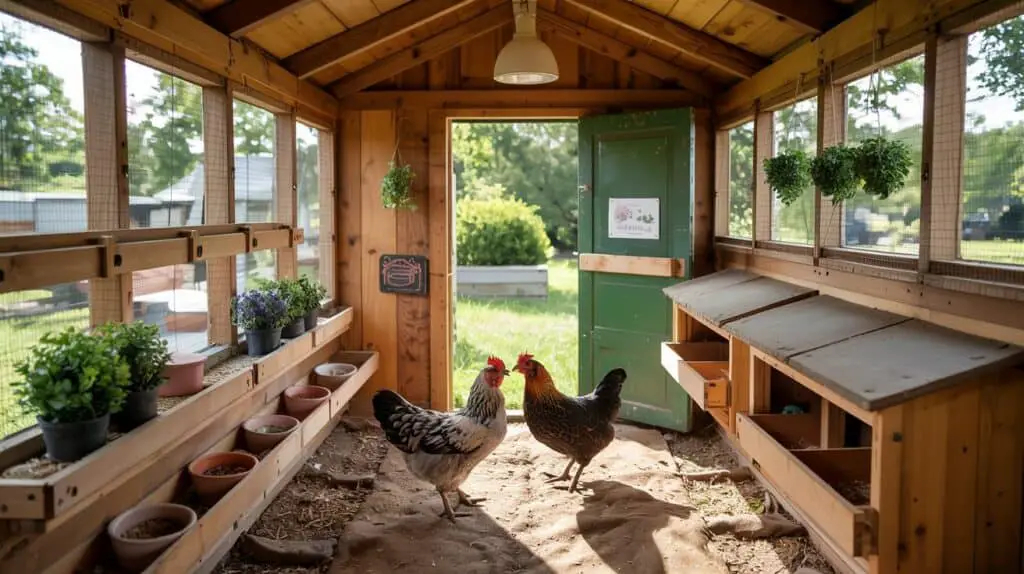
A coop is not just a bedroom; it’s a living room. Chickens are social, intelligent animals. They get bored. Boredom leads to bullying, feather picking, and cannibalism. In a spacious walk-in coop, you have the room to create zones that encourage natural behaviors. Dust bathing is non-negotiable. They need a dry, loose area where they can wiggle and throw dirt over themselves to clean their feathers and kill parasites. If you don’t provide a designated spot, they’ll make one, usually in your nicest garden bed or a corner of the coop that’s hard to clean.
Create a dust bath station using a large tub or a framed-off section of the floor. Fill it with a mix of dry dirt, sand, and diatomaceous earth (food grade). Keep it dry. Wet dust baths are muddy messes that breed bacteria. Alongside this, consider hanging treats. Cabbages, heads of lettuce, or specialized pecking blocks suspended from the ceiling keep them active. It forces them to jump and stretch, exercising their muscles and keeping their minds engaged. In 2026, we’re seeing more emphasis on “chicken enrichment” similar to zoo animal care. It’s not coddling; it’s basic welfare.
Mirrors are another interesting tool. Some keepers hang unbreakable mirrors to reduce loneliness in smaller flocks or to distract aggressive birds. The chickens see their reflection and think it’s another bird, which can diffuse tension. However, monitor this closely. If it causes more fighting, remove it. Every flock is different. The goal is to observe their behavior. Are they exploring? Are they preening? Or are they standing still, looking lethargic? A well-designed coop encourages movement and interaction. It turns a static space into a dynamic environment.
The biggest advantage of a walk-in coop is convenience for you. You don’t have to crawl on your hands and knees to collect eggs. But that human-sized door is also the biggest vulnerability. Predators are smart. Raccoons can open simple latches. Bears can tear through flimsy wood. Even dogs can push open unlatched doors. Your security strategy needs to be layered. Start with the door itself. It should swing outward, making it harder for predators to push in. Use heavy-duty hinges with non-removable pins.
The latch is critical. Skip the basic hook-and-eye. Use a two-step locking mechanism, like a slide bolt plus a carabiner or a padlock. Raccoons have dexterous paws; they can undo single latches easily. Some keepers are now installing automatic door closers that trigger at dusk, ensuring the door is never accidentally left open. These systems often have sensors to detect obstructions, preventing injury to late-returning birds. It’s peace of mind worth the investment.
Don’t forget the perimeter. The walk-in door should seal tightly against the floor. No gaps. Install a kick plate of metal flashing along the bottom interior to prevent rodents from chewing through the wood frame. And remember, predators dig. Bury hardware cloth at least 12 inches deep around the exterior perimeter, bending it outward in an L-shape. This stops diggers like foxes and coyotes from tunneling under. It’s extra work during construction, but it saves heartbreak later. Your coop should be a fortress, not just a shelter. Sleep well knowing your girls are safe.
Building a walk-in coop is an act of love. It’s saying, “I value your comfort as much as my convenience.” By focusing on ventilation, light, flooring, roosting, enrichment, and security, you create more than a structure. You create a home. It’s a place where your chickens can thrive, express their instincts, and stay healthy. And in return, they give you fresh eggs, pest control, and those quiet moments of connection that make backyard farming so rewarding. So, before you buy that pre-fab kit or hammer the first nail, ask yourself: does this design respect the chicken? If the answer is yes, you’re on the right track.