You’ve been there. You buy the newest 85-inch screen, the one that makes your living room look like a cinema. You plug in your gaming console or streaming box with a standard HDMI cable you found in a drawer. It’s maybe twenty feet long. You hit power. The screen flickers. Then nothing. Just a black void staring back at you. Or worse, those annoying white sparkles dancing across the image like digital snow. It’s frustrating. It feels like a scam. Did you buy a bad cable? Is your TV broken?
Usually, neither is true. You’ve just run headfirst into the invisible wall of physics.
We tend to think of digital signals as magic. Ones and zeros. They’re either there or they aren’t, right? If it works at three feet, it should work at thirty. But electricity doesn’t care about our convenience. As we push for higher resolutions—4K, 8K, and beyond—we are asking copper wires to carry data at speeds that border on the absurd. And when you stretch that wire out, the laws of nature start to fight back. This isn’t just about buying a "better" cable. It’s about understanding how signal degradation works, why passive copper has hit its limit, and what you actually need to do to get that perfect picture across the room.
The Myth of the Digital Cliff
Let’s clear up a common misconception first. Many people believe that because HDMI is digital, it’s immune to quality loss. They think it’s an on/off switch. Either you get a perfect picture, or you get no picture. While it’s true that you won’t get a "fuzzy" analog-style image with slight static, the reality is much messier. Before the signal dies completely, it struggles.
Think of it like trying to hear a whisper from across a noisy room. At first, you catch every word. As you move further away, you start missing syllables. Your brain fills in the gaps, so you still understand the sentence. But eventually, you miss too many words. The message breaks down. In HDMI terms, those missing syllables are data packets. When your TV misses a packet, it tries to correct the error. If it can’t, you get those sparkles or black screens. This is called bit error rate, and it’s the enemy of long cable runs.
The problem is that modern Ultra High Speed HDMI standards push bandwidth to 48 Gbps or even higher for 8K. That is a staggering amount of data moving through a tiny wire. At these speeds, the signal is incredibly fragile. A cable that worked perfectly for 1080p content five years ago might fail miserably with a 4K 120Hz signal today. It’s not that the cable is "broken." It’s that the demand on the physics of the wire has exceeded what passive copper can handle over that distance.
Resistance and the Copper Bottleneck
At the heart of every standard HDMI cable is copper. It’s cheap, it’s flexible, and it conducts electricity well. But it’s not perfect. Every foot of copper wire has resistance. As electrons push through the metal, they collide with atoms, generating heat and losing energy. This is basic Ohm’s law, but the effects are magnified when you’re dealing with high-frequency signals.
In older HDMI versions, like 1.4, the bandwidth was only 10.2 Gbps. The signal didn’t need to change voltage levels very quickly, so it could travel further—up to 10 meters (about 30 feet) without much issue. But today? We are dealing with frequencies that oscillate billions of times per second. These high-frequency components are the first to die off. They get absorbed by the cable’s insulation and the copper itself. This phenomenon is known as attenuation.
By the time the signal reaches the end of a 15-foot passive copper cable, the high-frequency edges of the digital square wave have rounded off. They look more like hills than sharp cliffs. The receiver in your TV or projector has a hard time distinguishing where a "1" ends and a "0" begins. If the cable is cheaply made with thin gauge wire (like 28 AWG), this happens even faster. Thicker wires (like 24 AWG) help, but they make the cable stiff and hard to hide behind walls. It’s a trade-off that engineers have been fighting for decades.
Capacitance and the Signal Smear
If resistance wasn’t enough trouble, we also have to deal with capacitance. Imagine two wires running parallel to each other inside the HDMI cable. They act like a tiny capacitor, storing electrical charge. When the signal tries to switch from low to high voltage, it has to fill up this "capacitor bucket" before the voltage can rise. This takes time.
For slow signals, this delay is negligible. But for Ultra HD signals switching billions of times a second, this tiny delay adds up. It smears the signal. The sharp transitions become sluggish. This is particularly bad for the clock signal, which keeps all the data in sync. If the clock gets smeared, the whole data stream falls apart. It’s like a drummer losing the beat; the rest of the band doesn’t know when to play.
This is why shielding matters so much. Good HDMI cables have layers of foil and braided mesh to keep external interference out and internal signals contained. But even with perfect shielding, the internal capacitance between the pairs of wires inside the cable creates a low-pass filter effect. It literally filters out the high-speed details you need for 4K and 8K. As cable length increases, this filtering effect gets stronger. By 25 feet, a passive copper cable is often acting like a sieve, letting the slow data through but catching the fast stuff.
The 15-Foot Reality Check
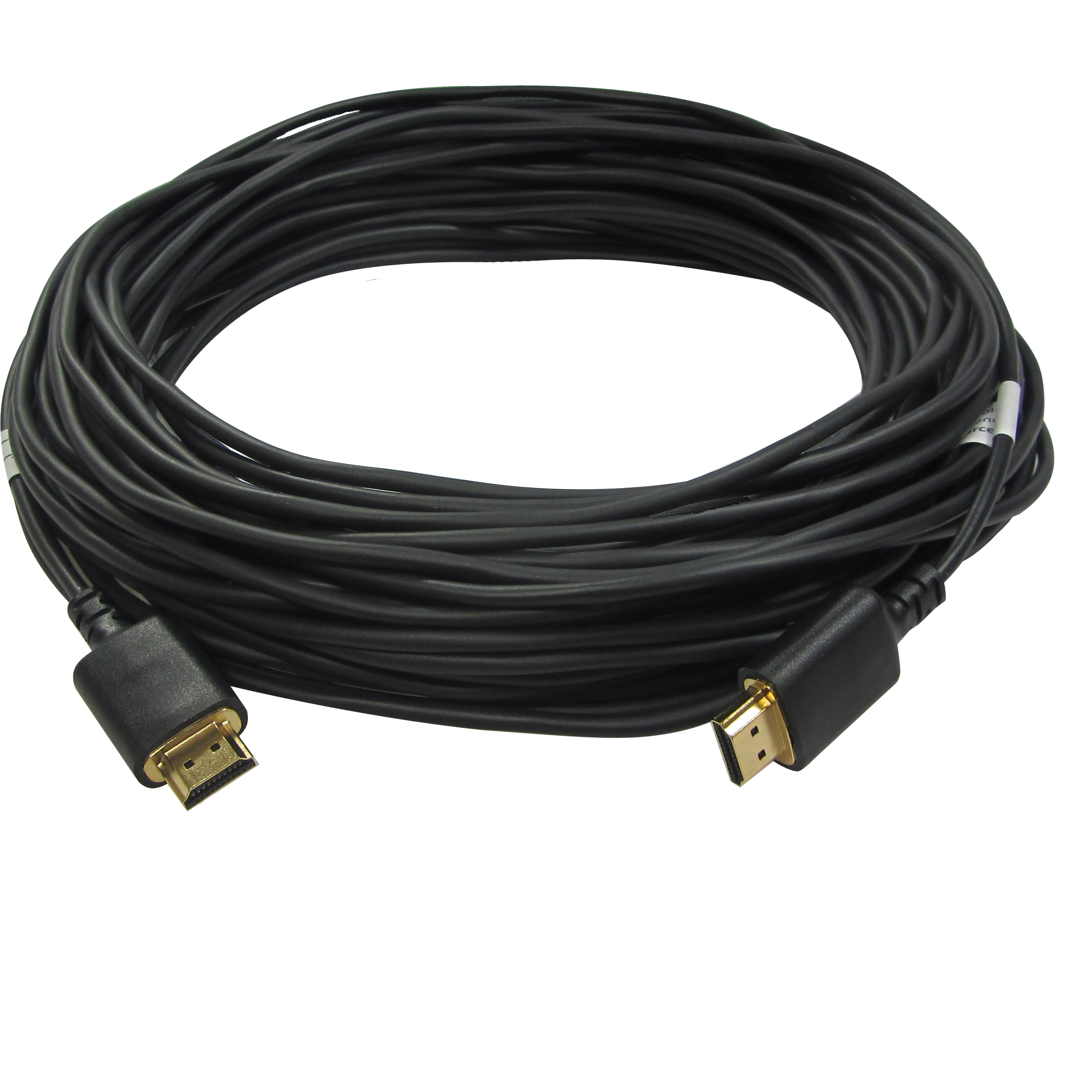
So, what does this mean for your setup? In 2026, the practical limit for passive copper HDMI cables carrying full 48 Gbps Ultra High Speed signals is surprisingly short. Most experts agree that beyond 15 feet (about 4.5 meters), you are rolling the dice. Some high-quality, thick-gauge cables might make it to 20 or 25 feet, but it’s not guaranteed. And if you’re trying to push 8K resolution, that safe distance shrinks even more, often to under 10 feet.
It’s tempting to just buy the longest cable you can find on Amazon. But length is the enemy here. A 50-foot passive HDMI cable claiming to support 8K is almost certainly lying, or it will only work at lower bandwidths. You might get it to work with a 1080p signal, but try to enable HDR or 120Hz gaming, and it will fail. This is why many people report "intermittent" issues. The cable works until the data rate spikes, then it drops out.
If you are setting up a home theater today, measure your distance carefully. If your source device is more than 15 feet from your display, do not rely on a standard passive copper cable. It might work for a week, or it might work for a year, but it’s a ticking time bomb. As firmware updates increase bandwidth demands or you upgrade your console, that marginal signal will be the first thing to break. Save yourself the headache and acknowledge the physical limit early.
Active Cables and the Power Boost
When you need to go longer than 15 feet, you have options. The most common solution is an Active HDMI cable. These look like normal cables, but they have a small chip built into the connector heads. This chip acts as a signal amplifier. It takes the weak, degraded signal coming through the copper wire and boosts it back to full strength before it enters your TV.
Think of it like a repeater station on a highway. The cars (data) get tired and slow down over long distances. The active chip gives them a shot of espresso and sends them on their way. These cables require power to work, which they usually draw from the HDMI port itself. This is why they are slightly bulkier at the ends. They are reliable for runs up to 25 or 30 feet, and sometimes longer, depending on the quality of the chipset.
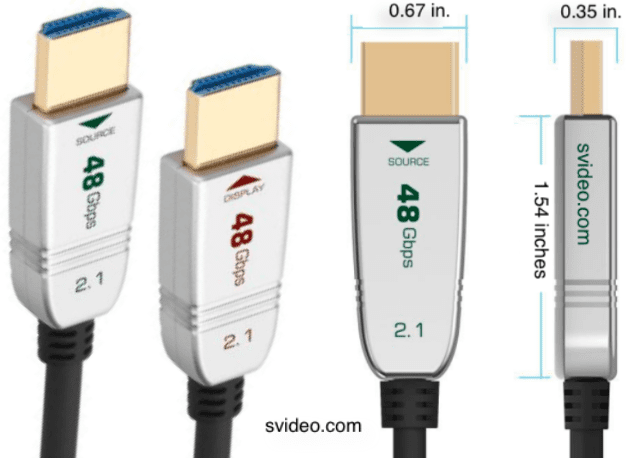
However, active cables have a direction. You must plug the "Source" end into your game console or player and the "Display" end into your TV. If you plug them in backwards, they won’t work. Also, because they rely on powered chips, they can be more fragile. If the chip fails, the whole cable is dead. But for most living room setups where you need to cross a room, a high-quality active copper cable is a solid, cost-effective choice. Just make sure it’s certified for the bandwidth you need.
Fiber Optic HDMI: The Future is Light
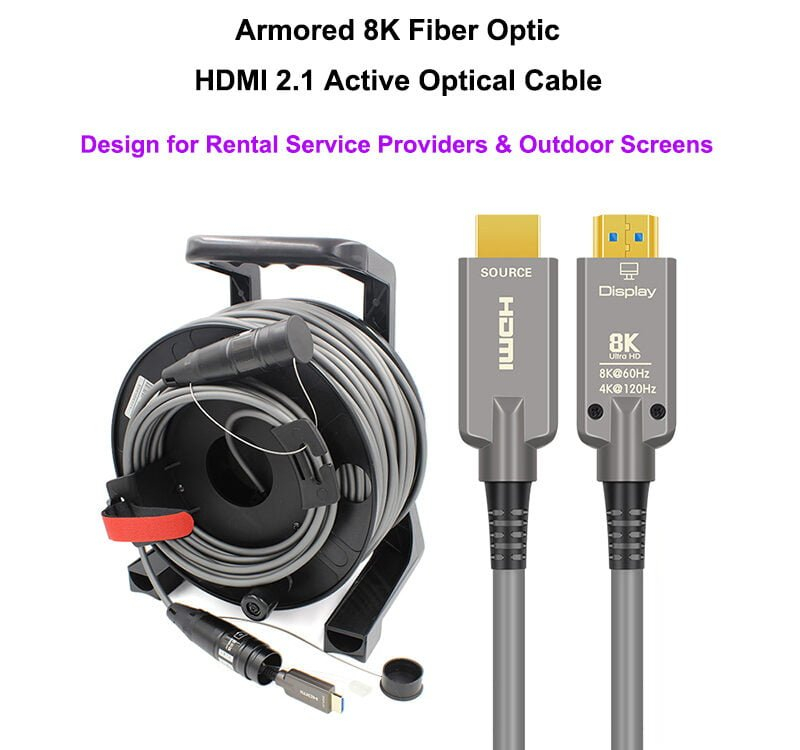
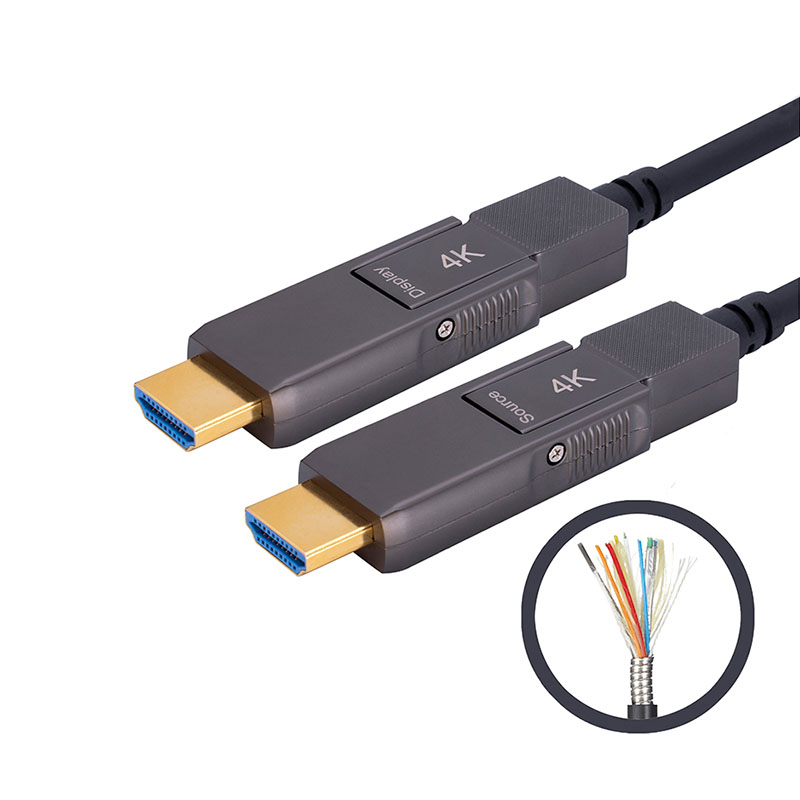
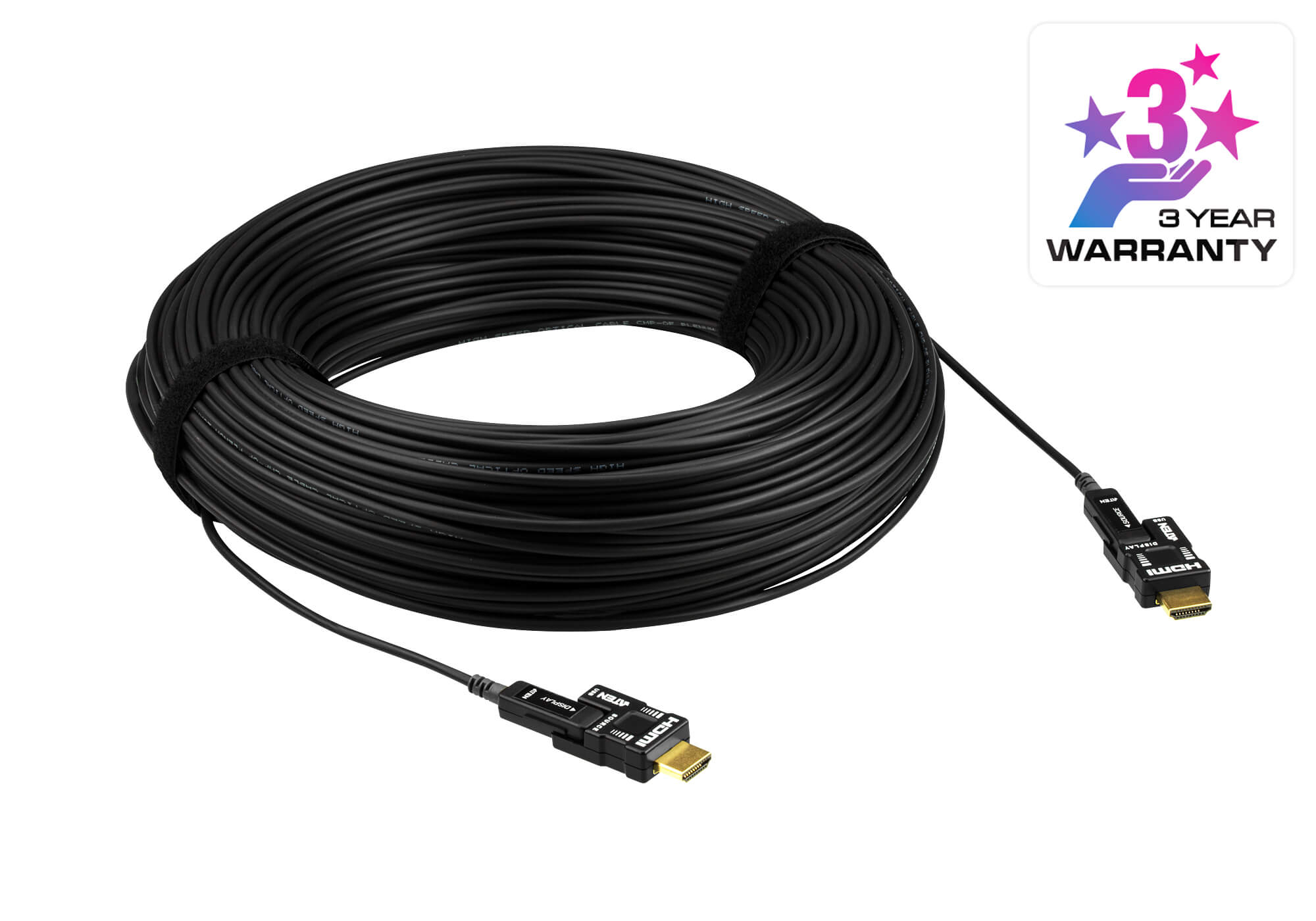
For really long runs—say, from a rack in the basement to a projector in the ceiling—you need to leave copper behind entirely. Fiber optic HDMI cables use light instead of electricity to transmit data. Light doesn’t suffer from resistance, capacitance, or electromagnetic interference. It can travel hundreds of feet without any signal loss.
In recent years, the price of fiber HDMI has dropped significantly. What used to be a $500 specialty item is now available for under $100 for decent lengths. They are also thinner and more flexible than thick copper cables, making them easier to fish through walls. The physics here are simple: an electrical signal is converted to light at one end, travels through glass or plastic fibers, and is converted back to electricity at the other end.
The downside? They are delicate. You can’t bend them at sharp 90-degree angles like you can with copper. The fiber inside can break. Also, like active copper cables, they are directional and require power. But if you are building a serious home theater or running cables through a large commercial space, fiber is the only way to guarantee performance. It removes the physics bottleneck entirely. In 2026, if you are running more than 30 feet, fiber should be your default choice, not an exception.
Knowing the physics is great, but how do you apply it? Start by mapping your room. Measure the exact distance from your source to your display. Add a foot or two for slack and routing around corners. If the total is under 15 feet, a high-quality passive Ultra High Speed HDMI cable will likely serve you well. Look for cables with thick gauges (24 AWG or lower) and good shielding.
If you are between 15 and 30 feet, opt for an active copper cable. Make sure it’s from a reputable brand that specifies support for 48 Gbps. Check the reviews for reliability. Don’t skimp here. A $20 active cable might use a cheap chip that overheats or fails. Spend the extra money for peace of mind. Remember, you only buy the cable once, but you’ll use it every day.
For anything over 30 feet, go with fiber optic HDMI. It’s the most future-proof option. As resolutions climb to 8K and beyond, fiber will handle the bandwidth without breaking a sweat. Just be careful during installation. Don’t kink the cable. Use gentle curves. And always test the cable before you close up walls or ceilings. Once it’s installed, you don’t want to find out it was damaged during the pull.
Ultimately, respecting the limits of HDMI physics saves you time, money, and frustration. It’s not about buying the most expensive gear; it’s about buying the right tool for the job. Whether it’s copper, active, or fiber, understanding how the signal travels helps you build a system that just works. No sparkles. No black screens. Just pure, uninterrupted entertainment.