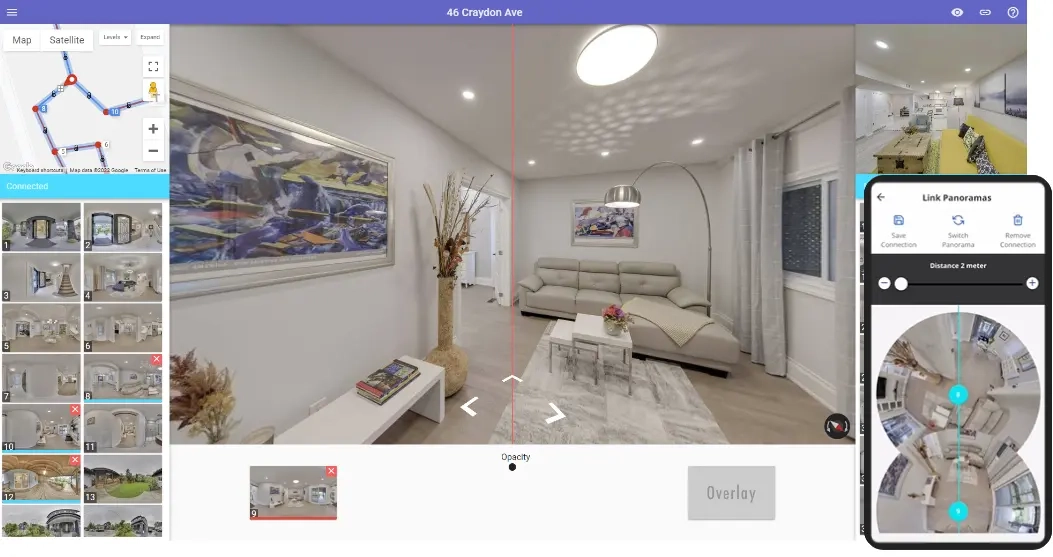
You’ve probably been there. You’re scrolling through listings or checking out a new restaurant online, and you click that little "3D Tour" button. Suddenly, you’re walking through the space. It’s cool, right? But then you think about getting one for your own business or property, and the first question hits you like a ton of bricks: How much is this going to cost?
If you start digging around, you’ll find prices ranging from "free" (if you do it yourself) to thousands of dollars. It’s messy. And if you try to compare quotes, you might notice some photographers charge by the hour, others by the shot, and some—wait for it—by the square foot. Why square footage? Is it fair? Does a bigger house really take that much longer to scan? Let’s untangle this knot together, because understanding the "per square foot" model might just save your budget in 2026.
Why Square Footage Matters More Than You Think
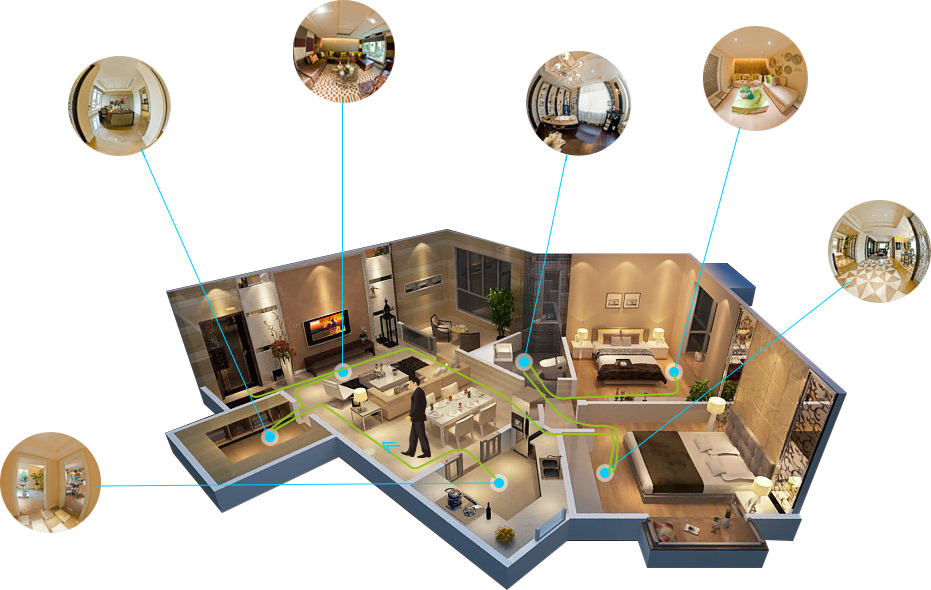
At first glance, charging by the square foot seems a bit arbitrary. After all, isn’t a virtual tour just a bunch of photos stitched together? Well, yes and no. In 2026, most professional tours use LiDAR technology or high-end 360-degree cameras that capture depth data. This means the camera isn’t just taking a picture; it’s mapping the geometry of the room.
When a technician walks through a 3,000-square-foot home versus a 1,200-square-foot condo, the difference isn’t just in the number of clicks. It’s in the time spent navigating tight corners, setting up tripods in large open spaces, and ensuring every nook is captured without gaps. Larger spaces inherently require more "scan points" to create a seamless dollhouse effect. If you skip spots in a big warehouse, the tour looks broken. In a small bathroom, you can cover it in two sweeps. The square footage is a proxy for complexity and time, even if it’s not a perfect one.
Think of it like painting a house. You wouldn’t charge the same amount to paint a shed as you would a mansion, even if the paint color is the same. The surface area dictates the labor. For virtual tours, the "surface area" is the volumetric space the camera needs to understand. This model helps providers give you a quick estimate over the phone without needing to see the property first. It’s a shorthand for effort.
The Typical Price Range in 2026
So, what’s the damage? If you’re looking at current market rates in 2026, the per-square-foot pricing usually hovers between $0.10 and $0.25 per square foot for standard residential properties. However, this base rate often comes with a minimum fee. You won’t find many pros willing to drive out to a studio apartment for $15. Most have a "floor" price, typically starting around $250 to $350, regardless of how tiny the space is.
For larger commercial spaces, the rate per square foot often drops. It’s the volume discount logic. Scanning a 10,000-square-foot retail store might cost less per foot than a 2,000-square-foot luxury home because the workflow is more repetitive and less detailed. You’re not worrying about capturing the texture of a velvet couch; you’re showing the layout of the sales floor. Some agencies, like Momentum Virtual Tours, have been known to use models like a base fee plus a percentage of square footage, which can simplify things for massive portfolios.
But beware of the outliers. If you see a quote for $0.05 per square foot, ask questions. Are they using outdated equipment? Is there a hidden hosting fee later? On the flip side, paying $0.50 per square foot usually means you’re getting premium add-ons like 4K resolution, custom branding, or advanced analytics built into the tour platform. The "sweet spot" for most real estate agents and small business owners remains in that $0.15 range, balancing quality with affordability.
Hidden Costs That Sneak Up on You
Here’s where it gets tricky. The per-square-foot price is rarely the only price. It’s the base layer of the cake, but you still need frosting. One of the biggest misconceptions is that the scan includes everything. It doesn’t. Most providers charge extra for "add-ons" that aren’t strictly part of the spatial mapping. For instance, drone footage of the exterior is almost always a separate line item, costing anywhere from $150 to $300 extra.
Then there’s the editing and processing time. While AI has gotten incredibly good at stitching images together in 2026, human review is still standard for high-end tours. If you want the photographer to blur out personal items, fix lighting issues, or add interactive hotspots (like clicking on a fridge to see its specs), that’s labor. Some companies bundle this into the square foot price, while others charge per hotspot. Always ask if the quote includes "post-production" or if that’s billed hourly.
Hosting fees are another silent budget killer. Many platforms charge a monthly or annual fee to keep your tour live on the web. In the past, this was opaque, but now many providers are moving toward transparent subscription models or one-time licensing fees. If you’re comparing a $300 tour from Provider A with a $400 tour from Provider B, check if Provider A charges $20/month to keep it online. Over two years, that "cheaper" option becomes way more expensiv.
DIY vs. Professional: Is the Savings Worth It?
With apps on your phone getting smarter, you might be tempted to grab your iPhone and do it yourself. And hey, in 2026, you absolutely can. Apps like Matterport’s mobile version or Panoee allow you to create decent tours for free or a low monthly subscription. So why pay a pro? The answer lies in consistency and hardware.
Professional cameras capture higher dynamic range and better low-light performance. Your phone might struggle in a dimly lit basement or a bright, sun-drenched living room, resulting in blown-out windows or grainy shadows. A pro uses HDR bracketing and specialized lenses to ensure every part of the image is crisp. Plus, they know how to stage a room. They’ll move a chair three inches to the left to make the flow feel natural. You might not notice it consciously, but your potential buyers will feel the difference.
However, DIY isn’t always bad. If you’re managing a portfolio of 50 small rental units and need basic visibility, doing it in-house might make sense. The trade-off is time. What takes a pro 45 minutes might take you three hours of fiddling with apps and uploading files. Calculate your hourly wage. If you’re a busy broker, your time is likely worth more than the $200 you’d save by DIY-ing. But for a hobbyist or a small landlord with plenty of time, the DIY route is a valid, low-cost entry point.
Industry Variations: Residential vs. Commercial
Not all square feet are created equal. A square foot in a hospital is different from a square foot in a suburban colonial. Residential tours are often about emotion and lifestyle. The photographer spends time capturing the cozy fireplace, the view from the master bedroom, and the flow of the kitchen. It’s narrative-driven. This attention to detail keeps the per-square-foot price higher because the margin for error is low. One bad angle can ruin the "vibe."
Commercial tours, on the other hand, are functional. A warehouse, office building, or retail space needs to show capacity, layout, and condition. The lighting is often uniform (fluorescent or LED), which is easier to shoot. There’s less "staging" involved. Because the goal is informational rather than emotional, the process is faster. This is why you’ll often see lower per-square-foot rates for industrial clients. The tech requirements might be higher (like integrating floor plans or asset tags), but the actual scanning process is more mechanical.
Hospitality falls somewhere in the middle. Hotels and restaurants need to look inviting, similar to homes, but they also have complex layouts with many repeating rooms (like hotel suites). Providers often charge a hybrid rate here: a lower per-room rate for standard units and a higher per-square-foot rate for lobbies and dining areas. Understanding which bucket your property falls into helps you negotiate better. Don’t let a commercial provider charge you residential rates for a bare-bones office space.
Ready to hire? Here’s how to not get ripped off. First, always ask for a flat-rate quote based on your approximate square footage, but request a breakdown of what’s included. Does it include the 3D dollhouse view? Floor plans? 4K static photos? These are often bundled, but not always. If you don’t need the floor plan, ask if removing it lowers the price. Sometimes it doesn’t, because the software generates it automatically, but it’s worth asking.
Second, consider bundling services. If you need standard photography, video walkthroughs, and a virtual tour, hire one vendor to do it all. Most photographers will offer a package discount because they’re already on-site. Driving to a location once and shooting everything is far more efficient than three separate visits. This is where you can often knock 10-15% off the total bill. It’s a win-win: they save time on travel, and you save cash.
Finally, look at the long-term value. A cheap tour that loads slowly or looks pixelated hurts your brand. In 2026, users expect instant, high-quality immersion. If a tour buffers for ten seconds, they’ll click away. Paying a bit more for a provider who optimizes file sizes and uses fast hosting servers is an investment in user experience. Ask to see samples of their work on a mobile device. If it’s clunky on your phone, it’ll be clunky for your customers. Don’t skimp on the tech stack.
Wrapping this all up, per-square-foot pricing is just a tool. It’s not a law of physics. It’s a way for professionals to estimate the scope of work quickly. By understanding what goes into that number—the hardware, the labor, the editing, and the hosting—you can look past the sticker shock. You’ll know when a quote is fair and when it’s inflated.
The virtual tour market in 2026 is mature. There’s no mystery anymore. Whether you’re selling a million-dollar mansion or a downtown coffee shop, the goal is the same: let people experience the space before they step foot inside. Pricing shouldn’t be a barrier; it should be a clear reflection of value. So, measure your space, know your needs, and ask the right questions. You’ve got this.