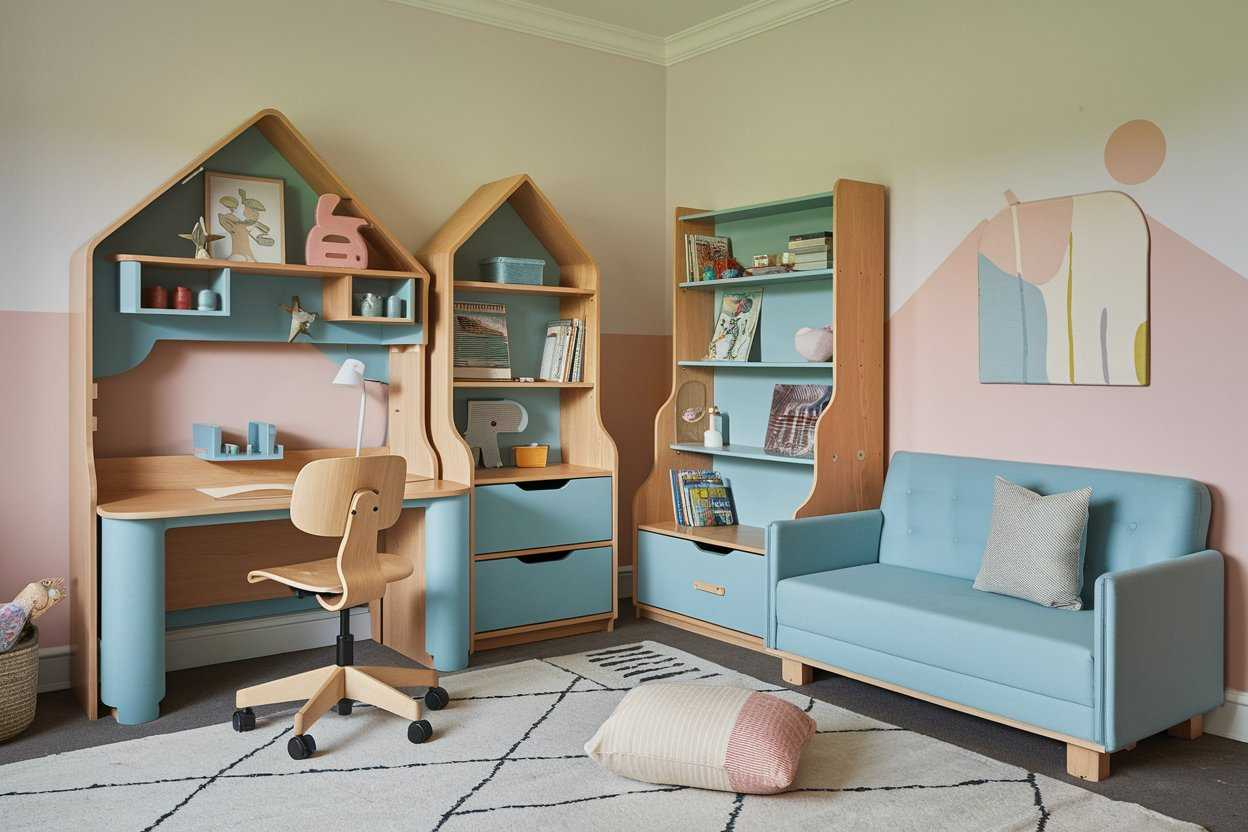
You know that feeling when you buy something for your kid, and it looks perfect in the showroom? Clean lines, bright colors, maybe even a little sticker that says "built to last." Then, three weeks later, it’s wobbly. Or scratched beyond recognition. Or worse, it breaks while they’re climbing on it. It’s frustrating. It’s expensive. And honestly, it’s a bit scary.
We’ve all been there. You want furniture that grows with them, right? That’s the promise of modular design. Swap a shelf here, add a desk there, keep the same frame for years. But not all modular pieces are created equal. Some are clever engineering marvels. Others are just expensive particleboard held together by hope and plastic dowels. So, how do you tell the difference before you hand over your credit card?
I’ve spent years talking to the people who actually build this stuff. Engineers, safety testers, designers who obsess over millimeters. They don’t look at the color first. They don’t care about the trendy name. They look at the bones. They look at the connections. They look for the things that break when a seven-year-old decides the bookshelf is also a jungle gym. Here is what they really look for, broken down so you can spot the quality yourself.
The Hidden Strength of Connection Points
Let’s start with the joints. This is where most furniture fails. Seriously. If you pick up a modular piece and give it a gentle shake, does it rattle? That’s a bad sign. Experts look for connection systems that lock tight and stay tight. We aren’t just talking about screws here. We are talking about the actual mechanism that holds module A to module B.
In 2026, the best designs use metal-to-metal connectors or high-density cam locks that bite into solid wood or reinforced composite cores. Plastic connectors? They might work for a year. But kids are rough. They climb. They jump. They lean. Plastic gets brittle. It cracks. When an evaluator looks at a piece, they check the tolerance—the gap between parts. It should be nearly invisible. If you can see daylight between two connected modules, stress will concentrate there. And stress leads to breaks.
Look for hidden reinforcement plates inside the corners. You won’t see them from the outside, but they distribute weight evenly. Without them, the screw holes strip out after a few reconfigurations. Think about it: modular furniture is meant to be taken apart and put back together. Maybe not every day, but often enough that standard wood screws just won’t cut it. The experts call this "cycle durability." How many times can you assemble and disassemble it before it becomes loose junk? Good gear handles dozens of cycles. Cheap stuff fails after three.
Material Density and Surface Resilience
Wood is wood, right? Wrong. There’s a massive difference between solid oak and a veneer wrapped around hollow-core particleboard. When experts evaluate durability, they look at density. Specifically, the Internal Bond strength. For wooden modules, hardwoods like maple, beech, or oak are the gold standard. They resist dents. They hold screws tightly. But they’re heavy and expensive.
So, what about the cheaper options? High-quality MDF (Medium Density Fiberboard) can be durable if it’s high density and sealed properly. The key is the edge banding and the surface finish. Kids spill things. Juice, paint, marker. If the finish isn’t resistant to moisture and abrasion, the material swells. Once it swells, it’s done. It won’t shrink back. Experts test this with something called a Taber Abraser, which literally grinds the surface to see how many rotations it takes to wear through. You can’t do that at home, obviously.
But you can do the fingernail test. Press your nail into an inconspicuous spot. Does it leave a mark? If yes, it’s too soft for active play areas. Also, check the edges. Are they rounded? Sharp edges chip easily. Rounded edges, often called "soft-touch" profiles, not only protect your kid from bumps but also prevent the material from splintering or peeling when bumped against walls or other furniture. In recent studies, like those referenced in sustainability frameworks, the longevity of the surface finish is directly tied to the product’s overall life cycle. If the look fades or chips, parents toss it. Durability is as much about aesthetics holding up as it is about structural integrity.
Stability Under Dynamic Loads
Static weight is one thing. A stack of books sits there. It doesn’t move. But kids? They move. They climb. They hang off the side of a desk. This is "dynamic loading." It’s the sudden force applied when a child jumps onto a seat or pulls themselves up on a shelf. Experts simulate this in labs using weights that drop from specific heights. It sounds harsh, but it mimics real life.
When you’re shopping, look for a wide base. Modular units that are tall and narrow are inherently unstable unless they are anchored. And even then, the connection between modules needs to handle shear force. Shear force is what happens when one part tries to slide past another. If you have a tower of cubes, the bottom ones take a lot of pressure. Are they reinforced? Do they have anti-tip hardware included? In 2026, safety standards have tightened globally. UL Solutions and SGS now push for more rigorous dynamic testing for anything marketed as "climbable" or "play-integrated."
Check the feet. Are they adjustable? Floors aren’t always level. If a module rocks because one foot is shorter, every movement adds stress to the joints. Adjustable leveling feet allow you to stabilize the unit perfectly. This simple feature extends the life of the furniture significantly because it prevents uneven wear on the connectors. If the piece wobbles out of the box, it’s going to wobble more in six months. Walk away.
Adaptability and Growth Compatibility
Here’s the thing about modular furniture: its main selling point is that it changes. But if the design doesn’t actually support meaningful change, it’s not truly modular. It’s just separate pieces. Experts look for "growth adaptability." Can the height adjust? Can a toddler table become a desk for a ten-year-old? Can storage bins swap out for drawers?
The evaluation framework known as GSOWCELM (Growth, Safety, Organization, Warmth, Convenience, Emotionality, Learning, Modularity) highlights this. It’s not just about swapping parts; it’s about whether the parts remain relevant. A shelf that’s too deep for a toddler’s books might be perfect for teen electronics. Versatility equals durability because the item stays in use longer. If it only works for one age range, it ends up in a landfill sooner.
Look for standardized hole patterns. Some brands use proprietary connectors that only work with their specific accessories. That’s a trap. If the company goes out of business or stops making that accessory, your furniture is stuck. Open-system designs, where components fit together logically without needing special tools or rare parts, are far more durable in the long run. They allow you to replace just one broken piece instead of the whole set. That’s smart design. That’s sustainable.
Safety Certifications and Chemical Integrity
Durability isn’t just physical. It’s chemical. Kids chew on things. They lick surfaces. They breathe in the air around new furniture. Off-gassing from volatile organic compounds (VOCs) is a real concern. Experts check for certifications like GREENGUARD Gold or FSC (Forest Stewardship Council) for wood sources. These aren’t just marketing badges. They require rigorous testing.
If a piece smells strong and chemical-like right out of the box, that’s a red flag. High-VOC finishes can degrade faster too. They yellow. They crack. Low-VOC, water-based finishes are not only safer but often more flexible. They move with the wood as humidity changes, preventing cracks. In 2026, transparency is key. Brands that publish their test results openly are usually more confident in their product’s integrity.
Also, look for mechanical safety. Are there pinch points? When you connect two modules, could a small finger get caught? Good design eliminates these hazards. Smooth transitions. Covered mechanisms. No exposed springs or sharp metal edges. Safety and durability go hand in hand. A safe piece is usually well-engineered, and a well-engineered piece lasts longer. It’s a cycle. Don’t ignore the fine print on safety labels. They tell you the intended weight limits and age ranges. Exceeding them voids the warranty and risks breakage.
Let’s be real. Kids make messes. Coffee spills. Crayon art on the desktop. Mud tracked in from the backyard. If you can’t clean it easily, it won’t last. Experts evaluate "cleanability." Can you wipe it down with a damp cloth? Do stains penetrate the surface? Textured surfaces might look cool, but they trap dirt. Smooth, non-porous finishes are easier to maintain and thus stay looking newer for longer.
But what happens when it does break? Can you fix it? This is huge. Most modern furniture is disposable. You can’t repair it. But true modular systems should offer spare parts. Can you buy a single replacement door? A new leg? A fresh connector kit? If the answer is no, the furniture has a fixed lifespan. If the answer is yes, it can potentially last decades.
Check the warranty. Not just the length, but what it covers. Does it cover structural defects? Joint failure? Finish peeling? A company that offers a long warranty on structure is betting on their own quality. Read the reviews, specifically the ones from people who’ve had the furniture for two or three years. Do they mention loosening joints? Fading colors? Broken cams? That’s the real data. Lab tests are great, but real-world abuse is the ultimate test. Look for brands that stand behind their gear with actual support, not just a return window.
So, there you have it. It’s not magic. It’s not luck. It’s about paying attention to the details that manufacturers hope you’ll overlook. Next time you’re staring at a colorful modular setup, ignore the hype. Shake it. Check the joints. Smell it. Ask about spare parts. Look past the pretty paint to the bones underneath. Because the best furniture isn’t the one that looks best today. It’s the one that’s still standing, sturdy and safe, five years from now. And honestly? That’s worth paying a bit more for. Your future self, and your kids, will thank you.