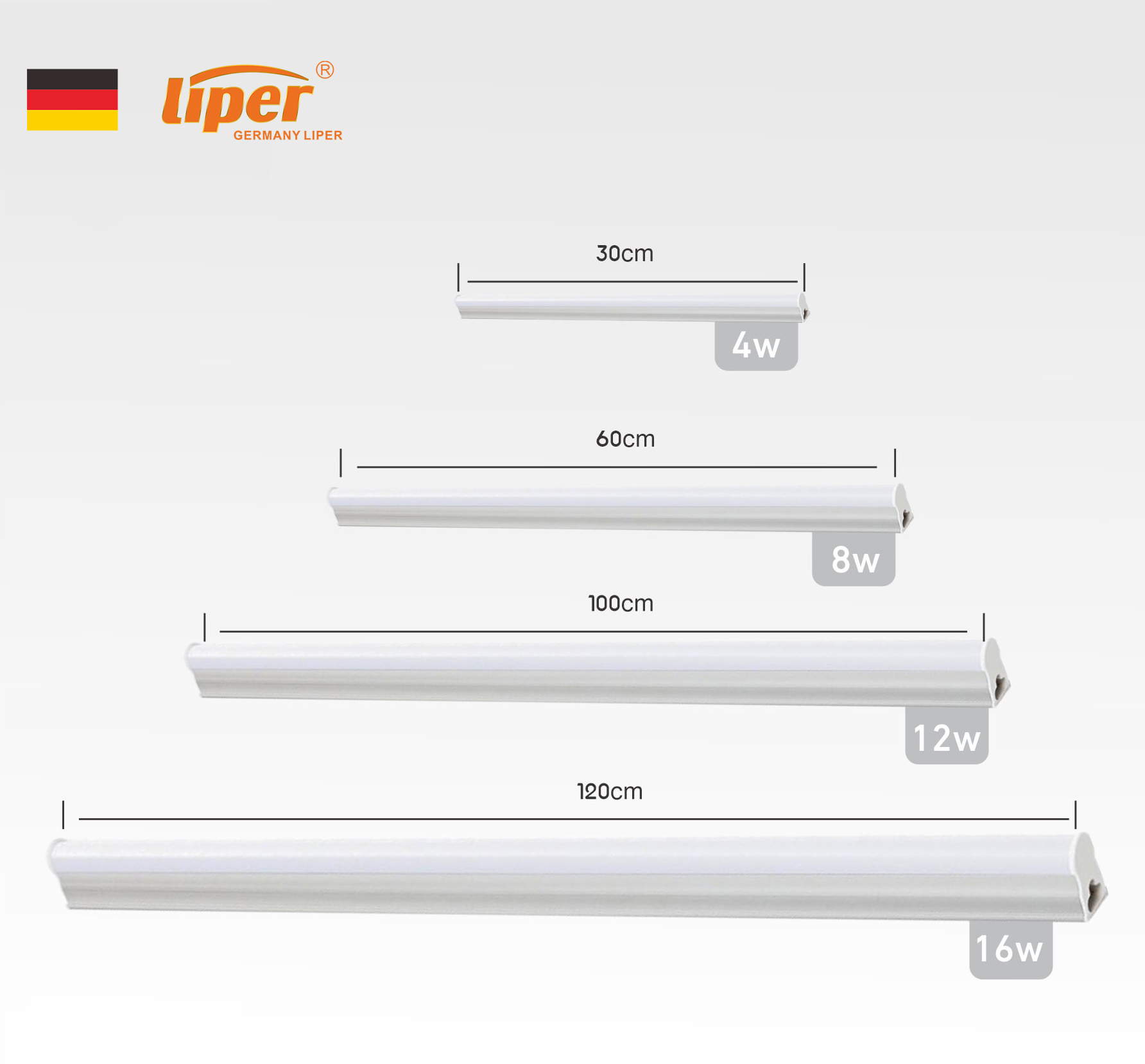
You walk into the hardware store, or maybe you’re scrolling through an online catalog at midnight, and you see it. Two boxes that look almost identical. One says T5. The other says T8. They both promise bright, clean light. They both claim to save energy. So, what’s the deal? Why are there two options? And more importantly, which one won’t make you regret the purchase three months later?
It’s a question I hear all the time. People think it’s just about size. Like picking between a small and large coffee cup. But it’s not that simple. These aren’t just different sizes; they’re different systems. Choosing the wrong one can mean buying new fixtures, dealing with flickering lights, or wasting money on bulbs that don’t fit your needs. Let’s cut through the noise. By the end of this, you’ll know exactly which tube belongs in your ceiling.
Understanding the Basics: What Do T5 and T8 Actually Mean?
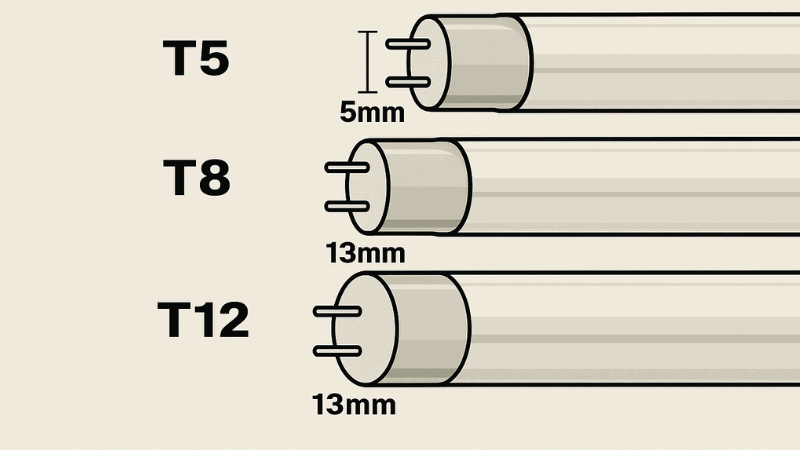
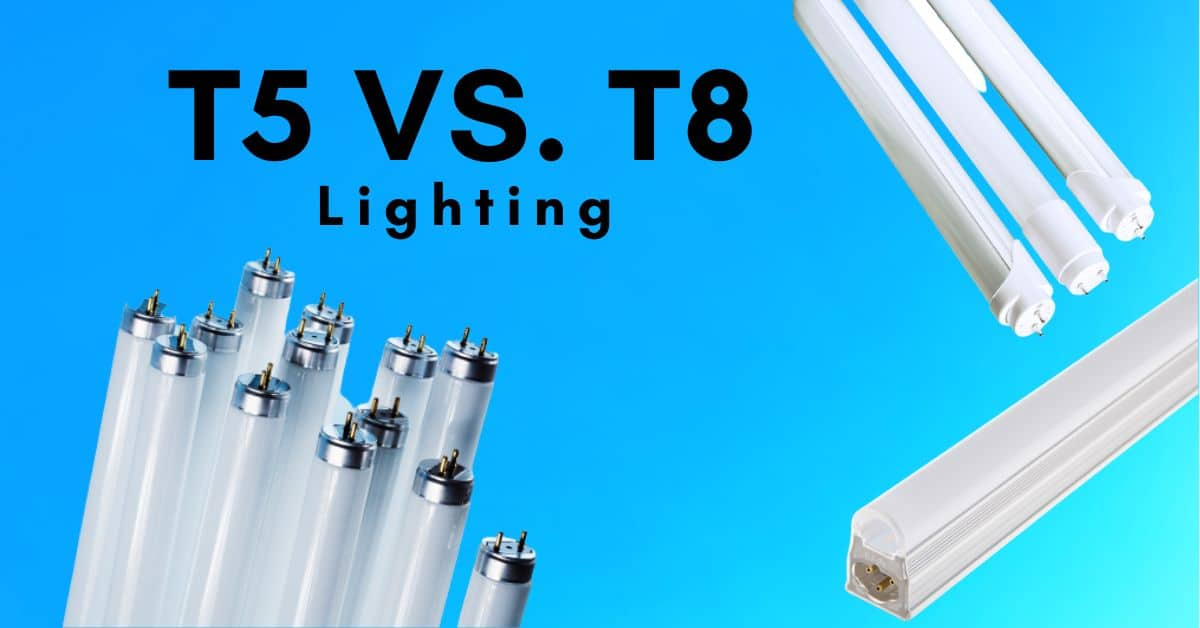
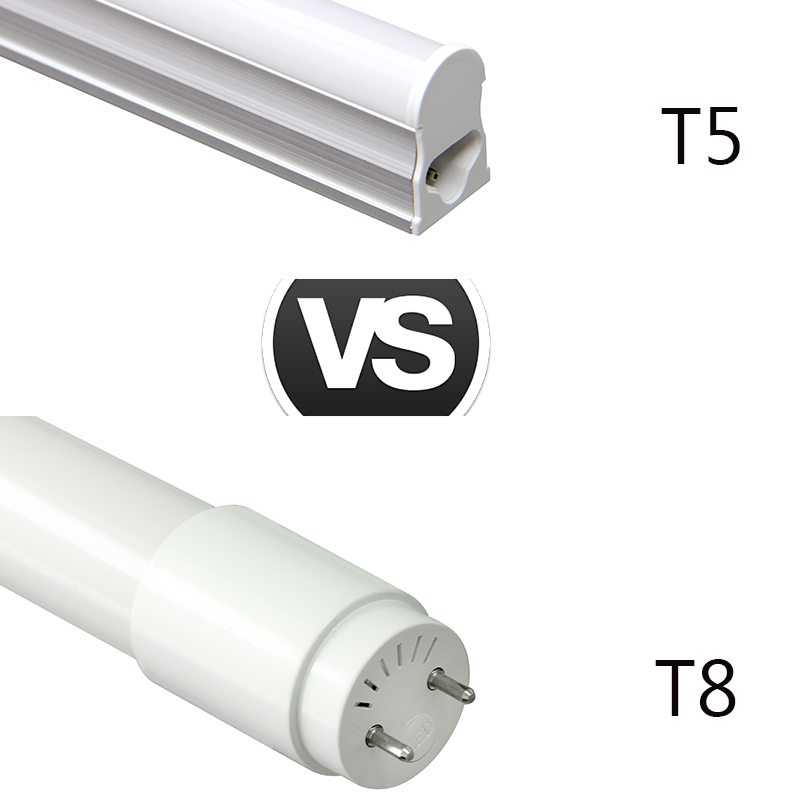
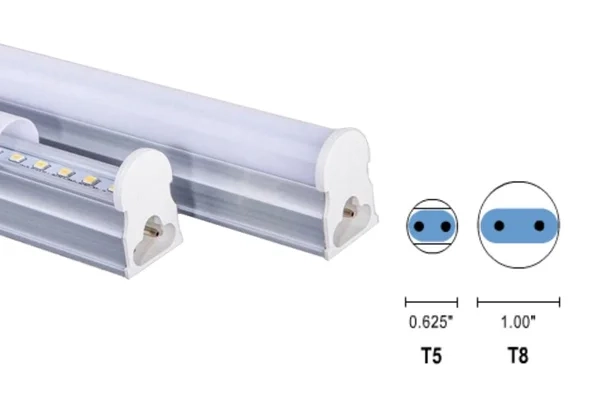
First things first. The "T" stands for tubular. That’s the shape. The number? That’s the diameter in eighths of an inch. It’s an old-school measurement system that stuck around. So, a T8 bulb is 8/8ths of an inch wide. That’s exactly one inch. Simple enough. A T5 bulb is 5/8ths of an inch wide. That’s roughly 0.625 inches. Visually, the T5 looks slimmer, more modern. The T8 looks a bit chunkier, more traditional.
But here’s where it gets tricky. You can’t just swap them out. They aren’t interchangeable. The sockets are different. The pin spacing—the distance between the metal prongs on the ends—is different. If you try to force a T5 into a T8 socket, it won’t fit. If you somehow manage to jam it in, it won’t light up. Or worse, it could damage the fixture. This is the most common mistake people make. They assume "LED is LED." It’s not. The physical design dictates everything else.
Think of it like shoes. You can’t wear a size 10 shoe on a size 7 foot. It doesn’t matter if the size 10 shoe is made of better leather or has cooler laces. It just won’t work. T5 and T8 are different sizes. Period. Before you even look at brightness or price, you need to measure your current fixture. Pull out a tape measure. Check the diameter. Check the length. Check the pins. This step saves you hours of headache later.
Efficiency and Performance: Which One Saves More Money?
Now let’s talk about what really matters to your wallet: efficiency. In 2026, LED technology has matured significantly. Both T5 and T8 LEDs are vastly superior to the old fluorescent tubes they replaced. But there are still differences. Generally speaking, T5 LEDs tend to be slightly more efficient. Why? Because they are smaller, they often run cooler. Heat is the enemy of LED lifespan. A cooler-running bulb lasts longer and maintains its brightness better over time.
T5 systems were originally designed for high-output applications. They pack a lot of lumens (light output) into a small package. This means you can get very bright light from a slim profile. For spaces where you need intense illumination—like a workshop, a garage, or a retail display—T5s are often the go-to. They deliver more punch per inch. If you’re trying to light up a detailed task area, the focused nature of T5 can be a real advantage.
T8s, on the other hand, are the workhorses. They are incredibly reliable and widely available. While they might be a tiny bit less efficient than top-tier T5s, the gap has narrowed considerably in recent years. For general office lighting, hallways, or classrooms, T8s provide plenty of light. They distribute it broadly and evenly. Most people won’t notice a difference in brightness between a good quality T8 and a T5 in a standard room. The energy savings difference is often negligible for average home use. Don’t obsess over the wattage numbers alone. Look at the lumens per watt rating. That’s the true measure of efficiency.
Installation and Compatibility: The Hidden Headaches
Here’s the part that trips everyone up. Installation. If you are replacing old fluorescent tubes with LED tubes, you have to pay attention to the ballast. The ballast is that heavy box inside the fixture that regulates power. Old fluorescents need them. LEDs? Not so much. There are two main types of LED replacements: plug-and-play (ballast compatible) and direct-wire (ballast bypass).
With T8 LEDs, you have tons of options. Many T8 LEDs are designed to work with your existing electronic ballast. You just pop the old fluorescent out and put the new LED in. Easy. But if your ballast is old or faulty, you might need to bypass it. This involves cutting wires and connecting the LED directly to the power source. It’s not hard for an electrician, but it can be scary for a DIYer. Always check the label. Does it say "Type A" (plug-and-play) or "Type B" (direct-wire)?
T5 installations are often more rigid. Because T5 fixtures are usually newer or more specialized, they are frequently designed for direct-wire LED integration from the start. However, finding plug-and-play T5 LEDs can be harder. The market is smaller. If you’re retrofitting an old T5 fluorescent fixture, you might find fewer compatible LED options. Sometimes, it’s easier to replace the entire fixture with a new LED-ready T5 unit rather than trying to find a bulb that works with the old gear. Know your fixture type before you buy.
Light Quality and Application: Where Do They Shine Best?
Light isn’t just about brightness. It’s about quality. Color temperature, color rendering, and distribution all play a role. T5 LEDs often excel in color rendering index (CRI). This measures how accurately colors appear under the light. A high CRI (90+) is crucial for art studios, kitchens, or anywhere you want food and fabrics to look natural. Many premium T5 LEDs offer superior CRI because of their advanced phosphor coatings and tighter manufacturing tolerances.
T8s are perfectly fine for most tasks. Standard T8 LEDs usually have a CRI around 80-85. This is great for offices, warehouses, and basements. You can see clearly, but colors might look slightly washed out compared to daylight. If you’re lighting a storage room, does it matter if the red box looks slightly orange? Probably not. But if you’re painting a portrait or choosing makeup, you’ll want that higher CRI found in many T5s.
Consider the space itself. T5s are slim. They fit in tight places. Think under-cabinet lighting in a kitchen, or inside a shallow display case. Their small diameter allows for sleek, unobtrusive fixtures. T8s are bulkier. They need more clearance. They are ideal for suspended ceilings, high bays, and open areas where the fixture size doesn’t matter as much. If you have low ceilings or want a minimalist look, T5 is often the aesthetic winner. If you’re lighting a large gymnasium, T8s are likely more practical and cost-effective.
Cost Analysis: Upfront Price vs Long-Term Value
Let’s talk dollars. Historically, T5 LEDs were more expensive. They were seen as premium products. T8s were the budget option. In 2026, this gap has shrunk, but it still exists. A single T5 LED tube can cost 20-30% more than a comparable T8. Why? Lower production volumes and more complex engineering. If you’re lighting a whole office building with hundreds of fixtures, that 30% adds up fast. T8s win on upfront cost.
However, look at the long term. T5s often have a longer lifespan. Some manufacturers rate their T5 LEDs for 50,000 to 60,000 hours, while T8s might be rated for 30,000 to 50,000 hours. If you’re changing bulbs in a hard-to-reach place—like a 20-foot ceiling—the labor cost of replacement matters more than the bulb cost. A T5 that lasts twice as long means half the maintenance calls. For homeowners, this is less of an issue. You can change a bulb yourself. For facility managers, T5 might actually be cheaper over five years.
Also, consider energy rebates. Many utility companies offer discounts for upgrading to high-efficiency lighting. Sometimes, these rebates are specific to certain types of fixtures or efficiency levels. Check with your local provider. You might find that switching to T5 qualifies you for a bigger rebate, offsetting the higher initial price. Do the math for your specific situation. Don’t just look at the price tag on the shelf. Look at the total cost of ownership.
So, how do you actually choose? It feels overwhelming, but it doesn’t have to be. Here is a simple checklist to guide you. First, measure your existing fixture. If it’s already T8, sticking with T8 is the easiest path. If it’s T5, stick with T5. Retrofitting from one size to another requires new fixtures, which is a big project. Only do that if you’re renovating anyway.
Second, ask yourself: What am I lighting? If it’s a task-heavy area like a workshop or kitchen counter, lean towards T5 for its brightness and potential for higher CRI. If it’s a general area like a hallway, garage, or office, T8 is likely perfect. It’s cheaper, widely available, and does the job well. Third, consider your comfort level with installation. If you want a simple swap, look for plug-and-play T8s. If you’re willing to rewire or hire a pro, you have more flexibility with both types.
Finally, check the specs. Look for lumens, not watts. Look for CRI if color matters. Look for the warranty. A 5-year warranty on a T8 might be better than a 1-year warranty on a fancy T5. Trust reputable brands. Read reviews from people who actually used the bulbs in similar settings. There’s no single "best" bulb. There’s only the best bulb for your specific need. Take a breath. Measure twice. Buy once. You’ve got this.
Choosing between T5 and T8 isn’t about finding a magic solution. It’s about matching the tool to the task. Both technologies are mature, efficient, and reliable. The "right" choice depends entirely on your existing setup, your budget, and what you’re trying to illuminate. Don’t let the technical jargon scare you. Focus on the basics: size, fit, and purpose. Whether you go with the slim, powerful T5 or the dependable, versatile T8, you’re making a smart move away from old, wasteful fluorescents. Your eyes—and your electricity bill—will thank you.