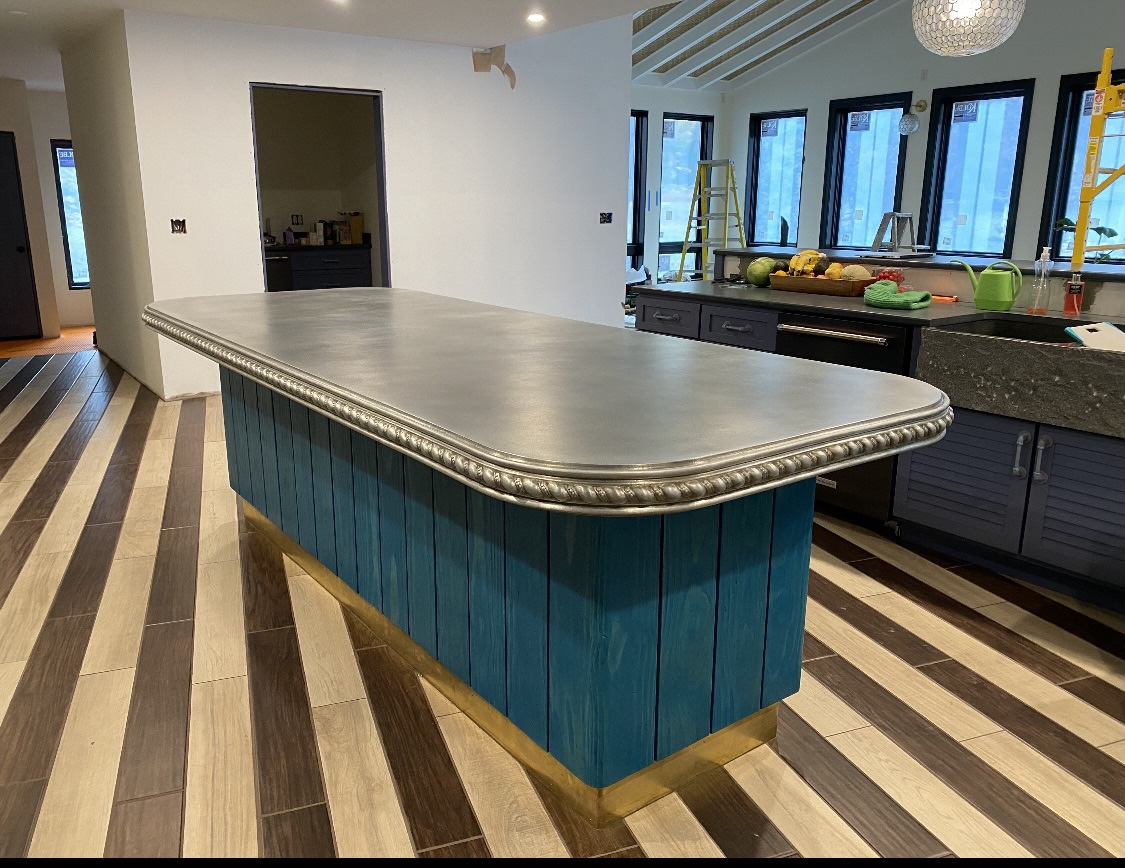
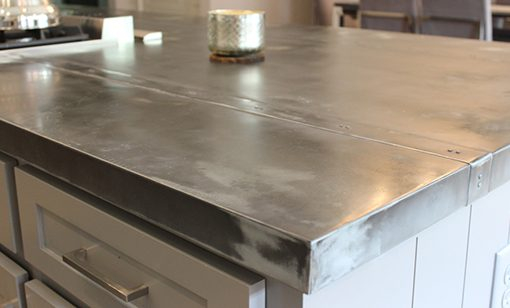
You walk into a showroom, and there it is. Gleaming. Bright. Almost blindingly silver. It looks perfect, sure. But does it feel like home? Probably not. Not yet. That’s the thing about zinc. It’s not a "set it and forget it" material like quartz or granite. It’s alive. Well, metaphorically speaking. It breathes. It reacts. It changes. And if you’re considering a zinc island for your kitchen, or maybe you’ve already taken the plunge and are now staring at a water spot with mild panic, you need to know what you’re signing up for.
It’s not just a countertop. It’s a diary. Every lemon slice squeezed, every drop of wine spilled, every late-night snack prep session—it all leaves a mark. For some, that’s terrifying. For others, it’s the whole point. In 2026, we’re seeing a massive shift away from sterile, flawless surfaces toward materials that tell a story. Zinc is leading that charge. But understanding the journey from shiny newness to that coveted, matte, grey-blue warmth is key to actually enjoying it. Otherwise, you might spend the first year fighting your own counter. Let’s stop fighting. Let’s start understanding.
The Science Behind the Shift
So, what is actually happening when zinc "ages"? It sounds mystical, but it’s really just chemistry doing its thing. When fresh zinc meets the air, it doesn’t just sit there. It reacts. Specifically, it interacts with oxygen and moisture in the atmosphere. This isn’t rust, like you’d see on iron. Rust eats away at metal, weakening it until it crumbles. Zinc patina is different. It’s protective.
The process starts with the formation of zinc oxide. This happens pretty quickly—sometimes within hours or days of installation. This thin layer is the first line of defense. But it doesn’t stop there. Over weeks and months, that oxide layer reacts with carbon dioxide in the air to form zinc carbonate. This is the good stuff. This is the stable, durable skin that gives zinc its famous matte finish and greyish hue. According to experts at NedZink, this progressive patination creates a unique charm that you just can’t fake with paint or stain. It’s a natural protective coating that actually makes the metal more resistant to corrosion over time.
Think of it like a tan. You go out in the sun, your skin produces melanin to protect itself, and you get darker. Zinc goes out in the "sun" (aka your kitchen air), produces carbonate, and gets… well, cooler. Literally and figuratively. This layer is highly adherent, meaning it sticks tight. It doesn’t flake off. It becomes part of the metal. So when people worry about zinc "corroding," they’re usually missing the point. It’s not decaying; it’s armoring up.
From Mirror to Matte: The Visual Journey
Let’s talk about what you’ll actually see. Day one? Your island is a mirror. It’s reflective. It’s bright. It might even feel a bit cold and sterile, as noted by design folks at Interior Impulse. If you have bright kitchen lights, you might find the glare annoying. That’s normal. But give it a few weeks. You’ll notice the shine starting to dull. It’s subtle at first. Maybe a softening of the reflection. A slight cloudiness in areas where you touch it most.
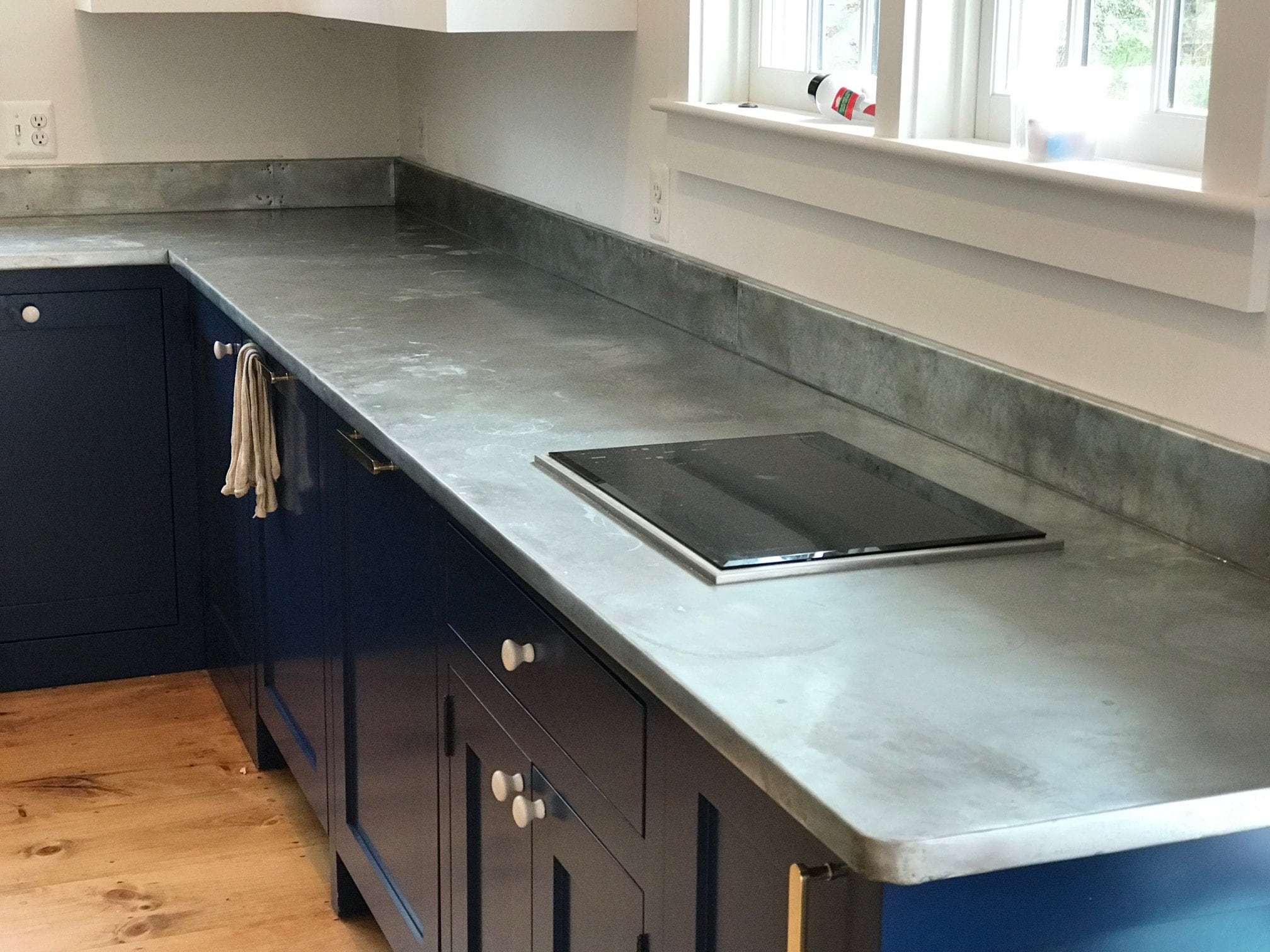
This is the transition phase. It can look uneven. This is where most people freak out. "Why is this spot darker than that spot?" they ask. Because you leaned there. Because you wiped it down with a damp cloth yesterday. Because the airflow is different near the window. Zinc is honest. It shows you exactly how you live. By month three or four, that high-gloss factory finish is gone. In its place is a satin, matte texture. It absorbs light instead of bouncing it back at you. It feels softer to the eye. And honestly? Much easier on the eyes during those early morning coffee runs.
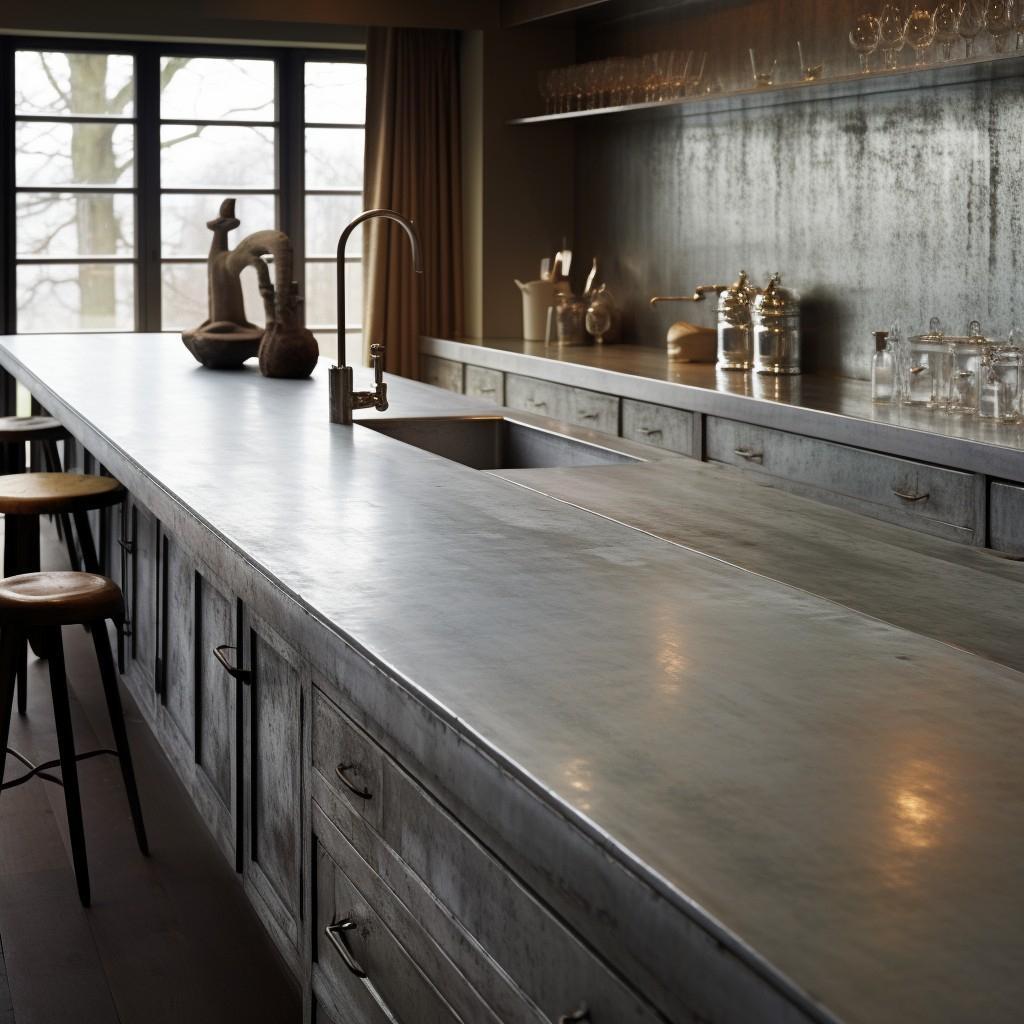
By the end of the first year, you’ll likely have a consistent, muted grey tone. It’s not uniform in a manufactured way. It has depth. Variations. Shadows. It looks "lived-in." That’s the goal. As mentioned in recent guides from MetalFixes, this reduced glare and added texture make the furniture feel timeless rather than mass-produced. It stops looking like a product and starts looking like a piece of your home.
Accelerating the Process: To Force or Not to Force?
Here’s the big question: Do you wait for nature, or do you lend it a hand? Waiting can take months, even years, to get that deep, rich character. Some people don’t have that kind of patience. They want the look now. Enter the world of forced patination. It’s a common practice among artisans and DIYers alike. But should you do it to your brand-new, expensive kitchen island?
There are methods. Vinegar and salt solutions are popular. Liver of sulfur is another classic chemical agent used by metalsmiths. The process typically involves cleaning the zinc thoroughly—super clean, no oils, no fingerprints—and then applying these solutions. The acid or sulfur reacts with the metal, speeding up the oxidation process dramatically. You can achieve in hours what might take nature six months. It adds immediate depth and that "aged" aesthetic.
But there’s a catch. Forced patinas can sometimes look a bit… forced. They might lack the subtle randomness of natural aging. If you’re not careful, you can end up with blotchy spots or streaks that look like mistakes rather than features. Plus, once you chemically alter the surface, you can’t really go back. If you love the idea of watching the change happen slowly, organically, then let it be. Let the lemons and the rain and the humidity do their work. But if you’re installing a zinc bar top and want it to match an old antique cabinet right away, acceleration might be the way to go. Just know that it requires skill. Or a very steady hand.
Daily Life: Acids, Scratches, and Love Marks
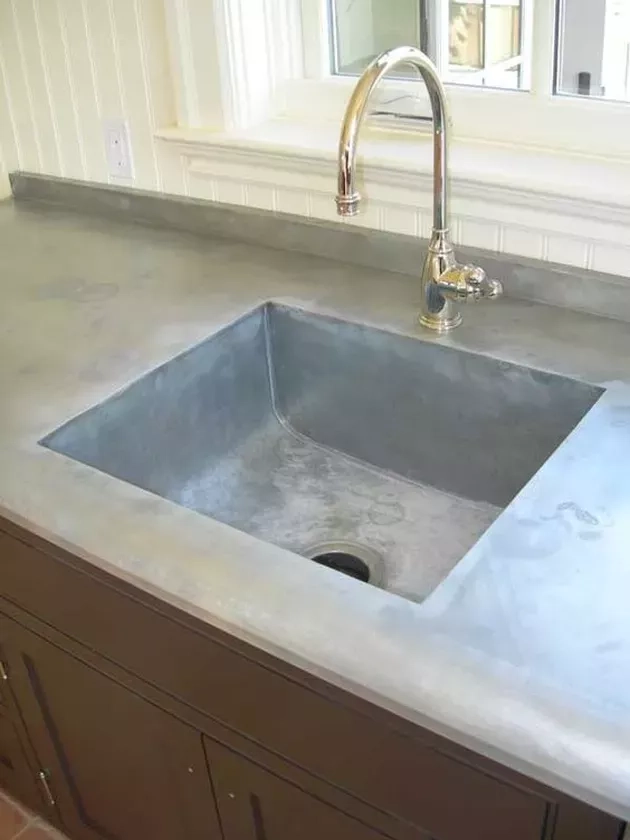
Let’s get real about kitchen life. You’re going to spill things. Lemon juice. Wine. Tomato sauce. Vinegar. These are acids. And zinc hates acid. If you leave a slice of lemon on your zinc counter overnight, you will wake up to a dark spot. A permanent one. Does this ruin the counter? No. It becomes part of the story. But you need to be okay with that.
Scratches are another thing. Zinc is a relatively soft metal. If you drag a cast-iron skillet across it, it will scratch. If you cut directly on it (please don’t, use a cutting board), it will gouge. But here’s the magic: many small scratches and dents can blend in over time as the patina develops around them. They soften. They become less noticeable. In fact, many homeowners find that these "imperfections" add to the charm. They prove the space is being used. It’s not a museum exhibit. It’s a kitchen.
Maintenance is simple, but specific. Don’t use harsh abrasive cleaners. They’ll strip the patina and expose fresh, shiny metal, which will then have to re-patinate, leaving you with a weird patchy look. Instead, use mild soap and water. Dry it off. That’s it. If you want to keep it looking consistent, some people apply a wax sealant occasionally. This doesn’t stop the patina entirely, but it slows it down and provides a bit more protection against acidic spills. It’s a choice. Do you want maximum protection and a slower change? Wax it. Do you want the full, raw evolution? Leave it bare.
The Emotional Connection: Why We Choose Imperfection
Why do we do this? Why choose a material that stains and scratches and changes color? In a world of engineered perfection, where we can buy countertops that look exactly the same in ten years as they did on day one, why choose zinc? I think it comes down to a desire for authenticity. We’re tired of fake. We’re tired of sterile. We want our homes to feel real.
A zinc island connects you to the rhythm of your daily life. You notice the seasons changing because the humidity affects the metal’s appearance. You notice how much you cook because the area around the stove darkens faster. It’s a tactile experience. Running your hand over a zinc surface feels different than running it over cold stone or warm wood. It’s cool, smooth, but with a subtle texture that invites touch. It feels substantial. Grounded.
There’s also a sense of stewardship. You’re not just buying a product; you’re caring for a material. You’re participating in its lifecycle. This creates a bond. People who own zinc counters often talk about them with a sort of affectionate resignation. "Oh, that spot? That was from Thanksgiving 2024 when the turkey dripped." It becomes a conversation piece. A memory keeper. In 2026, as we continue to seek sustainability and longevity in our design choices, zinc fits perfectly. It’s durable. It’s recyclable. And it gets better with age.
So, you’ve had your zinc island for a few years. What now? By now, the patina should be well-established. It’s likely a beautiful, even grey with darker accents in high-use areas. The initial anxiety about every little mark has probably faded, replaced by an appreciation for the surface’s character. But maintenance doesn’t stop. It just evolves.
Keep doing the basics. Clean with pH-neutral cleaners. Avoid bleach. Avoid ammonia. These can strip the protective carbonate layer and cause uneven discoloration. If you do get a stubborn stain or a scratch that bothers you, remember that zinc is forgiving. Light sanding with fine-grit steel wool can sometimes blend minor imperfections, allowing the patina to re-form over the area. It won’t look "new" again, but it can look "refreshed."
Also, consider the environment. If you live in a coastal area with salt air, your zinc might patinate faster and differently than someone in a dry, inland climate. That’s okay. It’s just adapting to its surroundings. The key is consistency in care. Don’t switch cleaners every month. Find a routine that works and stick to it. And if you’re ever unsure, test any new product in an inconspicuous area first. Better safe than sorry.
Ultimately, the long-term beauty of zinc lies in its resilience. It doesn’t crack like stone. It doesn’t delaminate like laminate. It just keeps being zinc. Adapting. Protecting itself. Looking cooler and more sophisticated with every passing year. It’s a low-drama material, provided you accept its quirks upfront. And in return, it gives you a surface that is uniquely yours. No two zinc islands are ever exactly alike. Yours is one of a kind.
Living with zinc isn’t about achieving perfection. It’s about embracing the process. It’s about letting go of the need for control and allowing your home to reflect the life you live within it. So, the next time you see a water spot or a tiny dent, don’t sigh. Smile. It’s just your kitchen island, growing up. And honestly? It’s looking pretty great.