Imagine the lights flicker. Then they go out. The hum of the refrigerator stops. For most homeowners, this is the moment panic sets in. You scramble for flashlights, worry about the food in the freezer, and wonder how long the outage will last. But for a growing number of people in 2026, this scenario is different. They don’t panic. They just walk to their garage, plug in a cable, and flip a switch. Suddenly, the lights come back on. The fridge starts humming again. The Wi-Fi reconnects.
The source of this power isn’t a noisy gas generator or a small, expensive box on the wall. It’s their car.
For years, we’ve been told that if we want energy independence, we need to buy a home battery. Products like the Tesla Powerwall have become status symbols of preparedness. They are sleek, efficient, and undeniably useful. But they have a glaring weakness: size. A typical home battery stores around 13 kilowatt-hours (kWh) of energy. That’s enough to keep the essentials running for a day or two, maybe. But compare that to the average electric vehicle (EV) sitting in the driveway. Most modern EVs hold between 60 and 110 kWh. That is four to eight times the capacity of a standard home battery.
This isn’t just about having more power. It’s about a fundamental shift in how we think about energy storage. Bidirectional charging is turning our cars into rolling power stations, making traditional stationary batteries look almost quaint by comparison. It’s a change that’s not just technical; it’s personal. It changes how we interact with our homes, our cars, and the grid. And honestly? It’s about time.
The Math Doesn’t Lie: Capacity Is King
Let’s get real for a second. When you buy a home battery, you are paying a premium for a very specific, limited function. You are buying a box that sits there, doing nothing, until the power goes out or until you decide to use stored solar energy at night. It’s a single-purpose tool. And while 13 kWh sounds like a lot, it disappears fast. Run your air conditioning during a summer heatwave? That battery might be empty in six hours. Keep the heat on during a winter storm? Same story.
Now look at your EV. Even an older model with a modest 60 kWh battery has nearly five times the storage of a Powerwall 3. A newer model with a 100 kWh pack? That’s almost eight times the capacity. Think about what that means in practical terms. If your home uses an average of 1 kWh per hour for essential loads (fridge, lights, modem, a few fans), a home battery gives you roughly 13 hours of backup. An EV gives you 60 to 100 hours. That’s not a difference in degree; it’s a difference in kind. One gets you through the night. The other gets you through the week.
This disparity is why bidirectional charging is such a game-changer. It unlocks this massive, underutilized resource. Most cars sit parked for 20 to 22 hours a day. For all that time, their enormous batteries are just… sitting there. Potential energy, wasted. Bidirectional tech taps into that reserve. It doesn’t require you to buy a new piece of hardware the size of a mini-fridge. You already own the storage. You just needed a way to access it.
And let’s talk cost. A high-end home battery system, installed, can easily run $15,000 to $20,000. A bidirectional charger? You’re looking at $2,000 to $4,000 for the hardware and install, assuming you already have the EV. The value proposition is staggering. You are leveraging an asset you already bought for transportation to solve your energy security problem. It’s efficient. It’s smart. And it makes the standalone battery market look a bit like selling single-use water bottles in a world with reusable filters.
Beyond the Hype: How V2H Actually Works
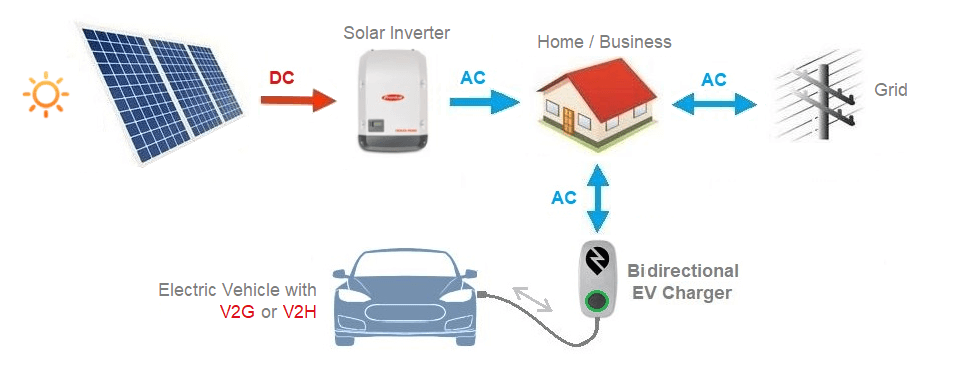
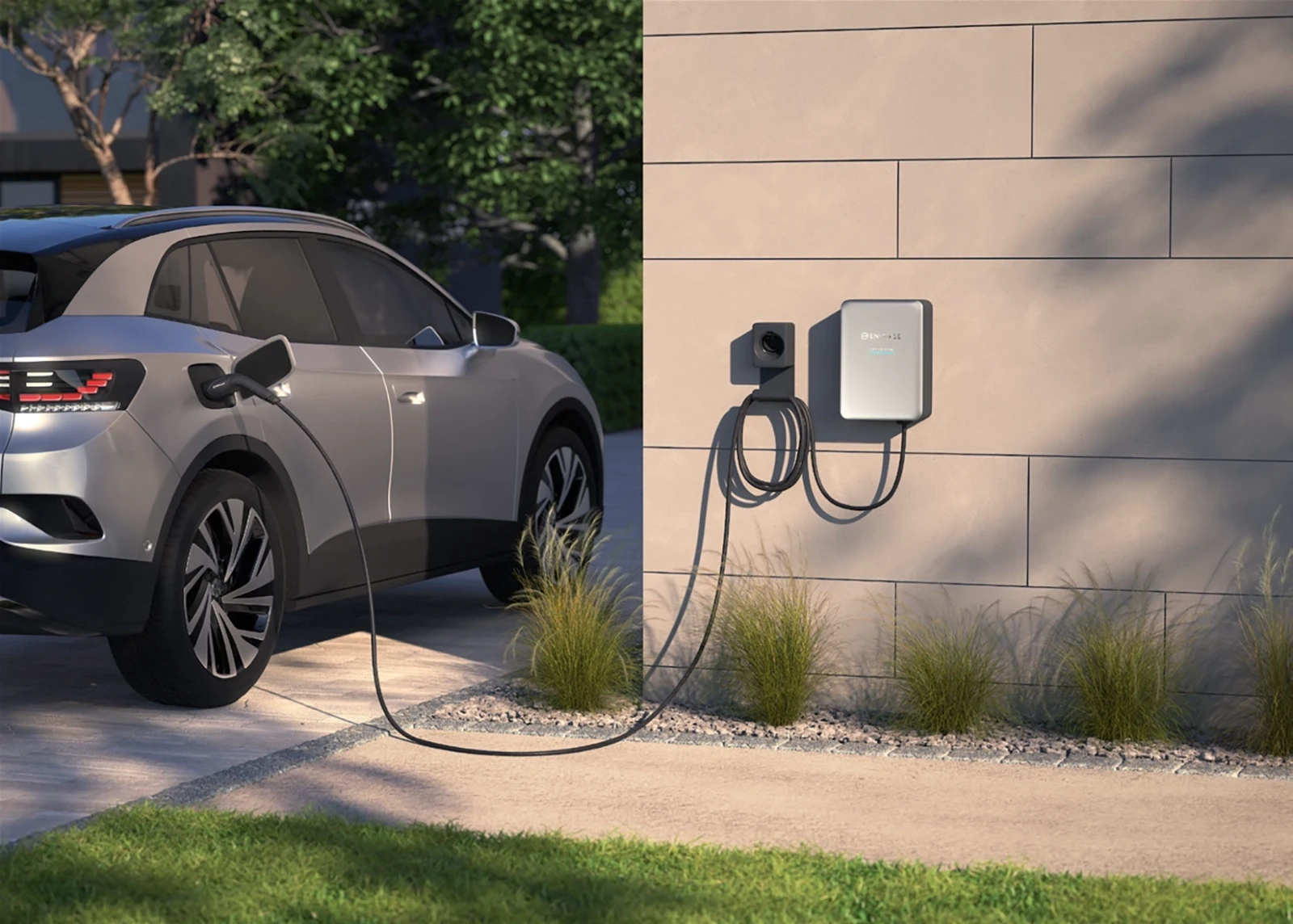
So, how does this magic happen? It’s not sorcery. It’s engineering. Traditional EV chargers are unidirectional. They take AC power from your home’s electrical panel, convert it to DC power, and push it into the car’s battery. That’s it. One way street. Bidirectional chargers, specifically those enabling Vehicle-to-Home (V2H) technology, break that rule. They can reverse the flow. They take DC power from the car’s battery, convert it back to AC, and feed it into your home’s electrical panel.
But it’s not as simple as plugging an extension cord from your car to your toaster. Safety is paramount. You can’t just backfeed power into your home without isolating it from the grid. If you did, you could electrocute utility workers trying to fix downed lines during a storm. That’s why V2H systems require a critical component: an automatic transfer switch or a smart electrical panel. This device detects when the grid goes down and instantly disconnects your home from the utility lines. Only then does it allow the car to start powering your house. It happens in milliseconds. You might not even notice the flicker.
In 2026, the technology has matured significantly. Early adopters had to deal with clunky setups and limited car compatibility. Today, major automakers like Ford, Hyundai, Kia, and yes, eventually Tesla, are building V2H capability directly into their vehicles. The chargers themselves are becoming smarter, too. They communicate with your home energy management system. You can set preferences. "Keep 20% battery for my morning commute." "Only discharge when the grid price is above 30 cents." "Prioritize solar charging during the day."
This integration is key. It’s not just about emergency backup. It’s about daily optimization. Imagine your solar panels generate excess power at noon. Instead of sending it to the grid for a low credit, your system directs it to charge your car. Then, in the evening, when solar production drops and grid prices spike, your car powers your home. You’re arbitraging energy costs automatically. The car becomes a dynamic part of your home’s energy ecosystem, not just a parasite on it.
The Elephant in the Room: Will It Kill My Battery?
If you’re an EV owner, your mind probably went to one place immediately: degradation. Batteries hate cycles. Charging and discharging wears them out. If I’m using my car to power my house every night, won’t I destroy the battery? Won’t I need a replacement pack in three years instead of ten? It’s a valid fear. After all, the battery is the most expensive component of the vehicle.
Here’s the good news: research suggests the impact is far smaller than you’d think. Studies cited by industry experts indicate that the additional wear from bidirectional charging is relatively minor. In fact, it’s often less than the natural variation in battery life caused by manufacturing differences alone. Think about it. Modern lithium-ion batteries are designed for thousands of cycles. A typical daily commute might use 10-20% of the battery. Adding a few more cycles for home use doesn’t push it off a cliff.
Moreover, smart software manages this process. V2H systems don’t just drain the battery to zero. They operate within a "safe zone," usually keeping the state of charge between 20% and 80%. This is the sweet spot for lithium-ion longevity. Extreme states of charge (very full or very empty) are what cause stress. By avoiding those extremes, the system minimizes degradation. Some manufacturers even offer warranties that specifically cover V2H usage, signaling their confidence in the technology’s safety.
Consider the alternative. If you buy a standalone home battery, that battery is also degrading. It’s cycling every day. It has a finite lifespan, usually rated for 10 years or a certain number of cycles. The difference is, you paid $15,000 for that degradation. With your EV, you’re spreading that wear over a much larger capacity pool. And if you’re mostly using V2H for emergency backup, the cycles are rare. The battery sits idle most of the time. The "wear" argument holds less water when you realize the battery is designed to handle far more stress than occasional home backup duties.
It’s also worth noting that battery technology itself is improving. Solid-state batteries and other next-gen chemistries are starting to trickle into the market in 2026. These promise higher durability and faster charging. The concern about degradation is becoming less of a barrier and more of a legacy worry. The tech is catching up to the ambition.
V2L vs. V2H vs. V2G: Know the Difference
Not all bidirectional charging is created equal. If you’re shopping for an EV or a charger, you’ll see acronyms thrown around: V2L, V2H, V2G. They sound similar, but they do very different things. Confusing them can lead to disappointment. Let’s break it down simply.
Vehicle-to-Load (V2L) is the entry level. It’s what you see on many Hyundai and Kia models today. V2L lets you plug appliances directly into your car. Want to power a coffee maker at a campsite? A laptop at a jobsite? A mini-fridge for a tailgate? V2L does that. It uses an adapter that plugs into the car’s charging port or sometimes an interior outlet. But here’s the catch: V2L cannot power your entire home. It’s limited to a few outlets. It’s great for convenience, but it won’t save you during a whole-house blackout. It’s a feature, not a solution.
Vehicle-to-Home (V2H) is the big kahuna for residential users. This is what we’ve been talking about. V2H integrates with your home’s electrical panel. It can power your entire house (or selected circuits) during an outage. It requires a special bidirectional charger and a transfer switch. It’s a whole-home solution. This is the tech that makes traditional home batteries look small. It’s the gold standard for energy independence right now.
Then there’s Vehicle-to-Grid (V2G). This is the futuristic one. V2G allows your car to send power back to the utility grid. Why would you do that? To help stabilize the grid during peak demand and get paid for it. Imagine your car selling electricity back to the utility when prices are high, then buying it back cheaply at night. It’s a win-win for you and the grid. However, V2G is still in its infancy in the U.S. Regulatory hurdles, utility resistance, and complex infrastructure mean it’s not widely available yet. While V2H is ready for prime time in 2026, V2G is still mostly pilot programs and promise. Don’t bet your home backup plan on V2G just yet. Stick with V2H for reliability.
Understanding these distinctions matters. If you buy a car with only V2L, you can’t upgrade to V2H later with just a charger. The car itself needs the hardware support. So, check the specs. Make sure the vehicle is V2H-capable if whole-home backup is your goal. Don’t assume all "bidirectional" cars are the same. They aren’t.
The Real-World Impact: Stories from the Driveway
Numbers are great, but stories stick. Let’s look at how this plays out in real life. Take Sarah, a nurse in Texas. In 2024, she bought a Ford F-150 Lightning primarily for work. It’s a truck, after all. But when Hurricane season hit in 2025, her neighborhood lost power for five days. Her neighbors with gas generators were fighting for fuel, dealing with noise, and worrying about carbon monoxide. Sarah? She plugged her truck into her home via her bidirectional charger.
She kept her fridge running, preserving hundreds of dollars worth of groceries. She charged her phones and laptops to stay connected with her hospital. She even ran a window AC unit during the hottest part of the day. Her truck started the week with 80% charge. After five days of powering her essential loads, it still had 40% left. Enough to drive to work if she needed to. "It wasn’t just convenient," she told me. "It was peace of mind. I didn’t feel vulnerable. I felt prepared."
Or consider Mark, a retiree in California with solar panels. Before he got his V2H-capable Hyundai Ioniq 5, he had a small home battery. It was okay, but it struggled to carry him through cloudy winter days. He’d often have to buy grid power in the evenings. Now, his car acts as a massive buffer. His solar charges the car during the day. At night, the car powers his home. He barely touches the grid. His electricity bill has dropped by nearly 60%. "I didn’t buy the car to save on electric bills," he said. "But it’s the best financial decision I’ve made in years. The car pays for itself, literally."
These aren’t edge cases. They are becoming the norm. As more people experience the resilience of V2H, the demand for standalone batteries is shifting. People are realizing they don’t need two expensive systems. They need one versatile one. The psychological shift is profound. The car is no longer just a liability that depreciates. It’s an asset that provides security and savings. It changes the relationship between owner and machine. You care for it differently when it’s keeping your lights on.
And it’s not just about outages. It’s about lifestyle. Camping with full power. Working remotely from a park with reliable internet and climate control. Hosting outdoor parties with powered kitchens. The utility extends far beyond emergency prep. It enhances daily life. That’s the hook. It’s not just insurance; it’s enhancement.
So, you’re convinced. Or at least, you’re curious. What’s the next step? If you’re in the market for an EV, prioritize V2H capability. It’s becoming a key differentiator. Ask the dealer specifically: "Is this vehicle V2H ready?" Don’t settle for vague answers. Check the manufacturer’s website. Look for the specs. In 2026, most major brands have at least one V2H-compatible model. Ford, GM, Hyundai, Kia, Nissan, and soon Tesla, are all in the game.
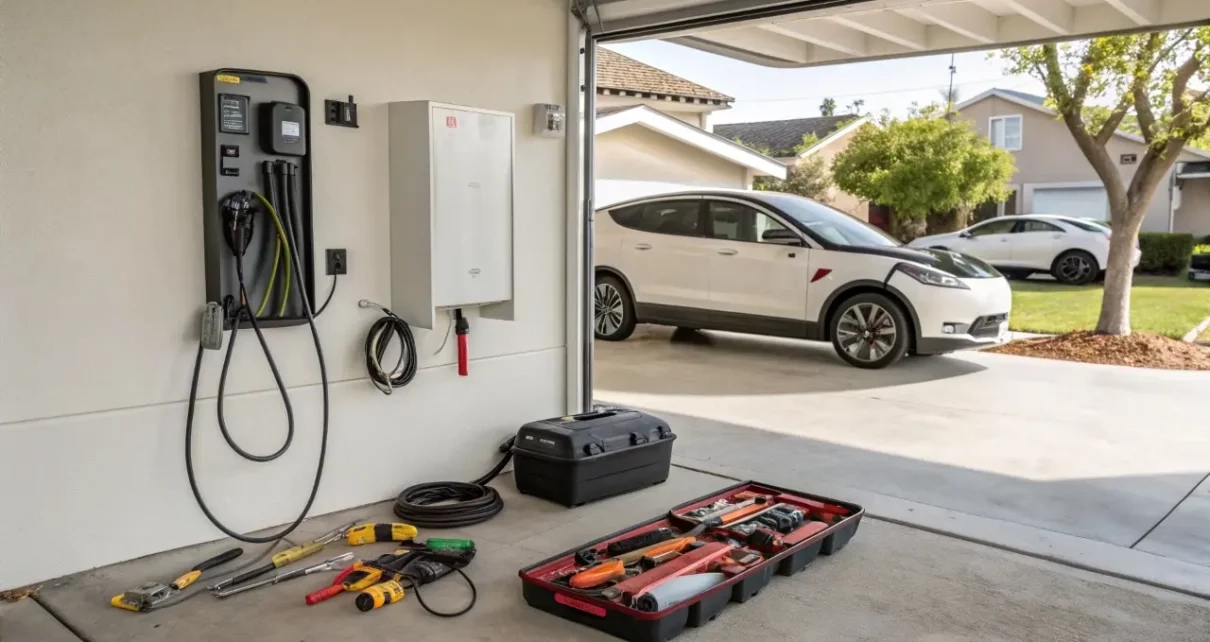
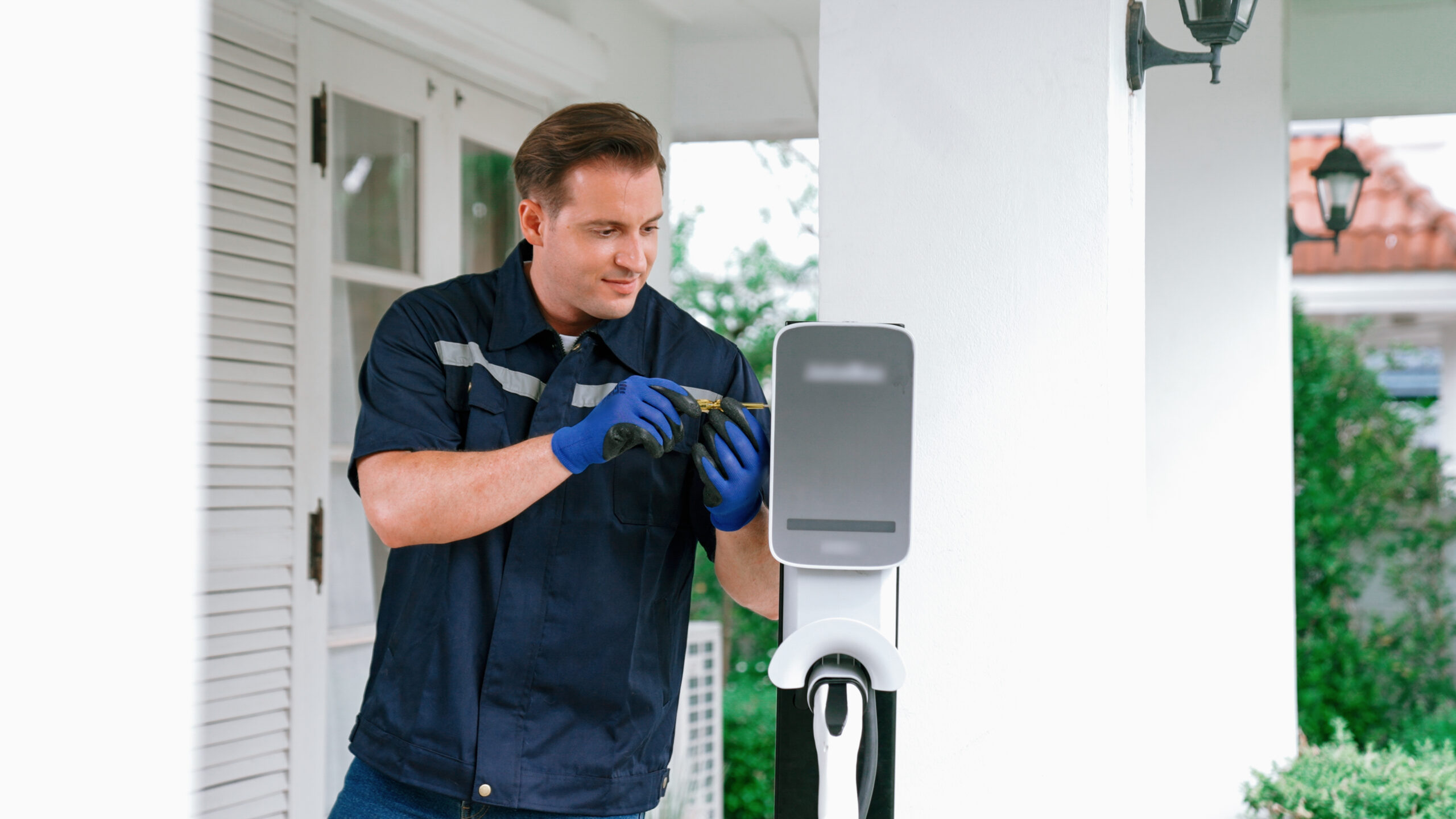
Next, assess your home’s electrical panel. Installing a bidirectional charger isn’t a DIY project. It requires a licensed electrician. You’ll likely need a sub-panel or a smart transfer switch to isolate your critical loads. Get quotes from multiple installers. Ask about their experience with V2H systems. Not all electricians are familiar with the tech yet, so find one who is. It’s worth paying a bit more for expertise.
Also, look into incentives. Federal tax credits and local rebates for EV chargers and energy storage systems can significantly offset the cost. In some states, utilities offer special rates for V2H participants. Do the math. Factor in the potential savings on your electricity bill and the avoided cost of a home battery. The ROI is often much faster than people expect.
Finally, think about your usage patterns. Do you need whole-home backup, or just essentials? If it’s just essentials, you can wire a smaller sub-panel, which saves money. Do you have solar? If so, V2H is a no-brainer. It maximizes your self-consumption. If you don’t have solar, V2H still offers value through time-of-use arbitrage and backup power. But solar + V2H is the killer combo. It’s the closest most homeowners can get to true energy independence today.
Don’t wait for perfection. The tech is good enough now. The cars are here. The chargers are available. The only thing holding you back is inertia. Break free from the idea that you need a separate battery for your home. Your car is already there. It’s powerful. It’s capable. And it’s waiting to help.
The transition to bidirectional charging isn’t just a technological upgrade. It’s a reimagining of what our vehicles can be. They are no longer just tools for movement. They are partners in our energy lives. They protect us, save us money, and give us freedom. Traditional home batteries had their moment. They paved the way. But the future is mobile. The future is bidirectional. And frankly, it’s much bigger.