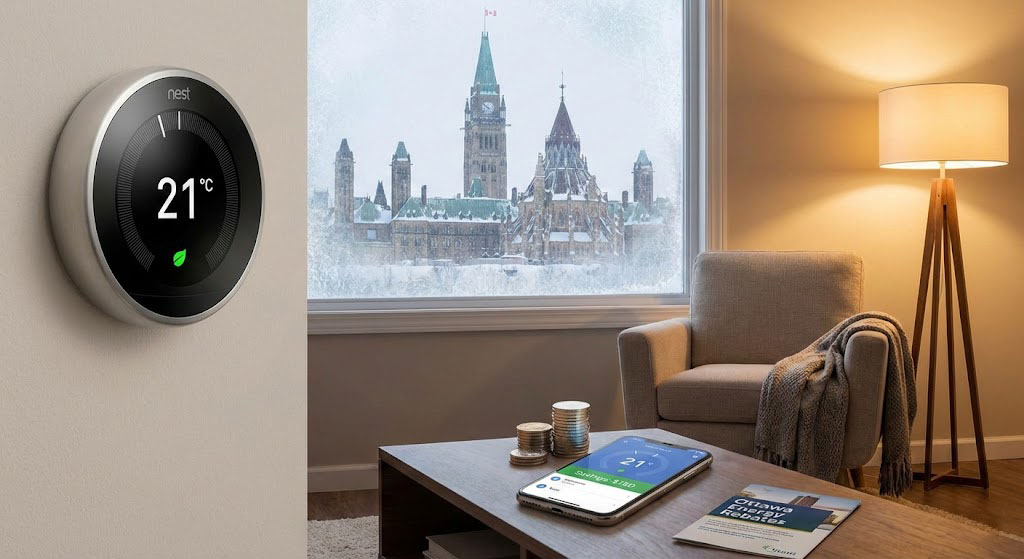
Let’s be honest for a second. You’ve probably seen the ads. They promise the moon. Install this sleek little device on your wall, and suddenly your energy bills drop by half. It sounds too good to be true, doesn’t it? Maybe you’re skeptical. Maybe you’ve got an old programmable thermostat that you’ve been meaning to replace for years, but you just haven’t gotten around to it. Or perhaps you’re renting and wondering if the hassle is worth it.
The marketing hype has always been loud. But in 2026, the noise has finally settled. We aren’t guessing anymore. We have hard numbers. Real data from thousands of homes across different climates. After digging through utility reports, EPA-verified stats, and case studies from actual homeowners, the picture is much clearer. It’s not magic. It’s math. And the results are surprisingly specific.
So, does it actually save you cash? Yes. But the amount? That depends entirely on who you are, where you live, and how lazy you are with your current settings. Let’s cut through the fluff and look at what the 2026 data really says about your wallet.
The Big Number: What Does the Average Homeowner Actually Save?
If you want a quick answer, here it is. The average homeowner in the US saved about $147 per year on energy costs after installing a smart thermostat. This figure comes from a robust analysis of 1,200 homes across 14 states. It’s not a guess from a manufacturer trying to sell you something. It’s real-world usage data.
But averages can be tricky. They smooth out the extremes. For some people, the savings were barely noticeable. For others, they were substantial. Independent studies and manufacturer data consistently show a range of $100 to $200 per year for the typical household. Google Nest, for instance, reports savings between $131 and $145 annually based on their own fleet data. These numbers align pretty closely with the broader market findings.
Why the variation? Well, it mostly comes down to baseline behavior. If you are already a person who meticulously programs your old thermostat—lowering the heat when you leave for work and raising it before you get home—a smart upgrade might only save you 1% to 3%. That’s because you’re already doing the heavy lifting. The smart thermostat just automates what you were already doing manually. But if you’re like most of us? If you tend to forget to adjust the dial or keep the house at a constant 72 degrees all day long? That’s where the big savings hide. The device catches the waste you didn’t even know was happening.
Who Saves the Most? Climate and Schedule Matter
Location is everything. It’s not just about the price of electricity or gas in your area, though that plays a part. It’s about how hard your HVAC system has to work. The data from 2026 shows that savings are significantly higher in colder climates. Why? Because there is more heating to optimize. In places with harsh winters, the difference between heating an empty house and a warm one adds up fast. Every degree you lower the temperature while you’re asleep or at work translates to tangible dollars.
Households with irregular schedules also see a bigger bang for their buck. Think about it. If you work nine-to-five, five days a week, your schedule is predictable. You can program a basic thermostat to handle that. But life is messy. Maybe you work from home on Tuesdays. Maybe you go out for dinner on Thursdays. Maybe you have kids with varying sports practices. A smart thermostat uses sensors and learning algorithms to detect when no one is home and adjusts accordingly. This automatic setback feature provides the most benefit for people whose lives don’t fit into a neat little box.
Conversely, if you live in a mild climate where you rarely use heating or cooling, the ROI takes much longer to materialize. In these zones, the energy load is lower, so the percentage savings might look good, but the actual dollar amount is smaller. It’s still saving energy, sure. But paying off a $250 device might take three or four years instead of one or two. Context is king here. You have to look at your specific weather patterns and daily routine to know where you fall on the spectrum.
The Upgrade Trap: What Are You Replacing?
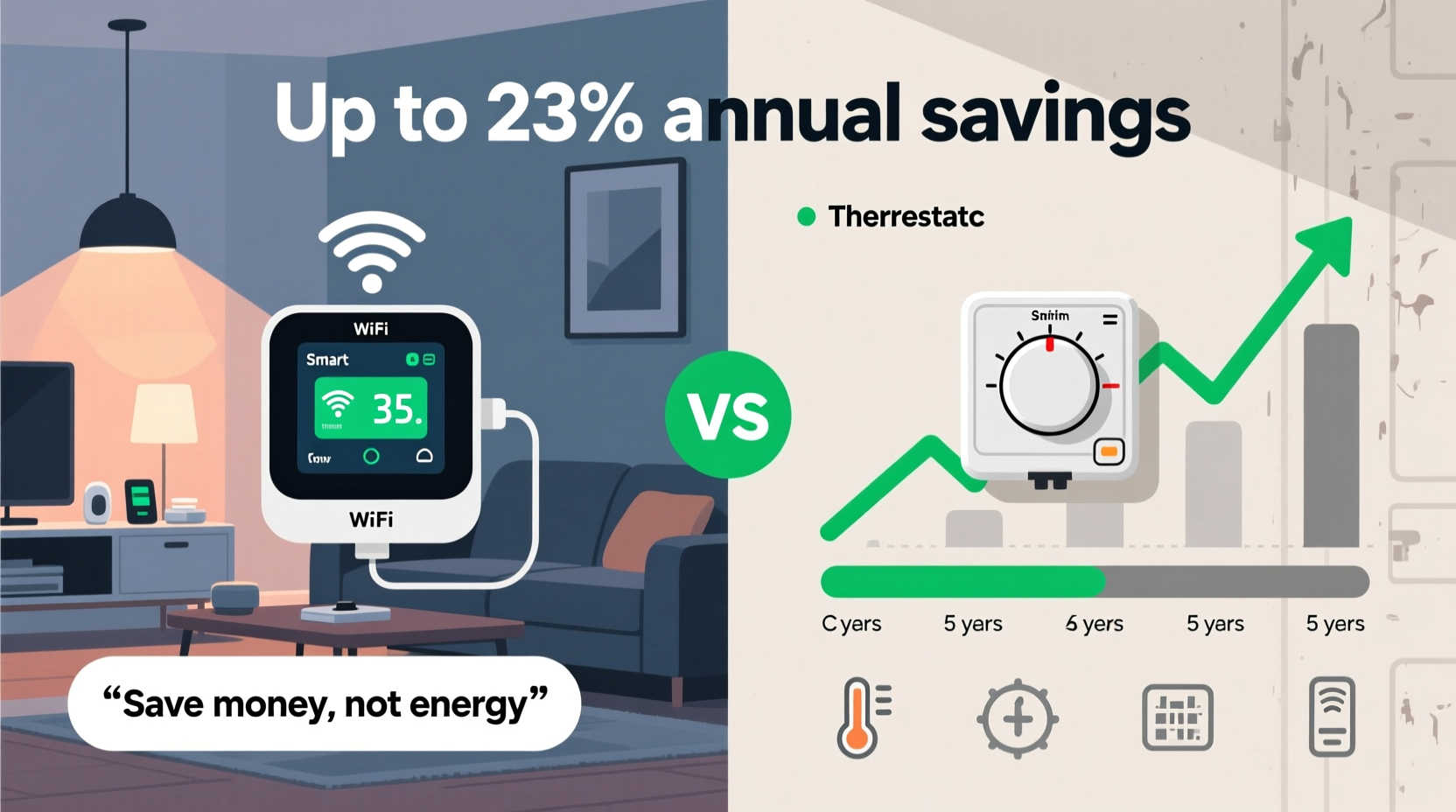
Here is a detail that often gets overlooked. The device you are replacing matters immensely. If you are upgrading from a manual, non-programmable thermostat—the kind with a simple dial or buttons that you have to physically touch every time you want a change—the savings are huge. You are moving from zero automation to full automation. The smart thermostat will likely save you 10% to 15% on your heating and cooling bills because it introduces structure where there was none.
However, if you are replacing an older programmable thermostat, the gap narrows. Many people bought programmable thermostats in the 2010s but never actually programmed them. They just used them as manual thermostats. If that’s you, you’re in the same boat as the manual dial users. You’ll see significant savings. But if you are one of the rare souls who actually used the scheduling features of your old unit effectively, the jump to smart technology offers diminishing returns. You might only see that 1% to 3% bump mentioned earlier.
It’s also worth noting the hidden benefits beyond direct bill reduction. Newer smart thermostats, like the Sensi Touch 2 or recent Ecobee models, often provide better insights into your HVAC system’s health. They can alert you to unusual run times or filter changes. While this doesn’t put cash directly back in your pocket each month, it can prevent costly repairs down the line. Extending the life of your furnace or air conditioner by ensuring it isn’t overworking is a form of savings, even if it’s harder to quantify on a monthly statement.
Brand Breakdown: Do Some Models Save More Than Others?
Not all smart thermostats are created equal. In 2026, the market is saturated with options ranging from budget-friendly basics to high-end hubs with air quality monitors. Does spending more get you more savings? Not necessarily. The core technology for energy saving—learning your schedule, detecting occupancy, and allowing remote control—is present in almost all major brands.
Google Nest and Ecobee remain the top contenders for pure energy optimization. Their algorithms are mature, having been refined over more than a decade of data collection. Nest’s Eco mode and Ecobee’s SmartSensor technology (which uses room sensors to balance temperatures) are particularly effective at reducing waste in larger homes or homes with hot and cold spots. For these premium models, costing between $250 and $350, the payback period is typically around 18 to 24 months for the average user.
On the other end of the spectrum, the Amazon Smart Thermostat has carved out a niche as the best budget option. At around $80, it’s hard to beat. It lacks some of the fancy learning features of its pricier cousins, but it integrates well with Alexa and allows for basic scheduling and remote access. Because the upfront cost is so low, the ROI is incredibly fast. You might break even in under six months if your energy bills are high. For renters or those on a tight budget, this device proves that you don’t need to spend a fortune to start saving. The key isn’t the brand name; it’s whether you actually use the features. A $300 thermostat left in manual mode saves nothing. An $80 thermostat set on a proper schedule saves plenty.
Hidden Costs and Rebates: The Real ROI Calculation
When calculating return on investment, you can’t just look at the sticker price of the device. You have to consider installation and potential rebates. If you are handy, installing a smart thermostat is often a DIY job that takes thirty minutes. There are countless YouTube tutorials, and most modern units come with clear, color-coded wiring guides. In this case, your cost is just the device itself.
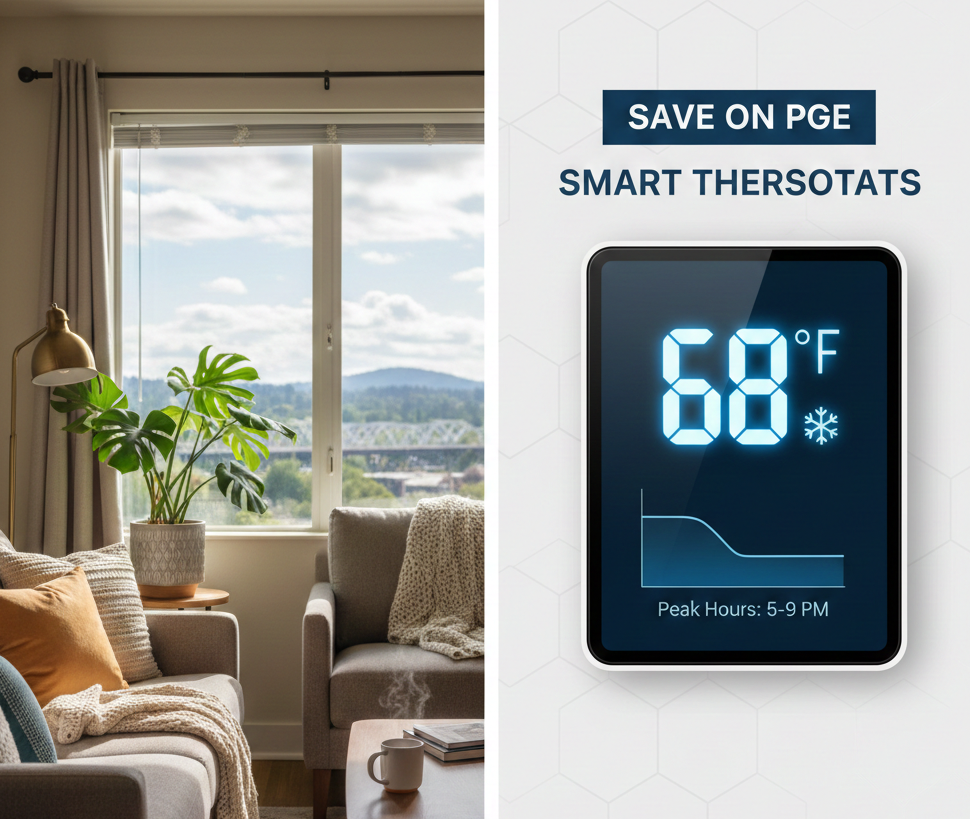
But if you need to hire an HVAC professional, add $100 to $200 to the tab. This changes the math. Suddenly, a $150 annual saving takes two years to pay off the device plus labor, rather than one. It’s still a good investment, but the timeline stretches. This is why checking for utility rebates is crucial. In 2026, many energy providers and local governments still offer incentives for upgrading to ENERGY STAR-certified smart thermostats. These rebates can range from $50 to $100 or more, effectively slashing the upfront cost. Some utilities even offer ongoing bill credits for participating in demand-response programs, where the utility company can slightly adjust your thermostat during peak usage times in exchange for a monthly discount.
Heat pump owners need to pay special attention. Heat pumps operate differently than traditional furnaces. They are efficient but sensitive to large temperature swings. Older smart thermostat algorithms sometimes struggled with this, causing the auxiliary heat strips to kick in unnecessarily, which is expensive. However, 2026 models have improved significantly in this regard. Look for thermostats specifically certified for heat pump compatibility. Using a generic model without proper configuration could actually increase your bills rather than lower them. Always check the compatibility list before buying.
Buying the device is only half the battle. To get those $147+ annual savings, you have to set it up right. First, take advantage of the geofencing feature. This uses your phone’s location to detect when you leave home and automatically adjusts the temperature. It’s far more reliable than trying to predict your schedule manually. Make sure everyone in the household has the app installed and permissions granted, or it won’t work properly.
Second, use room sensors if your system supports them. In a two-story home, the upstairs is often hotter than the downstairs. If your thermostat is downstairs, it might keep running the AC long after the upstairs is comfortable, or vice versa. Placing sensors in key living areas ensures the system balances the whole house, preventing over-cooling or over-heating unused spaces. This alone can boost efficiency by several percentage points.
Finally, review your energy reports. Most smart thermostat apps provide weekly or monthly summaries of your usage. Look at them. Did you save money last month? If not, why? Maybe the schedule is too aggressive. Maybe the geofencing radius is too small. Tweak the settings. Treat the thermostat like a tool, not a set-it-and-forget-it appliance. Engaging with the data helps you refine your habits. And remember, small adjustments matter. Lowering your heat by just one degree in the winter can save up to 3% on your heating bill. Over a season, that adds up. It’s not about being uncomfortable; it’s about being smart.
So, is it worth it? For most people, yes. The data from 2026 is clear. Smart thermostats save money, reduce energy waste, and offer convenience. But they aren’t a magic wand. They require a bit of setup and understanding. If you approach it with realistic expectations—knowing that your savings depend on your climate, your current habits, and your willingness to use the tech—you’ll find it’s one of the easiest upgrades you can make for your home. It’s a small step toward a more efficient, comfortable, and cost-effective living space. And in today’s world, who doesn’t want that?