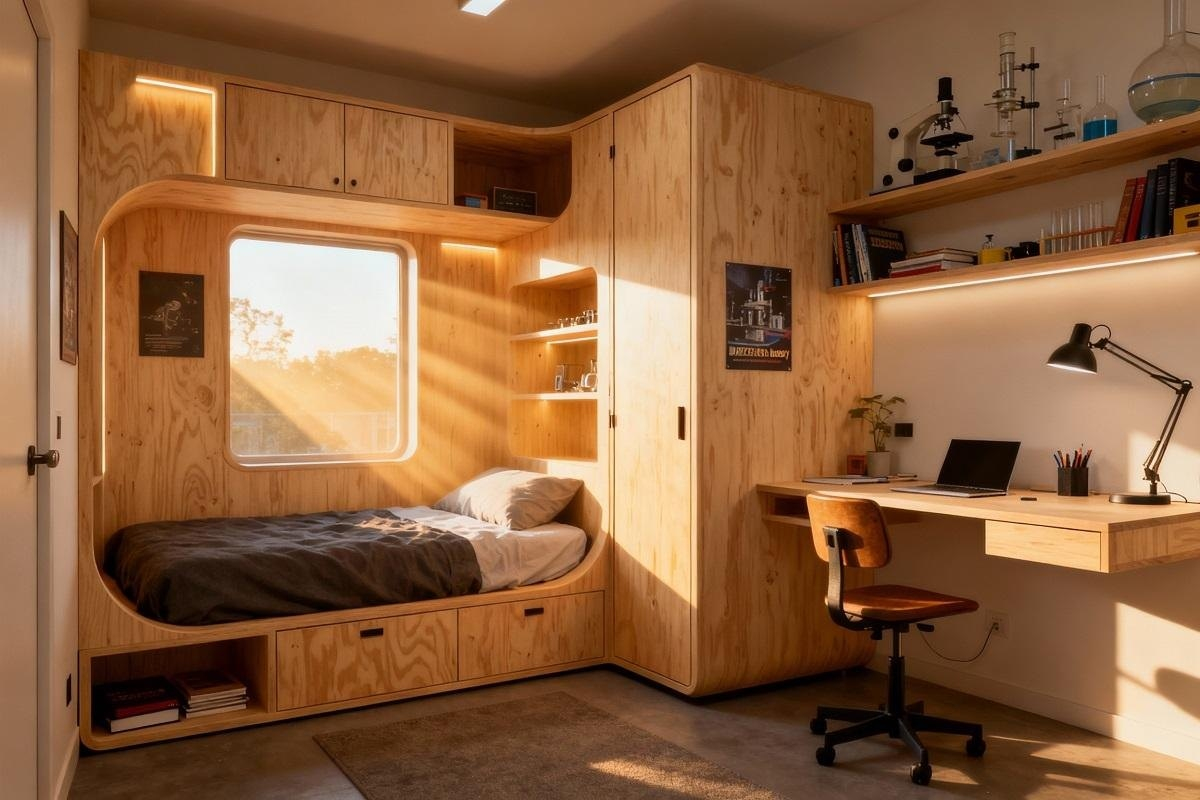
You walk past your teenager’s door. It’s shut tight. Again. Maybe there’s a sliver of blueish light leaking from underneath, or maybe it’s pitch black at 4 PM on a Tuesday. You knock. No answer. Or maybe a muffled "go away." It’s easy to take this personally. It’s easy to think they’re just being difficult, lazy, or antisocial. But what if the room itself is working against them? What if the very walls and bulbs surrounding them are quietly hacking their brain chemistry, making it harder to relax, harder to focus, and way easier to feel anxious?
We spend so much time worrying about what teens are doing on their phones or who they’re hanging out with that we forget where they’re actually living. Their bedroom isn’t just a storage space for clothes and homework. It’s their sanctuary, their office, their social hub, and their recovery zone all rolled into one small box. And in 2026, with screens brighter than ever and schedules more packed than ever, the environment inside that box matters more than we realize. It’s not just about aesthetics. It’s about biology.
Let’s be real for a second. Most advice on teen rooms is pretty surface level. Pick a trendy color. Buy some cool LED strips. Make sure there’s enough desk space. But recent insights from psychology and neuroscience are showing us something deeper. The specific hue of the paint and the temperature of the light bulbs are acting like invisible dials on your child’s emotional state. They can push a teen toward depression or pull them out of it. They can wreck sleep or fix it. And the scary part? Most parents—and most teens—have no idea they’re playing with these dials blindly.
The Biology of Brightness: It’s Not Just About Seeing
Light isn’t just something that helps you find your socks in the dark. It’s a primary signal for your brain. When light hits the eyes, it doesn’t just go to the visual cortex. It travels straight to the hypothalamus, the part of the brain that controls hormones, mood, and sleep cycles. This is why lighting is one of the most underappreciated levers in mental health. As noted by experts at Neurolaunch, lighting actively reshapes brain chemistry. It suppresses or boosts critical hormones like melatonin and cortisol.
Think about it. If your teen is studying under a harsh, bright white light at 9 PM, their brain thinks it’s noon. It stops producing melatonin, the sleep hormone. The result? They lie in bed awake, scrolling through their phone, feeling wired but exhausted. This isn’t just bad habit; it’s a biological mismatch. The wrong light at the wrong time derails sleep, tanks cognition, and compounds anxiety. It’s a vicious cycle. They can’t sleep because of the light, so they’re tired the next day, so they struggle to focus, so they get stressed, so they stay up later.
But it goes both ways. Research highlighted by Psychology Today shows that lighting brightness, color temperature, timing, and rhythm can all improve mood. Imagine if that same study session happened under a softer, warmer light that mimics sunset. The brain gets the signal to wind down. Cortisol levels drop. The teen feels calmer. They might still get their work done, but without the jagged edge of stress. It’s a small change with a massive ripple effect. We often treat light as a utility, like water or electricity. But it’s more like food. You wouldn’t feed your kid junk food all day and expect them to feel great. Why do we feed their eyes junk light?
Color Temperature: The Kelvin Scale Secret
Here’s where it gets technical, but stick with me. You’ve probably seen numbers on light bulb packages like 2700K or 5000K. That’s the color temperature, measured in Kelvins. And it matters a lot. According to Emberela, cool lighting (5000K-6500K) supports focus and energy. It’s blue-heavy. It mimics midday sun. This is great for waking up or crushing a math test. But warm tones (2700K-3000K) promote calm and relaxation. They’re yellow/orange-heavy, like candlelight or a campfire.
The problem? Most teen rooms are stuck on one setting. Usually, it’s that harsh, cool white overhead light that came with the house. It’s efficient, sure. But it’s emotionally flatlining. If a teen spends all their evening hours under 5000K light, their body never gets the cue to relax. They remain in a state of low-grade alertness. This is exhausting. It’s like keeping your foot on the gas pedal while parked.
So, what’s the fix? Layering. You don’t need to rewire the house. You just need options. A desk lamp with a cooler temperature for homework time. A floor lamp or string lights with a warm temperature for chilling out or reading. Smart bulbs are huge here in 2026. They can shift automatically. Imagine lights that are bright and crisp at 4 PM when they get home from school, helping them shake off the day, and then slowly turning amber and dim by 8 PM to prep for sleep. It’s balancing study time and rest, perfectly timed to their circadian rhythm. It’s not magic. It’s just respecting how human bodies work.
Paint Psychology: Walls That Talk
Now let’s talk about the walls. Color psychology isn’t new, but its application in teen spaces is often misunderstood. We tend to think of color as just "vibes." Blue is calm, red is angry, yellow is happy. It’s a bit more nuanced than that. Wellbeing Magazine points out that colors affect how you feel, focus, and function. But the impact depends heavily on the shade, the saturation, and how much of it is in the room.
Take blue, for example. It’s the most popular choice for teen boys, often recommended for sleep. But a dark, saturated navy can feel oppressive if the room is small or lacks natural light. It can lead to feelings of isolation or sadness. A lighter, airy sky blue, on the other hand, can lower blood pressure and heart rate. It creates a sense of space. Then there’s green. It’s the easiest color for the eye to process. It’s restful. It reduces anxiety. If your teen is prone to stress or overwhelm, a sage or olive accent wall might do more good than any meditation app.
But beware of the trends. Neon accents, bold geometric patterns, or entire rooms painted in high-energy colors like bright orange or electric yellow can be overstimulating. These colors raise energy levels. That’s great for a gym or a playroom. Terrible for a bedroom where you need to decompress. As RoomEnhance notes, different colors create specific emotional responses. The key is balance. You don’t want a sensory deprivation tank, but you also don’t want a disco ball. The goal is a backdrop that supports the teen’s current emotional needs, not one that fights them.
The Interaction Effect: When Light Meets Color
Here’s the thing most people miss: light and color don’t work in isolation. They dance together. A well-designed lighting scheme can transform a room’s color and mood, as Improveworkspace highlights. The same gray paint can look cozy and sophisticated under warm, dim light. Under harsh, cool fluorescent light? It looks institutional. Cold. Depressing.
This interaction is crucial for teens because their tastes change fast. One year they want everything black and moody. The next, they want pastel dreams. If you lock in a paint color without considering the lighting, you might end up with a room that feels "off" no matter what they do. For instance, a deep purple wall might look regal and creative under a warm spotlight. But under general overhead lighting, it can suck the energy out of the room, making it feel cavernous and lonely.
Conversely, lighting can save a bad color choice. If your teen insists on painting their room a bright, chaotic yellow (and you’ve already given in), you can mitigate the anxiety-inducing effects by using softer, indirect lighting. Bouncing light off the ceiling or using shades that diffuse the glow can soften the intensity of the color. It’s about creating harmony. The light should reveal the best version of the color, not expose its flaws. This is why interior designers always test paint swatches under the actual lights that will be used in the room. It’s a simple step that prevents major regrets.
Functional Zones: One Room, Many Moods
Teen bedrooms are multitaskers. They sleep there. They study there. They game there. They video chat with friends there. Each of these activities requires a different mental state. And therefore, a different lighting and color environment. Coohom emphasizes that teen room decor should balance self-expression and functional zones. Prioritizing furniture flexibility is key, but lighting flexibility is just as important.
Think about the "study zone." This area needs focus. Cool, brighter light (around 4000K-5000K) is ideal here. It keeps the brain alert. Pair this with neutral or slightly cool wall colors like soft gray or pale blue to minimize distraction. Now think about the "chill zone"—maybe a beanbag corner or the bed itself. This area needs warmth. Dimmable, warm light (2700K) is perfect. Wall colors here can be richer or more personal, like a favorite band poster backdrop or a warm terracotta accent.
The mistake many families make is having one big switch on the wall that turns on every light in the room at full blast. This creates a flat, one-size-fits-all environment that fits none of the needs well. Instead, encourage task lighting. Desk lamps. Clip-on reading lights. LED strips behind the bed headboard. Give your teen control over their immediate environment. When they can adjust the light to match their activity, they feel more in control of their mood. It’s a subtle form of empowerment. And for a teenager, feeling in control is a rare and precious gift.
Personalization and Control: The Mental Health Link
Finally, let’s talk about agency. Teens are in a stage of life where they’re trying to figure out who they are. Their room is the one place where they have total control. ResearchGate notes that there hasn’t been a ton of research specifically on teens, but what exists suggests that personalization increases engagement and happiness. When a teen chooses their own colors and lighting setup, they’re investing in their space. They’re making it theirs.
This isn’t just about decoration. It’s about identity. A room that reflects their personality—whether that’s goth, preppy, minimalist, or chaotic maximalist—provides a sense of safety and belonging. But here’s the catch: they need guidance. Most teens don’t know about color temperature or the psychological impact of saturated reds. They just know what looks cool on TikTok. This is where you come in. Not as a dictator, but as a consultant.
Offer boundaries, but within those boundaries, let them lead. "You can pick any color for the accent wall, but let’s keep the main walls neutral so the room doesn’t feel too small." Or, "You can have those neon lights, but let’s put them on a dimmer switch so you can turn them off when you need to sleep." By involving them in the science—explaining why certain choices help them feel better—you’re teaching them lifelong skills. You’re showing them that their environment affects their mind. And that knowledge? That’s powerful. It helps them advocate for their own well-being, long after they’ve left home.
So, where does this leave us? It’s easy to feel overwhelmed. There’s so much information. So many choices. But remember, you don’t have to overhaul everything overnight. Start small. Swap out one bulb. Add a dimmer switch. Paint one wall. Watch how your teen responds. Do they seem calmer? Do they sleep better? Do they complain less about headaches or eye strain? These are the metrics that matter.
The goal isn’t perfection. It’s awareness. It’s recognizing that the room is a tool. It can be a source of stress or a source of support. In 2026, with all the pressures teens face, we need every advantage we can get. Lighting and color are free, non-invasive, and highly effective tools for boosting mental health. They’re quiet helpers. They don’t nag. They don’t judge. They just set the stage for your teen to thrive.
Next time you walk past that closed door, don’t just see a barrier. See an opportunity. Think about what’s happening inside. Is the light helping or hurting? Is the color soothing or stimulating? You might not be able to fix all their problems. You can’t control their school stress or their social drama. But you can help make their room a place where they can recover from it. And sometimes, that’s enough. It’s more than you think. It’s everything.