You know that feeling when you’re sitting on your patio, sipping coffee, and the birds start singing? It’s perfect. Peaceful. Now imagine adding a soft jazz track or your favorite podcast to that moment, but without seeing a single black box or wire ruining the view. Sounds like magic, right? But it’s not. It’s just smart design.
For years, we’ve treated outdoor audio like an afterthought. We’d slap a speaker on a fence post or leave a subwoofer hiding behind a potted plant, hoping no one noticed. But in 2026, the approach has shifted. People don’t just want sound; they want an experience that feels organic. They want the music to feel like it’s coming from the air itself, not from a piece of plastic. The secret isn’t about buying the most expensive gear. It’s about thinking like a gardener first, and an audiophile second.
Let’s be honest. Most of us hate the look of tech in our sanctuaries. We spend hours choosing the right shade of green for our hydrangeas or picking out stone pavers that complement the house. Then, boom—there’s a giant speaker staring back at you. It breaks the spell. But what if I told you that the best outdoor audio systems are the ones you can’t see? Not because they’re small, but because they’re hidden in plain sight. This guide will walk you through exactly how to achieve that seamless blend, turning your yard into a sonic oasis without sacrificing an inch of aesthetic beauty.
The Psychology of Hidden Sound
Why do we care so much about hiding speakers? It’s not just about being tidy. There’s a psychological component to how we perceive sound when we can’t see the source. When a speaker is visible, our brains categorize it as "technology." We become critical listeners. We notice the bass is too loud or the treble is sharp. But when the source is invisible, our brains process the sound as part of the environment. It becomes ambient. Natural.
Think about walking through a forest. You hear leaves rustling, water flowing, maybe a distant bird call. You don’t look around for the "speaker" making those noises. You just accept them as part of the scene. That’s the goal here. By removing the visual cue of the speaker, you lower the listener’s defensive barrier. The music feels less like a performance and more like a mood. It’s subtle. Powerful.
In recent surveys from early 2026, homeowners reported higher satisfaction with their outdoor living spaces when technology was "biophilically integrated." That’s a fancy way of saying tech that mimics or hides within nature. When audio is invisible, people tend to leave it on longer. They use it for background ambiance during dinner parties instead of blasting it for a rave. It changes how you use your space. It encourages relaxation. And isn’t that why we built the garden in the first place? To escape the noise of the city, not bring more of it with us in a visible box.
Choosing the Right Camouflage Strategy
So, how do you actually hide them? You have options. And no, it’s not just about digging a hole. The first step is assessing your landscape. Do you have dense shrubbery? A rock garden? A wooden deck? Each element offers a different hiding spot. The key is matching the speaker’s form factor to your existing hardscape or softscape.
Rock speakers are the classic choice for a reason. Modern versions in 2026 are incredibly realistic. They aren’t just gray lumps anymore. Manufacturers now use 3D scanning to replicate specific types of limestone, granite, or even moss-covered stones. You can place these strategically among your real rocks. The trick is variation. Don’t buy two identical rock speakers and place them symmetrically. That looks fake. Buy different sizes and shapes. Mix them with your actual landscaping rocks. If you have a river bed feature, tuck a flat, slate-like speaker among the stones. It disappears.
Then there’s the foliage method. This works best with directional speakers that can be aimed. You can mount slim-profile speakers on tree trunks or sturdy posts, then use climbing vines or dense leafy plants to partially obscure them. The sound passes through the leaves, which actually helps soften the high frequencies, making the audio sound warmer. Just make sure you don’t cover the driver completely, or you’ll muffle the sound. It’s a balance. You want the plant to act as a grille, not a blanket.
Technology That Disappears
Hardware has come a long way. In the past, "outdoor rated" meant a bulky plastic box that could survive rain. Today, it means sleek, weather-resistant designs that can be painted, buried, or mounted invisibly. Let’s talk about the three main types you should consider for a truly invisible setup.
First, in-ground subwoofers. These are game-changers. Bass is omnidirectional, meaning it doesn’t need to point at you. You can bury a subwoofer in a planter bed or under a patch of grass (with a proper vented cover). Because low frequencies pass through soil and wood easily, you get that deep, rich thump without seeing a huge box. It’s physical. You feel the music in your chest while looking at a flower bed. It’s disorienting in the best way possible.
Second, architectural speakers. These are designed to blend into structures. If you have a pergola, eaves, or a fence, you can install flush-mount speakers that look like light fixtures or vent covers. Some new models in 2026 even mimic the texture of wood grain or stucco. You can paint them to match your trim exactly. From ten feet away, they’re invisible. From two feet away, they look like part of the building. This is ideal for patios where you want clear, direct sound for conversation or dining, but don’t want the visual clutter.
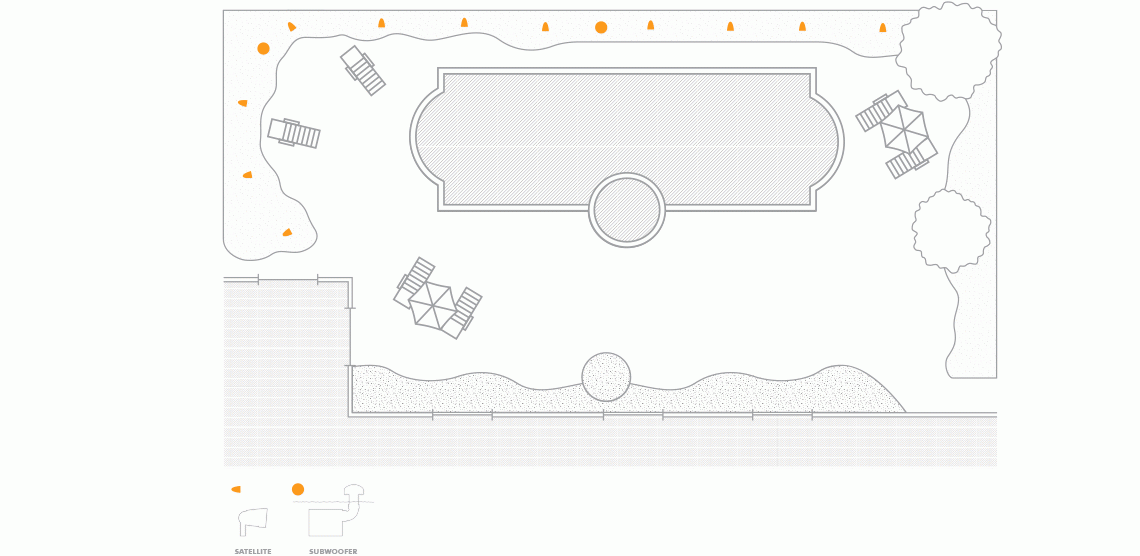
Third, distributed audio systems. Instead of two big speakers, you use many small ones. Think of it like lighting. You wouldn’t light a whole garden with one floodlight. You’d use path lights, uplights, and string lights. Same with audio. Small, satellite speakers hidden in various spots create a uniform sound field. No single source dominates. The volume can be lower overall because the sound is everywhere. This reduces the need for any single speaker to be powerful enough to be noticeable.
The Art of Placement and Zoning
Hiding the speaker is only half the battle. Where you put it determines how good it sounds. Poor placement can make even the most expensive invisible speaker sound terrible. The goal is even coverage. You don’t want hot spots where the music is loud and dead zones where you can’t hear anything.
Start by mapping your "listening zones." Where do you sit? The dining table? The fire pit? The lounge chairs? Draw imaginary circles around these areas. Your speakers should aim toward these zones, but from the edges. Avoid pointing speakers directly at each other, which causes phase cancellation (a technical term for sound waves killing each other out). Instead, angle them inward toward the listening area.
Height matters too. Human ears are about five feet off the ground when standing, and three to four feet when sitting. Try to keep your tweeters (the part that makes high sounds) near ear level. If you’re using rock speakers on the ground, the sound might be too muddy. Consider raising them slightly on a small bed of gravel or mounting them on low stakes hidden by plants. If you’re using architectural speakers, mount them high enough to clear heads, but angle them down.
Don’t forget about reflection. Hard surfaces like stone walls, glass doors, and concrete patios bounce sound. This can be good or bad. A stone wall behind a speaker can help project sound forward, acting like a natural amplifier. But too many hard surfaces can cause echoes. If your garden is full of hardscape, you might need to add soft elements like outdoor rugs, cushions, or dense planting to absorb excess reverberation. It’s all about balancing the acoustics of the outside world.
Wiring Without the Mess
Nothing ruins the illusion of invisible audio faster than a messy trail of wires. In 2026, wireless technology is great, but for permanent outdoor installations, wired systems are still more reliable and offer better sound quality. The challenge is hiding those wires.
If you’re building new or renovating, run conduit underground. It’s the gold standard. You dig a trench, lay PVC pipe, and pull your speaker wire through it. This protects the wire from shovels, rodents, and moisture. Plan your route carefully. Run wires along the edge of planting beds or under mulch paths. Never run wire across the middle of a lawn unless you have to.
For existing landscapes, you can get creative. Use existing irrigation lines as a guide. Often, you can tuck speaker wire alongside drip lines under the mulch. Just make sure to use direct-burial rated wire, which has a thicker jacket to resist moisture and decay. Clip it securely so it doesn’t shift when you’re gardening.
Another trick is to use hardscape gaps. If you have a stone patio, you can sometimes fish wire through the joints between stones, especially if they’re set in sand. Seal the entry point with a color-matched caulk to keep bugs out. For decks, run wires under the boards before you install them, or use the hollow space beneath the deck railing if it’s accessible. The goal is to make the wire path logical and protected. If you ever need to replace a speaker, you shouldn’t have to dig up your entire garden to do it.
Maintenance and Seasonal Care
Outdoor audio isn’t install-and-forget. Weather happens. Seasons change. Your garden grows. To keep your invisible system sounding great and looking hidden, you need a maintenance routine. It doesn’t have to be hard. Just consistent.
Spring is your best time for checks. After winter, inspect your rock speakers for moss buildup or dirt clogging the grilles. A soft brush and some water usually do the trick. Check your in-ground subwoofer vents to make sure leaves or debris haven’t blocked them. Blocked vents can damage the speaker over time. Look for any exposed wire that might have been uncovered by frost heave or animal digging. Bury it back down or add more mulch.
Summer brings heat and storms. Ensure your connections are tight. Humidity can cause corrosion on terminals if they aren’t sealed properly. Use dielectric grease on all wire connections to keep moisture out. If you have climbers growing over your speakers, trim them back slightly if they’re getting too thick. You want airflow and sound passage, not a solid wall of ivy.
Fall is about preparation. Clear fallen leaves from around your speakers. Wet leaves can stick to grilles and dampen sound. If you live in an area with harsh winters, consider covering in-ground subs with a breathable cover or ensuring the drainage around them is good so they don’t sit in frozen water. Most modern outdoor speakers are built to withstand freezing temps, but ice accumulation on the cone can cause damage if the system is played while frozen. Let things thaw before turning them on.
At the end of the day, this isn’t really about speakers. It’s about how you feel in your space. When you get the audio right—when it’s invisible, balanced, and warm—your garden transforms. It becomes a place where you can truly disconnect. The boundary between inside and outside blurs. The music doesn’t interrupt nature; it enhances it.
We’ve moved past the era of bulky boomboxes on the patio. The future of outdoor living is seamless. It’s about intentionality. Choosing the right rock, placing the right plant, running the right wire. It takes a bit of thought upfront, but the payoff is huge. Imagine hosting a dinner party where guests ask, "Where is the music coming from?" and you just smile. That’s the win.
So, start small. Maybe hide one speaker in a planter. See how it feels. Listen to how the sound interacts with your space. Adjust. Tweak. Grow into it. Your garden is a living thing, and your audio system should be too. It should evolve with your plants, your seasons, and your life. Keep it simple. Keep it hidden. And let the sound do the talking.