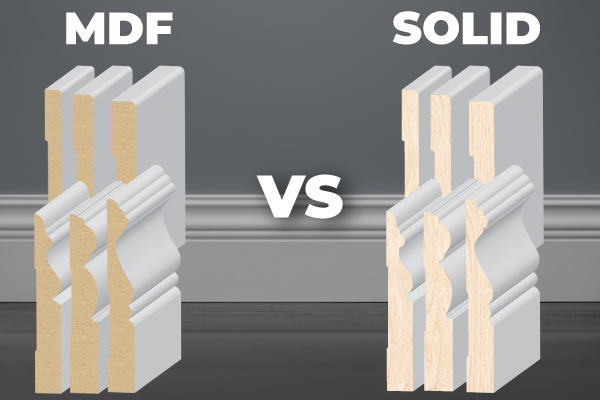
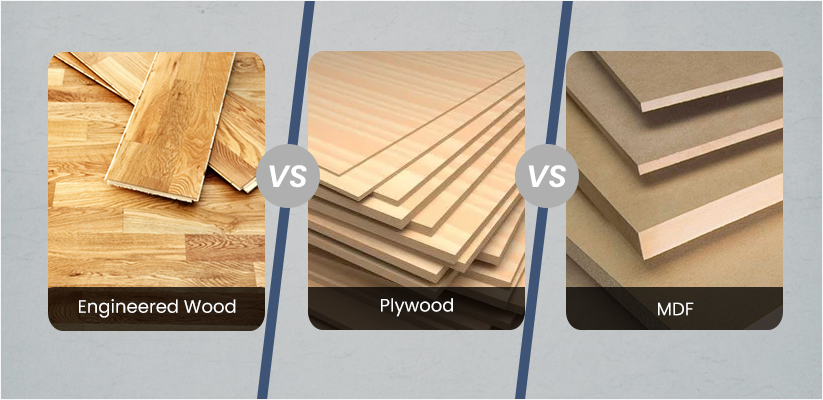
You know that feeling when you’re standing in the hardware aisle, staring at two piles of baseboards? One is solid pine, smelling like a forest, costing a small fortune. The other is MDF, heavy as a brick, and half the price. Your gut says go with the "real" wood. It feels honest. It feels permanent. But here’s the thing: if you are planning to paint it, that instinct is costing you hundreds of dollars and hours of your life.
We’ve been sold a story for decades that natural is always better. But in the world of painted trim, natural is actually kind of a nightmare. Knots bleed through paint. Grain raises up after the first coat. Wood warps when the humidity shifts. Meanwhile, MDF (medium-density fiberboard) just sits there, smooth as glass, waiting for a roller. It doesn’t judge you. It doesn’t move. It just works.
Let’s be real for a second. Most of us aren’t trying to showcase the intricate grain patterns of our door casings. We want crisp, clean lines. We want white walls that flow into white trim without weird bumps or shadows. We want to finish the job on a weekend, not spend three weeks sanding down splinters. If that sounds like your vibe, then it’s time to let go of the wood snobbery. MDF isn’t the "cheap" alternative anymore. In 2026, it’s the smart pro choice. And honestly? Once you see the finish, you won’t care what’s underneath the paint.
The Smoothness Factor That Wood Can’t Match
Here is the biggest secret painters know but rarely tell homeowners: wood is textured. Even the smoothest pine has a grain. When you paint over it, that grain telegraphs through. You can sand it until your arms fall off, but as soon as that water-based primer hits the fibers, they swell up. It’s called "grain raise." It’s annoying. It means you sand, prime, sand again, paint, sand again, and paint again. It’s a cycle of frustration.
MDF doesn’t have grain. It’s made of tiny wood fibers glued together under heat and pressure. The result is a surface that is uniform all the way through. There are no knots to bleed resin onto your fresh white paint. There are no soft spots that dent when you look at them wrong. When you run your hand along a piece of primed MDF, it feels like plastic or high-end furniture. It’s eerily smooth.
This matters because light is harsh. In modern homes with bright LED lighting or large windows, imperfections stick out like sore thumbs. A knot in pine creates a shadow. A patch of filler creates a bump. MDF eliminates almost all of that visual noise. You get a factory-like finish right out of the box, especially if you buy pre-primed boards. You aren’t fighting the material; you’re just adding color. It’s liberating, really. You stop working against the wood and start working with the design.
Your Wallet Will Thank You Later
Let’s talk numbers, because this is where the argument gets hard to ignore. Solid wood trim prices have gone crazy in recent years. Supply chain hiccups, logging restrictions, and general inflation have pushed the cost of clear pine, poplar, or oak through the roof. In 2026, buying solid wood for a whole house renovation feels like burning cash. You could easily spend double, sometimes triple, what you’d pay for MDF.
And for what? For a material that requires more labor? Think about the hidden costs. With wood, you need wood filler for nail holes and knots. You need stain-blocking primer to prevent those yellow rings from appearing months later. You need more sandpaper. You need more time. Time is money, especially if you’re hiring someone. Even if you’re DIYing, your time has value. Do you really want to spend your Saturday night sanding door frames instead of watching a movie?
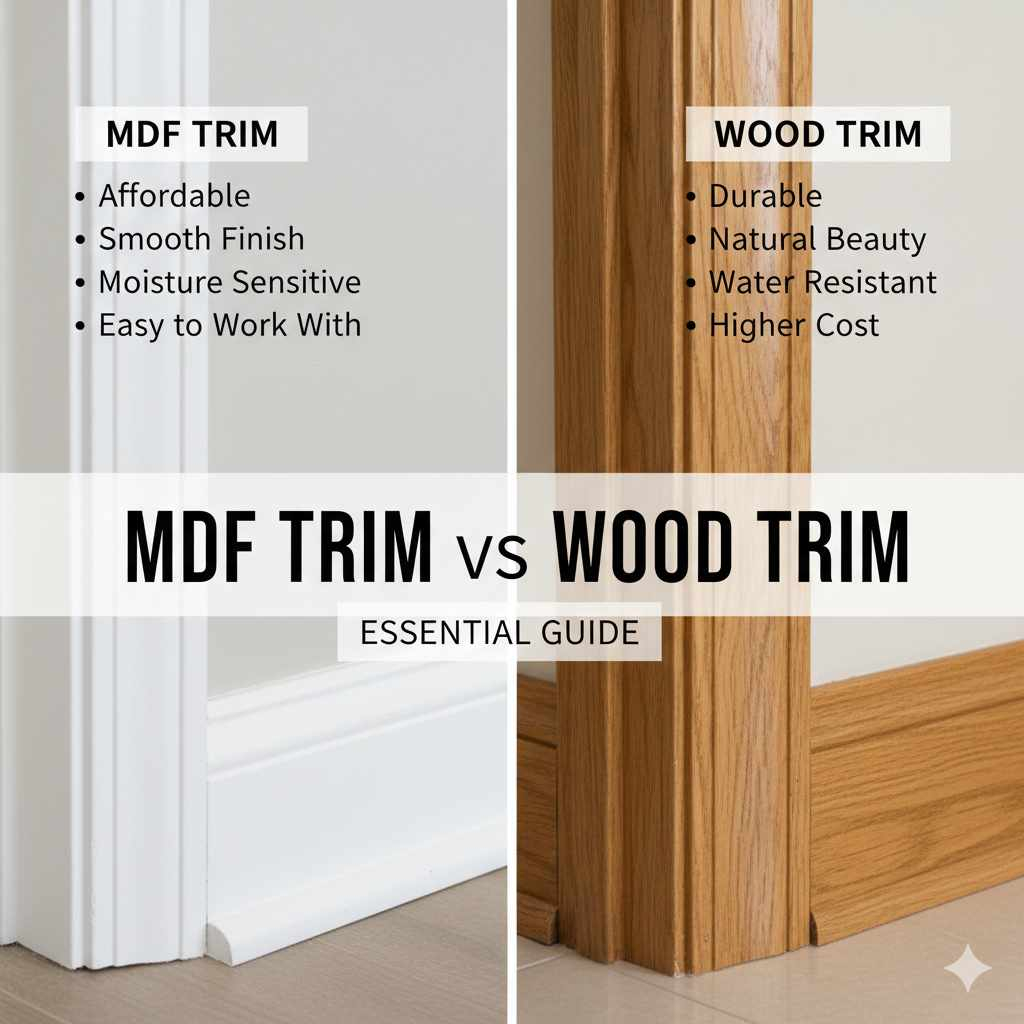
MDF is consistently cheaper per linear foot. But the real savings come from the install. Because it’s stable and pre-primed, you can often skip the initial sealing step. You nail it up, fill the tiny nail holes (which are easier to spot on the smooth surface), caulk the seams, and paint. Done. For a standard 1,500-square-foot home, switching from wood to MDF can save you anywhere from $500 to $1,500 depending on the complexity of the moldings. That’s a nice vacation. Or a new sofa. Or just keeping that money in your emergency fund.
Stability Is King in Modern Homes
Wood is alive. Well, it was. And it still acts like it. It breathes. It absorbs moisture from the air and releases it when things get dry. This means it expands and contracts. In older homes with drafty windows, this wasn’t as big of an issue because the humidity was all over the place anyway. But in modern, tightly sealed homes with HVAC systems running constantly, the air can get very dry in winter and humid in summer.
This movement causes gaps. You’ve seen them. Those little cracks that appear between the trim and the wall, or at the mitered corners of your crown molding. You caulk them in spring, and by winter, they’re back. It’s a losing battle. Wood moves. MDF, on the other hand, is incredibly stable. It doesn’t expand and contract nearly as much as solid wood. It stays put.
This stability means your paint job lasts longer without cracking. It means your caulk lines stay intact. It means less maintenance over the years. Sure, if you live in a swamp or have a leaking pipe, MDF will swell up like a sponge and ruin itself. Don’t use it in bathrooms with poor ventilation or directly on concrete floors without a moisture barrier. But for 95% of interior applications—living rooms, bedrooms, hallways, dining rooms—it is superior because it doesn’t fight the environment. It just holds its shape.
The Installation Experience Is Actually Better
If you’ve ever tried to cut solid wood with a miter saw, you know the struggle. Soft woods like pine tear out. Hard woods like oak dull your blades instantly. And getting a tight miter joint on wood is an art form. You’re fighting the grain direction. One slip, and you have a gap that needs filling. Filling gaps is tedious. It never looks quite right.
MDF cuts like butter. It’s dense, so it doesn’t tear out. You get crisp, sharp edges every time. Your miter joints fit together tighter because the material is so uniform. There’s no grain to interfere with the cut. This makes it much easier for beginners to get professional-looking results. You don’t need twenty years of carpentry experience to make MDF look good. You just need a sharp blade and a steady hand.
Also, MDF is heavier. Some people complain about this, but I see it as a benefit. When you’re nailing it to the wall, it doesn’t bounce around. It stays where you put it. The density also means it holds nails well, though you should always pre-drill near the ends to prevent splitting. But overall, the workflow is faster. You measure, cut, nail, and move on. There’s less fussing. Less adjusting. Less cursing at the saw. It’s a smoother process from start to finish.
Where Wood Still Wins (And Where It Doesn’t)
Now, I’m not saying wood is useless. There are times when you absolutely should use solid wood. If you want a natural stain finish, MDF is not an option. You can’t stain MDF to look like oak. It’ll just look like gray mush. So if you’re going for that warm, honey-colored wood look, stick with the real thing. Also, for exterior trim, never use standard MDF. It will disintegrate. Use PVC, composite, or treated wood outside.
Another place wood wins is durability against impact. MDF is dense, but it’s brittle. If you kick it hard with a steel-toed boot, it might chip or crumble. Pine will dent, but it won’t shatter. So, if you have a house full of toddlers who play hockey in the hallway, or you’re outfitting a commercial space with heavy carts rolling around, solid wood (or a high-impact PVC) might be a safer bet. Baseboards in high-traffic entryways might take a beating that MDF can’t handle long-term.
But for most residential interiors? The trade-off is worth it. The likelihood of you kicking your baseboard hard enough to crumble it is low. The likelihood of you hating the look of knotty, grainy paint jobs is high. And let’s not forget custom profiles. MDF allows for intricate designs that would be prohibitively expensive in solid wood. You can get fancy crown molding shapes in MDF for a fraction of the cost of milling them out of hardwood. It opens up design possibilities that budget constraints usually shut down.
So, you’ve bought the MDF. Now what? Don’t just slap paint on it. There are a few tricks to make it look perfect. First, seal the edges. The cut ends of MDF are porous. They suck up paint like a straw. If you don’t seal them, they’ll look rough and dark. Use a good quality oil-based or shellac-based primer on the cut ends before you install. Or, even better, use a high-build water-based primer designed for MDF. Apply it generously to the ends. Let it dry. Sand it smooth.
Second, caulk everything. One of the beauties of MDF is how well it takes caulk. Because the surface is smooth, the caulk blends in seamlessly. Use a paintable acrylic latex caulk. Run a bead along the top edge where the trim meets the wall, and along the bottom where it meets the floor. Smooth it with a wet finger or a tool. This hides any tiny gaps from installation and gives that built-in, custom look. It’s the difference between "DIY job" and "professional install."
Finally, use the right paint. You don’t need expensive exterior paint, but you do want a durable interior enamel. Look for terms like "scuff-resistant," "washable," or "cabinet grade." A satin or semi-gloss sheen is standard for trim because it’s easy to wipe down and reflects light nicely, highlighting the crisp lines. Avoid flat paint on trim; it shows dirt and scuffs too easily. Two coats of good quality paint over a solid primer job will give you a finish that looks like it came from a factory. It’s tough, smooth, and beautiful.
In the end, choosing MDF over wood for painted trim isn’t about cutting corners. It’s about choosing the right tool for the job. Wood is amazing for stains and natural beauty. But for paint? It’s high-maintenance and expensive. MDF is consistent, stable, and affordable. It gives you that sleek, modern look we all crave without the headache.
So next time you’re renovating, don’t feel guilty about skipping the pine. Embrace the fiberboard. Your bank account will thank you. Your painter (even if it’s you) will thank you. And when you step back and look at those crisp, clean lines glowing in the afternoon light, you’ll realize you made the right call. It’s not about what’s inside. It’s about how it looks on the outside. And in 2026, MDF looks pretty damn good.