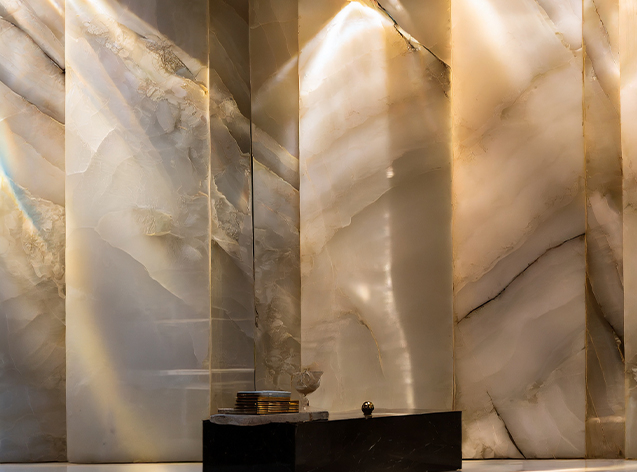
You know that feeling when you walk into a room and just… stop? It’s not always because of the furniture or the view. Sometimes, it’s the light. Or rather, how the light seems to come from inside the walls themselves. That warm, golden hum that hits your eyes softly, without glare. That is backlit onyx. And if you’ve been paying attention to high-end design lately, you’ve noticed it is everywhere. From sleek Melbourne penthouses to the lobbies of boutique hotels across Australia and beyond, this isn’t just a trend that’s passing through. In 2026, it has settled in as the definitive statement piece.
It’s strange, isn’t it? We have all these new synthetic materials, smart glass, and digital screens that can mimic almost anything. Yet, designers and homeowners keep coming back to stone. Real, fragile, breathtaking stone. There is something about the unpredictability of nature that screens just can’t replicate. When you pair that raw, ancient geology with modern LED technology, you get something that feels both futuristic and timeless. It’s a paradox that works. It signals a level of care and investment that goes beyond just buying expensive things. It’s about curating an experience.
So why does it still hold the crown in 2026? Why hasn’t it faded into the background like so many other "it" materials of the past decade? The answer lies in how we live now. Our spaces are becoming sanctuaries. We crave calm. We want our homes to feel like a exhale after a long day. Backlit onyx provides that. It’s not just a wall; it’s a mood. It transforms a cold, hard surface into something that feels alive, breathing with a soft, steady rhythm of light. Let’s dive into why this material continues to captivate us.
The Psychology of Soft Light
There is something unexpectedly calming about standing in front of a glowing slab of stone. It’s not just aesthetic; it’s physiological. Harsh overhead lights trigger alertness. They keep us wired. But the diffuse, amber glow of backlit onyx does the opposite. It mimics the warmth of a sunset or a fire. In 2026, as we continue to prioritize mental well-being in our architectural choices, this matters more than ever. Designers are noticing that clients aren’t just asking for "pretty" rooms. They are asking for rooms that feel safe. Rooms that lower their heart rate.
Interestingly, this effect works best when the rest of the room stays quiet. If you surround a backlit onyx feature wall with busy patterns, loud colors, or too many textures, the magic gets lost. It becomes noise. The power of onyx is in its solitude. It demands space to breathe. When you strip away the clutter and let the stone speak, the result is profound. It creates a focal point that draws the eye but doesn’t demand attention aggressively. It invites you in. This subtlety is what separates true luxury from mere opulence. Opulence shouts. Luxury whispers.
Think about the last time you were in a high-end spa. Notice how the reception counter or the relaxation lounge often features this soft radiance? That’s no accident. Brands like SDP Stones have highlighted how this sublime glow sets the tone for a high-touch experience. It tells your brain to slow down. In a world that moves at breakneck speed, having a corner of your home that forces you to pause is a luxury worth paying for. It’s not just about looking good for guests. It’s about how the space makes you feel when you’re alone in it.
Beyond Marble: The Designer’s Power Move
For years, marble was the default choice for anyone wanting to signal wealth. Carrara, Calacatta, Statuario. We know them all. But marble is opaque. It reflects light. Onyx, on the other hand, transmits it. This fundamental difference changes everything. It allows for depth that marble simply cannot achieve. When you look at a backlit onyx slab, you aren’t just seeing the surface. You are seeing into the stone. You see the veins, the crystals, the imperfections, all illuminated from within. It creates a three-dimensional effect that feels almost holographic.
This is why onyx has become the designer’s power move in 2026. It shows a deeper understanding of materials. It says, "I didn’t just pick the most expensive stone; I picked the right stone for the light." Whether it’s the dazzle of Saffron onyx, which burns with a fiery intensity, or the subtle, milky glow of Classic White, each slab tells a different story. Pink Sapphire offers a romantic, soft hue that works beautifully in bedrooms or private dressing areas. These aren’t just colors; they are atmospheres.
Marblebee and other industry observers note that this shift is about transforming living spaces into living works of art. A backlit onyx bar in a dining area doesn’t just hold bottles; it becomes the centerpiece of the evening. It changes as the night progresses. During the day, it might look like a beautiful, translucent stone. At night, with the lights dimmed and the backlighting on, it becomes a lantern. This duality adds a layer of intrigue to the interior. It keeps the space dynamic. You never quite see it the same way twice.
Innovation in Durability and Design
Let’s be real for a second. Onyx has a reputation. It’s soft. It’s porous. It stains if you look at it wrong. For a long time, this kept it confined to low-traffic areas or behind protective glass. But 2026 is different. The technology surrounding onyx installation and treatment has leaped forward. We aren’t just talking about better sealants, though those help. We are talking about engineered solutions that preserve the beauty while boosting performance.
Take Lumigraf’s Lumi-Onyx 2026 collection, for example. They’ve introduced nine designs specifically built to last in modern environments. Six of these are entirely new, including names like Verdeluce, Nottedoro, and Pietrarosa. These aren’t just random names; they represent a refined approach to how onyx performs in today’s spaces. They’ve also reimagined classics like Glacier and Wildflower, tweaking them to meet current lighting expectations. This kind of innovation is crucial. It means you can use onyx in a kitchen backsplash or a bathroom vanity without constantly worrying about ruining it.
Turkish onyx, in particular, has seen a surge in popularity for these applications. Hubway Stone points out that premium quality panels from this region are becoming the go-to for luxury hotels and high-end interiors. The consistency of the veining and the translucency levels are being curated more strictly than before. Designers can now specify exactly how much light transmission they want. This level of control was unheard of ten years ago. It turns a risky material choice into a reliable design element. The fear of maintenance is fading, replaced by the confidence of durability.
Creating Immersive Atmospheres
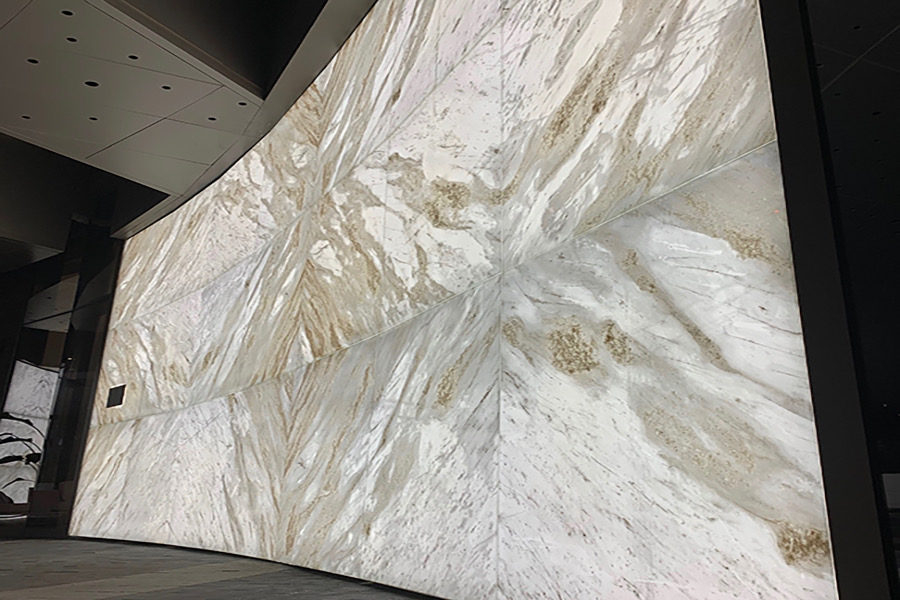
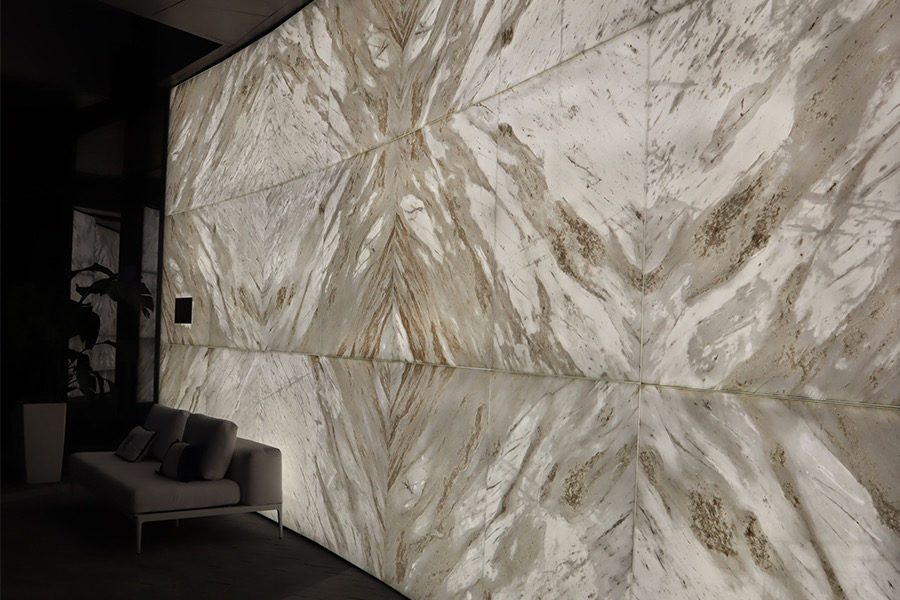
Where do you put this stuff? That’s the question everyone asks. The answer is: wherever you want to create a moment. In boutique hotels, it’s often the lobby wall. You walk in, tired from travel, and boom—you’re hit with this warm, welcoming embrace. It sets the tone for the entire stay. But in residential settings, the applications are getting more creative. It’s not just about feature walls anymore.
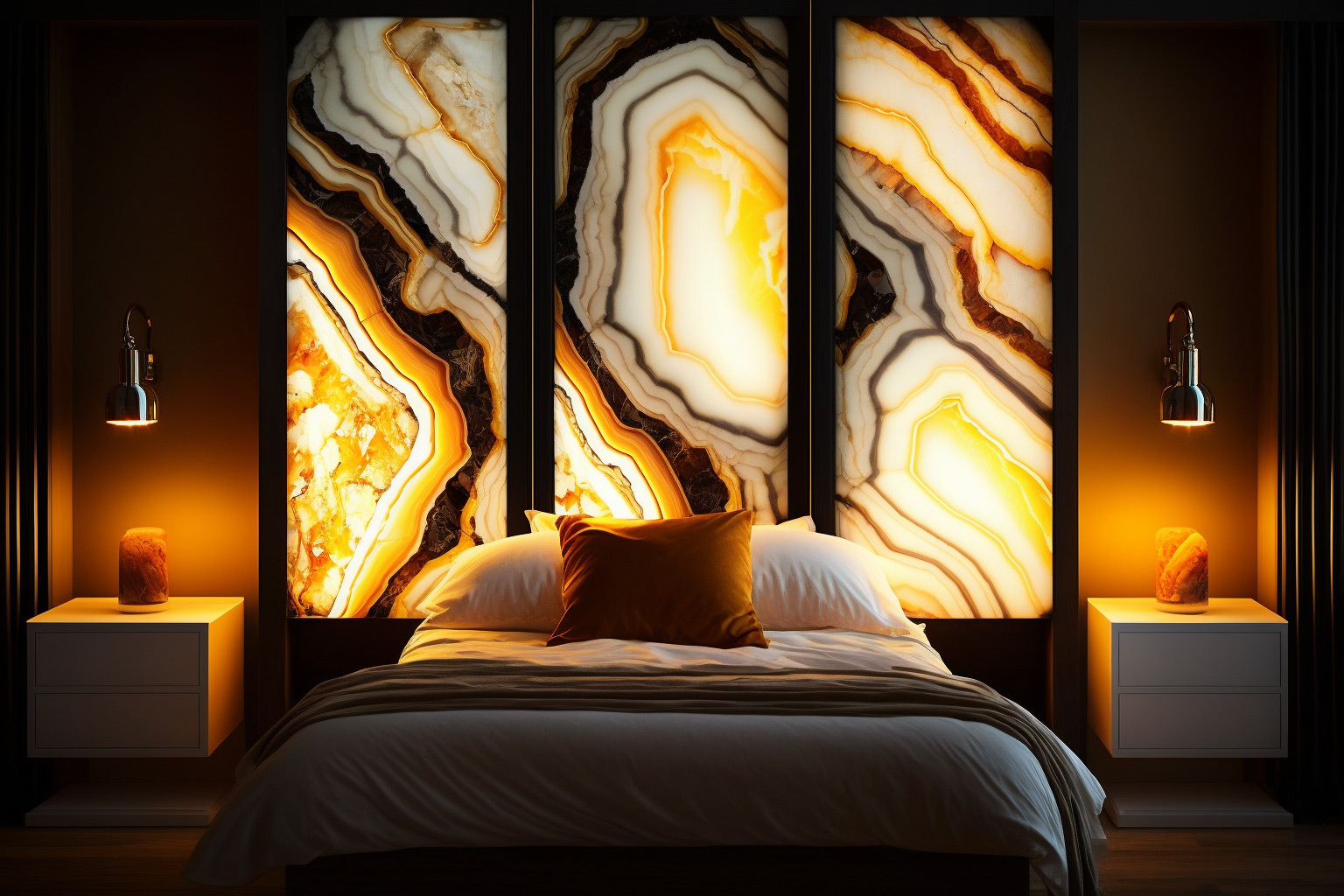
Imagine a backlit onyx headboard in a master suite. It acts as a nightlight, but infinitely more sophisticated. No harsh bulbs, no switches to fumble for. Just a gentle glow that helps you wind down. Or consider a shower niche lined with backlit onyx. The steam, the water, the light filtering through the stone—it turns a daily routine into a ritual. MCI (Marble Centre India) highlights how shades like Classic White can bring a sense of purity and spa-like calm to bathrooms. It’s about immersion.
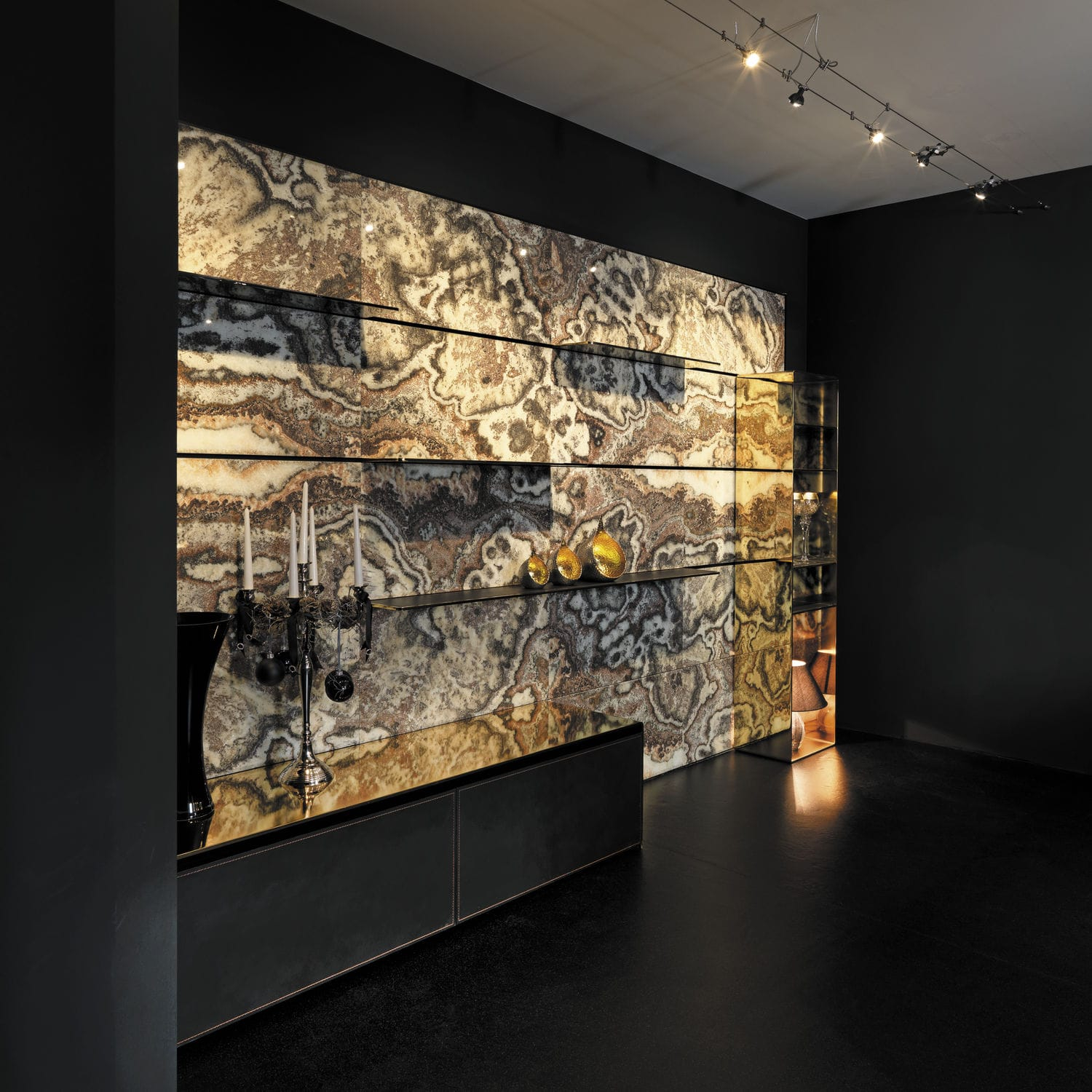
Bars and entertainment areas are another huge hotspot. Picture a home bar where the shelves are backed with illuminated onyx. The bottles sit in front of this glowing backdrop, making the liquids inside sparkle. It elevates the act of pouring a drink into a performance. Granite Direct notes that this signals an appreciation for natural beauty that synthetic materials can’t touch. It’s the difference between a printed image of a forest and actually standing in one. One is flat; the other has soul. In 2026, we are craving soul in our spaces.
The Art of Restraint
Here is the tricky part. Because onyx is so dramatic, it’s easy to overdo it. You might think, "If one wall is great, four walls must be better." Wrong. Backlit onyx works best when it is the star, not part of the chorus. If you light up every surface, you lose the contrast. You lose the drama. The key to pulling this off in 2026 is restraint. Keep the surrounding interiors neutral. Think matte finishes, soft textiles, and muted tones. Let the stone pop.
This approach requires confidence. Many homeowners feel the need to fill every empty space with decor. But with backlit onyx, the stone is the decor. Adding too many accessories nearby clutters the visual field and diminishes the impact of the light. LinkedIn discussions among interior pros emphasize this point repeatedly. The calming effect is diluted if the eye has nowhere to rest. By keeping the rest of the room simple, you allow the onyx to do its job.
It also helps to think about the color temperature of the lighting. Not all LEDs are created equal. You want a warm white, usually around 2700K to 3000K. Anything cooler looks clinical and kills the warmth of the stone. Anything too yellow can make it look muddy. Getting this balance right is an art form. It’s not just about installing a light strip; it’s about tuning the frequency of the glow to match the specific hues of the onyx slab. A good designer will spend hours testing this. It’s worth it. The difference between a cheap glow and a luxurious radiance is often just a few degrees on the Kelvin scale.
At the end of the day, why do we choose this? Why go through the hassle of sourcing rare stone, engineering custom lighting, and reinforcing walls to hold the weight? Because it communicates something. A backlit onyx feature wall signals attention to detail. It shows an investment in quality that goes beyond the visible. It says you value things that are unique, natural, and enduring. In an era of fast furniture and disposable trends, onyx is the antithesis. It is heavy. It is permanent. It is real.
For luxury hotels and restaurants, this prestige is currency. It tells the guest that they are in a place of refinement. But for homeowners, it’s personal. It’s a daily reminder of beauty. Caron Stone’s recent analysis of market trends shows that onyx slabs are redefining high-end design because they offer a connection to the earth that feels grounding. In 2026, as we spend more time indoors, that connection is vital. We want our homes to feel anchored.
It’s also a conversation starter. Guests notice it. They ask about it. They run their hands over the smooth, cool surface. It creates a tactile experience that engages the senses. You don’t just see it; you feel it. This multi-sensory engagement is what makes it the ultimate statement. It’s not just visual decoration. It’s an environmental intervention. It changes the air in the room. It changes the mood. And in a world that often feels chaotic and disconnected, having a space that feels centered and beautiful is priceless.
So, is backlit onyx worth the hype in 2026? Absolutely. But only if you treat it with respect. Don’t just slap it on a wall and hope for the best. Plan for it. Design around it. Let it be the hero. When you do, you get more than a pretty wall. You get a sanctuary. You get a piece of the earth, lit from within, reminding you to slow down and appreciate the glow. And honestly, isn’t that what we’re all looking for?