You walk through the door after a long day. The noise of the city fades. The air feels still. It’s not just quiet; it’s peaceful. That’s the power of a well-designed space. In 2026, our homes have become more than just places to sleep. They are retreats. Sanctuaries. And nothing says sanctuary quite like the calm, grounded aesthetic of a Japanese apartment.
But let’s be real. Most of us aren’t living in sprawling Kyoto machiya houses. We’re in compact urban apartments. Maybe a studio. Maybe a one-bedroom with awkward corners. Does that mean we can’t have that zen vibe? Absolutely not. In fact, the constraints of a small space often make the Japanese minimalist approach even more effective. It’s about intention. It’s about choosing less, but better.
This guide isn’t about buying expensive imports or knocking down walls. It’s about shifting your perspective. It’s about lowering your furniture—literally and figuratively—to create a sense of openness. It’s about letting natural textures do the heavy lifting so you don’t have to clutter your shelves with knick-knacks. Let’s dive into how you can bring this timeless tranquility into your modern life, right here, right now.
The Philosophy of Less: Embracing Ma and Wabi-Sabi
Before we move a single chair, we need to talk about mindset. Japanese design isn’t just a look; it’s a philosophy. Two concepts are crucial here: Ma and Wabi-Sabi. You’ve probably heard of them, but what do they actually mean for your apartment?
Ma is often translated as "negative space" or "gap." But it’s more than just empty room. It’s the pause between notes in music. It’s the breath between thoughts. In your apartment, Ma is the open floor space that allows energy to flow. When you crowd a room with furniture, you choke that flow. By pulling back, by leaving areas empty, you create a sense of calm that fills the room. It feels spacious, even if the square footage is tiny.
Then there’s Wabi-Sabi. This is the appreciation of imperfection and impermanence. It’s the crack in the ceramic bowl. The weathered grain of old wood. In 2026, where everything is sleek, shiny, and mass-produced, Wabi-Sabi offers a refreshing antidote. It tells us that our home doesn’t need to be perfect to be beautiful. It needs to be authentic. Embrace the slight asymmetry. Choose materials that age well. Let go of the need for everything to match perfectly. This shift in thinking takes the pressure off. It makes decorating feel less like a performance and more like a practice.
So, how do you apply this? Start by looking at your room. What can you remove? Not hide away in a closet, but actually remove. Create pockets of empty space. Let the light hit the floor. Appreciate the texture of a worn wooden beam or a handmade cushion. This foundation of mindfulness makes every other design choice easier.
Grounding the Space: The Power of Low-Profile Furniture
If there’s one visual trick that defines the Japanese apartment aesthetic, it’s the height of the furniture. Or rather, the lack of height. Low-profile furniture is non-negotiable if you want that grounded, zen feel. Why does it work so well?
When your furniture sits closer to the floor, your eye level drops. This creates an illusion of higher ceilings and more vertical space. In a small apartment, ceiling height can feel oppressive. A low sofa, a platform bed, or a floor cushion breaks up the vertical line of sight, making the room feel airier. It also encourages a different way of living. Sitting lower connects you to the earth. It feels stable. Secure.
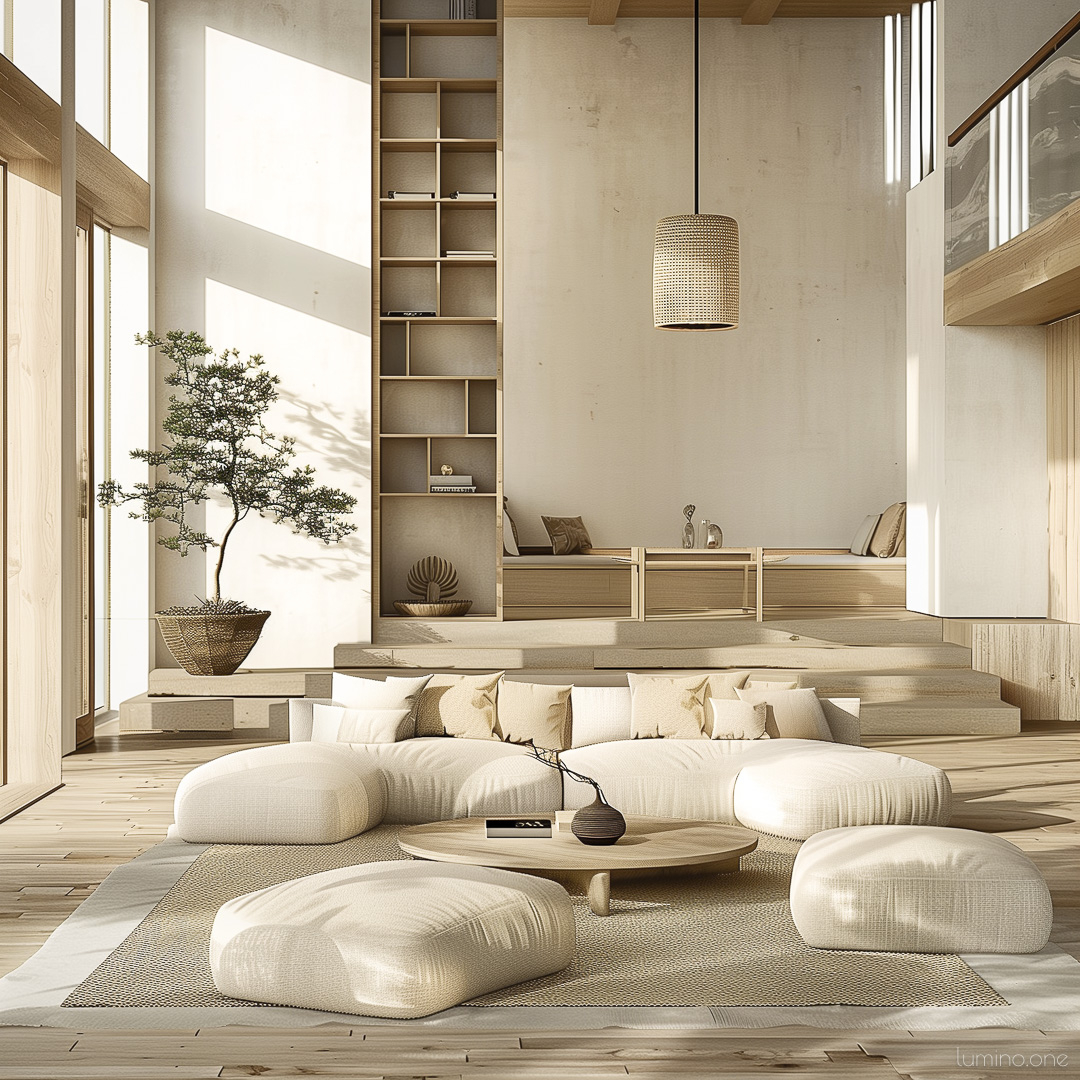
Let’s talk specifics. Swap that bulky, high-backed sofa for a low-slung modular piece or a traditional zabuton-style seating arrangement. Look for legs that are short or non-existent. A coffee table should be knee-height, not waist-height. In 2026, many designers are revisiting the chabudai (low dining table) concept, adapting it for modern laptops and meals. These pieces don’t dominate the room. They anchor it.
Be careful with scale, though. Low doesn’t mean flimsy. The pieces still need visual weight. Solid wood frames, thick cushions, and substantial bases prevent the room from feeling like a college dorm. The goal is groundedness, not emptiness. Think of a stone resting on the ground. It’s low, but it has presence. Your furniture should have that same quiet confidence. And remember, keeping things low keeps the view across the room unobstructed, enhancing that crucial sense of Ma we talked about earlier.
Touching Nature: Selecting Authentic Natural Textures
Once you’ve lowered your sights, it’s time to look at what you’re touching. Japanese design is deeply tactile. It relies on natural materials to bring warmth and life into a minimalist space. Without these textures, minimalism can feel cold and sterile. With them, it feels cozy and inviting.
Wood is the star of the show. But not just any wood. Look for light tones like ash, oak, or pine. These woods reflect light and keep the atmosphere bright. Dark woods can work, but they absorb light and can make a small space feel smaller. The grain should be visible. You want to see the history of the tree. In 2026, sustainable sourcing is huge, so look for reclaimed wood or certified sustainable options. It adds to the Wabi-Sabi story.
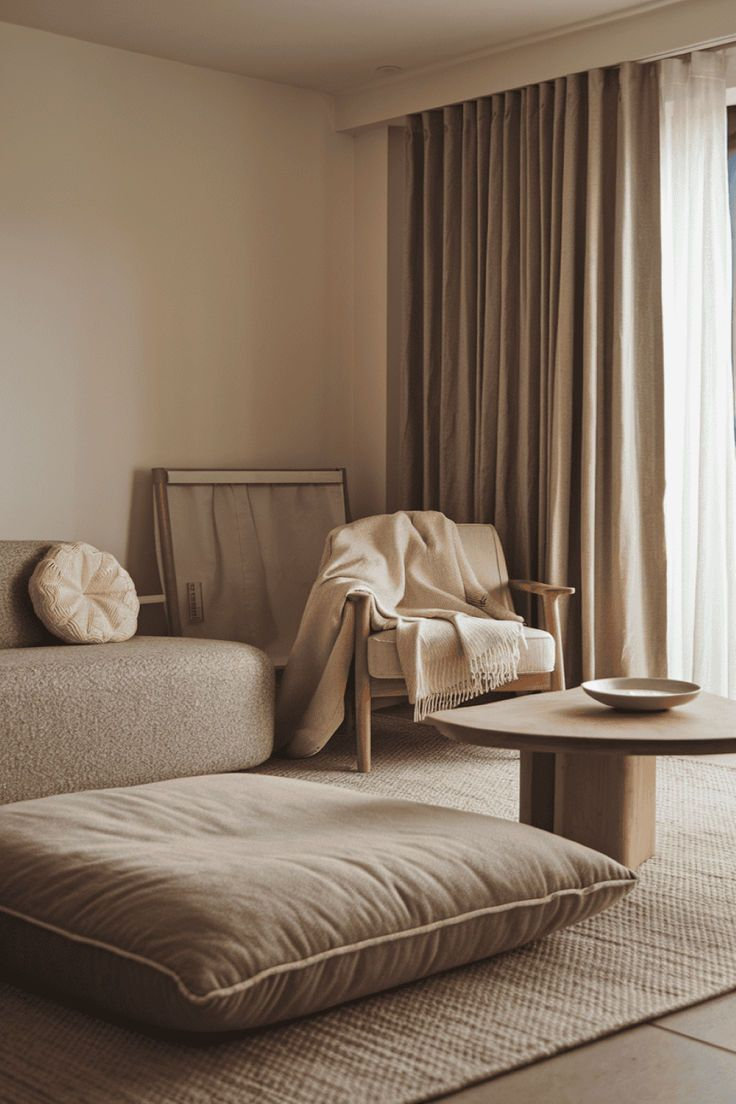
Stone and clay are also essential. A smooth river stone paperweight. A rough-textured ceramic vase. Tatami mats, traditionally made from rice straw, are making a comeback in modern forms. You might not cover your whole floor in tatami, but a tatami-inspired rug or mat can define a seating area beautifully. Linen and cotton for textiles are key too. Avoid synthetics if you can. Natural fibers breathe. They soften over time. They feel good against the skin.
Layering these textures is an art. Don’t be afraid to mix smooth wood with rough stone. Pair soft linen with woven bamboo. The contrast creates depth. It engages the senses. When you run your hand along a wooden armrest or step onto a woven mat, you feel connected to the natural world. This connection is vital for reducing stress. It reminds us that we are part of nature, even in the middle of a concrete city.
Light and Shadow: Harnessing Natural Illumination
Light shapes space. In Japanese aesthetics, light isn’t just about visibility; it’s about mood. The interplay of light and shadow, known as in’ei, is crucial. Western design often tries to eliminate shadows, flooding rooms with bright, even light. Japanese design embraces the shadow. It finds beauty in the dim, the subtle, the filtered.
Start with your windows. Keep them clear. No heavy drapes blocking the view or the light. If you need privacy, consider shoji screens or sheer linen curtains. Shoji screens are iconic for a reason. The translucent paper diffuses sunlight, creating a soft, glowing ambiance that changes throughout the day. It turns harsh direct sun into a gentle wash of light. Modern alternatives use frosted glass or synthetic papers that mimic the effect while being more durable.
In the evening, avoid overhead lighting if possible. Ceiling lights cast harsh shadows downwards and flatten the room. Instead, use floor lamps and table lamps with warm-toned bulbs. Place them low, near your low furniture. This creates pools of light that invite you to sit and relax. Paper lanterns, like andon, are perfect for this. They cast intricate shadows and add a sculptural element to the room.
Think about the direction of light. Where does the morning sun hit? Can you place a plant there to cast dancing shadows on the wall? Where does the evening light fade? Can you place a candle or a small lamp to catch the twilight? Being mindful of light transforms your apartment from a static box into a dynamic, living space. It marks the passage of time. It connects you to the rhythm of the day.
Smart Simplicity: Hidden Storage and Clutter-Free Living
Let’s address the elephant in the room. Or rather, the lack of room. Apartments are small. Stuff accumulates. How do you maintain a zen, clutter-free look when you have bills, clothes, gadgets, and kitchenware? The answer is hidden storage. Japanese design is masterful at concealing the practical to reveal the peaceful.
The goal is "out of sight, out of mind." Every item should have a home, and that home should ideally be behind a door or in a drawer. Open shelving looks nice in magazines, but in real life, it becomes a dust magnet and a visual clutter trap. Limit open shelves to one or two curated displays. Everything else gets tucked away.
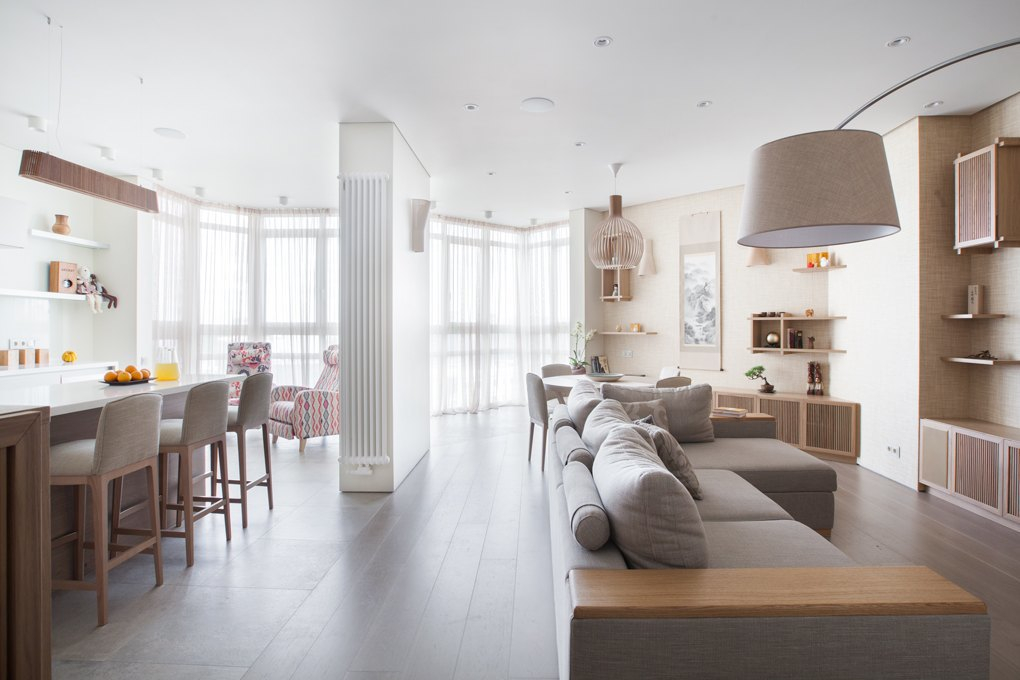
Look for furniture with built-in storage. A platform bed with drawers underneath. A coffee table with a lift-top or hidden compartment. Wall-mounted cabinets that float above the floor, maintaining that sense of Ma below. In 2026, modular storage systems are highly customizable. You can build units that fit your exact wall dimensions, maximizing every inch.
Adopt a "one in, one out" rule. If you buy a new shirt, donate an old one. If you get a new gadget, recycle the old one. Be ruthless. Ask yourself: Does this bring me joy? Do I use it? Is it beautiful? If the answer is no, let it go. Clutter is not just physical; it’s mental. Clearing your space clears your mind. It’s a daily practice, not a one-time cleanup. Keep surfaces clear. A bare table is a peaceful table.
Finally, no Japanese apartment is complete without a touch of green. Plants are the bridge between the interior and the exterior. They bring life, color, and fresh air into the space. But choose your plants wisely. You’re not trying to create a jungle. You’re trying to create a glimpse of nature.
Select plants with simple, elegant forms. A single branch of cherry blossom in a vase. A bonsai tree on a low stand. A tall, slender snake plant in a corner. Ikebana, the Japanese art of flower arrangement, focuses on line, form, and space. You don’t need a huge bouquet. One or three stems arranged thoughtfully can be more impactful than a dozen roses.
Consider the container as much as the plant. A simple ceramic pot, a bamboo basket, or a stone planter complements the natural textures of the room. Avoid plastic pots if you can. The material matters. Place plants where they can catch the light but also where you can see them from your seated position. A plant on a low table becomes a focal point. A hanging plant draws the eye up, adding vertical interest without taking up floor space.
Caring for these plants is part of the zen practice. Watering them, pruning them, watching them grow. It’s a slow, mindful activity that grounds you. It reminds you of the cycles of life. In a fast-paced world, tending to a plant is a radical act of patience. It slows you down. It brings you into the present moment. And that, ultimately, is what this whole design style is about.
Creating a zen Japanese apartment in 2026 isn’t about following a strict set of rules. It’s about cultivating a feeling. It’s about lowering your furniture to ground yourself. It’s about choosing natural textures to warm your space. It’s about embracing light, shadow, and emptiness. It’s about letting go of the excess to make room for what matters.
Start small. Move one piece of furniture. Clear one surface. Bring in one plant. Feel the difference. Notice how your breathing slows. Notice how your shoulders drop. This design style is a gift you give to yourself. It’s a daily reminder to pause, to breathe, and to find peace in the simplicity of the present moment. Your home is your sanctuary. Make it a place where you can truly rest.