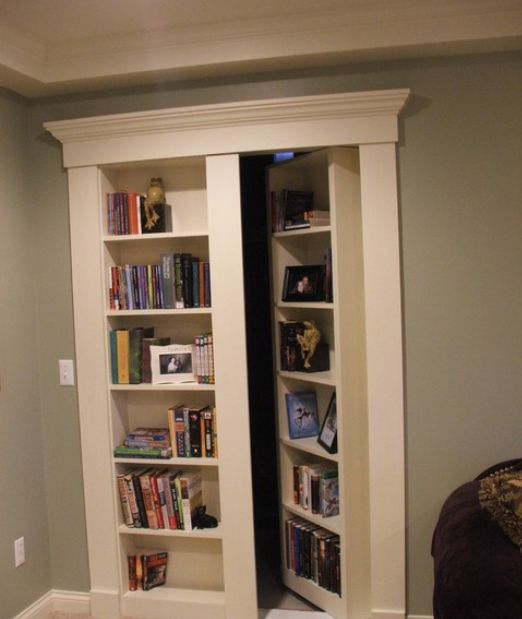
You push against the spine of that oversized encyclopedia, expecting the familiar, satisfying click of the latch releasing. Instead, nothing. Just a dull thud and the stubborn resistance of wood against wood. It’s frustrating, isn’t it? That moment when your clever concealment turns into a literal barrier. You’re not alone. In 2026, as more homeowners embrace the charm of secret rooms and hidden libraries, the number of calls to carpenters about "stuck" hidden doors has skyrocketed. It’s become the number one complaint among owners of these architectural quirks.
We’ve all been there. You’re rushing to grab a book, or maybe you’re trying to sneak into your home office without being seen, and the mechanism betrays you. It feels personal. But here’s the truth: it’s rarely personal. It’s physics. It’s humidity. It’s a tiny screw that worked itself loose three months ago. Understanding why this happens is the first step to fixing it, and honestly, most of the time, you don’t need a professional. You just need a little patience and the right knowlege.
The Invisible Enemy: Humidity and Wood Movement
Wood is alive, in a sense. It breathes. It expands when the air is moist and shrinks when it’s dry. This natural behavior is the single biggest culprit behind stuck hidden doors. If you live in an area with distinct seasons, like the Midwest or the Northeast, you’ve probably noticed your door sticks more in the summer than in the winter. That’s because the wood swells with the humidity, creating friction against the frame. Even a fraction of an inch of expansion can be enough to jam a precision-fit door.
In 2025, studies on residential timber behavior showed that untreated oak and maple, popular choices for bookcases, can expand up to 3% in width during high-humidity months. For a door that’s three feet wide, that’s nearly half an inch of extra bulk. If the gaps around your door were tight when installed, that expansion has nowhere to go but into the frame. The result? A door that feels like it’s glued shut.
The fix isn’t always to sand down the door, though that’s an option. Often, controlling the environment is easier. Using a dehumidifier in the room during humid months can make a surprising difference. Also, check if the wood was properly sealed. If the raw edges are exposed, they absorb moisture faster. A quick coat of polyurethane on those hidden edges can stabilize the wood and prevent future swelling. It’s a small step, but it saves a lot of headache later.
Hardware Hiccups: When Pivot Hinges Fail
Most hidden bookcase doors don’t use standard hinges. They rely on specialized pivot hinges or floor-mounted springs that allow the heavy unit to swing open smoothly. These mechanisms are engineering marvels, but they’re also sensitive. Over time, dust, debris, and even pet hair can clog the pivot points. Imagine trying to spin a top on a gritty surface—it just won’t work right. The same applies to your door.
Another common issue is misalignment. If the house settles, even slightly, the floor might shift. Since many hidden doors are anchored to the floor, this shift can throw the entire unit out of plumb. The door might drag on the carpet or catch on the threshold. You might notice a scraping sound when you try to open it. That’s your clue. The pivot point is no longer aligned with the top mount, creating binding pressure.
To fix this, start by cleaning the pivot hardware. Use a vacuum with a narrow attachment to suck out any gunk from the floor pivot. Then, apply a dry lubricant like graphite powder or a silicone-based spray. Avoid oil-based lubricants, as they attract more dirt. If the door is still sticking, check the alignment. Use a level to see if the door is vertical. If it’s leaning, you may need to adjust the top pivot bracket or shim the bottom one. It’s delicate work, but adjusting just a millimeter can restore smooth operation.
The Weight of Knowledge: Structural Sagging
Let’s be real. We love our books. But books are heavy. A fully stocked bookcase can weigh hundreds of pounds. If the hidden door wasn’t built with adequate internal bracing, or if the shelves are overloaded, the structure can begin to sag. This sagging changes the geometry of the door. It might bow outward, causing the corners to catch on the frame. Or it might twist, making the latch miss its strike plate entirely.
This problem often develops slowly. You might not notice it until one day, the door just won’t close properly. In recent years, manufacturers have started using lighter composite materials for the core of hidden doors to mitigate this, but many older installations still use solid wood or particle board. If your door is older, sagging is a likely suspect.
Check the shelves. Are they bowed? If so, redistribute the weight. Move heavier items to the bottom shelves, closer to the support points. You can also add vertical supports or braces inside the cabinet structure if you’re handy. For a quicker fix, consider installing anti-sag kits, which are metal rods that run vertically through the back of the shelves to keep them straight. It’s like giving your bookcase a backbone.
Latch and Lock Logic: The Small Parts That Matter
Sometimes, the problem isn’t the door itself, but the tiny mechanism that holds it closed. Magnetic latches, roller catches, and mechanical locks can all fail. Magnets lose strength over time, especially if they’re exposed to heat or other magnetic fields. Roller catches can get gummed up with dust. And mechanical locks? Well, they have springs that can break or pins that can bend.
If your door feels like it’s sticking right at the end of the closing motion, it’s probably the latch. Try opening the door and inspecting the latch mechanism. Is it dirty? Clean it with a cotton swab and some alcohol. Is the magnet weak? You can test this by seeing if it holds a paperclip firmly. If not, it’s time for a replacement. These parts are inexpensive and easy to find online.
Also, check the strike plate—the part the latch engages with. If it’s loose, it might have shifted, causing the latch to hit the edge instead of sliding into the hole. Tighten the screws. If the holes are stripped, use toothpicks and wood glue to fill them before re-screwing. It’s a classic carpenter’s trick that works wonders. Ensuring the latch engages smoothly removes a major source of friction and resistance.
Floor and Carpet Interference
It sounds simple, but it’s overlooked constantly. Does your hidden door swing over carpet? If so, the carpet pile might be catching on the bottom of the door. This is especially common if you’ve recently had the carpets cleaned or replaced, as new padding can be thicker. Even a high-pile rug can cause enough drag to make the door feel stuck.
Inspect the bottom edge of the door. Are there marks or fraying where it touches the floor? If yes, you have two options. You can trim the bottom of the door slightly, but be careful not to cut too much, as this can create a visible gap when the door is closed. Alternatively, you can install a low-profile threshold or a smooth guide track on the floor. This creates a hard surface for the door to glide over, bypassing the carpet entirely.
If you have hardwood floors, check for debris. Small stones, toy pieces, or even dried food crumbs can get lodged under the door. Sweep the area thoroughly. Sometimes, the simplest solutions are the most effective. A clean floor is a happy floor, and a happy floor means a smooth-opening door. Don’t underestimate the power of a good vacuum session.
Here’s a tough pill to swallow: sometimes, we’re the problem. Hidden doors require a specific technique to open and close. Pushing too hard on one corner can twist the frame. Pulling at an angle can bind the hinges. If you’re in a hurry, you might not be engaging the release mechanism correctly. Many hidden doors have a subtle trigger—a specific book, a shelf tilt, or a hidden button. If you’re missing that trigger, you’re just pushing against a locked door.
Take a moment to observe how you interact with the door. Are you pushing evenly? Are you using the correct release point? If you have kids or guests, they might not know the secret handshake required to open it. Consider adding a subtle visual cue, like a small mark on a specific book, to remind everyone how it works. Education is key.
Also, avoid hanging heavy items on the door itself, like coats or bags. This adds uneven weight and can pull the door out of alignment. Treat the door with respect. It’s a piece of furniture and a mechanical device. Gentle, consistent pressure is better than brute force. If you find yourself having to shove it open, something is wrong. Stop. Diagnose. Fix. Don’t force it, or you’ll break it.
So, there you have it. Your hidden bookcase door isn’t possessed. It’s just dealing with humidity, hardware wear, weight, latch issues, floor interference, or maybe just a bit of user impatience. By understanding these common pitfalls, you can troubleshoot the problem yourself. Start with the easiest fixes—cleaning and lubricating—before moving on to adjustments and repairs. Most importantly, remember that these doors are meant to be enjoyed, not fought with. A little maintenance goes a long way in keeping your secret safe and accessible. Now, go ahead. Give that encyclopedia another push. It should slide open like magic.