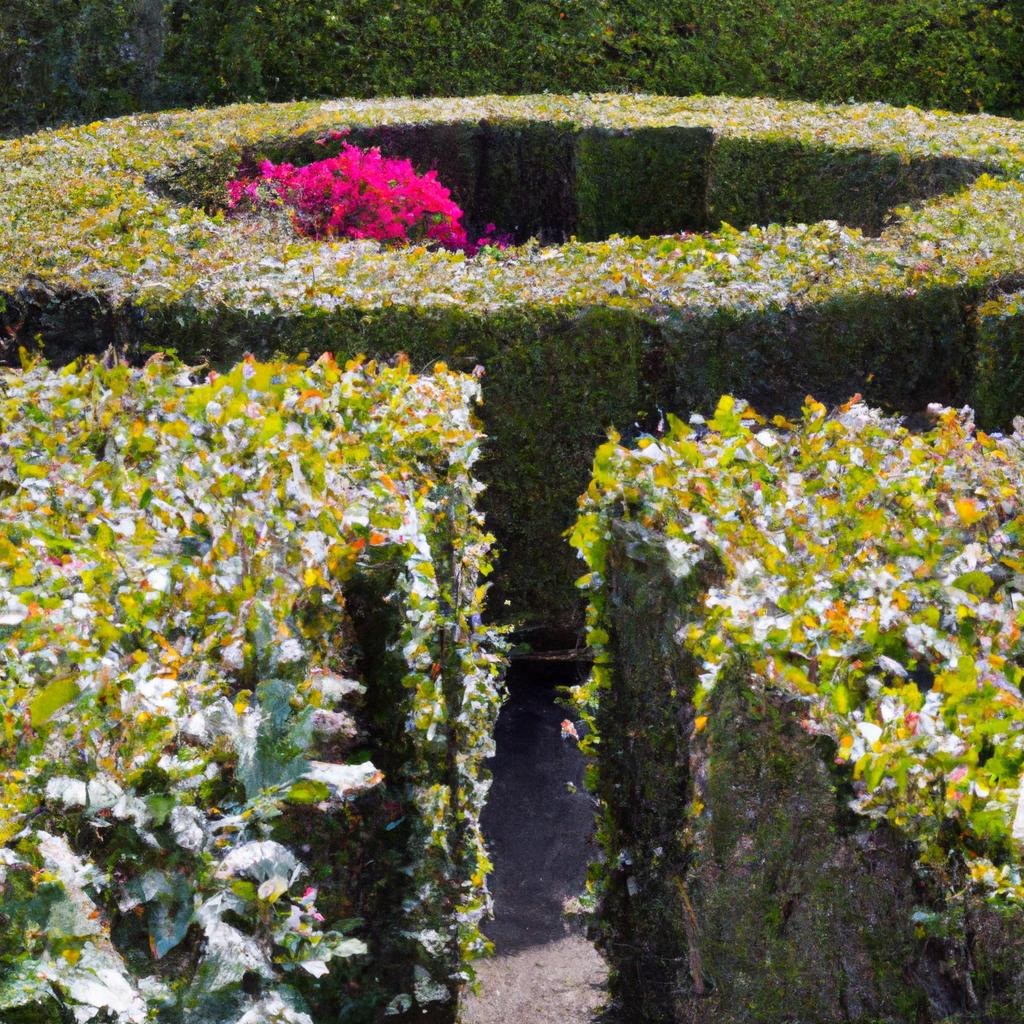
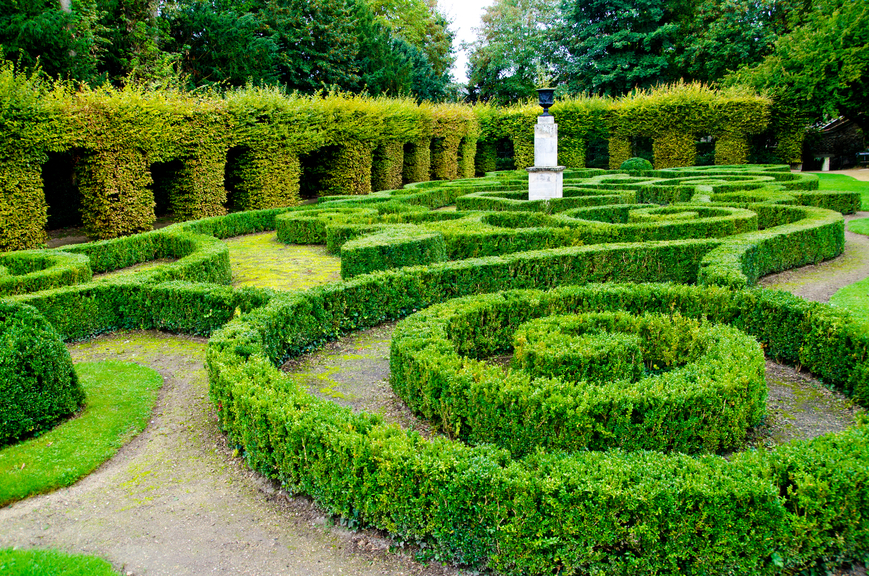
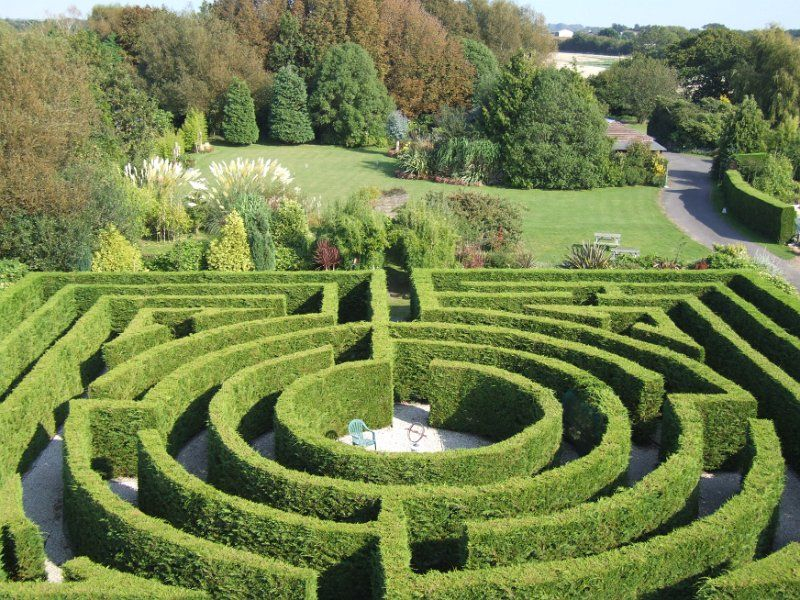
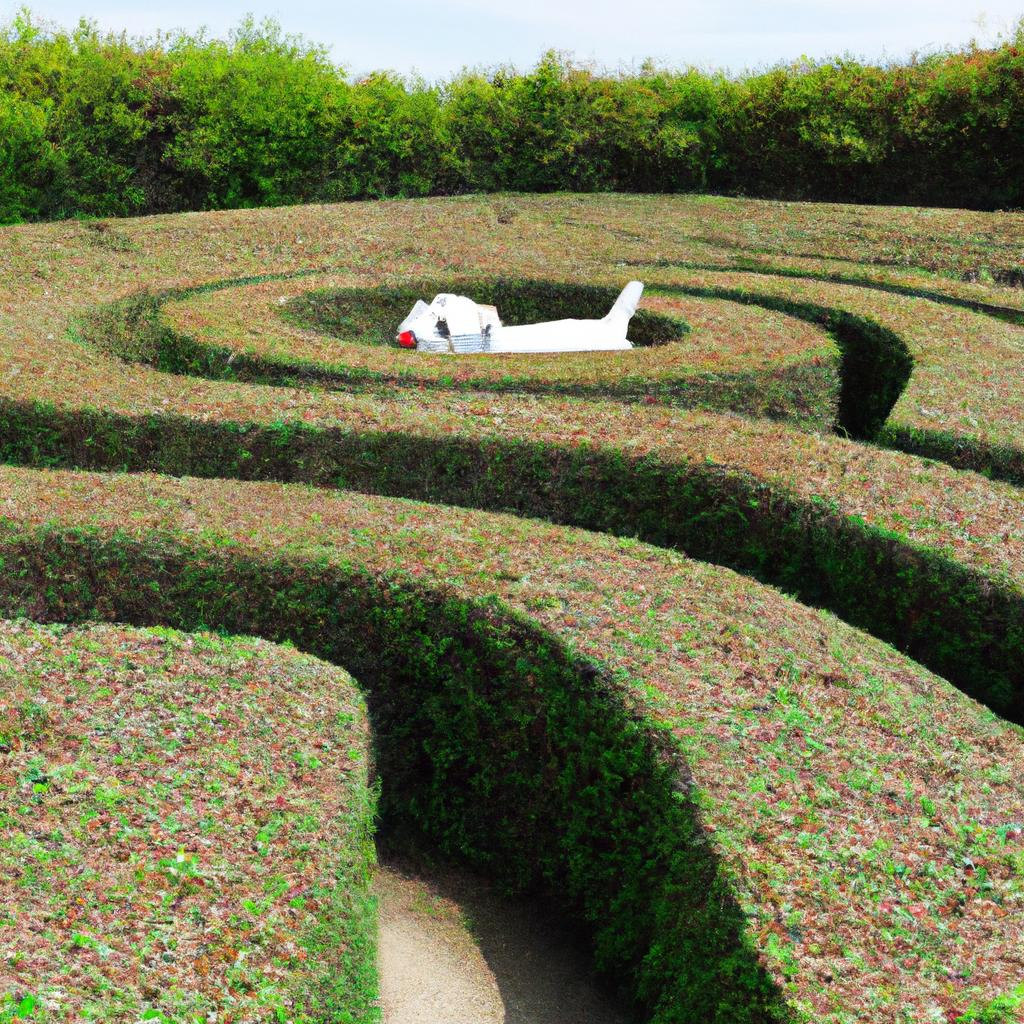
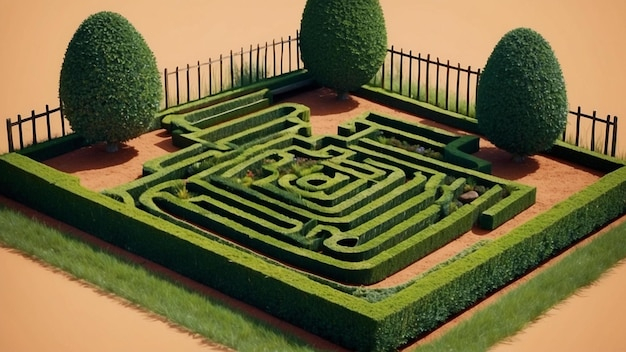
You know the feeling. The air is thick with the scent of damp earth and clipped boxwood. The sun is filtering through the leaves, casting dappled shadows that seem to shift every time you blink. You turned left three turns ago, or was it right? It doesn’t matter now. The green wall in front of you is impenetrable, tall, and judging you. Your heart rate picks up just a notch. Not full-blown panic, but that prickly heat of uncertainty. We’ve all been there. Whether it’s a tourist attraction in England or a quirky backyard project in Ohio, hedge mazes have a way of stripping away our confidence.
It’s funny, isn’t it? We navigate complex digital interfaces, drive cars in heavy traffic, and manage multitasking lives with relative ease. But put us in a labyrinth of shrubbery, and suddenly we’re back to primal instincts. Flailing. Guessing. Spinning in circles. In 2026, as more homeowners and public parks embrace these living puzzles for their charm and privacy benefits, the number of people getting genuinely frustrated inside them has risen. It’s not because the mazes are harder. It’s because we’re approaching them wrong. We treat them like races or video games, forgetting they are physical, organic spaces designed to disorient.
Let’s fix that. This isn’t about becoming a grandmaster of horticulture puzzles. It’s about reclaiming your sense of direction and actually enjoying the experience. By understanding the subtle traps our brains fall into and adjusting our physical approach, you can turn a stressful ordeal into a delightful wander. Here is what usually goes wrong, and how you can sidestep the frustration before you even step past the entrance arch.
The Sprinter’s Fallacy: Why Rushing Guarantees Getting Lost
The first mistake is almost always speed. We see an opening, we dash for it. Our modern brains are wired for efficiency. We want the shortest path from point A to point B. But a hedge maze is not a highway. It is a puzzle box made of plants. When you move quickly, your peripheral vision blurs. You miss the subtle cues—the slight widening of a path, the change in light, the texture of the leaves. Speed causes mistakes. It’s that simple. Slow, deliberate movement is actually more efficient because it allows your brain to process spatial data.
Think about it. When you rush, you’re reacting, not observing. You turn a corner and immediately look for the next turn, never pausing to orient yourself within the larger structure. This leads to the "hamster wheel" effect, where you traverse the same section repeatedly without realizing it. Taking your time isn’t just advice for relaxation; it’s a tactical necessity. By slowing down, you give your hippocampus—the part of the brain responsible for spatial memory—a chance to map the environment. You start to notice landmarks. Maybe it’s a particularly gnarly branch, a patch of moss, or a gap in the hedge that lets a beam of light through. These are your anchors.
So, how do you combat the urge to sprint? Breathe. Literally. Before you enter, take a deep breath. Consciously lower your pace to a stroll. If you feel your shoulders tense up, stop. Look up. Most people stare at the ground or straight ahead at eye level. But looking up allows you to see the sky, the tops of the hedges, and sometimes, if the maze design permits, distant landmarks or the exit tower. In many modern designs from 2024 and 2025, architects have included slight elevation changes or viewing platforms specifically to reward those who pause and look around. Don’t rob yourself of that advantage by rushing past it.
The Wall-Hugger’s Trap: Misunderstanding Simple Algorithms
We’ve all heard the advice: "Just keep your hand on the left wall and you’ll get out." It’s the most famous maze-solving algorithm in existence. And here is the harsh truth: it often fails. Or rather, it works, but not in the way people expect. The wall-following rule guarantees you will explore every part of the maze connected to the outer boundary. But if the exit is in an island—a section of the maze completely surrounded by loops and not connected to the outer wall—you will walk in a giant circle forever. You’ll get tired, you’ll get hungry, and you’ll still be inside.
Relying solely on this method creates a false sense of security. You stop thinking. You go on autopilot. This is dangerous because it disengages your problem-solving skills. Instead of blindly trailing a leafy wall, try to engage with the structure. Is this a unicursal labyrinth (one single path that winds to the center) or a multicursal maze (with branches and dead ends)? Most garden mazes are multicursal. Knowing this helps. If you hit a dead end, don’t just turn around and retrace your steps exactly. Pause. Look back at the path you came from. Try to visualize the map in your head.
A better approach is to use markers, but not the kind that damage the plants. Use mental markers. Note the turns. "Left, long straight, right, short burst, dead end." Create a narrative of your journey. If you have to backtrack, you’re not just walking; you’re updating your internal map. Some experts suggest working backwards mentally. Imagine where the exit is. Trace a path from the exit inward. It sounds counterintuitive, but it shifts your perspective. You’re no longer lost; you’re hunting. This mental shift reduces anxiety and keeps your brain active. It transforms the maze from a trap into a game board.
Ignoring the Organic Nature: Plants Are Not Static Walls
This is a mistake that catches even seasoned navigators off guard. We treat hedges like concrete walls. We assume they are uniform, solid, and unchanging. But they’re alive. In 2026, with climate patterns shifting, plant growth can be unpredictable. A hedge that was trimmed tight in spring might have exploded with new, soft growth by summer, narrowing the path or creating visual noise that looks like a passage but isn’t. Conversely, older sections might have gaps at the bottom, tempting you to squeeze through where you shouldn’t.
Ignoring the organic reality leads to physical errors. You might brush against a branch that snaps back, startling you and causing you to lose your bearing. Or you might misjudge a shadow cast by dense foliage as a dark corridor, only to walk face-first into a solid wall of yew. Always respect the plant. Touch it gently if you need to check density. Look at the base of the hedge. Is there a clear path, or is it overgrown? Maintenance matters. A well-kept maze, like those designed by professionals using fast-growing species for quicker establishment, offers clearer visual cues. A neglected one is a chaotic mess of green ambiguity.
Also, consider the sensory input. The smell of certain herbs like lavender or rosemary, often used in smaller garden mazes, can be distracting or overwhelming if you’re not prepared. The sound of wind rustling through different types of leaves—oak versus privet, for instance—changes the acoustic landscape. Use these senses. If the air smells sweeter, you might be near a specific planting bed often located near exits or centers. If the wind noise drops, you might be in a sheltered cul-de-sac. Tuning into the biology of the maze gives you data that pure geometry ignores. It’s about harmonizing with the environment, not fighting it.
The Solo Hero Complex: Forgetting the Power of Communication
There is a strange pride in tackling a maze alone. We want to prove we can solve it. But isolation is a navigator’s enemy. When you’re alone, your internal monologue becomes echoey and unreliable. You second-guess yourself. "Did I come from there? Or was it the other side?" Without an external reference point, your confidence erodes. This is why groups often solve mazes faster than individuals, provided they communicate effectively. The mistake isn’t being alone; it’s refusing to use available tools or companions when things get tough.
If you’re with friends or family, don’t just wander off separately. That splits your cognitive resources. Instead, use a buddy system. One person scouts ahead a few yards while the other holds the position. Call out observations. "Dead end here." "Path opens up to the left." This verbalization forces clarity. It turns vague feelings into concrete data. Even if you’re solo, talk to yourself. It sounds crazy, but narrating your moves—"Turning right now, path is narrow"—keeps your prefrontal cortex engaged. It prevents the brain from slipping into passive confusion.
In larger public mazes, don’t ignore the human element. Staff members or other visitors can be valuable resources. Asking "Which way did you come from?" isn’t cheating; it’s gathering intelligence. In 2026, many interactive mazes even incorporate QR codes or augmented reality hints for those truly stuck. Using these isn’t failure. It’s adaptation. The goal is enjoyment and exploration, not suffering. If you’ve been spinning in circles for twenty minutes, your brain is fatigued. A fresh perspective, whether from a person or a tool, resets your mental state. Drop the ego. Ask for help. Look for clues. Connect with others.
Visual Tunnel Vision: Failing to Use Landmarks and Height
We tend to look at what’s directly in front of us. This is tunnel vision, and it’s deadly in a hedge maze. The hedges are designed to block your view of the broader layout. But they rarely block everything. The mistake is failing to scan vertically and horizontally for breakthroughs. Most people keep their gaze at eye level, focused on the next junction. They miss the sky. They miss the tops of trees outside the maze. They miss the subtle differences in hedge height that might indicate a main thoroughfare versus a minor spur.
Look up. Seriously. In many contemporary designs, the hedges are kept at a uniform height, but the terrain might slope. Or there might be intentional gaps in the canopy above. Sunlight patterns can reveal the time of day and your orientation relative to the sun. If you know the exit is on the north side, and the sun is in the south, you can use shadows to guide you. This requires basic awareness, not a compass. Also, look for man-made landmarks. A statue, a bench, a distinctive lamp post. These are fixed points in a sea of green. Memorize them. When you see one again, you know you’ve looped.
Another trick is to use your peripheral vision more actively. Train yourself to notice the width of the path. Main arteries in a maze are often slightly wider to accommodate foot traffic. Dead ends might taper or feel more enclosed. The texture of the ground changes too. Gravel versus grass versus dirt. Pay attention to your feet. If the ground feels spongier, you might be in a less-traveled area. These micro-observations build a composite picture of your location. It’s like piecing together a puzzle from the edges inward. Don’t just look for the door; look for the frame, the handle, the hinge. Context is king.
Finally, the biggest ruiners of navigation are emotional. Panic. Frustration. Anger. When you realize you’re lost, your body releases cortisol. Your heart races. Your breathing shallow. This physiological response narrows your focus literally and figuratively. You stop seeing options. You start making impulsive decisions. "I’ll just run down this path!" No, you won’t. You’ll trip. Or you’ll hit another dead end and feel worse. The cycle repeats. Anxiety clouds judgment. It makes the maze feel hostile, when it’s really just indifferent.
Recognize the signs. If you feel your chest tightening, stop. Stand still. Close your eyes for ten seconds. Reset. Remind yourself that you are safe. It’s just plants. There is no monster. There is no time limit (unless there is, in which case, breathe harder). Acknowledge the feeling, then let it pass. Once the initial spike of adrenaline fades, your logical brain comes back online. You can think clearly again. This is why taking your time is so crucial—it prevents the buildup of stress in the first place.
Practice makes perfect, not just in solving mazes, but in managing your reaction to being lost. The more you expose yourself to these situations, the calmer you become. You develop an intuition. You learn that getting lost is part of the process. It’s not a failure; it’s data collection. Every dead end teaches you where the path isn’t. Embrace the detour. Enjoy the mystery. In 2026, we’re so obsessed with optimization and GPS precision that we’ve forgotten how to wander. A hedge maze is a rare space where wandering is the point. Let yourself be curious. Let yourself be unsure. And when you finally see the exit, the relief will be sweet because you earned it, step by slow, deliberate step.
So, next time you face those towering greens, remember: slow down, look up, talk it out, and stay calm. The maze isn’t trying to beat you. It’s inviting you to play. And now, you know the rules.