You’ve seen the photos. You know the feeling. That iconic silhouette, the way the leather seems to hug your body, the gentle recline that makes you forget about the emails piling up. The Eames Lounge Chair is more than furniture; it’s a cultural icon. But let’s be real for a second. The authentic Herman Miller version costs as much as a used car. For most of us, that price tag is a hard stop. So, we look elsewhere. We scroll through online marketplaces, visit local showrooms, and hunt for that perfect balance of style and budget.
But here is the tricky part. The market in 2026 is flooded. It is absolutely saturated with copies. Some are terrible, wobbly messes that fall apart in six months. Others? They are surprisingly good. Really good. The gap between a "cheap fake" and a "high-quality reproduction" has widened, but so has the confusion. Sellers use words like "premium," "authentic style," and "designer grade" to mask inferior goods. It feels like you need a degree in forensic furniture analysis just to buy a chair. You don’t. You just need to know what to look for.
This isn’t about shaming anyone for buying a replica. It’s about making sure you get what you pay for. If you are going to spend a few hundred or even a thousand dollars on a reproduction, it should last. It should feel good. It should look right in your living room. We are going to walk through exactly how to spot the difference between a quality build and a ripoff, using the knowledge that collectors and insiders have been refining for decades. Let’s dive in.
The Wood Veneer Tell: Grain, Shine, and Soul
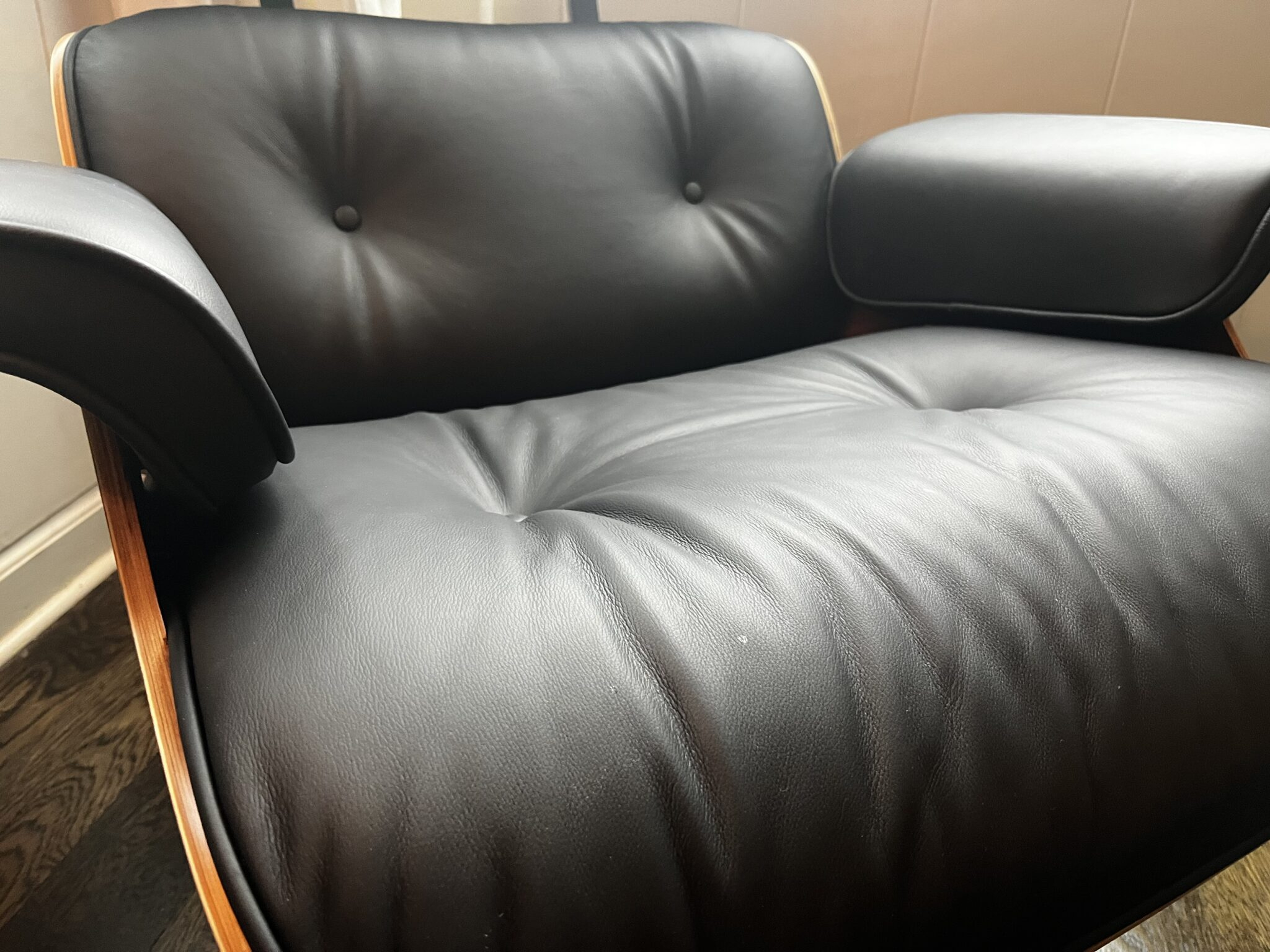
The first thing your eyes hit when you look at an Eames chair is the wood shell. This is where the biggest mistakes happen. In the original design, Charles and Ray Eames used molded plywood with a specific grain orientation. Today, high-quality replicas respect this tradition. Cheap ones do not. When you are looking at a chair, either in person or via high-res photos, look closely at the veneer. Is it rosewood? Walnut? Palisander? The grain should be natural, irregular, and deep. It should look like wood, not plastic.
A common trick in 2026 is the use of printed vinyl or low-grade laminate that mimics wood grain. It looks perfect from five feet away. Up close? It’s dead. There is no depth. The pattern might even repeat if you look at different sections of the shell. Real wood veneer has variation. No two chairs are exactly alike. If the seller claims it is "real wood" but the price is under $400, be skeptical. Ask for close-up shots of the grain. Look for the pores. Look for the subtle shifts in color. A quality replica will use genuine hardwood veneers, often hand-selected to match the classic aesthetic.
Also, check the sheen. Authentic-style chairs usually have a satin or semi-gloss finish that highlights the wood without looking like a bowling ball. Cheap copies often go too glossy. It looks wet. It looks cheap. The finish should feel smooth to the touch, not sticky or overly coated. If you can see your reflection clearly in the armrest, run away. The goal is warmth, not shine. Remember, the wood shell is the skeleton of the chair. If the skeleton is fake, the whole thing is compromised.
Leather Quality: Smell, Touch, and Aging
Leather is the soul of the Eames lounge. It is what you touch, what you sit on, and what ages with you. This is where manufacturers cut corners aggressively. In 2026, you will see terms like "bonded leather," "bi-cast," or "PU leather." These are not full-grain. They are scraps of leather glued together or plastic coated with a leather-like texture. They might look okay new, but they peel. They crack. They smell like chemicals, not hide.
A quality replica uses top-grain or full-grain aniline leather. It should smell rich and earthy. When you press your finger into it, it should wrinkle slightly around the indentation. This is called the "pull-up" effect, especially in oils-treated leathers. If the surface stays perfectly flat and rigid, it is likely synthetic or heavily corrected. You want leather that breathes. You want leather that gets softer and more beautiful over time, developing a patina. Cheap leather just gets ugly.
Pay attention to the stitching too. On a high-end reproduction, the stitching is straight, tight, and consistent. The thread color should complement the leather, not clash with it. Look at the seams where the cushions meet the shell. Are there gaps? Is the leather pulling unevenly? A well-made chair has cushions that fit snugly but not tightly. The leather panels on the backrest and seat should align properly. Sloppy stitching is a sign of rushed assembly line work, not craftsmanship. Don’t ignore the nose. If it smells like a new car interior (plastic), it is not real leather.
The Geometry of Comfort: Proportions and Pitch
Here is a secret: comfort is math. The original Eames lounge was designed with a specific 15-degree tilt. This angle allows your body to relax without sliding out or feeling like you are falling backward. Many cheap replicas get this wrong. They make the chair too upright, like a dining chair, or too reclined, like a beach lounger. Both are uncomfortable for long periods.
In 2026, some sellers advertise "modernized" dimensions to fit smaller apartments. Be careful. Changing the proportions often ruins the ergonomic balance. A quality replica sticks to the classic specs. The seat height should be around 15 inches. The overall height is roughly 32-33 inches. The ottoman should be proportional, not tiny and cute, but substantial enough to rest your legs fully. If the ottoman looks like a footstool for a child, the chair scale is probably off too.
Ask the seller for exact measurements. Compare them to standard Eames dimensions. If they hesitate or give vague answers, that is a red flag. Also, look at the relationship between the headrest and the back. In a good copy, the headrest cushion sits flush and supports the neck naturally. In bad copies, it sticks out awkwardly or sinks in too far. The geometry should feel intuitive. When you sit down, you shouldn’t have to adjust yourself constantly. You should just sink in. If the angles look weird in photos, trust your gut. They will feel weird in person.
Hardware and Base: The Hidden Details
Flip the chair over. Or ask for photos of the underside. The base is where the engineering happens. The original uses a five-star aluminum base with rubber glides. High-quality replicas mimic this with heavy-duty cast aluminum. Cheap ones use thin, lightweight metal that feels hollow. Tap it. Does it sound solid? Or does it ring like a tin can? The weight matters. A quality chair is heavy. It anchors itself to the floor. A light chair feels tippy and unstable.
Check the shock mounts. These are the rubber discs that connect the wood shells to the frame. They allow the chair to flex slightly, giving it that famous bounce. In 2026, better replicas use high-density rubber compounds that resist drying out and cracking. Cheap versions use hard plastic or low-grade rubber that snaps under pressure. If you can see the mounts, look for cracks or discoloration. They should be black or dark grey, uniform, and firmly attached.
Also, look at the screws and bolts. Are they stripped? Are they mismatched? A well-assembled chair uses high-quality hardware, often hidden or capped for a clean look. If you see rust or cheap zinc plating already showing wear, the internal components are likely just as bad. The swivel mechanism should be smooth. It should turn silently. If it grinds or catches, the bearing inside is poor quality. These details seem small, but they determine whether your chair lasts two years or twenty.
Branding, Labels, and the "Herman Miller" Myth
Let’s clear something up. If you are buying a replica, it will not say Herman Miller. It shouldn’t. Herman Miller is the licensed manufacturer of the authentic Eames chairs. Any chair sold as a "replica" or "reproduction" is, by definition, not Herman Miller. However, shady sellers sometimes try to confuse buyers. They might use logos that look similar, or claim the chair is "licensed" when it is not. In 2026, consumer protection laws are stricter, but online marketplaces are still the wild west.
A honest replica seller will be transparent. They will say, "This is a reproduction inspired by the Eames design." They won’t try to trick you. Look for the manufacturer’s label on the underside of the chair or ottoman. It should identify the actual maker of the reproduction. If there is no label, or if the label is a sticker that looks like it was printed at home, be wary. Quality manufacturers take pride in their brand, even if it is not the original.
Beware of the word "Authentic" in listings for non-Herman Miller chairs. It is a marketing buzzword used to imply quality, but it is legally misleading if taken literally. Instead, look for terms like "High-Fidelity," "Premium Reproduction," or "Designer Inspired." Read the reviews. Look for photos posted by actual buyers, not just the stock images provided by the seller. Do the chairs in the user photos look like the ones in the listing? Discrepancies here are a major warning sign. Trust transparency over hype.
Finally, let’s talk money. You cannot buy a high-quality Eames replica for $200. The materials alone—real wood veneer, genuine leather, aluminum base—cost more than that. In 2026, a decent quality reproduction typically ranges from $800 to $1,500. Some ultra-high-end bespoke copies go higher. If you see a chair for $300, it is particle board and vinyl. It will not last. You are better off saving your money and buying a different style of chair entirely.
Where you buy matters. Specialized furniture retailers who focus on mid-century modern reproductions are usually safer bets than general marketplaces. They have a reputation to uphold. They often offer warranties or return policies. Buying from a random third-party seller on a massive e-commerce site is a gamble. You might get lucky, but you might also get a box of regrets. Look for companies that have been around for a while. Check their customer service responsiveness. Do they answer questions about materials? Do they provide detailed specs?
Consider buying vintage replicas too. Sometimes, older reproductions from the 90s or early 2000s were built better than some of the fast-furniture copies today. They have already proven their durability. But inspect them carefully for wear. Ultimately, the goal is value. You want a chair that serves you well for years. Paying a fair price for a well-made replica is smart. Overpaying for junk is painful. Underpaying for trash is frustrating. Find the sweet spot. Do your homework. And when in doubt, wait. The right chair is worth the search.
So, there you have it. Spotting a quality Eames lounge chair replica in 2026 doesn’t require a magic eye. It requires attention. Look at the wood grain. Smell the leather. Check the angles. Inspect the base. Be honest about the branding. And respect the price. When you find a chair that meets these criteria, you aren’t just buying a seat. You are buying a piece of design history, reinterpreted for your life. It might not be the original, but it can still be exceptional. And isn’t that what really matters? Enjoy the hunt. And enjoy the sit.