Have you ever stared into your fridge, seen a jar of pickles hiding behind a block of cheddar, and thought, "There has got to be a better way"? You’re not alone. We’ve all been there. For decades, the round lazy Susan was the go-to solution for corner cabinets and deep pantries. It spins. It’s fun. But does it actually work well in a modern, square-shaped refrigerator shelf? Spoiler alert: not really.
In 2026, home organization isn’t just about aesthetics; it’s about efficiency. And lately, there’s been a quiet revolution happening in kitchen storage. People are swapping out those classic circular trays for rectangular ones. It might seem like a small change, but the difference is night and day. Why? Because of simple physics. Specifically, how shapes interact with space, rotation, and gravity. Let’s dive into why going rectangular is the smartest move you can make for your square shelves.
The Geometry of Wasted Space
Let’s start with the obvious. Most fridge shelves are rectangular or square. They have straight edges and ninety-degree corners. Now, imagine placing a perfect circle inside a square. What happens? You get empty space in the four corners. That’s dead zone. Unused real estate. In a small apartment fridge, that wasted space might equal an entire week’s worth of yogurt cups or condiment bottles.
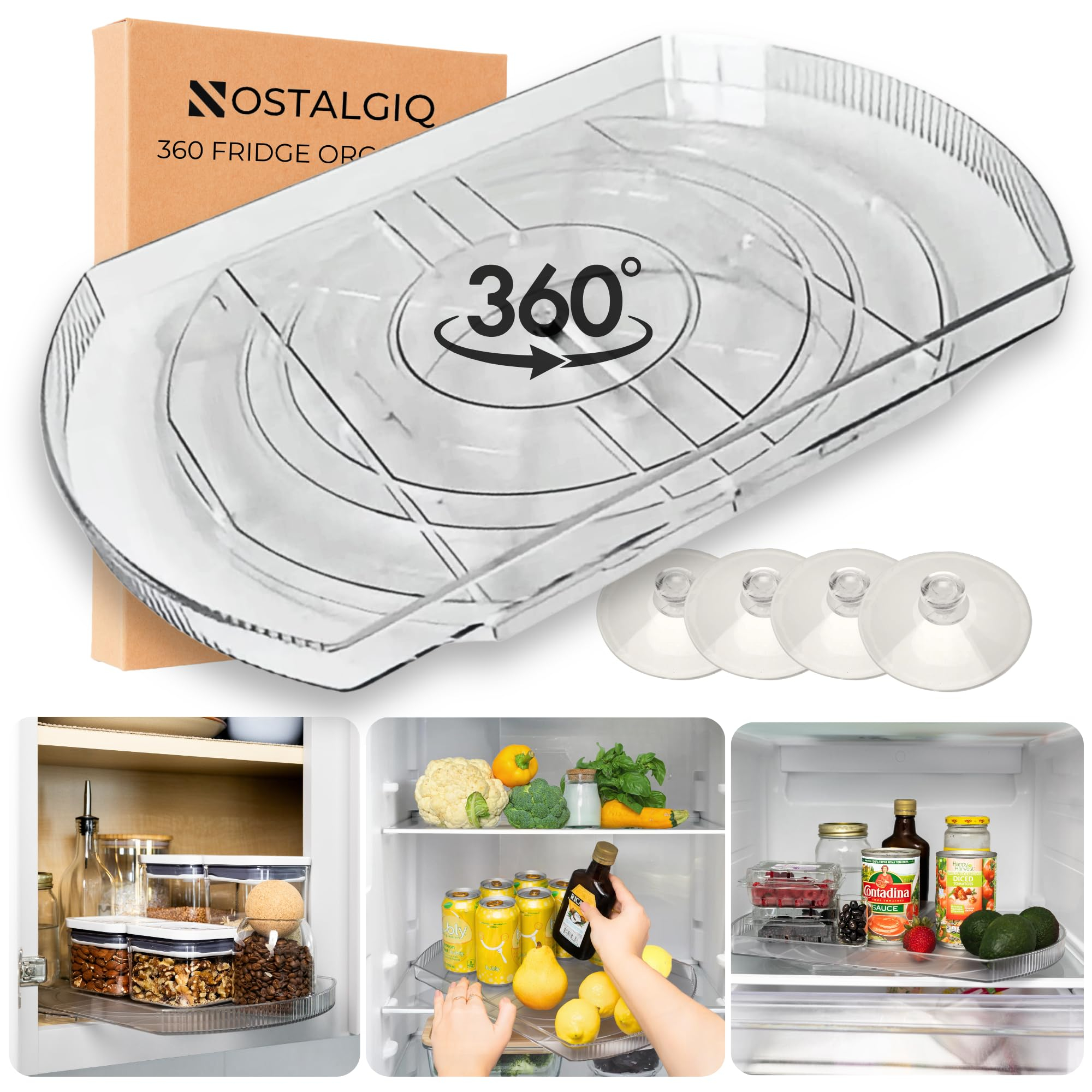
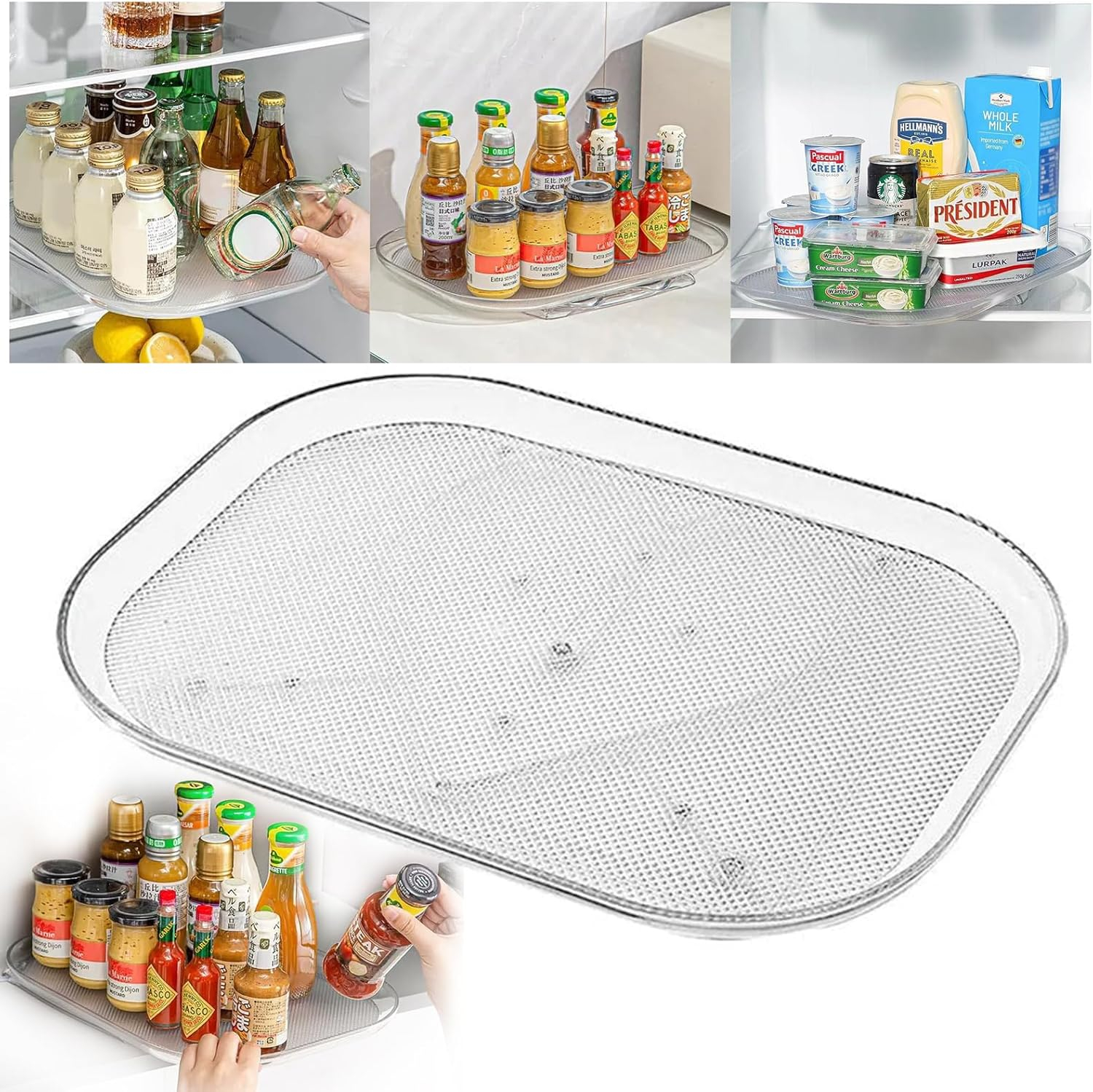
A rectangular turntable, on the other hand, aligns with the shelf’s geometry. It fills the footprint. There are no gaps. No awkward triangles of nothingness where dust bunnies (or worse, spilled milk) can hide. This isn’t just about looking tidy; it’s about volume. By matching the shape of the container to the shape of the shelf, you maximize every cubic inch. It’s basic geometry, sure, but it’s also common sense. When you stop fighting the shape of your storage, you start winning at organization.
Think about it this way: if you buy a rug for a square room, you don’t buy a round one unless you’re going for a specific look. You buy a square rug to cover the floor. The same logic applies here. The rectangular turntable respects the boundaries of the shelf. It doesn’t try to be something it’s not. And because it fits flush against the front edge, you don’t lose any depth. Every item sits within reach, right up to the front lip. No more reaching into the dark abyss of the back corner.
Rotation Mechanics and Center of Gravity
Here’s where the physics gets interesting. A round turntable rotates around a central point. Easy. Stable. But a rectangle? It’s longer. It has more mass distributed away from the center. So, why doesn’t it tip over? Why doesn’t it wobble like a cheap table leg? The answer lies in the bearing mechanism and the center of gravity.
Modern rectangular turntables, like the Mighty Susan or the Honuorable Square models popular in 2026, use reinforced bases. They often have steel-reinforced tracks or multi-point bearing systems. These aren’t just simple swivels; they’re engineered to handle uneven weight distribution. When you place a heavy jar of salsa on one side and a light bag of spinach on the other, a cheap round tray might tilt. A quality rectangular one stays flat. Why? Because the base is wider. It has a larger surface area in contact with the shelf. This creates stability.
Also, consider the rotation itself. A rectangle doesn’t spin freely in all directions like a circle. It has limits. But that’s a good thing. In a confined space like a fridge, you don’t need 360 degrees of infinite spin. You need controlled access. The rectangular design allows the tray to rotate just enough to bring the back items to the front, then stop. It prevents the "overspin" problem where you knock over neighboring items. It’s predictable. And predictability is key when you’re grabbing milk at 6 AM.
Accessibility and the "Front-Load" Advantage
One of the biggest complaints about round lazy Susans in square spaces is that they don’t sit flush with the front edge. They curve inward. This means the items at the front are further away from you than they need to be. You have to reach over the curve. It’s subtle, but it adds up. Over time, that extra inch of reach becomes a barrier. Especially for kids or anyone with mobility issues.
Rectangular turntables solve this. They sit flush. The front edge of the tray aligns perfectly with the front edge of the shelf. This is what organizers call the "front-load" advantage. Everything is presented directly to you. No curves. No gaps. Just straight-line access. When you pull the tray forward (some models allow a slight slide), or simply rotate it, the items are right there. At eye level. At hand level.
This design also makes cleaning easier. Spills happen. Sauce drips. With a round tray, liquid can pool in the corners of the shelf, outside the tray. With a rectangular one, the tray acts as a containment unit. It catches the mess. You just lift it out, rinse it, and pop it back in. No scrubbing the shelf itself. It’s a small detail, but it saves time. And in 2026, who doesn’t want to save time?
Material Science and Durability
It’s not just about shape; it’s about what the tray is made of. Early rectangular turntables were flimsy plastic. They warped. They cracked. But today’s models are built differently. They use high-grade, BPA-free plastics that are rigid yet lightweight. Some even have non-slip mats integrated into the surface. This prevents bottles from sliding around during rotation.
The non-slip feature is crucial. Think about the physics of friction. When you rotate a tray, inertia wants to keep the objects stationary. If the surface is smooth, glass jars slide. They clatter. They break. A textured or rubberized surface increases friction. It grips the items. This allows for smoother, quieter rotation. You can spin the tray with one finger, and everything stays put. It’s satisfying. It feels solid.
Durability also matters for long-term use. Refrigerators are cold environments. Materials contract and expand. Cheap plastic becomes brittle. High-quality materials resist this. They maintain their shape. They don’t warp under the weight of heavy items. This is why brands like YouCopia and Mighty Susan have gained traction. They’ve invested in material science. They’ve tested their products in real-world conditions. And it shows. The trays feel substantial. They don’t feel like toys. They feel like tools.
Real-World Applications Beyond the Fridge
While the fridge is the most common spot, rectangular turntables are versatile. They work in pantries. They work in cabinets. They even work on countertops. The physics remains the same: maximize space, ensure stability, improve access. In a pantry, a rectangular tray can hold cans, boxes, and jars. It turns a deep, dark shelf into a visible, accessible display. You can see everything at a glance. No more buying three cans of tomato paste because you couldn’t see the two you already had.
In upper cabinets, they’re a game-changer for spices. Traditional round spice racks waste space. A rectangular tray fits the width of the cabinet. It holds more bottles. And because it rotates, you don’t have to dig through the back row. Just spin and grab. It’s simple. It’s effective. It reduces clutter. And let’s be honest, less clutter means less stress. There’s a psychological benefit to organization. When your space is orderly, your mind feels clearer.
Some people even use them in bathrooms. For toiletries. For makeup. Anywhere you have a square or rectangular shelf and limited access, a rectangular turntable helps. It’s not just a kitchen gadget; it’s a universal solution for spatial inefficiency. And as homes get smaller and storage gets tighter, these solutions become more valuable. They’re not a luxury; they’re a necessity.
Common Misconceptions and Myths
There are a few myths floating around about rectangular turntables. One is that they’re harder to clean. False. As mentioned earlier, their shape actually makes them easier to clean because they contain spills better. Another myth is that they’re expensive. While some high-end models cost more, basic versions are affordable. And considering the space you save, the ROI is quick. You’re essentially gaining free storage space.
Another misconception is that they’re difficult to install. They’re not. You don’t need tools. You don’t need screws. You just place them on the shelf. That’s it. They’re freestanding. This makes them renter-friendly. You can take them with you when you move. No holes in the walls. No permanent changes. Just pure, portable efficiency.
Some people worry about weight capacity. Can they hold heavy items? Yes. Modern designs are rated for 20-30 pounds or more. That’s plenty for condiments, jars, and cans. Just don’t stand on them. They’re not step stools. But for normal kitchen use, they’re robust. They’re designed to handle the load. So don’t let fear of breakage stop you. These things are tough.
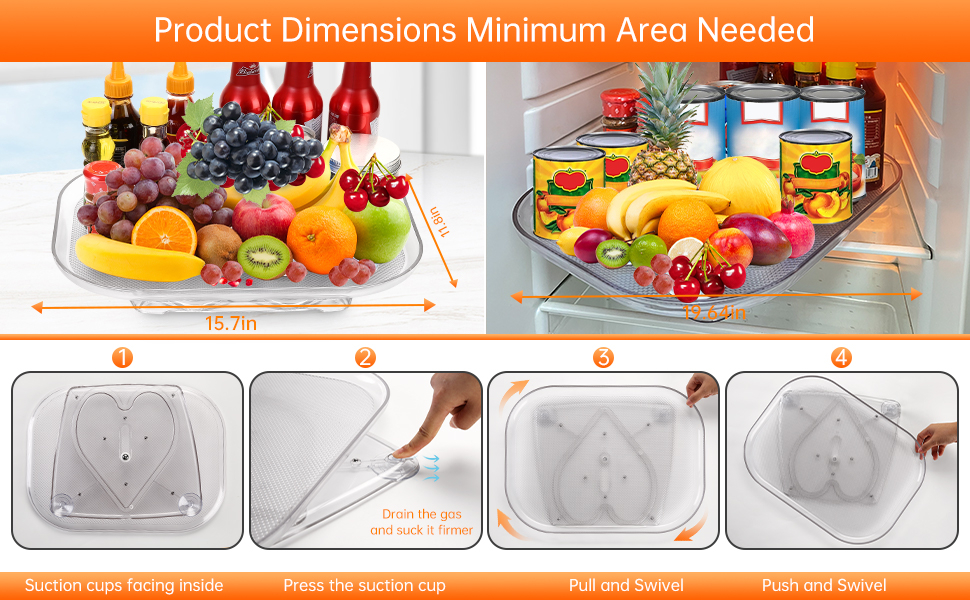
So, how do you get started? First, measure your shelves. Know your dimensions. Width, depth, and height clearance. Then, choose a tray that fits. Don’t guess. Measure twice, buy once. Look for features like non-slip surfaces, clear plastic (so you can see contents), and smooth rotation. Read reviews. Check for durability reports. In 2026, there are plenty of options. From budget-friendly basics to premium, steel-reinforced models.
Start with one shelf. Maybe the condiment shelf in your fridge. See how it feels. Notice the difference. Notice how much easier it is to find things. Notice how much cleaner it looks. Then, expand. Add another to the pantry. Another to the cabinet. Soon, you’ll wonder how you lived without them. It’s a small change, but it has a big impact.
Remember, organization isn’t about perfection. It’s about function. It’s about making your life easier. Rectangular turntables do that. They respect the physics of your space. They work with you, not against you. And in a world that’s constantly demanding more from us, isn’t it nice to have one thing that just works? Give it a try. Your future self will thank you. And your fridge will finally make sense.