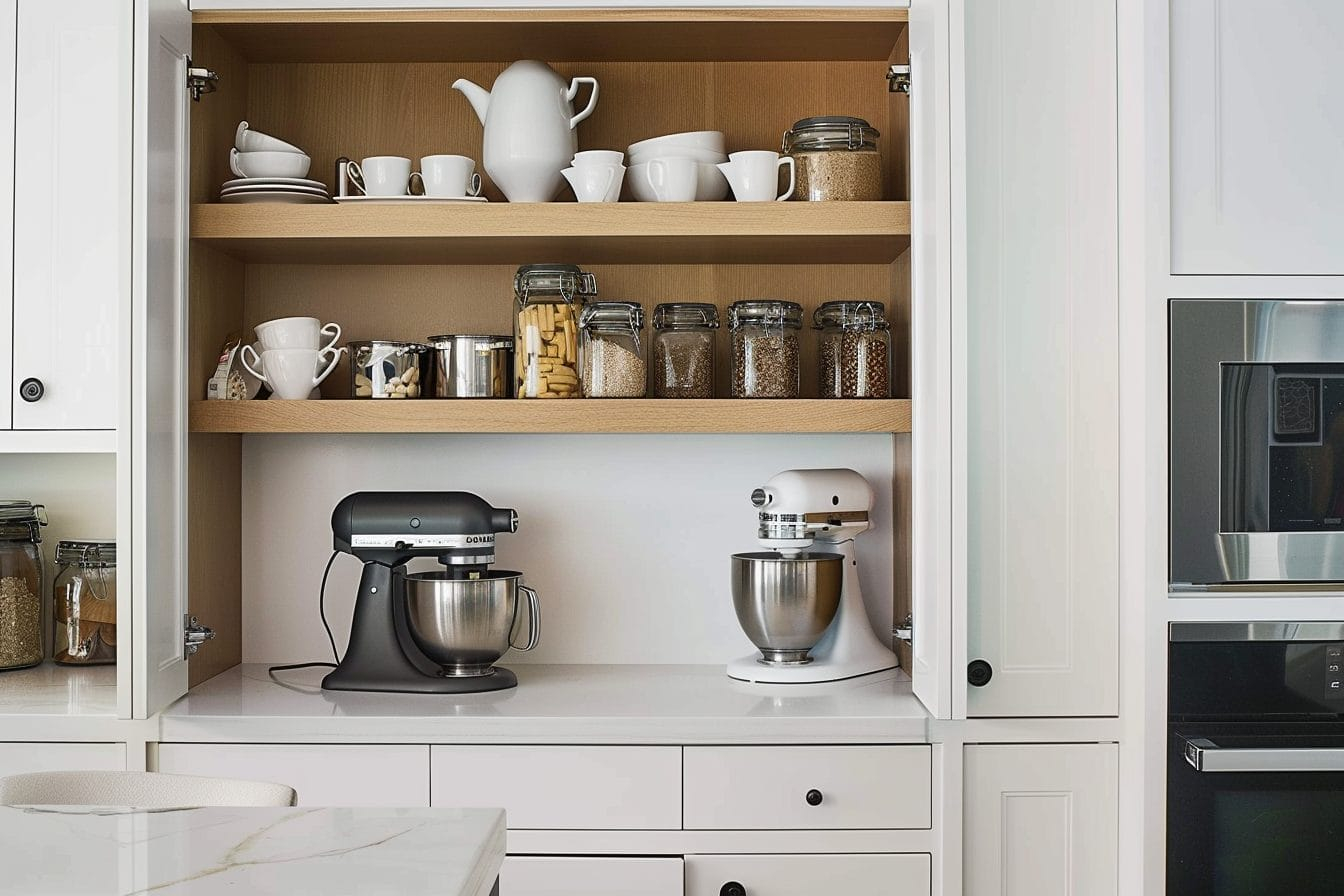
Remember those roll-top doors from your childhood kitchen? The ones that rattled when you tried to pull them down, usually hiding a dusty toaster or a blender you hadn’t touched since last Christmas. For decades, the "appliance garage" was synonymous with awkward design choices and wasted space. It felt like an afterthought, a bulky box tacked onto the counter that screamed "1985." But something interesting has happened. We’ve stopped fighting our countertops and started embracing smart storage.
The concept hasn’t changed much at its core—we still want to hide the mess—but the execution has undergone a total glow-up. In 2026, nobody wants a cluttered workspace. We crave calm. We want surfaces that breathe. And surprisingly, the solution isn’t just buying fewer gadgets (though that helps). It’s about giving those gadgets a proper home that doesn’t ruin the vibe of the room. The modern appliance garage is quiet, seamless, and actually useful. It’s not just a trend; it’s a correction.
Why We’re Done With Cluttered Counters
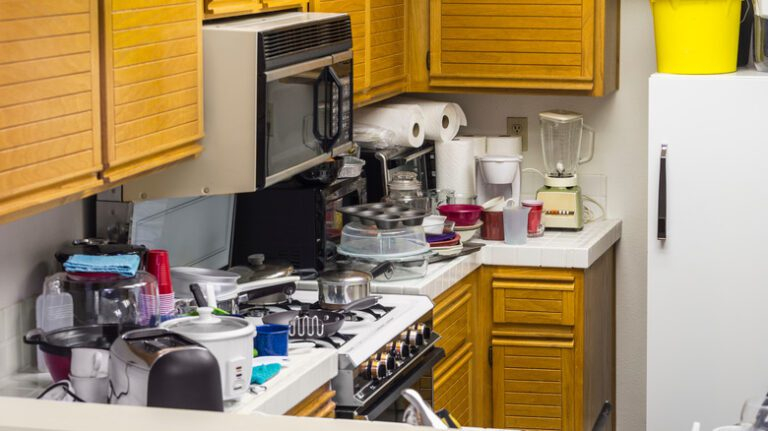
Let’s be honest for a second. How many times have you pushed a coffee maker into a corner just to make room for chopping vegetables? Or worse, left it out because plugging it in every morning feels like too much hassle? Our kitchens have become the command centers of our homes. We cook, we work, we scroll through phones, and we entertain all in the same square footage. When every surface is covered in cords and plastic housings, the mental load goes up. It feels chaotic.
Recent shifts in interior design show a massive push toward "visual silence." That’s a fancy way of saying we want our eyes to rest. According to recent industry reports, homeowners are prioritizing storage solutions that keep daily essentials accessible but out of sight. The countertop is no longer a dumping ground; it’s prime real estate. By reclaiming this space, we aren’t just tidying up; we’re changing how we interact with our kitchens. It’s less about hiding things out of shame and more about curating what we see.
This isn’t just about aesthetics, either. There’s a practical side to clearing the decks. When your workspace is clear, food prep becomes easier. Cleaning is faster because there are fewer nooks for crumbs to hide in. And let’s not forget the safety aspect—fewer cords dangling near sinks means fewer accidents. The return of the appliance garage addresses these pain points directly. It acknowledges that we own these devices, we use them, but they don’t need to dominate our visual field 24/7.
From Roll-Tops to Seamless Panels
If you’re picturing those slatted wooden doors that got stuck halfway down, stop. That’s not what we’re talking about anymore. The biggest difference between the garages of the 80s and today’s versions is integration. Modern designs don’t look like add-ons. They look like they were born with the cabinetry. Designers in 2026 are planning these spaces directly into the kitchen layout, treating them as standard storage rather than a quirky extra feature.
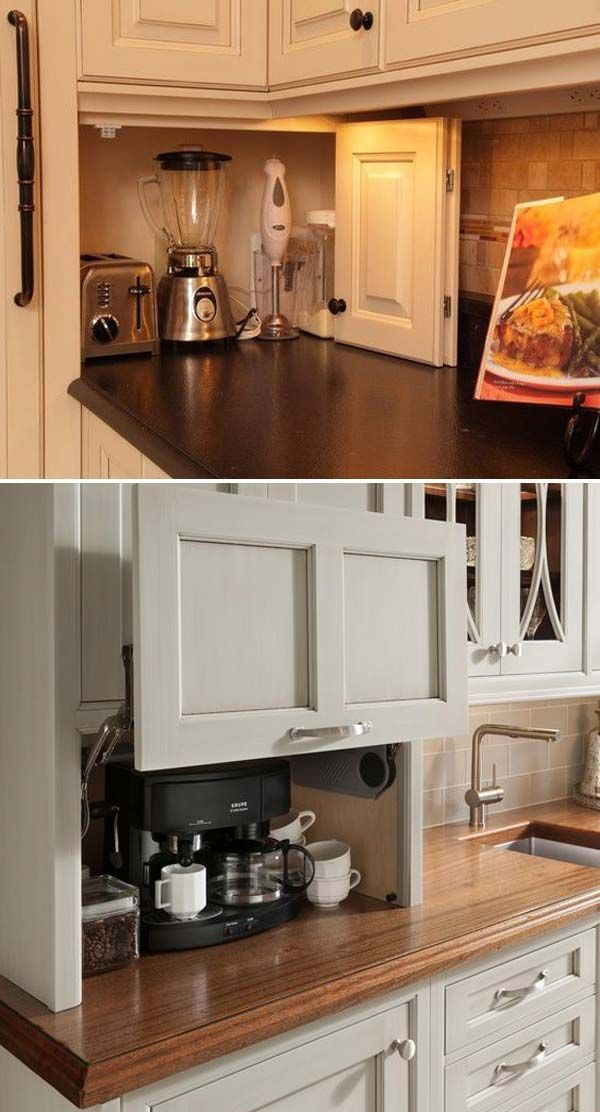
One of the most popular styles right now is the pocket door system. Instead of a door that swings out into your face or rolls up awkwardly, these doors slide back into the cabinet itself. It’s magic. You open the cabinet, grab your mixer, and close it up, and the door disappears. No hardware visible, no obstruction. Another favorite is the flush-panel look. The front of the garage matches the rest of your kitchen cabinets exactly. If you didn’t know it was there, you’d never guess. It creates a wall of clean lines that makes even small kitchens feel bigger.
Technology has played a huge role here, too. We’re seeing soft-close hinges and high-quality tracks that glide smoothly. No more rattling. No more slamming. Some high-end models even include internal lighting that turns on when you open the door, so you aren’t fumbling for plugs in the dark. It’s these small details that elevate the experience from "storage box" to "luxury feature." It’s functional, sure, but it also feels good to use. And honestly, isn’t that what a home should feel like?
Making Dead Corners Actually Useful
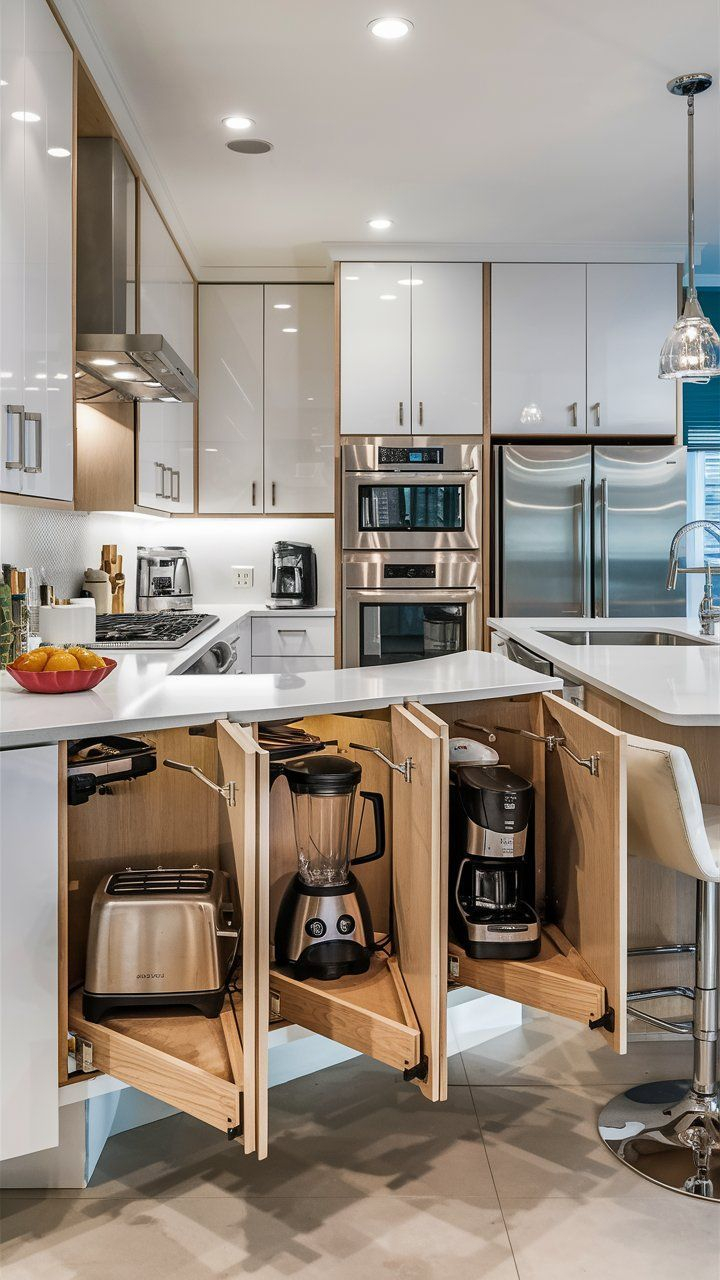
We all have that one corner in the kitchen. You know the one. It’s deep, dark, and impossible to reach. For years, we shoved useless stuff in there or just let it gather dust. It was dead space. But the modern appliance garage thrives in these awkward spots. Since you don’t need standing room in front of an appliance garage (you just need arm reach), corners become perfect candidates. It transforms a frustrating architectural quirk into a high-utility zone.
Designers are getting creative with L-shaped configurations. Imagine a corner unit where two sides open up to reveal a dedicated station for your coffee setup. On one side, you store the beans and mugs; on the other, the machine and grinder. It keeps everything contained. No more spreading coffee grounds across the main counter. This approach maximizes every inch of cabinetry. In smaller apartments or homes with limited square footage, this efficiency is a game-changer. It allows you to keep more appliances without sacrificing workflow.
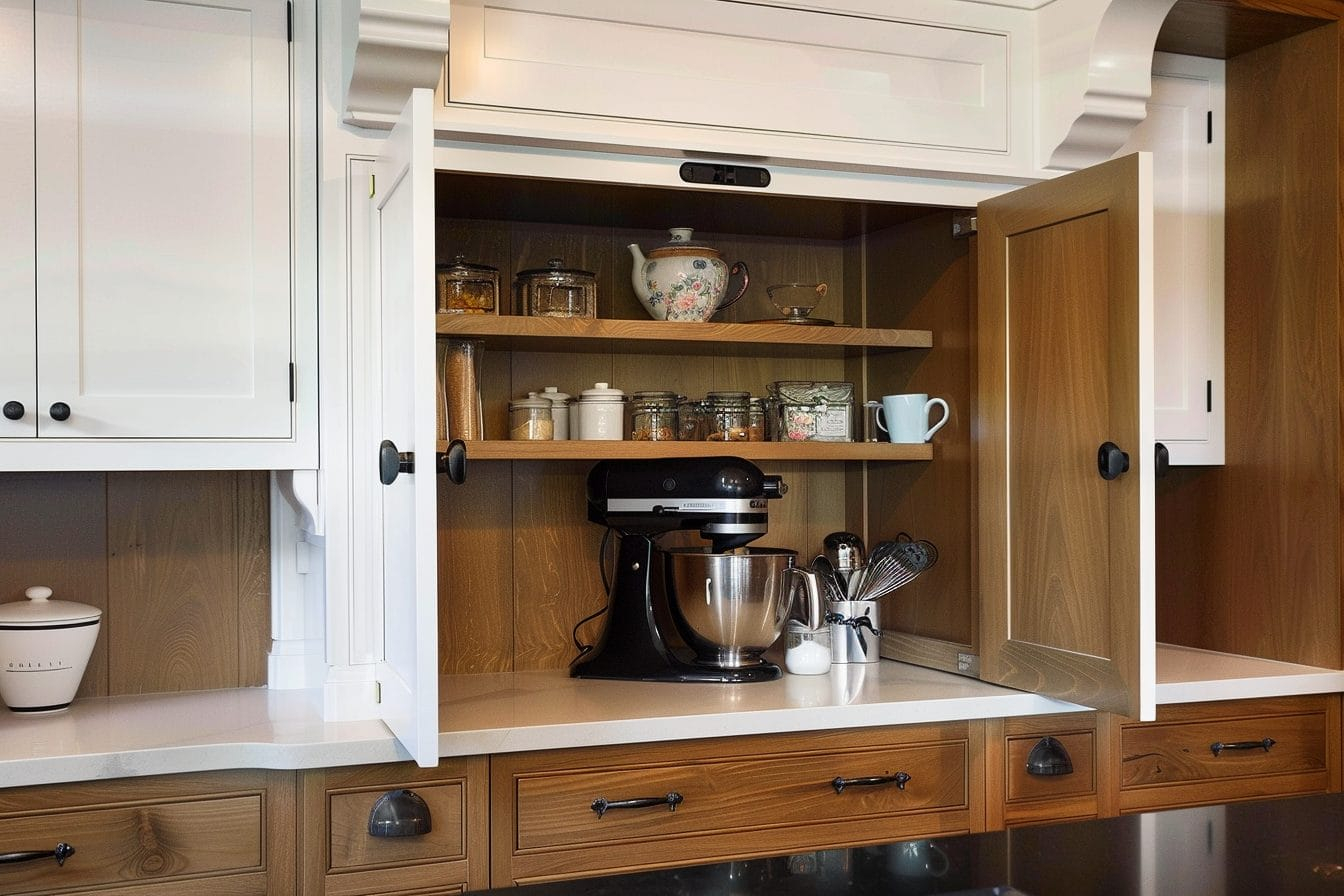
Another clever trick is using vertical space. Older garages were often short and wide. Newer designs go tall. This is perfect for stand mixers or air fryers that have height. By building upward, you free up horizontal counter space elsewhere. It’s a simple shift in perspective, but it changes everything. Instead of fighting the geometry of your kitchen, you’re working with it. The result is a layout that feels intentional, not cramped. It turns those weird angles into assets.
DIY Hacks and Budget-Friendly Options
You might be thinking, "This sounds expensive." And sure, custom cabinetry isn’t cheap. But here’s the good news: you don’t need a full remodel to get this benefit. The DIY community has exploded with creative ways to hack existing furniture. One of the most popular methods involves modifying standard IKEA boxes. With some basic carpentry skills and the right hinges, you can convert a regular upper cabinet into a lift-up garage. It’s cost-effective and looks surprisingly professional if you take your time.
For renters or those who can’t drill into walls, there are freestanding options too. Furniture makers are releasing stylish console-style units designed specifically for kitchen appliances. They look like nice sideboards but have built-in cord management and ventilation. You just plug the strip inside, place your toaster on the shelf, and close the door. It’s portable, non-permanent, and solves the clutter problem instantly. These pieces often come in various finishes, so you can match them to your current decor without painting a thing.
Even simpler? Use tension rods and curtains. It sounds low-tech, but in a pinch, it works. Install a small curtain rod inside an open shelving unit and hang a fabric panel that matches your kitchen textiles. It hides the mess, adds a bit of softness to the room, and costs under twenty bucks. It’s not as sleek as a pocket door, but it achieves the same goal: out of sight, out of mind. The point is, you don’t need a huge budget to embrace this trend. You just need a little creativity and a willingness to experiment.
Tech-Integrated Storage for the Smart Home
It’s 2026, so naturally, our storage is getting smarter. The modern appliance garage isn’t just a hole in the wall; it’s becoming a tech hub. We’re seeing more units with built-in charging stations. Not just for phones, but for larger devices too. Imagine a cabinet with wireless charging pads embedded in the shelf, so your tablet or smart display is always ready to go while it’s tucked away. It keeps the cords organized and hidden, which is a huge relief for anyone who hates tangled wires.
Ventilation is another key tech upgrade. Appliances generate heat. Toasters, air fryers, and coffee machines all need airflow to operate safely and last longer. Old garages often trapped heat, which was a fire hazard and bad for the machines. New designs incorporate passive vents or even small, quiet fans that activate when the temperature rises. Some high-end models connect to smart home systems, allowing you to monitor the internal temperature via an app. It’s peace of mind, baked right into the joinery.
Lighting has also evolved. Motion-sensor LED strips are now standard in quality builds. As soon as you slide the door open, the interior lights up. This isn’t just for show; it helps you see plugs and switches clearly. Some systems even allow you to change the color temperature, matching the ambient light of your kitchen. Whether you’re making midnight snacks or morning coffee, the lighting adapts to you. It’s these subtle integrations that make the modern garage feel like a natural part of a connected home.
So, how do you decide what’s right for you? It starts with assessing your habits. Do you use your blender every day? Then maybe a lower cabinet garage near the prep area makes sense. Is your coffee maker the first thing you touch in the morning? Put it at eye level. Don’t just follow a trend; follow your routine. The best appliance garage is the one that fits seamlessly into your life, not the one that looks best in a magazine.
Consider the scale of your kitchen. In a large, open-plan space, you can get away with bolder designs. Maybe a glass-fronted garage that displays your nice ceramics alongside the appliances. It becomes a feature, not just storage. In a tiny galley kitchen, stealth is key. Go for flush panels that blend into the wall. You want the eye to travel smoothly across the room without stopping on bulky boxes. Material choice matters too. Warm woods add coziness, while high-gloss whites feel crisp and modern. Match the finish to your existing cabinets for a cohesive look.
Finally, think about maintenance. Sliding tracks need occasional cleaning. Lift-up mechanisms need checking. If you’re not handy, maybe a simple swing-door with a nice handle is better than a complex pocket system. There’s no shame in simplicity. The goal is to reduce stress, not add to it. Pick a style that feels easy to live with. After all, this is your kitchen. It should serve you, not the other way around. Take your time, measure twice, and choose what makes you smile when you walk in.
The resurgence of the appliance garage proves that good ideas don’t die; they just evolve. We’ve taken a concept that was once clunky and inconvenient and refined it into something elegant and essential. It’s about respecting our space and our sanity. By hiding the noise, we make room for the things that matter—good food, good company, and a little bit of calm in the chaos of daily life. So, if you’re staring at that cluttered counter wondering what to do, maybe it’s time to build a garage. Just make sure it’s the modern kind.