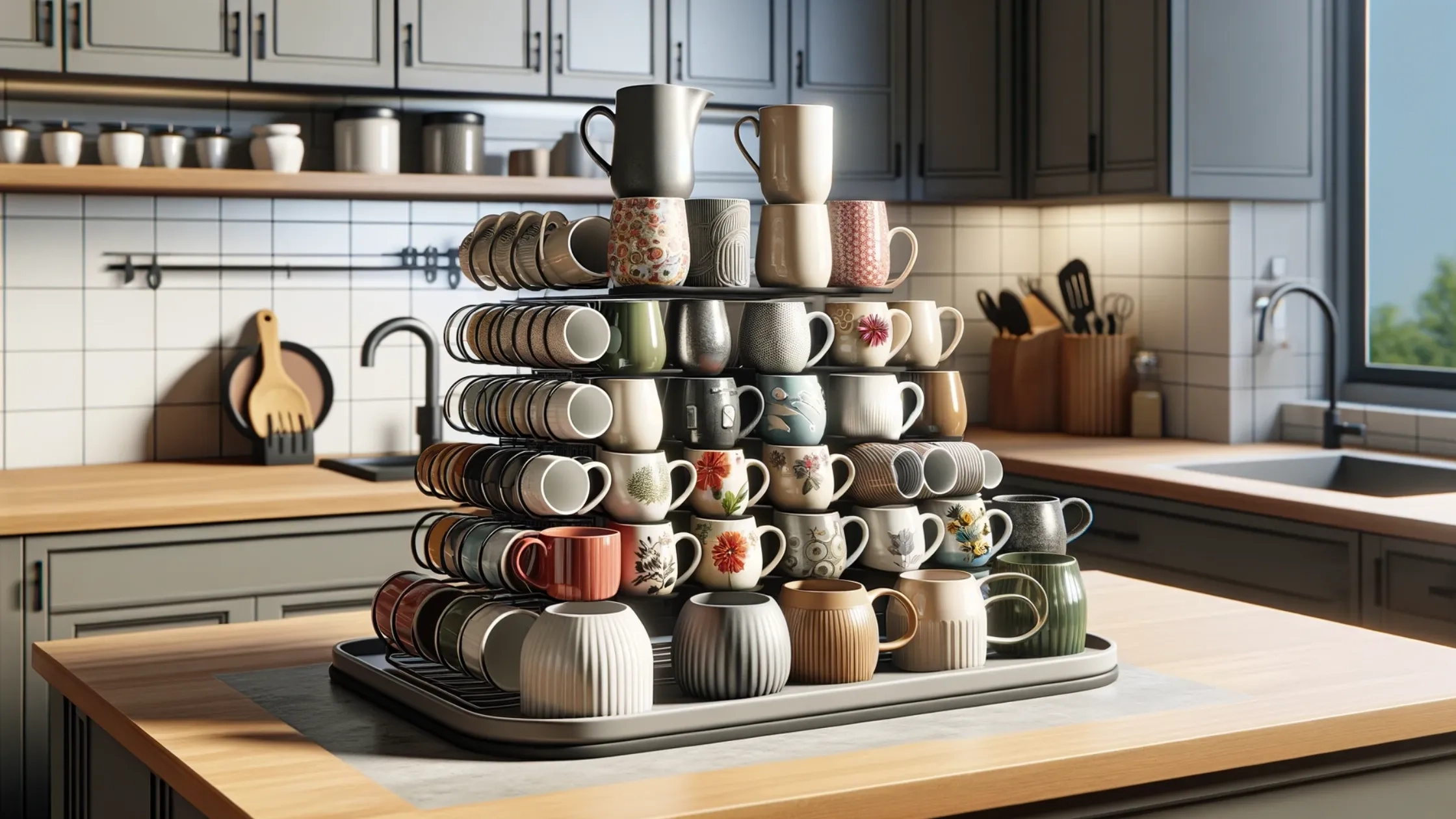
You know that feeling when you open the cupboard for your morning coffee, and it’s like an avalanche waiting to happen? Mugs stacked precariously on top of each other, handles tangled, and that one chipped favorite hiding in the back. It’s chaos. For years, I let it slide. I thought, "It’s just mugs." But then I realized my kitchen storage was drowning in ceramic clutter. I wasn’t just losing space; I was losing my mind every time I tried to grab a cup.
The breaking point came last Tuesday. I reached for a simple white mug, and three others crashed down. That was it. I decided enough was enough. I didn’t want to buy new cabinets or hire a designer. I wanted a fix. A real one. And guess what? It didn’t cost a fortune. In fact, by using some clever, simple organizers, I literally doubled my usable shelf space. If you’re tired of the mug mess, you’re in the right place. Let’s talk about how to get your sanity—and your shelf space—back.
The Great Purge: Why Less Is Actually More
Before you buy a single hook or rack, you have to face the music. We all have too many mugs. It’s true. Think about it. How many do you actually use? Not how many you own, but how many you reach for on a regular basis? I pulled every single mug out of my cabinets and put them on the counter. The pile was embarrassing. There were promotional mugs from conferences I attended in 2019, mismatched sets from garage sales, and gifts from relatives I barely see.
I started sorting them into three piles: Keep, Donate, and Toss. The "Keep" pile was strictly for mugs I used at least once a week. If it had a chip, a stain, or a handle that felt weird in my hand, it went to Donate or Toss. This step is crucial because no amount of organizing can fix a collection that’s simply too big for the space. By cutting my collection down by about forty percent, I immediately freed up room. It felt light. Liberating, even. You might be surprised by how much breathing room you create just by letting go of the extras.
Don’t feel guilty about getting rid of them. Those mugs aren’t serving you if they’re just gathering dust and taking up prime real estate in your kitchen. Once I had my curated list of favorites, I could actually see what I was working with. I had standard sized mugs, a few oversized travel-style ones, and some delicate tea cups. Knowing exactly what I had helped me choose the right tools for the job. It’s not just about hiding them away; it’s about making the ones you love easy to find and use.
Vertical Thinking: Stackable Risers Are Game Changers
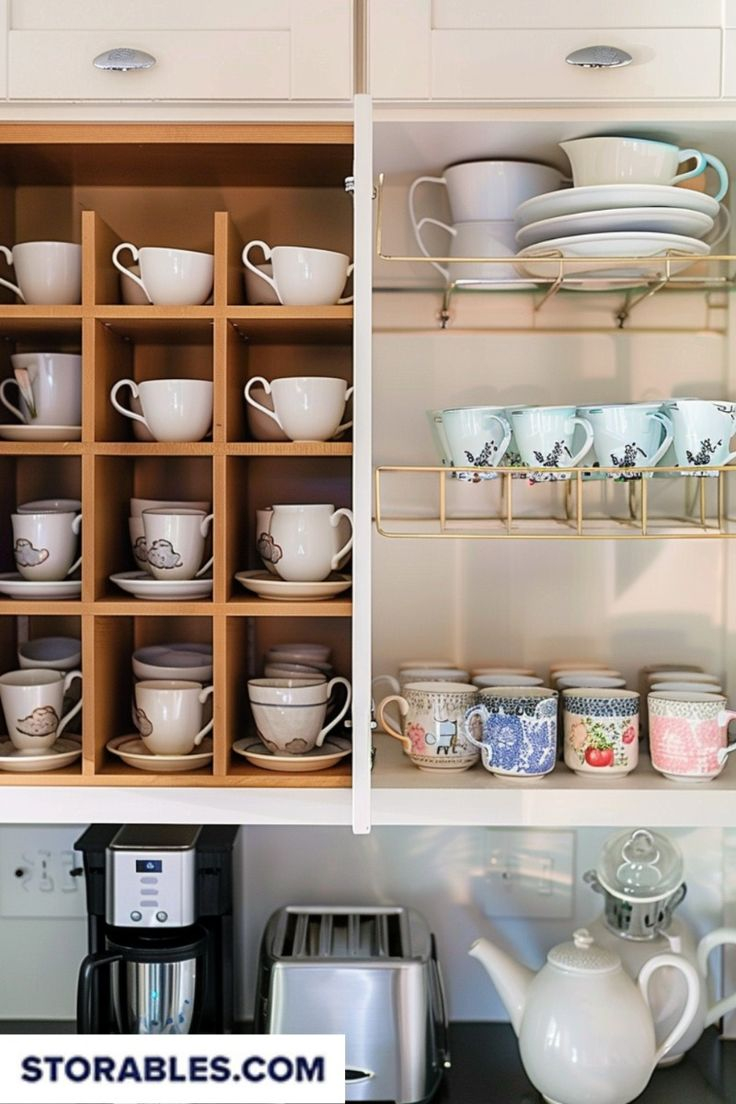
Most people store mugs horizontally, stacking them one on top of the other. It’s the default. But it’s also the most wasteful way to use space. When you stack mugs, you’re leaving huge gaps of empty air above each cup. Plus, trying to pull the bottom mug out without knocking over the tower is a nightmare. Enter shelf risers. These are simple wire or acrylic stands that create a second level within your existing shelf.
I bought a set of adjustable wire risers, and the difference was instant. Instead of stacking mugs directly on the shelf, I placed half of them on the riser and half underneath. Suddenly, I had two layers of accessible mugs. No more digging. No more teetering towers. I could see every handle clearly. It’s such a simple concept, but it effectively doubles your vertical storage capacity. For standard kitchen cabinets, this is probably the highest-impact change you can make.
There are different types of risers, too. Some are fixed height, while others adjust to fit taller mugs or shorter shelves. I found that the adjustable ones were worth the extra few dollars because my mugs weren’t all uniform. I could tweak the height so there was just enough clearance to grab a mug without scraping the shelf above. If you have deep cabinets, you can even place two rows of risers, one behind the other, though you’ll need to remember what’s in the back. For most people, a single row of risers across the width of the cabinet is plenty.
Hanging It Up: Utilizing Dead Space Under Shelves
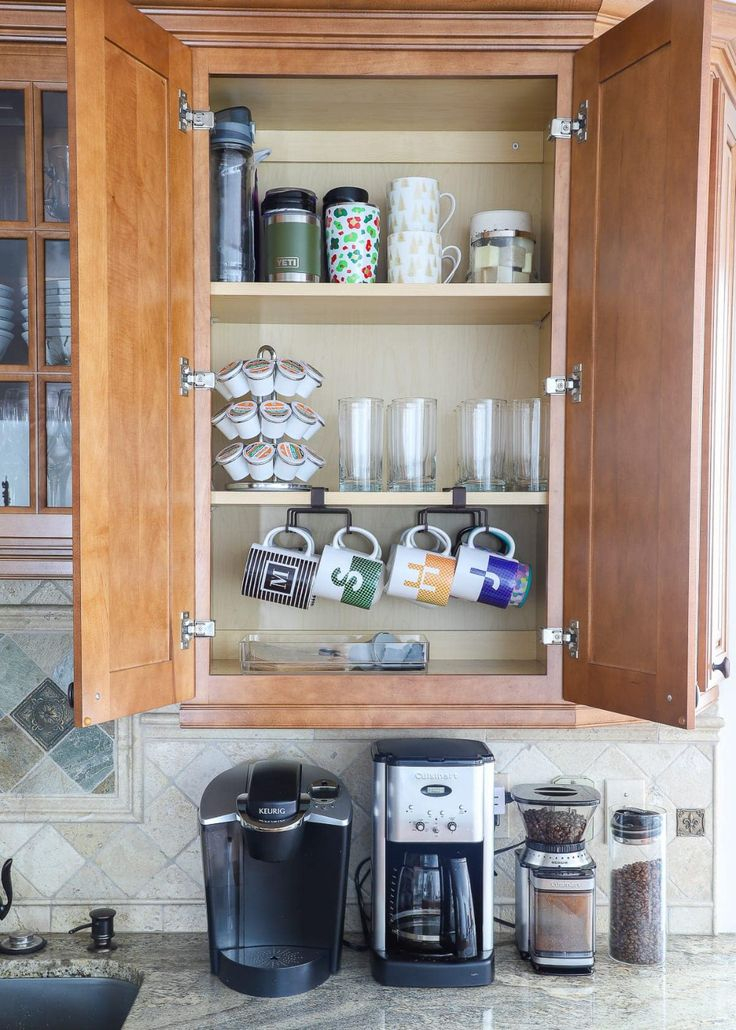
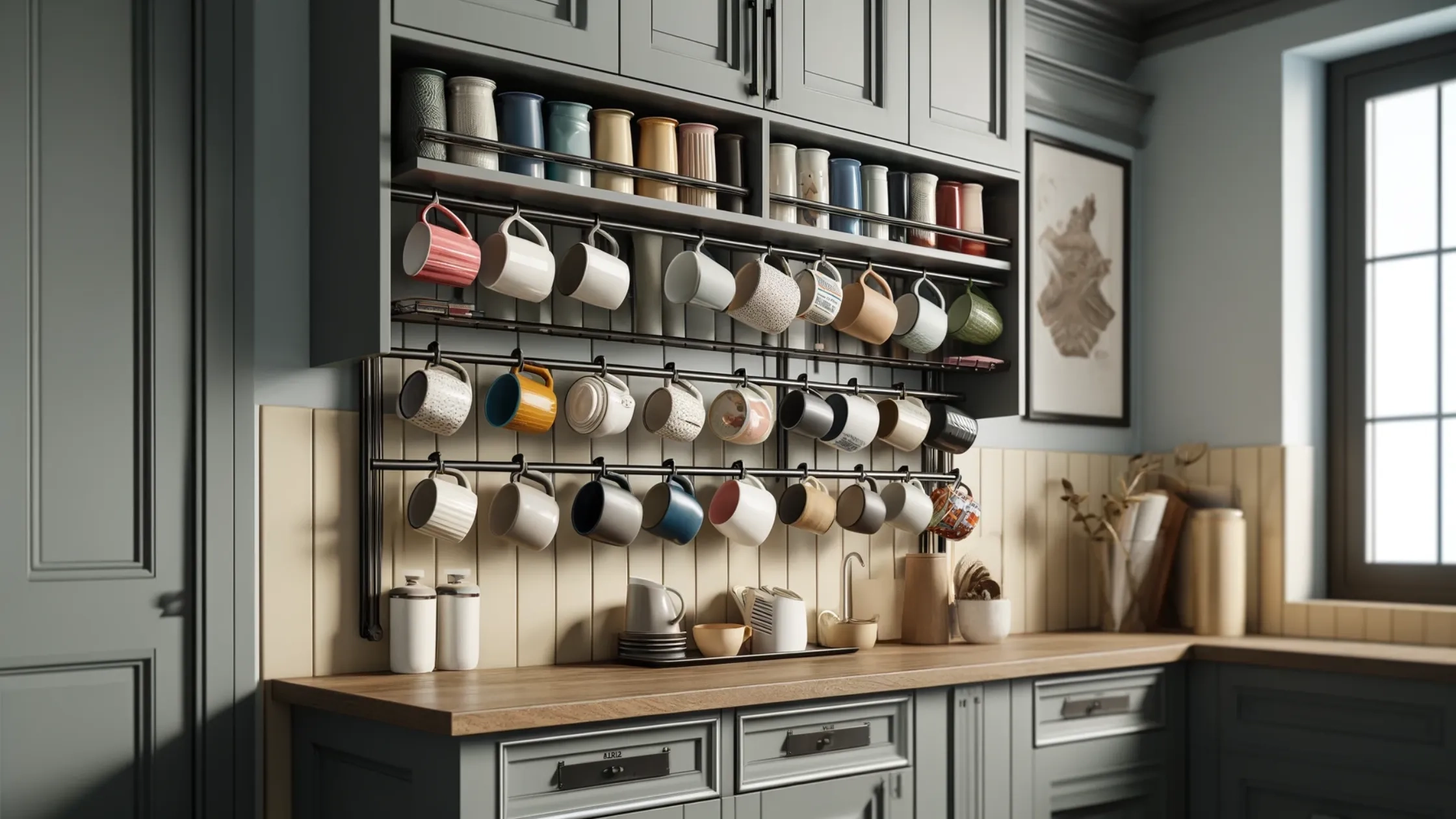
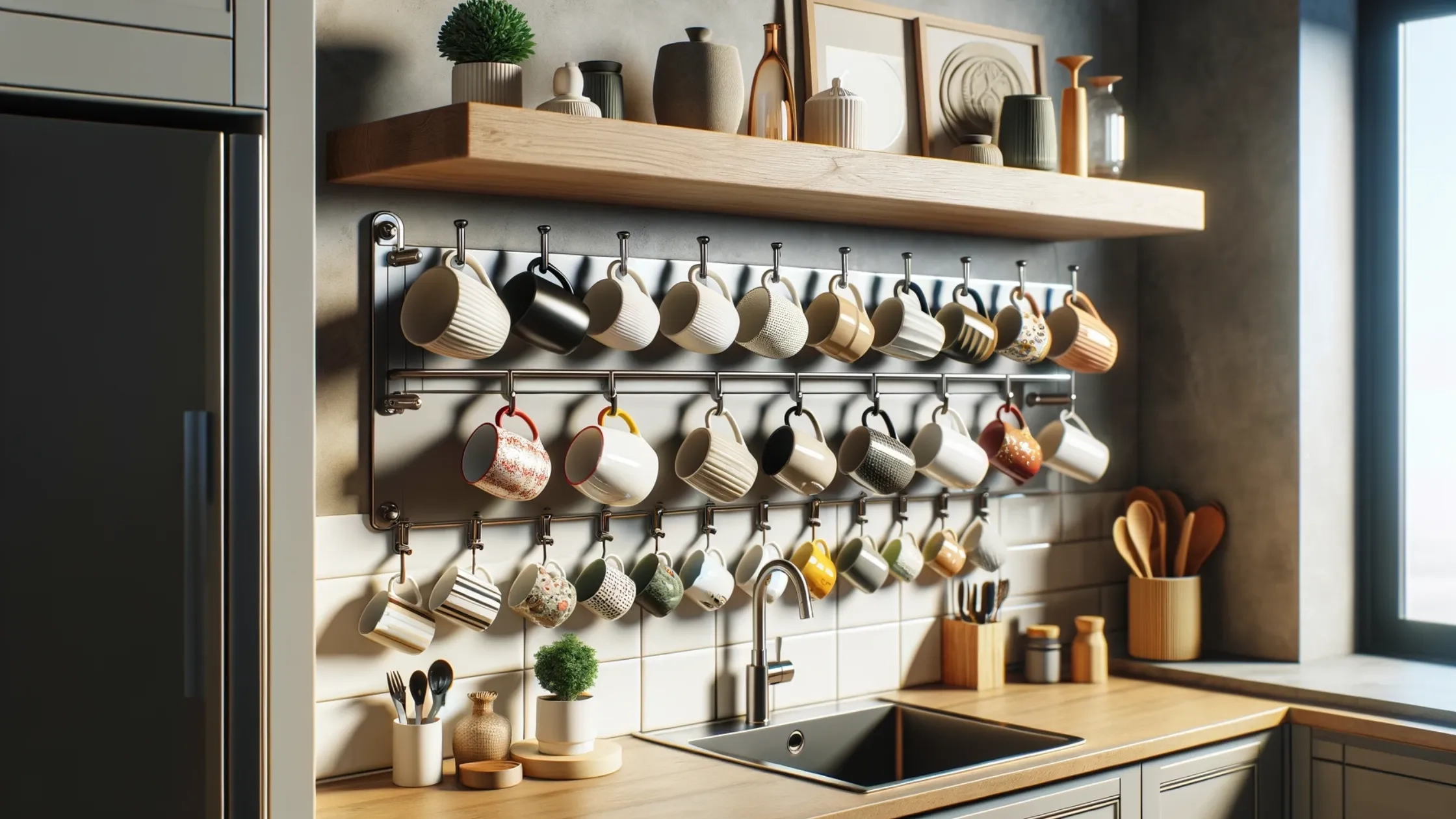
Here’s a secret: the underside of your cabinet shelves is prime real estate that’s mostly ignored. It’s just empty space hanging there. Why not use it? Under-shelf hooks are inexpensive, easy to install, and they keep your mugs off the shelf surface entirely. This is perfect for mugs you use every single day. I installed a row of adhesive hooks under my top shelf, and now my six most-used mugs hang there, ready to grab.
This method has a few huge benefits. First, it keeps the mugs visible. You don’t have to open a door or move anything to see them. Second, it frees up the shelf below for other things, like plates or bowls. Third, it looks kinda cool. Seeing your mugs hanging in a neat row adds a bit of personality to the kitchen. Just make sure you measure the height of your mugs before buying hooks. You need enough clearance so the mugs don’t hit the shelf below when you hang them.
If you’re worried about damaging your cabinets, don’t be. Most modern adhesive hooks are strong enough to hold several pounds but remove cleanly without leaving residue. I’ve had mine up for six months now, and they haven’t budged. For heavier ceramic mugs, you might want to look for screw-in hooks, but for standard daily drivers, adhesive works fine. Just wipe the surface with alcohol before sticking them on to ensure a good bond. It’s a small step that makes a big visual impact.
Drawer Dividers: The Hidden Hero for Odd Shapes
Not everyone has enough cabinet shelf space, and that’s okay. Drawers can be fantastic for mug storage if you organize them right. The key here is dividers. Without dividers, mugs in drawers just roll around and clatter against each other. It’s noisy and risky. But with adjustable drawer dividers, you can create custom slots for each mug. This keeps them secure and prevents chipping.
I converted one of my deep lower drawers into a mug station. I used spring-loaded dividers to create individual compartments. Each mug sits in its own little cubby, handle facing up or to the side, depending on what fits best. This is especially great for odd-shaped mugs that don’t stack well or are too wide for standard shelves. It also protects delicate rims from getting knocked by heavy plates.
The beauty of drawer storage is that it’s hidden. If you have a mix of beautiful artisan mugs and some beat-up old ones, you can keep the pretty ones on display and hide the rest in the drawer. It keeps the visual clutter down. Just make sure your drawers are sturdy enough to handle the weight. Ceramic is heavy. If you have a lot of mugs, distribute them across multiple drawers rather than loading one up completely. It makes pulling the drawer open easier and safer.
The Carousel Trick: Access Meets Efficiency
If you have a corner cabinet or a deep shelf that’s hard to reach, a carousel (or lazy Susan) might be your best friend. I was skeptical at first. It seemed like a gimmick. But after trying a slim, rotating tray designed for mugs, I became a believer. You place the mugs around the edge of the tray, and when you need one, you just spin it. No more reaching into the dark back corners of the cabinet.
This solution is particularly good for families where everyone has their own favorite mug. You can assign a spot for each person, and they can just spin to find theirs. It turns a frustrating search into a smooth motion. There are various sizes available, so measure your cabinet space carefully. You want something that fits comfortably without hitting the sides when it spins.
One thing to note: carousels work best with lighter mugs. If you have extremely heavy stoneware, make sure the base is sturdy. Also, don’t overload it. Leave a little space between mugs so they don’t clink together when you rotate the tray. It’s a fun, functional addition that makes accessing your collection feel a bit more special. Plus, it looks neat and tidy when everything is aligned properly.
Once you have the physical organizers in place, the final step is maintenance. How do you keep it from becoming a mess again? Systematize it. I started color-coding my mugs. Not in a obsessive way, but roughly. Light colors on one side, dark colors on the other. Or, I grouped them by type: tea cups together, coffee mugs together, travel mugs in their own spot. This creates a visual logic that makes putting them away intuitive.
When you have a designated zone for each type of mug, you’re less likely to just shove them in anywhere. You know exactly where the blue mug goes. You know the travel mug lives on the bottom shelf. This mental map reduces decision fatigue. It takes seconds to put a mug away when it has a home. Without a system, you’re constantly deciding where to put things, which leads to haphazard stacking and eventual chaos.
I also do a quick "reset" once a month. I take everything out, wipe the shelves, and put them back according to the system. It takes five minutes. This prevents slow drift into disorder. Over time, you’ll notice patterns. Maybe you never use the yellow mugs. Maybe the travel mugs are always dirty. Adjust your zones as needed. The goal isn’t perfection; it’s functionality. A system that works for your life is the only one that will last.
So, there you have it. Reclaiming half my cabinet space didn’t require a contractor or a massive budget. It required a bit of honesty about what I actually needed, and some smart, simple tools. Shelf risers, under-cabinet hooks, drawer dividers, and a bit of zoning transformed my kitchen from a cluttered stressor into a functional, calm space. You don’t have to do all of these at once. Pick one idea that resonates with you and try it this weekend.
Start with the purge. It’s the hardest part, but also the most rewarding. Then, look at your remaining mugs and ask: where is the wasted space? Is it vertical? Is it under the shelf? Is it in a deep corner? Match the solution to the problem. Remember, organization isn’t about being rigid. It’s about creating ease. It’s about making your morning coffee routine smoother, quieter, and more enjoyable.
Your kitchen should work for you, not against you. By taking control of your mug storage, you’re taking a small but significant step toward a more organized home. And honestly, there’s nothing quite like the satisfaction of opening a cabinet and seeing everything in its place, ready and waiting. Go ahead. Give it a try. Your future self, sipping coffee in a calm kitchen, will thank you.