We have all been there. You reach for the dish soap, but your hand hits a wall of half-empty spray bottles. You try to pull out the sponge, but it’s wedged behind a leaky pipe. It feels like a game of Jenga where one wrong move sends everything tumbling into a puddle of who-knows-what. Opening that cabinet door shouldn’t feel like an archaeological dig. It should be simple. Easy. Even satisfying.
Yet, for most of us, the space under the sink is the final frontier of home organization. It is dark, awkwardly shaped, and often damp. It collects things we don’t know where else to put. But here is the good news: you do not need a degree in engineering or a massive budget to fix it. In 2026, the solutions are smarter, simpler, and more adaptable than ever before. Let’s stop digging and start organizing.
Why This Space Is So Hard to Tame
Let’s be honest for a second. The area under your sink is basically designed to be annoying. You have pipes getting in the way. A garbage disposal humming along. Maybe a water filter system taking up prime real estate. It is not a nice, square box like a pantry shelf. It is an obstacle course. And because it is out of sight, it becomes out of mind. We toss things in there with zero strategy.
This neglect leads to what experts call "clutter creep." It starts small. A new bottle of cleaner goes in front of the old one. Then a spare roll of trash bags gets shoved to the back. Before you know it, you have three half-used sponges, two types of drain cleaner, and a rag that smells questionable. According to recent surveys, the under-sink cabinet is one of the most stressful spots in the kitchen for homeowners. It is not just about mess; it is about wasted time and frustration every single day.
The other issue is accessibility. If you have to kneel down, squint into the darkness, and move three items just to find the soap, you are not going to use that space efficiently. You will just keep buying duplicates because you can’t see what you already have. This cycle of overbuying and under-using is exactly what we need to break. Understanding why it is messy is the first step to fixing it. It is not your fault. The design is tricky. But the solution is within reach.
The Great Purge: Start With Nothing
Before you buy a single bin or basket, you need to empty the cabinet. Completely. Take everything out. Yes, even that bottle of cleaner you think you might need someday. Put it all on the floor or the counter. This step is non-negotiable. You cannot organize what you cannot see. And trust me, seeing the pile of stuff is shocking. It is also liberating.
Now comes the hard part: sorting. Group similar items together. All the dish soaps in one pile. All the surface cleaners in another. Trash bags, sponges, gloves. As you sort, be ruthless. Check expiration dates. Many cleaning products lose effectiveness after a year or two. If it is crusty, leaked, or you haven’t used it in six months, toss it. Do not feel guilty. That half-empty bottle of specialized grout cleaner from 2023? It is not coming back. Let it go.
While the cabinet is empty, take a moment to clean it. Wipe down the shelves. Check for leaks around the pipes. If there is moisture, fix it now. Organization fails in a damp environment. Consider lining the bottom with a waterproof liner or a simple vinyl mat. This protects the wood from spills and makes future cleanup a breeze. It is a small step, but it makes a huge difference in how the space feels. Fresh, clean, and ready for a new system.
Choosing the Right Tools for 2026
Gone are the days of trying to make ill-fitting plastic bins work. In 2026, under-sink organizers are designed with the specific quirks of plumbing in mind. The market is full of adjustable, modular systems that actually fit around pipes and disposals. When choosing tools, think about flexibility. Your needs might change, and your organizer should adapt.
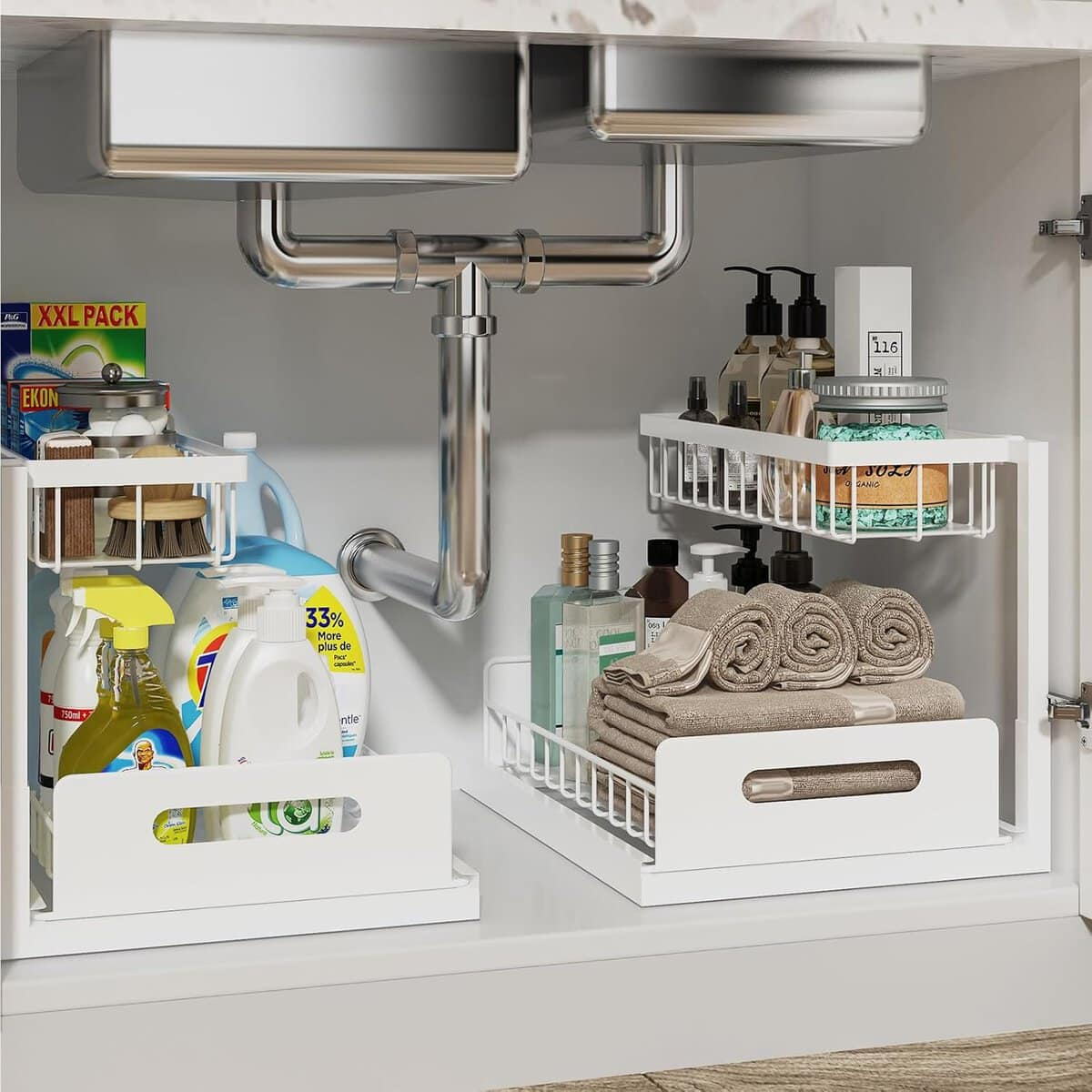
One of the most popular trends this year is the tension-mounted shelf. These are genius. They slide into place without any drilling or screws, creating a second tier of storage instantly. You can stack heavier items on the bottom and lighter, frequently used items on top. Another favorite is the pull-out drawer system. Instead of digging into the back, you simply slide a tray out. It brings everything to you. No more crawling on the floor.
For smaller items like sponges and scrub brushes, look for hanging caddies or door-mounted racks. These utilize vertical space that is often ignored. The back of the cabinet door is prime real estate. A simple over-the-door organizer can hold spray bottles, keeping them upright and easy to grab. Just make sure to measure the clearance so the door still closes properly. The key is to mix and match. Use drawers for bulk items, shelves for daily drivers, and hooks for tools.
Strategic Placement: A Place for Everything
Now that you have your tools and your sorted items, it is time to put them back. But do not just shove them in. Think about frequency of use. What do you grab every single day? Dish soap? Sponges? Those should be at the front and center. Easy to reach without moving anything else. If you have a pull-out tray, put these items there.
Less frequently used items, like extra trash bags or specialty cleaners, can go in the back or on higher shelves. Keep heavy items on the bottom to prevent tipping. Lighter items can go on top. Group like with like. Keep all the kitchen cleaning supplies together. If you store bathroom cleaners under the bathroom sink, keep those separate. Do not mix them. It creates confusion and increases the chance of using the wrong product.
Labeling is your friend. You do not need a fancy label maker. Simple chalkboard labels or even masking tape work fine. Knowing exactly where something lives means you can put it back correctly. It also helps other family members. If everyone knows the sponges live in the left bin, the clutter stays away. It creates a system that is easy to maintain. And remember, leave some empty space. Do not pack it tight. You need room to grab things easily.
Dealing with the Awkward Bits
Let’s talk about the pipes. They are ugly and they get in the way. But you can work with them. Use U-shaped organizers that cut out around the P-trap. These are specifically designed to fit snugly against the back wall while avoiding the plumbing. They maximize the usable floor space. If you have a garbage disposal, consider a slim, vertical organizer that sits to the side.
Another trick is to use the vertical height. Many cabinets are tall, but we only use the bottom foot. Install a second shelf if possible. Or use stackable bins. This doubles your storage capacity. Just ensure the bins are stable. You do not want a tower of cleaning supplies crashing down when you open the door. Clear bins are great because you can see what is inside without pulling them out.
Do not forget about safety. If you have children or pets, keep harsh chemicals locked up or placed high enough that they cannot reach them. Some modern organizers come with child-safe locks built-in. If not, a simple cabinet lock works wonders. Peace of mind is part of organization. Knowing that dangerous items are secure lets you relax. It is not just about tidiness; it is about creating a safe home environment.
Organization is not a one-time event. It is a habit. To keep your under-sink area tidy, you need a maintenance routine. Once a month, take a quick look. Wipe up any spills. Check for leaks. Toss any empty bottles. This five-minute check prevents the buildup of clutter. It is much easier to maintain order than to restore it after a major mess.
Be mindful of what you bring into the house. Do not buy bulk cleaning supplies unless you have the space to store them. One bottle at a time is often enough. If you buy in bulk, store the extras in a different location, like a garage or pantry, and only keep one active bottle under the sink. This reduces the temptation to hoard half-used products.
Finally, be flexible. If a system is not working, change it. Maybe the pull-out drawer is too small. Maybe the tension shelf keeps slipping. Adjust as needed. The goal is functionality, not perfection. If you find yourself constantly rearranging things to make them fit, the system is flawed. Swap it out. Try something else. The best organization system is the one you actually use. And in 2026, with so many smart options available, finding that perfect fit is easier than ever.
So, take a deep breath. Open that cabinet. Pull everything out. And start fresh. You deserve a space that works for you, not against you. No more digging. No more frustration. Just clean, simple, accessible storage. You’ve got this.