So, you found the perfect property. It’s got good bones, a motivated seller, and enough potential profit to make your head spin. You’re ready to move fast. But then you hit the wall: the bank says no. Or maybe they just take too long. That’s when you turn to private money. It feels like a lifeline, doesn’t it? Quick cash, flexible terms, and a handshake that actually means something.
But here’s the thing. Just because it’s easier to get than a traditional mortgage doesn’t mean it’s easy to get right. In fact, the speed of private lending is exactly where most new investors trip up. They rush in, eyes wide open to the prize but blind to the process. I’ve seen deals die not because the property was bad, but because the borrower didn’t know how to talk to a lender. It’s heartbreaking. And entirely avoidable.
Let’s be honest. Nobody wants to look foolish when asking for money. But in the world of hard money and private capital, looking unprepared is the fastest way to get rejected. This isn’t about having a perfect credit score or a decade of experience. It’s about understanding what the person holding the checkbook actually cares about. Spoiler alert: it’s not your life story. It’s the deal.
Overestimating the After Repair Value (ARV)
The first mistake is almost always about the numbers. Specifically, the After Repair Value, or ARV. New investors look at a Zillow estimate, see a renovated house down the street sold for $500k, and suddenly their fixer-upper is worth $500k too. It’s a dangerous game of wishful thinking. Lenders don’t care about your hopes. They care about cold, hard comparables.
When you inflate the ARV, you’re essentially lying to yourself and the lender. If the lender thinks the house will sell for $400k after repairs, but you’re claiming $450k, they’re going to question your entire analysis. Why? Because if you’re wrong about the exit price, you’re probably wrong about the repair costs too. And that puts their money at risk. In 2026, with markets shifting faster than ever, relying on outdated comps from six months ago is a recipe for disaster.
To fix this, do the legwork. Don’t just pull one comp. Pull five. Look at sold listings, not active ones. Active listings are just opinions; sold listings are facts. And be conservative. If you think it might sell for $400k, run your numbers based on $380k. If the deal still works, you’ve got a buffer. If it doesn’t, you just saved yourself from a financial nightmare. Lenders respect caution. They despise arrogance.
Underestimating Rehab Costs and Timelines
Speaking of being wrong, let’s talk about budgets. Every new investor thinks they can flip a house for $20k in repairs. Then they open the walls and find knob-and-tube wiring, black mold, and a foundation that’s seen better days. Suddenly, that $20k budget is $50k. And the timeline? Well, that two-month flip is now a four-month slog.
Private money lenders charge interest by the month. Sometimes by the day. Every extra week you hold that loan eats directly into your profit margin. If you underestimated your rehab costs, you might run out of cash before the job is done. Now you’re stuck with a half-finished house and a looming balloon payment. This is the classic "cash flow crunch," and it kills more deals than bad locations do.
The solution? Pad your budget. Add 15-20% to whatever contractor quote you get. Contractors forget things. Materials prices jump. Unexpected issues arise. By building in a contingency fund, you show the lender you’re realistic. It also gives you peace of mind. When you present your loan request, include a detailed scope of work with line-item costs. Show them you’ve thought about the plumbing, the electrical, and the permits. It proves you’re not just guessing.
Lack of a Clear Exit Strategy
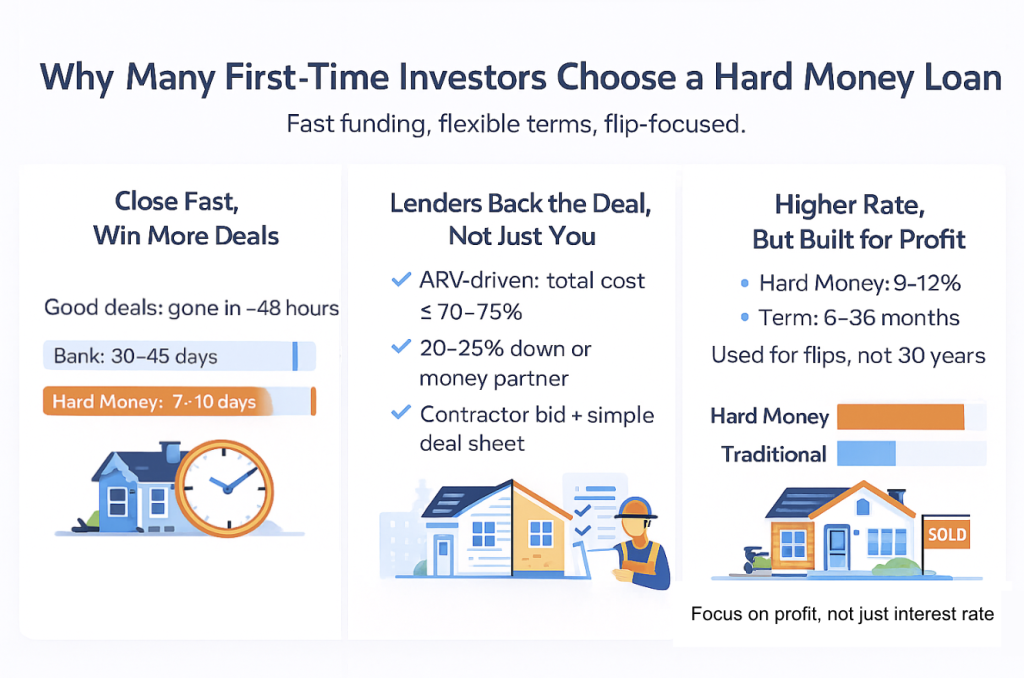
Here’s a question that stumps plenty of beginners: How are you paying this loan back? Private money loans are short-term. Usually 6 to 12 months. They are not forever loans. If you don’t have a clear plan to repay the principal, the lender has no reason to trust you. "I’ll refinance" is not a strategy. It’s a hope. "I’ll sell it" is better, but it needs proof.
Your exit strategy needs to be specific. Are you selling to a retail buyer? To another investor? Are you refinancing into a long-term rental loan? If you’re refinancing, have you spoken to a long-term lender yet? Do you meet their criteria? If you’re selling, what’s your marketing plan? Who is your buyer pool? Lenders want to see that you’ve thought past the purchase. They want to know how their money comes home.
In today’s market, exit strategies need flexibility. Maybe Plan A is to sell, but Plan B is to rent it out if the market slows down. Having a backup plan shows sophistication. It tells the lender you’re prepared for curveballs. Don’t just say "I’ll sell it." Say, "I will list it at $X price point, targeting first-time homebuyers, with a backup plan to refinance into a DSCR loan if it doesn’t sell in 90 days." See the difference? One is vague. The other is a plan.
Poor Presentation of the Deal Package
Imagine walking into a job interview wearing sweatpants and chewing gum. That’s what sending a messy loan package feels like to a private lender. You might have a great deal, but if you send it in a disorganized email with missing documents, blurry photos, and no summary, you’re signaling chaos. Lenders are busy. They skim. If they can’t find the info they need in thirty seconds, they move on.
Your loan package should be clean, professional, and complete. Include a one-page executive summary. Highlight the key numbers: Purchase Price, ARV, Rehab Costs, Loan Amount Needed, and Exit Strategy. Use bullet points. Make it easy to read. Attach high-quality photos of the property, both inside and out. Include the comps you used. Include the contractor’s bid.
Think of it as telling a story. The story of why this deal makes money. Your presentation is the cover of the book. If it looks amateurish, people assume the content is too. Take the time to format your documents. Use PDFs, not Word docs that shift around. Name your files clearly (e.g., "Subject_Property_Photos.pdf" instead of "IMG_5923.jpg"). These small details build credibility. They show you respect the lender’s time. And in this business, respect goes a long way.
Ignoring the Lender’s Criteria and Box
Not all private money is the same. Some lenders only do owner-occupied bridges. Others only fix-and-flips. Some won’t touch condos. Some have minimum loan amounts of $100k. Yet, new investors spray and pray. They send their single-family flip deal to a lender who only does commercial multifamily. Then they wonder why they got rejected.
It’s wasted energy. And it makes you look desperate. Before you reach out, do your homework. Check the lender’s website. Read their guidelines. Do they lend in your state? Do they fund the type of property you’re buying? What is their maximum Loan-to-Value (LTV)? If they max out at 70% LTV and you need 80%, don’t bother calling. Find a lender who fits your deal.
This also means understanding their "box." Every lender has a box of what they like. Maybe they love cosmetic flips in suburban neighborhoods but hate structural rehabs in urban cores. Tailor your pitch to their preferences. If you know a lender likes quick turnovers, emphasize your experienced contractor and tight timeline. If they like strong equity cushions, highlight your down payment. Speak their language. Show them you fit squarely inside their comfort zone.
Failing to Build a Relationship Before the Crisis
The biggest mistake? Waiting until you’re under contract to find a lender. By then, you’re stressed. You’re on a clock. And you have zero leverage. Lenders can smell desperation. And desperation leads to bad terms, or worse, rejection. Private lending is a relationship business. It’s not a transaction. It’s a partnership.
Start building relationships now. Even if you don’t have a deal. Call lenders. Introduce yourself. Ask about their criteria. Buy them coffee. Attend local real estate meetups where lenders speak. Get on their email lists. When you finally have a deal, you’re not a stranger. You’re "that guy who called last month." There’s a huge difference.
Trust takes time. Lenders want to know you’re reliable. They want to know you’ll pick up the phone when things go wrong. By building a rapport early, you create a safety net. If a deal gets tricky, a lender who knows you is more likely to work with you than one who sees you as a name on an application. In 2026, with competition fierce, having a rolodex of trusted lenders is your greatest asset. Don’t wait for the emergency to start making friends.
Look, getting private money isn’t magic. It’s not a secret club. It’s just business. And like any business, it rewards preparation, honesty, and professionalism. The mistakes above aren’t fatal if you catch them early. In fact, avoiding them puts you ahead of 90% of the other beginners out there. Most people are winging it. You don’t have to.
Remember, the lender wants you to succeed. They make money when you make money. They aren’t trying to trick you. They’re trying to protect their capital. When you approach them with clear numbers, a solid plan, and a respectful attitude, you become an attractive borrower. You become someone they want to fund again and again.
So take a breath. Double-check your comps. Pad your budget. Polish your presentation. And reach out to those lenders before you need them. You’ve got this. The deals are out there, and the money is too. You just need to speak the right language. Now go get ’em.