You know that feeling. You walk into a thrift store, hit by that specific mix of old carpet smell and possibility. Most of the time, it’s just junk. Broken lamps. Clothes that don’t fit. But then, you see it. A chair leg that catches the light just right. Or a drawer pull that feels heavy and cold in your hand. Your heart skips a beat. Is it real? Or is it just another piece of cheap veneer pretending to be something it’s not?
In 2026, finding genuine solid wood isn’t just about saving money. It’s become a bit of a rebellion against the disposable culture we’ve been stuck in for decades. With fast furniture falling apart after two years, people are waking up. They want stuff that lasts. Stuff with soul. But the hunt has gotten trickier. Manufacturers have gotten really good at making fake wood look convincing. So, how do you separate the gems from the garbage?
It starts with slowing down. You can’t rush this. If you’re scanning aisles like you’re in a race, you’ll miss the details. The magic is in the imperfections. The weight. The way the grain moves. This guide isn’t about turning you into an antique appraiser overnight. It’s about giving you the eyes to see what’s actually there. Let’s dig in.
The Weight Test and First Impressions
Pick it up. Seriously. Don’t just look at it from three feet away. Walk over and lift that corner. Solid wood is heavy. Like, surprisingly heavy. If you can lift a whole dresser with one hand while checking your phone, put it back. It’s probably particle board or hollow core MDF. Those materials are light because they’re mostly air and glue. Real oak, maple, or walnut has density. It feels substantial. It anchors itself to the floor.
But weight isn’t everything. Some solid woods, like pine or cedar, are lighter than dense hardwoods. So, combine the lift test with the knock test. Rap your knuckles against the surface. Listen closely. Solid wood makes a dull, thuddy sound. It absorbs the vibration. Veneer over particle board often sounds hollow or tinny. It rings a bit. It’s a subtle difference, but once you hear it a few times, you can’t unhear it. It becomes instinct.
Also, look at the bottom. Flip that table over if you can. The underside is where manufacturers get lazy. If the top looks perfect but the bottom is rough, unfinished, or shows exposed particle board edges, it’s likely a veneer job. Solid wood pieces are usually finished on all sides, or at least sealed, because wood moves with humidity. Leaving it raw on the bottom would cause warping. That’s a dead giveaway.
Reading the Grain Patterns
Here’s the thing about nature: it doesn’t repeat itself. Ever. Look at the wood grain on the front of a drawer. Now look at the side. Do the lines match up perfectly? Do they wrap around the corner like a continuous sheet of paper? If they do, it’s veneer. Real wood grain changes direction at corners. It doesn’t flow seamlessly from one face to another unless it’s a single, massive slab (which is rare and expensive).
Check for repetition. Stand back and look at the pattern across a large surface, like a tabletop. Do you see the same knot or swirl appearing every twelve inches? That’s a printed laminate or a low-quality veneer stamp. Real wood has unique variations. One section might be tight-grained, while another is wild and swirling. Imperfection is the signature of authenticity. Embrace the knots. Love the color shifts.
Another trick? Look at the end grain. This is the cross-section of the wood fibers. On a solid wood table leg, you should see the ends of the fibers, looking like little pores or rings. If the "end" looks exactly like the side—smooth and continuous—it’s wrapped in veneer. End grain is hard to fake convincingly. It’s the fingerprint of the tree. If you see it, you’re likely holding something real.
Checking Drawers and Joinery
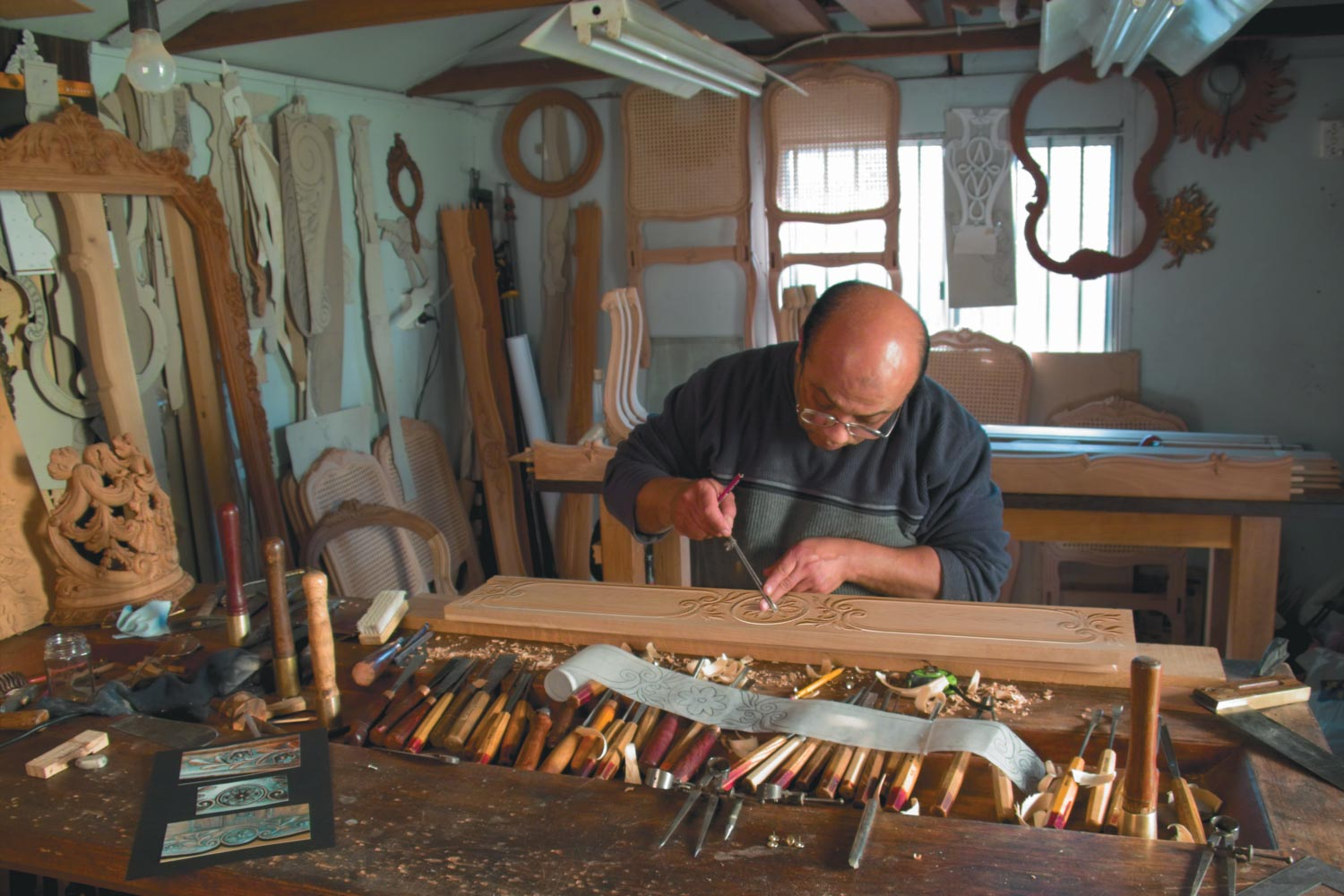
Open the drawers. Don’t just slide them in and out. Pull them all the way out. Look at the sides of the drawer box. Are they made of thin, stapled-together cardboard-like material? That’s modern, cheap construction. Solid wood drawers usually have dovetail joints. Look for those interlocking fingers of wood. They’re strong. They’re beautiful. And they’re a sign that someone cared about how this piece was built.
Even if it’s not dovetailed, look for wood-on-wood sliding mechanisms. Older pieces often have wooden runners instead of metal glides. These wear down over time, creating a smooth, polished track. If you see metal slides that look brand new on an "antique" piece, be suspicious. It might be a refurbishment, or it might be a newer reproduction. Neither is bad, but know what you’re buying.
Check the inside of the cabinet too. Shine your phone flashlight in there. Solid wood cabinets will have wood panels inside. Cheap ones use white melamine or unfinished fiberboard. Smell it. Does it smell like old wood and dust? Or does it smell like chemicals and formaldehyde? That sharp, plasticky scent is a red flag for composite materials. Your nose knows. Trust it.
Inspecting Hardware and Details
Look at the screws. Are they Phillips head? Flathead? Or do they look like modern, mass-produced junk? Older solid wood furniture often uses slotted screws or even square-drive screws. If you see stripped, cheap zinc-plated screws holding a "vintage" piece together, it’s likely been messed with or isn’t as old as it claims. Original hardware matters.
Check the backs of chairs and tables. Are there nails? Screws? Or are there wooden pegs? Hand-driven nails are often irregular. Machine-made nails are uniform. Pegs suggest traditional joinery. Also, look for saw marks. On the underside of older pieces, you might see circular saw marks or even planer marks. These aren’t defects; they’re evidence of how the wood was milled. Modern factory furniture is sanded perfectly smooth everywhere. Real wood has texture if you know where to look.
Don’t ignore the labels. Sometimes, there’s a manufacturer’s stamp burned into the wood or on a paper tag inside a drawer. In 2026, you can quickly snap a photo and search it online. Brands like Ethan Allen, Stickley, or even lesser-known local workshops have distinct styles. Knowing the maker helps you confirm if it’s solid wood. Some brands only used solid wood for certain lines. Do your homework.
Spotting Repairs and Restorations
Not every scratch is a dealbreaker. In fact, some wear adds character. But you need to distinguish between honest wear and structural damage. Look for wobbly legs. Sit in the chair. Does it creak ominously? Solid wood can be repaired. A loose joint can be reglued. A cracked leg can be stabilized. But if the wood is rotted or eaten by termites, walk away. No amount of love fixes rot.
Check for previous repairs. Look for mismatched wood colors. Maybe a drawer front was replaced. Maybe a leg was swapped. This isn’t necessarily bad. It shows the piece has lived. But it affects value. If you’re handy, you can fix these things. If you’re not, factor in the cost of a carpenter. Sometimes, a "gem" is only a gem if you’re willing to put in the sweat equity.
Watch out for excessive paint. Paint can hide a lot of sins. It can cover up veneer peeling off. It can fill in cracks. If a piece is painted, ask yourself why. Is it a stylistic choice? Or is it hiding damage? You can sometimes scrape a tiny, hidden spot to see what’s underneath. If you see layers of veneer lifting under the paint, it’s not solid. If you see solid wood fibers, you’re in luck. Just know that stripping paint is a messy, tough job.
Why does this matter now? In 2026, sustainability isn’t just a buzzword. It’s a necessity. Buying solid wood secondhand keeps it out of landfills. It reduces the demand for new logging. It’s a small act, but it adds up. Plus, solid wood furniture holds its value. You can buy a solid oak table for $50 today, clean it up, and sell it for $200 next year. Or keep it for twenty years and pass it down. That’s financial sense.
But beyond money, there’s the connection. Solid wood warms up to your touch. It ages beautifully. It develops a patina that plastic never can. When you run your hand over a smooth, oiled walnut surface, you’re connecting with something natural. Something real. In a world of screens and synthetic materials, that tactile experience is precious. It grounds you.
So, don’t get discouraged if you leave empty-handed sometimes. The hunt is part of the fun. Every "no" teaches you something. Every "yes" feels like a victory. Keep your eyes open. Keep your hands ready to lift and feel. And remember, the best pieces often hide in plain sight. They’re waiting for someone who knows how to look.
Finding solid wood gems isn’t about being an expert. It’s about being curious. It’s about taking that extra minute to turn the piece over, to open the drawer, to listen to the knock. It’s about valuing quality over convenience. As you practice these tips, you’ll start to see furniture differently. You’ll stop seeing just "used stuff" and start seeing potential. You’ll see history. You’ll see craft.
Start small. Look for a simple stool. A nightstand. Build your confidence. Don’t be afraid to ask the thrift store staff questions. Sometimes they know the history of a donation. Sometimes they don’t. But asking shows you care. And that care translates into better finds. Happy hunting. The next treasure is out there, waiting for you to recognize it.