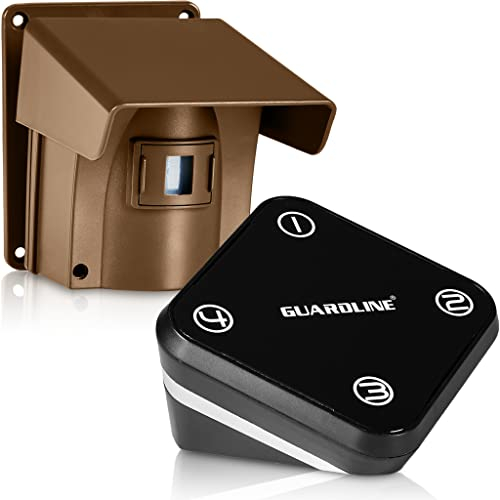
It’s 2 AM. You’re fast asleep, dreaming of anything but home security, when a shadow slips past your front gate. Or maybe it’s just the wind. You’ll never know because your driveway alarm didn’t make a peep. Again.
We’ve all been there. You bought that wireless driveway monitor to give you peace of mind, a digital watchdog that barks when tires hit your pavement. But instead of reliable alerts, you get silence. Or worse, false alarms triggered by a stray cat or a swaying tree branch. It’s frustrating. It makes you question if the system is even worth the hassle.
But here’s the good news: most of the time, the problem isn’t the tech itself. It’s how it’s set up. In 2026, these systems are smarter than ever, yet they still struggle with the same old physical world problems. Let’s dig into why your alarm is ghosting you and exactly how to bring it back to life.
The Battery Bluff: Power Issues You Can’t See
Let’s start with the easiest fix, because sometimes the answer is hiding in plain sight. You might think, “I just put new batteries in last month,” but here’s the thing: not all batteries are created equal, and cold weather hates them. If your sensor is outside, those winter temps in early 2026 likely drained the juice faster than you expected. Even a brand-new battery can read low if it’s been sitting on a shelf for too long.
Experts from Absolute Automation note that for systems like the Optex Wireless 2000, the first step is always checking the voltage. You want to see 9V or higher. If it’s dipping below that, the sensor might have enough power to blink an LED but not enough to send a strong signal through your walls. It’s like trying to shout through a pillow; the effort is there, but the message doesn’t get through. Swap it out for a fresh, high-quality alkaline or lithium battery. Don’t cheap out here. It’s the heartbeat of your system.
Also, check the contacts. Corrosion is a silent killer. A little white crust on the battery terminals can break the circuit intermittently. Take a cotton swab with a bit of vinegar or rubbing alcohol and clean those metal springs. It sounds trivial, but you’d be surprised how many "broken" alarms are fixed with a five-minute cleaning session.
Sensor Positioning: The Angle of Attack Matters
If power isn’t the issue, then geometry probably is. Passive Infrared (PIR) sensors, which are the most common type in driveway alarms, don’t actually "see" cars. They detect changes in heat. When a warm engine block moves across their field of view, they trigger. This means positioning is everything. If you mount the sensor too high, it looks down on the roof of the car, missing the heat signature of the engine. Too low, and it might only catch the tires, which aren’t hot enough to trigger the alert.
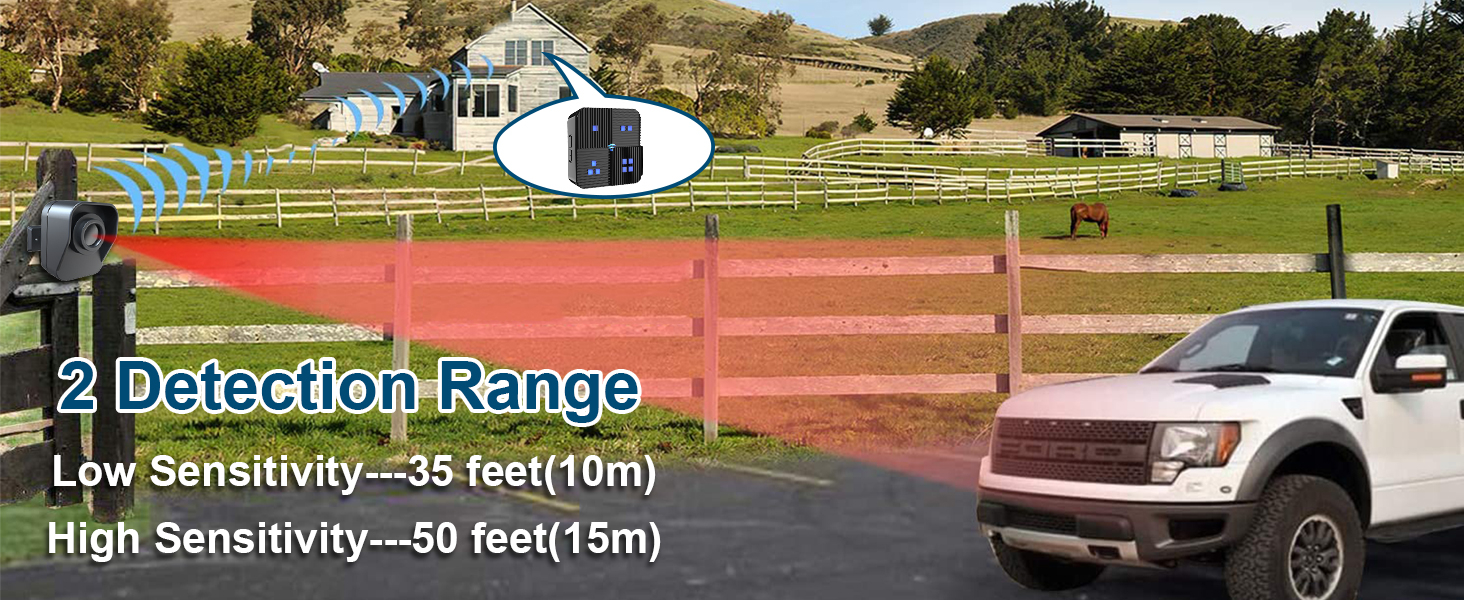
The sweet spot is usually waist-high, angled slightly downward toward the path of the vehicle. According to troubleshooting guides for the ERA-DSTX, the sensor needs to cross the path of the car, not look at it head-on. Imagine the sensor’s view as a fan shape. You want the car to cut through that fan, not drive straight into the center of it. This lateral movement creates the distinct heat-change pattern the sensor is looking for.
Try this test: walk across the detection zone yourself. Does it beep? If not, adjust the angle. Keep tweaking it until you can consistently trigger it by walking past. Then, park a car in the driveway and let it cool down. Start it up and drive through. If it misses, lower the angle slightly to catch more of the undercarriage and engine heat. It’s a game of inches, so be patient.
Signal Interference: The Invisible Walls
Wireless signals are tricky beasts. They don’t just fly straight from point A to point B. They bounce, they weaken, and they get blocked. If your receiver is inside the house and the sensor is out by the road, you’ve got a lot of obstacles in between. Brick walls, metal siding, and even large trees can eat up signal strength. In 2026, with more smart devices cluttering the airwaves, interference is more common than ever.
Mighty Mule users often report detection complications due to metallic structures. If your sensor is mounted on a metal pole or near a metal fence, that metal can act as a shield, blocking the radio frequency (RF) signal from reaching the receiver. Try moving the sensor to a non-metallic post, like wood or PVC. Even a few feet can make a huge difference.
Also, consider the distance. Most units claim a range of 400 to 1,000 feet, but that’s in open fields. In a suburban yard with houses and foliage, that range drops significantly. If you’re pushing the limit, consider adding a signal repeater if your model supports it. Or, simply move the receiver closer to a window facing the driveway. Sometimes, just plugging it into an outlet on the first floor instead of the basement can clear up the connection.
Environmental Noise: When Nature Tricks the Tech
False alarms are annoying, but missed alarms are dangerous. However, the two are often linked. If your sensor is too sensitive, it might be clogged with "noise" from the environment, causing it to miss the actual car because it’s busy processing a thousand other triggers. Or, conversely, if it’s set too low to avoid false alarms, it ignores the car too.
Wind is a major culprit. Swaying branches, tall grass, or even trash cans blowing over can trigger PIR sensors. Snow and rain can also interfere, especially if the sensor lens is wet or covered in ice. In late 2025 and early 2026, many users reported issues during heavy storm seasons. Make sure the sensor housing is sealed tight and the lens is clean. A quick wipe-down with a microfiber cloth can restore clarity.
Heat sources are another trap. Don’t point your sensor at an AC unit, a grill, or a vent that blows hot air. These constant heat sources can "blind" the sensor, making it less responsive to the sudden heat of a car engine. Clear the field of view. Trim back bushes, remove debris, and ensure the only thing moving in that zone is what you want to detect.
Hardware Glitches: LEDs and Internal Fuses
Sometimes, the issue is mechanical. Before you call it quits, pop open the sensor casing. Most units, like the Emacros or Wuloo models, have a small LED light that blinks when motion is detected. This is your diagnostic tool. If you walk in front of it and the LED doesn’t blink, the sensor isn’t seeing anything. That’s a hardware or positioning issue. If it does blink but the receiver doesn’t chime, it’s a transmission issue.
Check the internal fuse if your model has one. Mier Products’ troubleshooting tree suggests checking the power light first. If it’s off, replace the 1A fuse. It’s a small, glass cylinder that might look fine but could be blown. Also, look for water damage. Even "waterproof" sensors can leak if the seal degrades over time. Condensation inside the unit can short out the circuit board. If you see moisture, dry it out thoroughly with rice or silica gel packets, and reseal it with silicone caulk.
If the LED is erratic—flickering when nothing is there—it could be a sign of a failing component. In this case, contact the manufacturer. Many companies offer warranties, and since these devices are relatively inexpensive, replacing a faulty unit might be faster than trying to solder a new board.
Finally, dive into the settings. Modern alarms aren’t just on/off switches. They have sensitivity dials, delay timers, and mode selections. If your system has a sensitivity adjustment, start in the middle. Test it. If it’s missing cars, turn it up one notch. If it’s false alarming, turn it down. It’s a balancing act.
Some systems have a "vehicle only" mode that uses algorithmic filtering to ignore small, fast-moving objects like animals. Make sure this is enabled if available. Also, check the chime volume on the receiver. It sounds silly, but if the volume is too low, you might think it’s not working when it’s actually just whispering. Crank it up and test again.
For smart systems connected to Wi-Fi, check the app. Is the firmware updated? In 2026, manufacturers frequently push updates to improve detection algorithms. An outdated device might struggle with newer interference patterns. A simple reboot of both the sensor and the receiver can also clear out temporary glitches in the memory. Unplug the receiver, remove the sensor batteries, wait ten seconds, and power everything back up. It’s the IT classic for a reason.
So, there you have it. Your driveway alarm isn’t broken; it’s just misunderstood. By checking the power, adjusting the angle, clearing the signal path, managing environmental noise, inspecting the hardware, and tuning the settings, you can turn that silent sentinel back into a reliable guardian. It takes a bit of tinkering, sure. But isn’t it worth it to sleep soundly, knowing you’ll hear every tire that hits your drive?