You know that feeling when you walk into a room and it just feels… off? Maybe it’s too cramped, or maybe it’s so empty it echoes. For years, we’ve been told we need to choose. Do you want a cozy nook for two, or a grand hall for twelve? It’s an either/or world. But what if it didn’t have to be?
In 2026, the answer isn’t bigger houses. It’s smarter furniture. Specifically, the humble, yet revolutionary, extendable dining table. It’s not just about adding leaves anymore. It’s about transformation. We talked to real people—apartment renters in New York, growing families in the suburbs, and remote workers trying to keep their sanity—and their stories all point to one thing. This piece of wood and metal is doing heavy lifting in our lives. It’s changing how we eat, work, and connect. And honestly? It’s kind of beautiful.
The Apartment Alchemy: Turning Tight Quarters into Entertaining Hubs
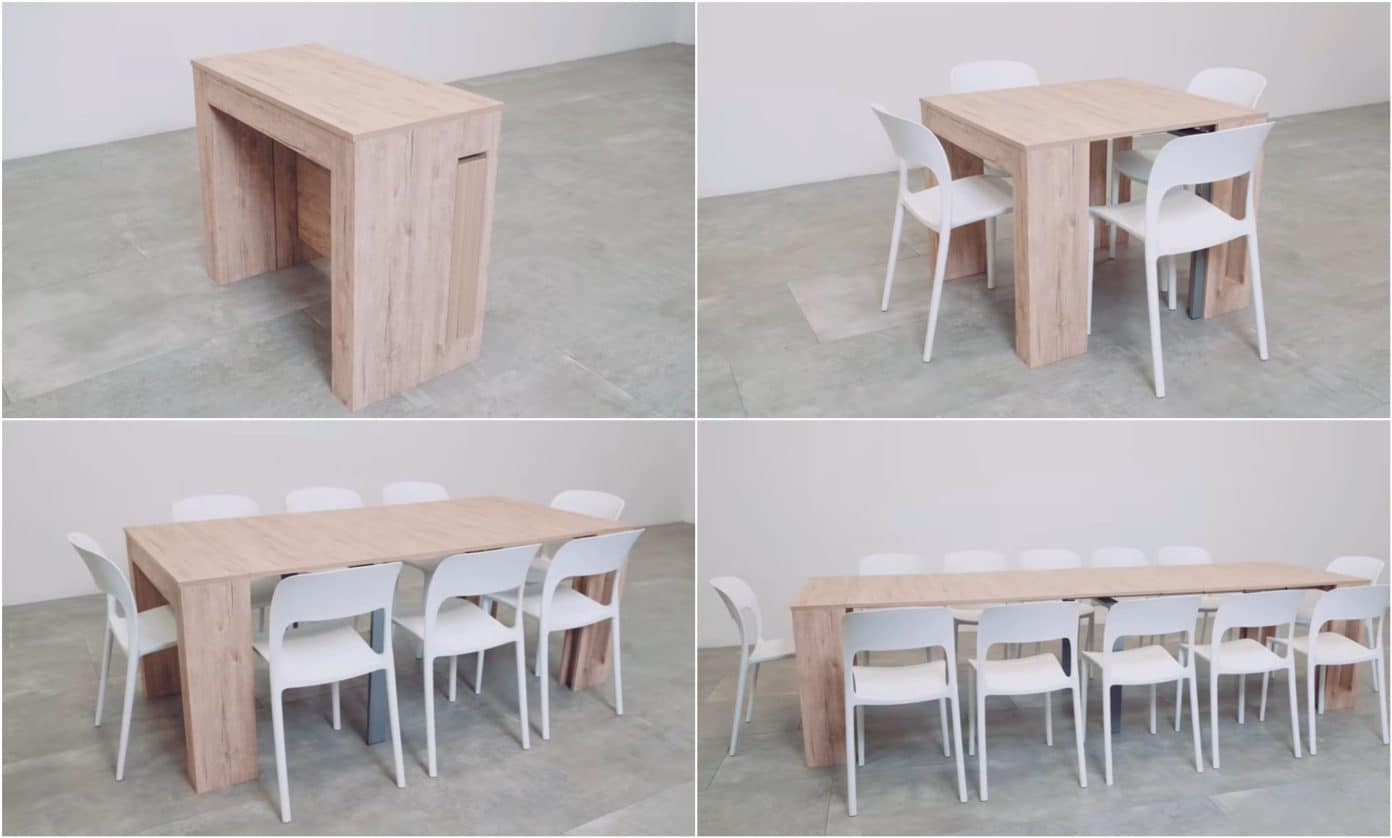
Let’s talk about Sarah. She lives in a 600-square-foot studio in Manhattan. In most cities, that’s considered spacious. In New York? It’s a closet with a view. For months, her "dining area" was a folding tray on her couch. It worked, until it didn’t. She wanted to host friends. She wanted to feel like an adult with a real home. Then she found a transformer-style table that tucks against the wall as a slim console.
The change was instant. During the week, it’s barely there. It holds her keys, a vase of wilting tulips, and her laptop charger. But when Friday night rolls around? She pulls it out. It expands from a narrow strip to a full-sized table that seats eight. "It’s like magic," she told us. "My friends don’t believe it’s the same piece of furniture." It’s not just about the extra surface area. It’s about the psychological shift. Her home went from a place she sleeps to a place she lives.
This isn’t unique to Sarah. Design editors and everyday renters are reporting similar wins. After six months of testing various models in tiny apartments, the consensus is clear. The right extendable table doesn’t just save space; it creates possibility. You stop apologizing for your small square footage. You start inviting people over. The table becomes the anchor of social life, proving that you don’t need a mansion to have a gathering spot. It’s practical, sure. But it’s also deeply emotional.
The Family Command Center: Surviving (and Thriving) Through Chaos
If you have kids, you know the dining table is rarely just for dining. It’s a homework station. A craft zone. A fort-building foundation. And occasionally, yes, a place to eat dinner before the syrup wars begin. For the Miller family in Ohio, their old fixed-size table was a bottleneck. Too small for homework sessions, too big for quiet Tuesday nights. It was always in the way, or never quite enough.
They switched to a durable, rubber-wood extendable model with a stain-proof finish. Game changer. Now, during the day, it’s compact, leaving the living room open for play. When school projects hit, they extend it. Four kids can spread out with glue sticks and poster board without elbowing each other. "It’s the command center of our life," says dad, Mike. "It morphs with us. One minute it’s a workspace, the next it’s a board game arena for marathon nights."
Durability matters here. Families in 2026 aren’t looking for delicate antiques. They need surfaces that can take a beating. Scratch-resistant finishes and solid construction are non-negotiable. The Millers noted that their table has survived juice spills, marker incidents, and the occasional dropped toy car. It’s not just furniture; it’s a partner in parenting. It adapts to the rhythm of family life, which is messy, unpredictable, and constantly shifting.
The Remote Work Revolution: From Desk to Dinner in Seconds
The line between work and home has blurred permanently. For many of us, the dining table is the office. But eating dinner off your laptop keyboard? That’s a recipe for burnout. James, a graphic designer from Portland, struggled with this. His apartment didn’t have room for a separate desk and a dining table. So he worked at his dining table. All day. Every day. It felt like he never left the office.
Then he got an extendable table with a clever leaf system. Here’s his routine: Morning comes, he extends the table to its full length. One end is his workstation, complete with monitors and coffee. The other end stays clear. At 5 PM, he shuts down the computer. He collapses the table back to its smaller size, clearing the work gear away. Suddenly, the space feels different. It’s no longer an office. It’s a dining room.
This physical act of shrinking the table signals a mental shift. It’s a boundary. "Putting the leaves away is my commute," James jokes. But it’s true. The table allows him to reclaim his evening. It’s a small mechanical action with a huge psychological payoff. In a world where we’re always "on," having a piece of furniture that helps you switch off is invaluable. It’s about protecting your peace, one extension at a time.
The Host’s Secret Weapon: Flexibility Without the Clutter
We all have that one friend who loves to host. Let’s call her Elena. She loves dinner parties, holiday gatherings, and spontaneous get-togethers. But she hates the idea of buying a massive table that sits empty 90% of the time. It’s wasteful. It’s clunky. It dominates the room. For years, she borrowed chairs from neighbors and balanced plates on her knees. It was charming, but exhausting.
Enter the modern extendable table. Elena chose a model that goes from a cozy four-seater to a twelve-person banquet hall setup. The best part? The leaves store inside the table itself. No hunting for dusty planks in the basement. No awkward stacking in the closet. When guests arrive, she pulls the ends apart, unfolds the hidden leaves, and boom. Dinner is served. "It makes me feel confident," she says. "I don’t worry about space anymore. I just focus on the food and the company."
This flexibility is key for modern hosting. We’re seeing a trend in 2026 towards more intimate, frequent gatherings rather than rare, formal events. An extendable table supports this lifestyle. It’s ready for a quick lunch with two friends or a birthday bash for twenty. It removes the friction from hospitality. You don’t need a dedicated dining room to be a gracious host. You just need the right table.
Small Space Hacks: Creative Uses Beyond Dining
Sometimes, the best use for an extendable table isn’t even as a table. Take Marcus, who lives in a converted warehouse loft. His space is open-plan, meaning everything is visible from everywhere. He needed a way to define his dining area without building walls. He used an extendable table as a room divider. Pushed against a partial wall, it acts as a bar counter for morning coffee. Extended, it becomes a long communal table for group dinners.
Others are getting even more creative. Some users have transformed hallway spaces into pop-up dining zones using slim, console-style extenders. It’s about seeing potential in dead space. A narrow corridor becomes a breakfast nook. A corner of the living room becomes a study hall. The table is the chameleon. It fits where nothing else can.
The lesson here? Don’t limit your thinking. An extendable table is a tool for spatial problem-solving. If you have a weird alcove, a long narrow room, or a multi-use studio, these tables can adapt. They encourage you to look at your home differently. Instead of asking "what fits here?", you ask "what could this space become?" It’s liberating. And it usually involves less drywall and more ingenuity.
Choosing the Right Mechanism: What Actually Works in 2026
Not all extendable tables are created equal. If you’re shopping around, you’ll see a lot of options. Butterfly leaves, drop-leaf styles, telescoping rails, and the newer "transformer" mechanisms. So, what’s the difference? And more importantly, what works? Based on real user reviews from the past year, durability and ease of use are the top priorities.
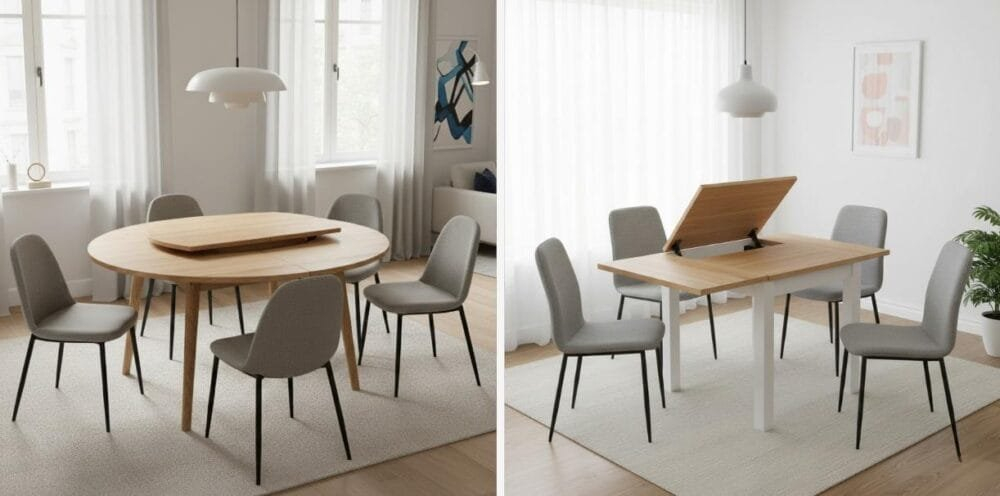
Butterfly leaves are classic. They fold under the table and unfold to fill the gap. They’re great because the leaves are stored with the table. But they can be heavy to lift. Telescoping tables slide open on rails. These are smooth and often easier for one person to operate. The new transformer styles, popularized by brands like Transformer Table, use a sliding mechanism that changes the table’s depth and length simultaneously. They’re pricier, but incredibly versatile.
Here’s the advice from people who’ve lived with them: Test the mechanism. If you can, try it in person. Does it stick? Is it wobbly when extended? Check the weight capacity. If you plan to work from it, make sure it’s sturdy enough for laptops and monitors. And don’t forget the finish. In 2026, performance fabrics and coatings are standard. Look for waterproof and scratch-resistant options. Your table will thank you. Also, measure twice. Seriously. There’s nothing worse than buying a table that doesn’t fit your space when closed or open.
At the end of the day, furniture is just stuff. Wood, metal, glass. But the stories we’ve heard suggest something deeper. These tables are facilitating connection. They’re making space for laughter, for work, for quiet meals, and loud celebrations. They’re helping people live better in the spaces they have, rather than waiting for the spaces they wish they had.
Whether you’re in a tiny city apartment or a sprawling suburban house, the principle is the same. Flexibility is freedom. An extendable dining table gives you the option to change your environment to suit your mood, your needs, and your guests. It’s a small investment with a big return on quality of life.
So, look at your dining area. Really look at it. Is it serving you? Or are you serving it? Maybe it’s time to consider a change. Not a bigger house. Just a smarter table. Because home isn’t about square footage. It’s about how you live within it. And if a little bit of engineering can make that life richer, warmer, and more welcoming, isn’t that worth pulling a few leaves?