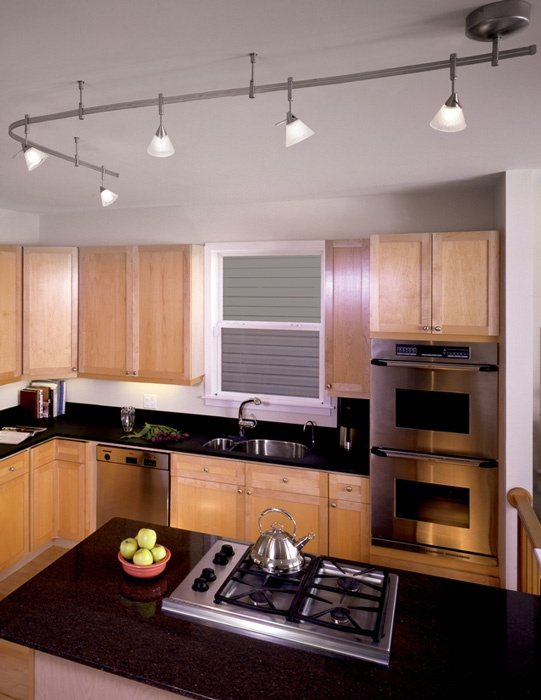
Ever walked into a kitchen that felt just… off? Maybe the lighting was harsh, or perhaps it missed the mark entirely, leaving dark corners where you’re trying to chop veggies. It’s frustrating. We’ve all been there. But what if the solution wasn’t just adding more lights, but changing how they move through the space? That’s where the magic of curved monorail tracks comes in. It’s not just about illumination; it’s about flow.
In 2026, home design has shifted away from rigid, boxy aesthetics. We’re embracing the weird angles, the irregular islands, and the open-concept chaos. Standard straight tracks? They just don’t cut it anymore. They feel stiff. Uninviting. Monorail systems, on the other hand, are like liquid metal frozen in time. They bend. They twist. They follow the architecture instead of fighting it. This guide dives deep into how you can use these flexible rails to turn your kitchen’s quirks into its biggest strengths.
The Art of the Floating Rail
Traditional track lighting sits flush against the ceiling. It’s functional, sure, but it lacks soul. Monorail systems are different. They hang. They float. This suspension creates a three-dimensional effect that draws the eye upward and adds depth to the room. According to recent design trends from restoredstyle.com, this "floating" look feels like a piece of architectural art rather than just a utility. It’s sleeker. More custom-tailored.
Why does this matter for unique kitchens? Because most interesting kitchens have height variations or exposed beams. A suspended rail can navigate around these obstacles gracefully. You aren’t stuck drilling into every joist in a straight line. Instead, you create a path that mimics the room’s natural rhythm. The rail becomes a visual guide, leading people through the space. It’s subtle, but powerful.
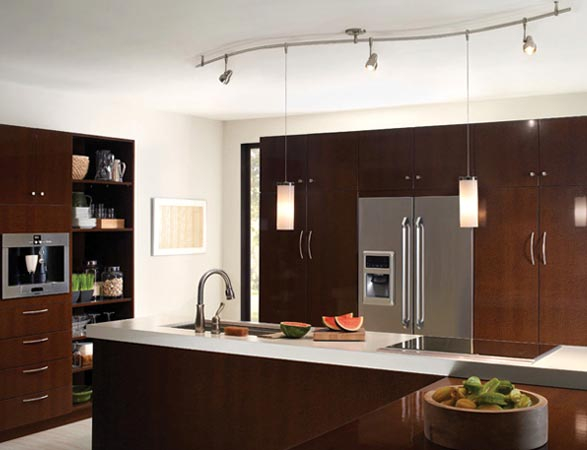
Think of it as jewelry for your ceiling. Just like a necklace follows the curve of a neck, a monorail follows the contour of your kitchen. Whether you have a vaulted ceiling or a dropped soffit, the suspension cables allow for adjustment. You can drop the rail lower over an island for intimate task lighting, then raise it up as it moves toward the perimeter. This dynamic range is impossible with fixed, flush-mounted tracks. It gives you control over the atmosphere, not just the brightness.
Navigating Irregular Islands and Peninsulas
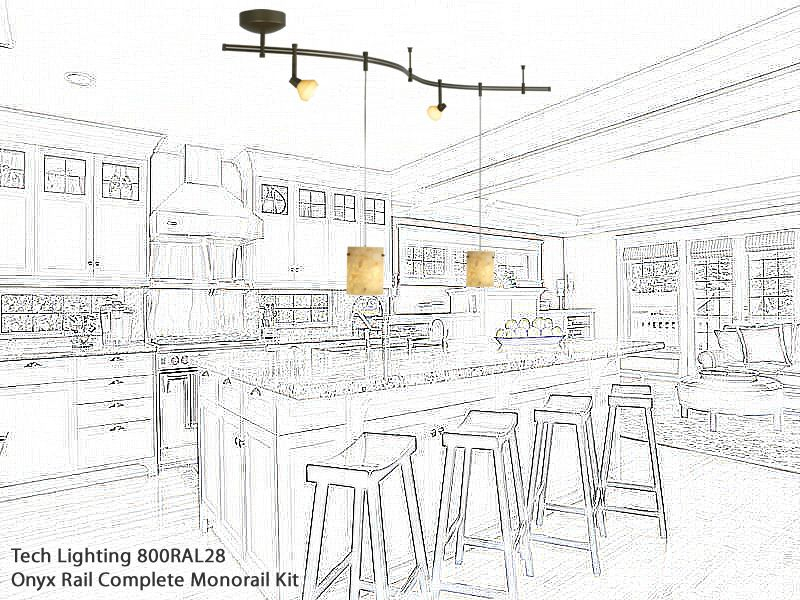
Kitchens today are rarely simple rectangles. We see kidney-shaped islands, L-shaped peninsulas, and even circular prep stations. Trying to light these with straight bars results in awkward gaps or blinding hotspots. It’s a mess. Monorail tracks solve this by curving around corners seamlessly. As noted by lemonademakinmama.com, this system is perfect for irregular shapes where straight tracks fail.
Imagine a large, curved island that serves as both a cooking station and a breakfast bar. A monorail can swoop along its edge, providing even light across the entire surface. No dark spots. No glare. The fixtures hang at adjustable points, so you can position them exactly where the knife meets the cutting board. It’s precision lighting. And because the rail bends without connectors (thanks to field-bendable tech mentioned by deepdiscountlighting.com), the line remains unbroken and elegant.
This approach also helps define zones. In an open-plan living area, the curve of the light can subtly signal where the kitchen ends and the dining area begins. It’s a psychological boundary made of light. You don’t need walls or rugs to separate spaces. The lighting does the heavy lifting. By following the architectural flow, the monorail reinforces the intended use of each area. It’s intuitive. People just know where to stand and where to sit.
Softening Hard Angles with Gentle Curves
Not every unique architecture feature is a soft curve. Sometimes, you’re dealing with sharp, aggressive angles. Think of a galley kitchen that jogs unexpectedly or a corner pantry that juts out. Straight lines here can feel clinical. Cold. Introducing a gentle curve in the monorail track softens the visual impact of these hard edges. It creates a sense of movement and ease.
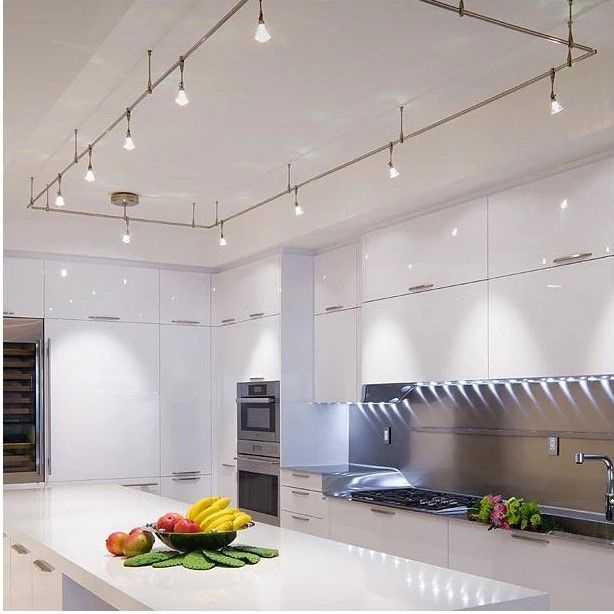
Beeslighting.com highlights that these flexible solutions allow you to transcend the limitations of rigid tracks. You can create artistic configurations that look intentional, not makeshift. For example, if you have a sharp 90-degree turn in your cabinetry, you don’t have to mirror it with a sharp 90-degree light track. Instead, you can sweep the rail in a wide arc that bridges the gap. It visually connects the two walls, making the space feel larger and more cohesive.
This technique is particularly effective in smaller kitchens. Sharp angles can make a small room feel cramped and chaotic. Curved lines guide the eye smoothly around the perimeter, creating an illusion of spaciousness. It’s a classic interior design trick, now applied to lighting. The result is a kitchen that feels calmer. More inviting. You’re not just lighting the room; you’re shaping how people experience it. As lumotrax.com points out, lighting influences atmosphere. A soft curve says "relax," while a jagged line says "hurry."
Mixing Pendants and Spotlights for Layered Effects
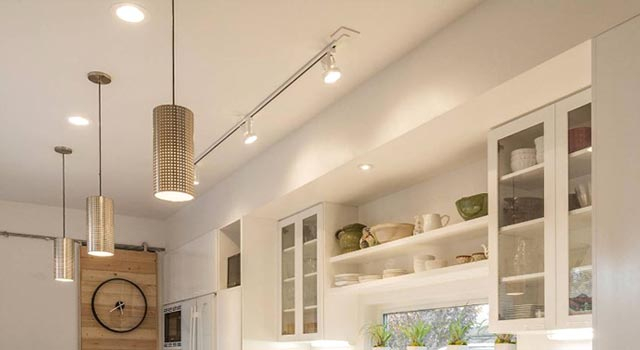
One of the coolest things about monorail systems is their versatility. You aren’t locked into one type of fixture. You can mix and match. Spotlights for task lighting. Pendants for ambiance. This layering is crucial for a well-rounded design, as emphasized by lightandlayer.com. It balances practicality with aesthetic charm.
Consider a long, winding rail above a multi-level counter. Over the sink, you might want a focused spotlight to help with dishwashing. But over the seating area, a cluster of mini-pendants creates a cozy, restaurant-like vibe. The monorail supports both. You can slide them along the track to find the perfect balance. It’s modular. Adaptable. If your needs change, you just move the heads. No rewiring required.
This mix-and-match approach also allows for creative expression. You can choose fixtures that complement your kitchen’s style—industrial cages for a loft look, sleek glass globes for modern minimalism, or brass accents for warmth. The rail itself becomes a canvas. By varying the heights and types of fixtures, you add texture and interest. It stops being just "lighting" and starts being a design feature. People notice it. They comment on it. It sparks conversation.
Field-Bending vs. Pre-Curved: Choosing Your Path
When planning your installation, you’ll face a choice: field-bendable rails or pre-curved sections. Both have their place. Field-bendable rails, like the Bruck Enzis mentioned in search results, offer ultimate flexibility. You can curve them to any radius on-site. This is ideal for truly unique, one-of-a-kind architectures where standard curves won’t fit. It’s like clay. You shape it to your will.
Pre-curved sections, on the other hand, offer precision. If you know you want a perfect circle or a specific arc, buying a pre-formed section ensures consistency. It’s cleaner. Less room for error during installation. However, it requires careful measurement. If your kitchen’s dimensions are slightly off, a pre-curved piece might not align perfectly. Field-bending allows for those tiny adjustments. It forgives imperfections.
For most DIYers or custom projects in 2026, field-bendable is the go-to. It empowers you to react to the space as you work. You can hold the rail up, visualize the curve, and bend it until it feels right. It’s intuitive. But remember, bending metal takes effort. You need the right tools and a steady hand. If you’re unsure, consulting a pro for the bending phase might save you headaches later. The goal is a smooth, continuous line. Any kinks or uneven spots will distract from the beauty of the design.
Installing a curved monorail isn’t rocket science, but it does require attention to detail. Start by mapping your curve on paper. Use a string or a flexible tape measure to trace the path on the ceiling. This helps you visualize the final look before you drill any holes. Remember, the rail needs support points. Don’t skimp on these. A sagging rail looks cheap and can be dangerous.
Power feed location is another critical factor. Unlike straight tracks, where you can often hide the feed at the end, a curved rail might need the feed in the middle or at a specific angle. Plan this early. Hide the wires within the ceiling if possible, or use decorative canopy covers that match the rail finish. Clean lines are key. Visible messy wiring ruins the illusion of the floating rail.
Maintenance is straightforward but important. Dust accumulates on the rail and fixtures. Wipe them down regularly with a soft cloth. Check the tension of the suspension cables every few months. They can stretch slightly over time. Tighten them if needed. Also, ensure the fixtures are securely locked in place. Vibrations from slamming cabinets or doors can loosen them. A little upkeep ensures your lighting stays safe and stunning for years. It’s a small price to pay for such a impactful design element.
Lighting is more than just function. It’s emotion. It’s memory. When you curve a monorail track around your kitchen’s unique architecture, you’re telling a story. You’re saying that this space matters. That its quirks are worth highlighting. In 2026, we’re moving away from cookie-cutter homes. We’re embracing individuality. Flexible lighting is a huge part of that shift.
So, look at your kitchen. Really look at it. Where are the shadows? Where do the lines feel harsh? Imagine a rail that flows through those spaces, softening and illuminating. It’s not just a fix. It’s a transformation. With the right planning and a bit of creativity, you can turn your kitchen into a masterpiece of light and shadow. Go ahead. Bend the rules. Bend the rail. Your home will thank you.