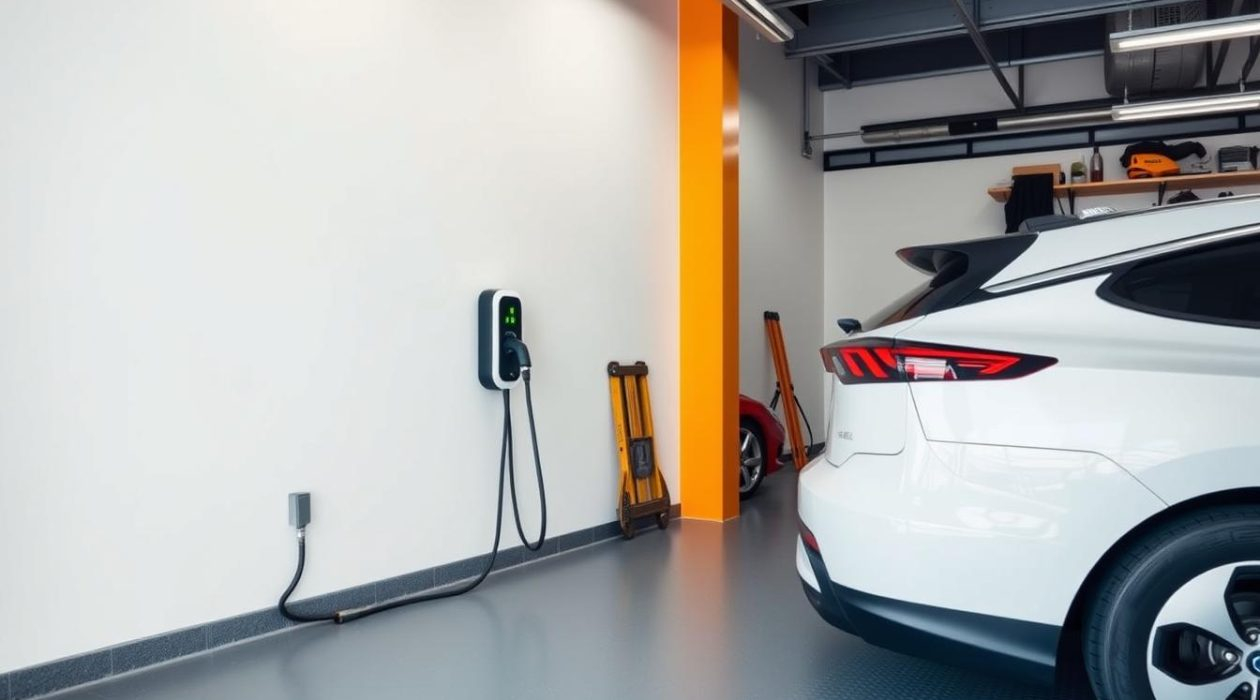
You just bought an electric vehicle. The keys are in your hand, the smell of new car leather is still fresh, and you’re ready to ditch the gas station forever. But then reality hits. You pull into your driveway and look at that blank wall. Where do you plug it in? And more importantly, how much is this going to cost?
It’s a question that keeps a lot of new EV owners up at night. The sticker price of the car is one thing, but the "charging infrastructure" is a whole other beast. Some friends say it’s cheap. Others swear they paid thousands. Who’s right? Well, both of them, actually. The cost of setting up home charging in 2026 isn’t a single number. It’s a range, shaped by your home’s age, your electrical panel’s health, and whether you know how to dodge the sneaky fees that contractors love to add.
Let’s cut through the noise. We’re going to look at what you’ll actually pay, where the money goes, and how to keep more of it in your pocket. Because waking up to a full battery every morning should feel like a win, not a financial regret.
Breaking Down the Price Tag: What Are You Actually Paying For?
When you get a quote for an EV charger installation, it can look like a jumble of numbers. To make sense of it, you have to split it into two buckets: the hardware and the labor. In 2026, the typical total project cost lands between $800 and $3,000 for most homeowners. That’s a wide gap, I know. But it exists because no two homes are wired the same way.
First, there’s the charger itself, often called an EVSE (Electric Vehicle Supply Equipment). You can spend as little as $300 on a basic unit or upwards of $700 for a smart charger with Wi-Fi, app control, and energy monitoring. Don’t skimp too much here. A smarter charger lets you schedule charging for off-peak hours, which can slash your electricity bill. But remember, the box on the wall is usually the smaller part of the bill.
The bigger chunk? Installation. This is where the electrician’s time and materials come in. If you live in a newer home with a modern electrical panel and the garage is right next to that panel, you might pay closer to the $800 end. The wire run is short, the panel has space, and it’s a quick job. But if your panel is old, full, or located in the basement while your car parks in the detached garage, that price climbs fast. Labor rates vary by region too, so a job in California costs more than one in Ohio. It’s not just about the plug; it’s about the path the electricity has to travel.
The Silent Budget Killer: Electrical Panel Upgrades
Here is the scary part that nobody talks about until the electrician is standing in your garage with a grim look on their face. Your electrical panel might not be ready. Many homes built before 2010 have panels that are maxed out. Adding a Level 2 charger, which pulls 40 to 50 amps continuously, is like asking a tired horse to pull a second carriage. It just won’t work safely.
If your panel needs an upgrade, the price tag jumps significantly. A main panel upgrade can cost between $1,500 and $3,000 on top of the charger installation. In some cases, if your service entry from the street is also outdated, you might need a service upgrade, which can push the total project toward the $5,000 mark. This is the "hidden fee" that hurts the most because it’s rarely included in initial online estimates.
How do you avoid this surprise? Check your panel before you buy the car, or at least before you call for quotes. Look at the main breaker. Is it 100 amps? 200 amps? If it’s 100 amps, you’re likely going to need an upgrade. Also, look for empty slots. If every slot is filled with breakers, you have no room for the new double-pole breaker the charger needs. Being proactive here saves you from sticker shock later. It’s better to know now than to halt the installation midway through.
Permits, Inspections, and the Red Tape Trap
"It’s just a plug," you might think. "Why do I need a permit?" This is a common misconception, and it’s a dangerous one. In most jurisdictions across the U.S., installing a Level 2 EV charger requires a permit and a subsequent inspection. Why? Because if it’s done wrong, it can cause a fire. Insurance companies take this seriously. If you skip the permit and your house burns down due to an electrical fault, your insurer might deny the claim.
Permit costs vary wildly. In some small towns, it might be $50. In larger cities with strict building codes, it can run $200 to $500. But the cost isn’t just the fee. It’s the time. The electrician has to file the paperwork, wait for approval, do the work, and then wait for the city inspector to come out. This adds days, sometimes weeks, to the timeline. Some contractors will quote you a lower price by saying they’ll "skip the permit." Don’t let them. That’s a red flag.
Always ask if the quote includes permitting and inspection fees. If it doesn’t, add it to your budget. Also, verify that the electrician is licensed and insured. An unlicensed handyman might charge half as much, but if they mess up the wiring, you’re left with the bill for fixing it. The peace of mind from a permitted, inspected job is worth every penny. Plus, many utility rebates require proof of a permitted installation. Skip the permit, lose the rebate. Simple as that.
Hardwired vs. Plug-In: Which One Saves You Money?
There’s a debate in the EV world: should you hardwire your charger or use a plug-in outlet? Hardwiring means the charger is connected directly to the circuit wires inside a junction box. Plug-in means it uses a heavy-duty outlet, usually a NEMA 14-50 or 14-60.
Hardwired setups are often slightly cheaper to install because you don’t need to buy and mount the expensive outlet box and receptacle. They also look cleaner and are more weather-resistant if installed outside. However, they are less flexible. If the charger breaks, you need an electrician to disconnect it. If you move, you have to leave it behind or pay to remove it.
Plug-in units offer flexibility. You can unplug the charger and take it with you if you move. You can also swap it out easily if technology improves. But the outlet itself adds cost—both for the hardware and the labor to install it properly. In 2026, many experts lean toward hardwiring for permanent installations because it’s more reliable and reduces the risk of loose connections over time. But if you rent or plan to move soon, a plug-in might make more sense. Ask your electrician which method suits your specific situation. Don’t just assume one is better.
Unlocking Free Money: Rebates and Tax Credits in 2026
Here is the good news. You don’t have to pay the full price. There is free money available if you know where to look. The federal government offers a tax credit for EV charger installations, covering 30% of the cost up to $1,000. This is part of the Alternative Fuel Vehicle Refueling Property Credit. To qualify, you must install the charger in a qualified location and meet certain income requirements. It’s not a refund check; it’s a credit against your taxes owed, so you need to have tax liability to use it.
But don’t stop at federal credits. State and local utilities are pouring money into EV adoption. In California, New York, and several other states, utilities offer rebates that can cover $500 to $1,000 of the installation cost. Some programs even offer discounted electricity rates for EV charging during off-peak hours. These deals change often, so you have to do your homework. Check the Database of State Incentives for Renewables & Efficiency (DSIRE) or your local utility’s website.
Timing matters too. Some utilities have limited funds that run out quickly. Applying early in the year increases your chances of getting the rebate. Also, keep all your receipts. You’ll need the itemized invoice showing the cost of the equipment and the labor separately. Without proper documentation, you’ll miss out on the savings. It’s a bit of paperwork, but it can drop your final cost by up to $2,000. That’s a huge difference.
Want to keep costs down? Start by getting three quotes. Never go with the first electrician you call. Prices can vary by hundreds of dollars for the exact same job. Ask each contractor for a detailed breakdown: equipment, labor, permits, and any potential extra charges. Look for specialists. Some electricians focus specifically on EV chargers. They might be faster and more knowledgeable about the latest codes and rebates.
Consider the placement of your charger. The farther the charger is from your electrical panel, the more copper wire you need. Copper is expensive. If you can park your car closer to the panel side of the house, you’ll save on material costs. Even moving the parking spot by ten feet can save you $100 or more in wire and labor. It’s a simple tweak that makes a big impact.
Also, ask about off-season discounts. Electricians are busiest in the summer and early fall. Scheduling your installation in late winter or early spring might get you a better rate. Some contractors offer promotions during slower months. Finally, bundle your work. If you need other electrical updates, like adding outlets or upgrading lights, do them all at once. You’ll save on the trip charge and potentially negotiate a better overall price. Being a smart shopper pays off.
So, there you have it. The real cost of home EV charging isn’t just a number on a receipt. It’s a mix of hardware, labor, permits, and potential upgrades. But it’s also an investment that pays for itself. By charging at home, you save roughly 50% compared to public charging stations. Over two or three years, those savings add up.
Don’t let the upfront cost scare you away. With careful planning, checking your panel, hunting for rebates, and choosing the right installer, you can manage the expense. The convenience of waking up to a full tank every morning is priceless. And knowing you didn’t overpay? That’s just the cherry on top. Take your time, ask questions, and drive happy.