Ever walked into a room and felt instantly calm? Or maybe you stepped into a lobby and felt like you were standing inside a jewel box? Chances are, the floor had something to do with it. We often pick stone based on the color of the slab in the yard, but we forget the most important variable: light. It’s not just about what the marble is; it’s about what the marble does with the sunlight streaming through your window.
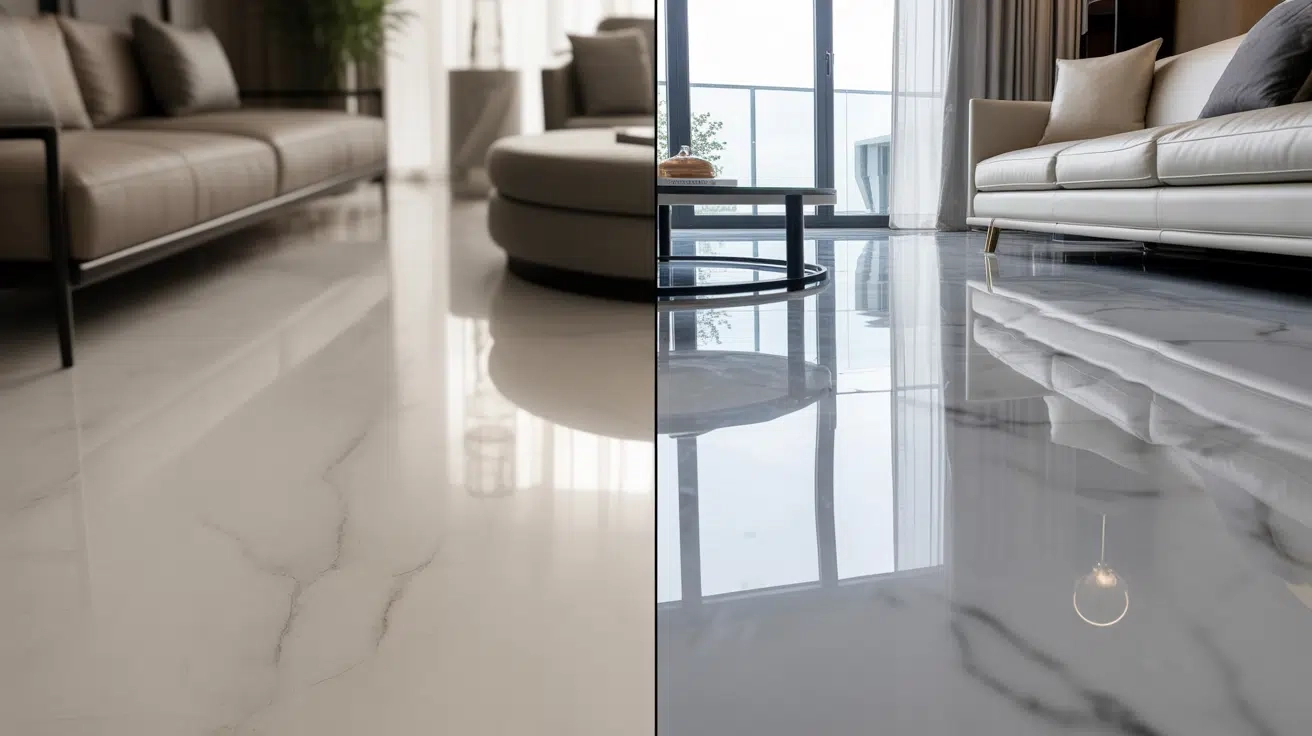
Marble is alive. Well, geologically speaking it’s dead rock, but visually? It breathes. The way it handles light changes everything. A polished sheet of Carrara acts like a mirror, bouncing photons around and making a small bathroom feel twice as big. A honed piece of the same stone swallows that light, giving you a soft, velvety matte look that feels grounded and earthy. It’s the difference between wearing silk and wearing linen. Both are luxury, but they speak different languages.
In 2026, homeowners are moving away from the "perfect" showroom look. We want texture. We want reality. But to get there, you have to understand the physics of shine. If you don’t, you might end up with a kitchen floor that looks perpetually wet or a hallway that feels cave-like. Let’s break down exactly how light plays with these two finishes so you can choose the one that fits your life, not just your mood board.
The Physics of Shine: Specular vs. Diffuse Reflection
To really get why these stones look different, we have to talk about how light hits them. It’s basic physics, but don’t worry, no textbooks required. When light hits a polished marble surface, it undergoes what’s called specular reflection. Think of a mirror. The light rays hit the smooth surface and bounce off at the same angle. This creates a sharp, clear image. You can see your face in a polished floor if the lighting is right. It’s high contrast. It’s dramatic.
Honed marble is the opposite. It goes through diffuse reflection. The surface has been ground down to be smooth to the touch, but on a microscopic level, it’s still a bit rough. When light hits it, those rays scatter in every direction. There’s no single bounce. Instead, the light spreads out. This is why honed marble has that soft, satin glow. It doesn’t shout; it whispers. The colors appear slightly lighter because the light isn’t being trapped in deep, glossy pools, but rather sitting on top of the stone.
This scattering effect is huge for how we perceive color. On a polished slab, the veins look dark and crisp because the background is so reflective. On a honed slab, the veins look softer, more blended. It’s like looking at a photo with the saturation turned down just a notch. For many people, this makes the stone feel more "natural," closer to how it looked when it was first pulled from the quarry before humans started buffing it to a glass-like sheen.
Visual Depth and the "Mirror Effect
Polished marble is all about depth. Because it reflects light so clearly, it creates an illusion of space beneath the surface. It’s like looking into a pool of water. This is why designers love using polished marble in small spaces or dark rooms. It bounces available light around, making the area feel brighter and more open. In 2026, with energy efficiency being a big topic, using natural light reflection to brighten a home is a smart, passive design choice.
But there’s a catch. That mirror effect highlights everything. Every scratch, every etch mark from a lemon drop, every tiny imperfection becomes visible because it disrupts the perfect reflection. The eye is drawn to the break in the pattern. If you have a polished floor, you’re signing up for a relationship with maintenance. You’ll notice when it gets dull. You’ll see the traffic patterns. It demands attention.
Honed marble, on the other hand, has no depth in that reflective sense. It’s opaque. What you see is what you get. The surface sits flat. This lack of reflection means it doesn’t amplify light, so it won’t make a dark room feel bigger. In fact, it can make a space feel cozier, or if you’re not careful, a bit dimmer. But the trade-off is forgiveness. Because the light is scattered, tiny scratches don’t create a sharp line of contrast. They just blend into the matte texture. It hides the wear and tear of daily life with grace.
Color Perception and Vein Definition
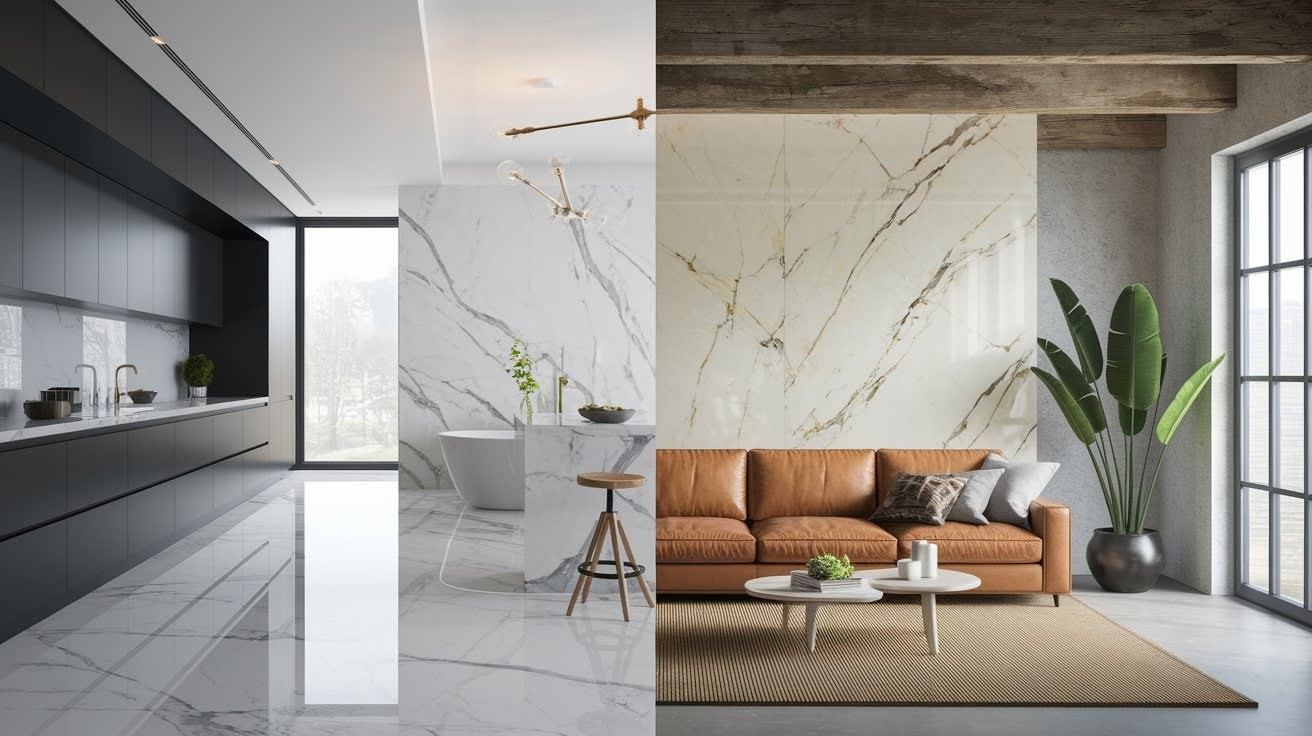
Let’s talk about the veins. Those swirling lines of gray, gold, or black are why we buy marble. But the finish changes how we read them. On polished marble, the veins pop. The high gloss creates a stark contrast between the white (or colored) background and the mineral deposits. It looks graphic. Bold. It’s almost like a vector illustration. This is great if you want the stone to be the star of the show, the main event.
With honed marble, the veins recede slightly. They look more organic, like clouds in a sky rather than ink on paper. The matte finish softens the edges of the veining. Some people love this; they find it more soothing. Others find it a bit muddy. It really depends on the specific stone. A Calacatta Gold with bold, thick veins might lose some of its punch when honed. A subtle Bardiglio might look more elegant and uniform.
Also, consider the ambient light color. Polished marble will reflect the color of the light source. If you have warm 2700K bulbs, your polished white marble will take on a creamy, yellowish tint because it’s reflecting that warm light back at you. Honed marble absorbs more of that color cast. It stays truer to its actual pigment, though it might look a shade or two lighter overall. This is crucial when you’re picking paint colors. Your polished floor is essentially a giant reflector board for your room’s lighting.
Texture, Touch, and the Human Experience
We don’t just see marble; we feel it. This is a sensory experience. Polished marble is cold and slick. It’s smooth as glass. Walking on it in bare feet can feel luxurious, but also a bit slippery, especially if there’s water involved. In a bathroom, this is a real safety consideration. The lack of friction means your toes have less grip. It’s elegant, yes, but it requires caution.
Honed marble has a tactile quality that polished lacks. It’s often described as velvety or satiny. It has a slight tooth to it. Not rough like sandpaper, but enough to let you know you’re walking on stone. This texture provides better traction. It’s safer for kids running around in socks or for wet areas like shower floors. In 2026, with an aging population and a focus on universal design, the slip-resistance of honed stone is becoming a major selling point.
There’s also a psychological component. Polished surfaces feel formal. They say "don’t touch." They say "this is a special occasion." Honed surfaces feel inviting. They say "come sit down." They feel more lived-in from day one. If you’re designing a family room or a casual kitchen, the honed finish aligns better with that relaxed vibe. It doesn’t feel like a museum exhibit. It feels like a home.
Durability Myths and Maintenance Realities
Here’s a common misconception: honed marble is harder than polished marble. It’s not. They are the same stone. The Mohs hardness scale doesn’t change because you buffed it. However, the appearance of durability is very different. Polished marble shows etching immediately. Etching is when acid (like wine, vinegar, or citrus) dissolves the calcium carbonate in the stone, leaving a dull spot. On a glossy surface, that dull spot stands out like a sore thumb.
On honed marble, an etch mark is barely noticeable. Why? Because the surface is already matte. The etch mark is just a slightly smoother or slightly rougher patch in a field of matte. It blends in. This is why honed marble has become the go-to for kitchens. You can live your life without holding your breath every time you pour a glass of wine. It’s not invincible, but it’s forgiving.
Maintenance-wise, polished marble needs regular cleaning with pH-neutral cleaners to keep that shine. If it gets dull, you might need to call a pro to re-polish it. Honed marble is lower maintenance in terms of appearance, but it’s more porous. Because the surface isn’t sealed by the polishing process (which closes the pores slightly), it can stain more easily if not properly sealed. You need to be diligent about sealing honed stone, perhaps once or twice a year, depending on usage. So, it’s a trade-off: polished shows etches but resists stains slightly better; honed hides etches but absorbs spills faster.
So, which one do you pick? It comes down to lifestyle and light. If you have a small, dark powder room, polished marble can work wonders. It will reflect the limited light and make the space feel airy and grand. Just be prepared to wipe down water spots. If you have a massive, sun-drenched foyer, polished marble might create too much glare. The sun bouncing off the floor could be blinding. In that case, honed would soften the light and reduce the glare.
For kitchens, the trend in 2026 is heavily leaning toward honed. People want to cook, entertain, and spill things without panic. The matte look pairs beautifully with modern cabinetry and warm wood tones. It grounds the space. For bathrooms, it’s a toss-up. Master baths often go polished for that spa-luxury feel. Kids’ baths or shower floors should almost always be honed for safety.
Don’t forget to test samples in your actual space. Take a polished tile and a honed tile of the same stone. Put them on the floor where you plan to install them. Look at them in the morning light, afternoon light, and under your artificial lights at night. Watch how the reflection changes. See which one makes you feel the way you want to feel in that room. Do you want drama and brightness? Or calm and texture? The stone isn’t changing, but the light is telling a different story with each finish.
At the end of the day, there’s no wrong choice, only the right choice for your specific context. Polished marble brings the theater; honed marble brings the comfort. Both are stunning. Both are timeless. But they interact with the world around them in fundamentally different ways. By understanding how light reflects—or doesn’t—off these surfaces, you’re not just picking a floor. You’re curating an atmosphere. And that’s what good design is all about. Take your time. Look closely. Let the light guide you.