You know that feeling when you walk into a tiny apartment and it just feels… heavy? Like the air is thick with furniture legs and cluttered corners. We’ve all been there. You try to squeeze a four-chair set into a nook that was clearly designed for two people standing up, and suddenly, your cozy breakfast spot feels like a traffic jam. It’s frustrating. But what if the answer wasn’t buying a smaller table or knocking down a wall? What if it was just changing what you sit on?
In 2026, the way we live has shifted again. Our homes are multi-purpose hubs—offices by day, gyms by morning, and sanctuaries by night. Space is premium currency. And amidst this shift, one humble piece of furniture has quietly taken over the design world: the dining bench. It’s not just a trend; it’s a survival tactic for urban living. By swapping bulky chairs for streamlined benches, you aren’t just saving inches. You’re changing how light moves, how people connect, and how big your room feels. Let’s dig into why this simple switch is the smartest move you can make for your small space this year.
The Visual Noise Problem
Let’s be honest for a second. Chairs are noisy. Not literally, of course, but visually? They are loud. Think about a standard dining chair. It has four legs, a backrest, arms maybe, and a seat that sticks out. Now multiply that by four or six. When you look at a dining area filled with chairs, your eye gets stuck on all those vertical lines and gaps. It creates what designers call "visual clutter." In a small room, this chaos makes the walls feel closer than they actually are. It’s like trying to meditate in a room full of ticking clocks.
Benches, on the other hand, are quiet. They offer a solid, continuous line. When you tuck a bench under a table, it disappears. Literally. Because most benches are backless and lower in profile, they slide right under the tabletop when not in use. This clears up the floor plan. Suddenly, you can see more of your flooring. You can see the base of the table. The eye travels further across the room without hitting a barrier. This openness is key. As noted by recent design insights from Homsee, nothing clutters a compact area faster than a sea of chair legs. Removing that clutter instantly curates the space rather than chaoticizing it.
It’s also about proportion. A rookie mistake many of us make is assuming a bench needs to be as massive as the table. I once saw a designer nearly shove a six-foot banquette into a seven-foot nook. Yikes. That’s a tight squeeze. The trick is finding a bench that respects the negative space. A svelte, backless design keeps the environment airy. It shows off the table instead of competing with it. When the visual weight is lowered, the ceiling feels higher. The room breathes. It’s a simple optical illusion, but it works every time.
The Tuck-Away Magic
Here is the practical side of things. Have you ever tried to navigate a small dining room with chairs pulled out? It’s an obstacle course. You have to shuffle sideways. You knock your hip against the chair back. It’s annoying. Chairs require clearance. They need space to pull out, space to push in, and space to exist when nobody is sitting in them. In a tiny apartment, that clearance eats up valuable square footage that could be used for, well, living.
Benches solve this because they slide. Neatly. Under the table. Unlike chairs that stick out like sore thumbs, a bench can be pushed all the way in until it’s almost invisible. This instantly reclaims floor space. According to data from Mynor and Associates, this ability to tuck away is a primary reason rooms feel larger. When the bench is tucked, you have a clear path. You can vacuum easily. You can walk through without doing the chicken dance. It makes the room functional, not just decorative.
This flexibility is huge for 2026 lifestyles. Maybe you need the floor space for yoga in the morning. Or maybe you’re hosting a game night and need to move the seating to the living room. Benches are lightweight enough to move but substantial enough to stay put during dinner. They adapt to your life. If you have guests, you pull the bench out. If it’s just you and your cat, you push it in and enjoy the open space. It’s dynamic furniture for dynamic lives. Plus, let’s face it, sliding onto a bench feels a bit more casual and relaxed. It invites you to linger.
Squeezing in More Friends (Comfortably)
Let’s talk numbers for a minute. One of the biggest myths about benches is that they are uncomfortable or cramped. Actually, when done right, they are more efficient. Research from Loomlan suggests that benches can seat 20-30% more people in the same linear space compared to chairs. Why? Because you aren’t limited by the fixed width of a chair frame. With chairs, you’re stuck with whatever width the manufacturer decided. With a bench, you can scoot. You can adjust.
Think about Thanksgiving or a birthday dinner. With chairs, you’re playing musical chairs. Someone always ends up with the wobbly one or the one that’s too close to the wall. With a bench, you can fit an extra person by just shifting everyone over an inch or two. It’s communal. It’s social. Edward Martin notes that this shared seating encourages connection. You’re literally sitting closer to your loved ones. It breaks down barriers. In small spaces, where you might not have a separate living room for post-dinner chats, this intimacy is a feature, not a bug.
But comfort matters. You don’t want a hard plank of wood. The ideal depth for a bench seat is generally between 16 to 18 inches, according to Homestyler. This gives enough room to sit without feeling like you’re perching on the edge. And remember to allocate at least 24 inches per person for comfortable spacing. If you have a 60-inch table, a bench can comfortably hold two adults, or even three if they are cozy. It’s about managing expectations and dimensions. When you get the sizing right, it feels luxurious, not cramped. It’s a cozy haven, as described by Life with Hana, transforming tiny rooms into intimate gathering spots.
Built-In Secrets and Hidden Storage
If you really want to level up your small space game, look at built-in benches. This is where the magic of hidden storage comes in. In 2026, minimalism isn’t just about having less stuff; it’s about hiding the stuff you have. A freestanding bench is great, but a built-in banquette can be designed with lift-up seats or drawers underneath. Imagine storing your linens, board games, or even winter coats right under your dining seat. It’s dual-purpose genius.
Livinator highlights that homeowners are increasingly choosing built-ins to make the most of tight floor plans. By anchoring the bench to the wall, you eliminate the gap behind the furniture where dust bunnies love to hide. It creates a cohesive aesthetic. The lines are clean. The look is custom. It feels like the room was designed specifically for you, which adds a sense of calm and order. And order makes a small space feel bigger. Clutter makes it feel small.
Plus, built-ins allow you to utilize awkward corners. That weird alcove in your kitchen? Perfect for a corner bench. It turns dead space into prime seating real estate. You can add cushions for comfort and backs for support if you want a more lounge-like feel. The key is keeping the profile low and the storage accessible. When you combine seating with storage, you free up closet space elsewhere in your home. It’s a ripple effect of organization. And let’s be real, a tidy home always feels more spacious than a messy one, no matter the square footage.
Styling for Airiness and Light
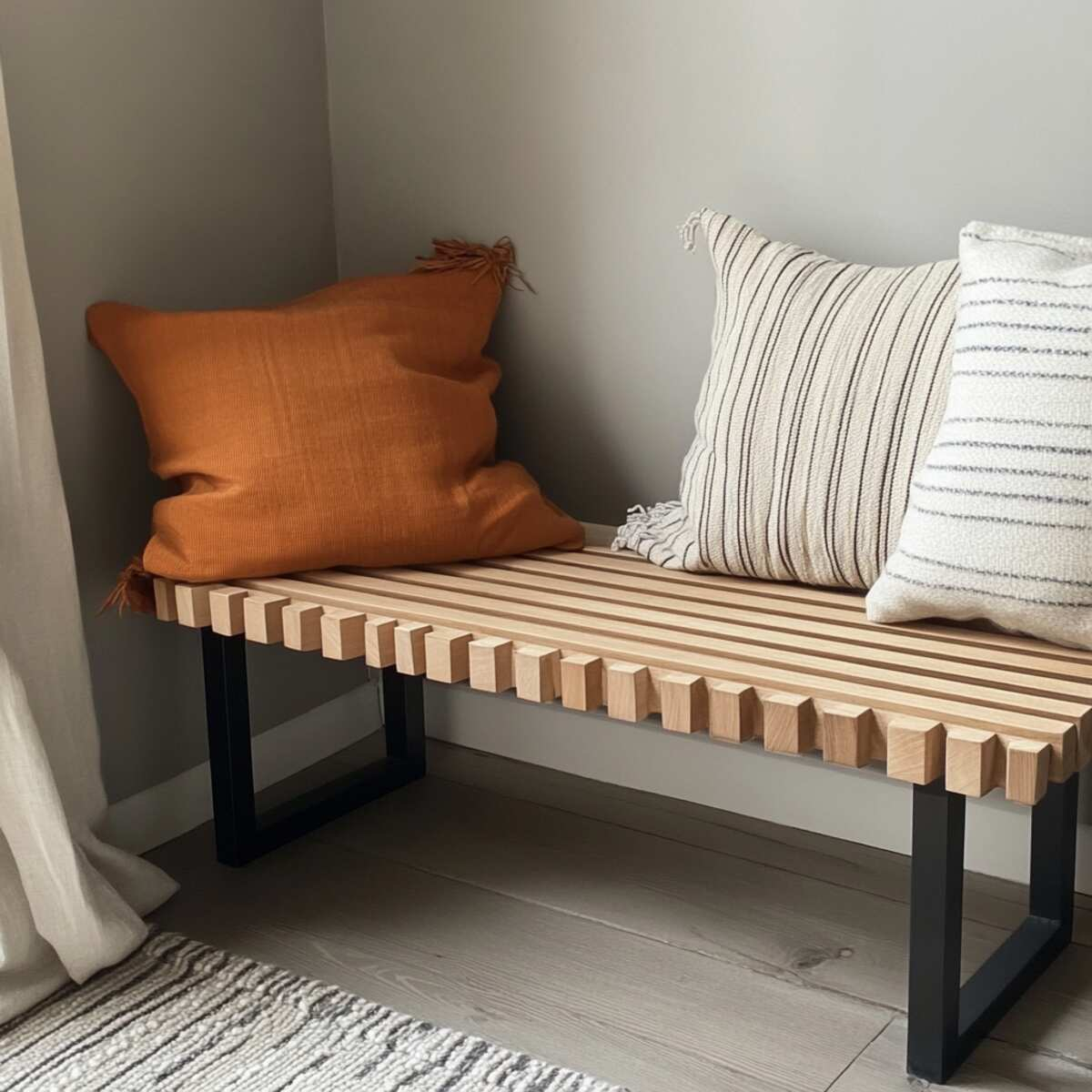
So you’ve got the bench. Now, how do you style it so it doesn’t look like a cafeteria? The goal is airiness. You want the eye to flow. Start with the legs. If you choose a freestanding bench, opt for one with slender legs or a cantilever design. Avoid bulky, blocky bases that weigh down the visual field. Countryside Amish Furniture points out that the svelte design of many benches helps show off the table and keep the environment spacious. The less visual weight, the better.
Cushions are your friend, but keep them tailored. A thick, puffy cushion can make a bench look overstuffed and large. Go for a firm, thin pad that complements the table height. Use fabrics that reflect light—lighter colors, natural textures like linen or cotton. Dark, heavy velvets can absorb light and make the corner feel cave-like. In small spaces, light is your best ally. Bounce it around.
Don’t forget the backdrop. If your bench is against a wall, use that vertical space wisely. A mirror above the bench can double the visual depth of the room. Or, keep the wall bare to emphasize the emptiness. Avoid hanging too many pictures or shelves directly above the bench, which can create a "boxed-in" feeling. Let the bench be the anchor, but let the space around it breathe. It’s about balance. You want the bench to feel like part of the architecture, not an afterthought. When the styling is subtle, the space feels expansive.
Common Pitfalls to Avoid
Even with the best intentions, it’s easy to mess up bench seating. The biggest error? Proportion. As mentioned earlier, forcing a huge bench into a tiny nook is a disaster. Measure twice. Buy once. If your nook is 7 feet wide, don’t buy a 6-foot bench unless you want zero wiggle room. Leave some breathing space on the sides. This gap allows for easier cleaning and prevents the room from feeling stuffed. Coohom emphasizes that small dining benches are all about proportion and access. Sometimes, two smaller stools or a shorter bench work better than one long unit.
Another mistake is ignoring the table height. Benches and tables need to play nice. Standard dining height is around 30 inches for the table and 18 inches for the seat. If your bench is too low, you’ll feel like a child at the adult table. Too high, and your knees will hit the apron of the table. Test it out. Sit down. Check your legroom. Ensure there’s enough space for your thighs under the table. Comfort is non-negotiable. If it’s not comfortable, you won’t use it, and then you’ve just wasted money on a place to pile laundry.
Lastly, don’t neglect the other side of the table. If you have a bench on one side, what goes on the other? Chairs? Another bench? A mix can work, but it needs to feel intentional. Two benches can look symmetrical and clean, but might feel too rigid. A bench on one side and chairs on the other offers variety and flexibility. Just ensure the styles complement each other. Don’t mix ultra-modern metal benches with rustic farmhouse chairs unless you’re very skilled at eclectic design. Keep it harmonious. Mistakes happen, but a little planning prevents the "rookie moves" that leave you frustrated.
At the end of the day, choosing a dining bench for your small space is about more than just furniture. It’s about embracing a smarter way to live. In 2026, we value flexibility, connection, and calm. Benches deliver on all three. They clear the visual clutter, tuck away to save space, and bring people closer together. They turn a cramped corner into a cozy nook. They make a small apartment feel like a home, not a storage unit.
It’s a small change with a big impact. You don’t need to renovate. You don’t need to move. You just need to rethink how you sit. So, look at your dining area. Is it feeling heavy? Is it hard to move around? Maybe it’s time to ditch the chairs. Slide in a bench. Clear the floor. Let the light in. You might be surprised at how much bigger your world feels when you simply change your perspective. And honestly, isn’t that what good design is all about? Making life feel a little lighter, one seat at a time.