It’s that time of evening again. You step out onto the patio, expecting that warm, inviting glow to welcome you home. Instead, you’re greeted by a faint, sickly flicker. The path to the front door looks more like a shadowy obstacle course than a welcoming entrance. It’s frustrating, isn’t it? You paid for security. You paid for beauty. But what you got was a dim, depressing mess that makes your house look neglected rather than nestled.
You’re not alone in this. In 2026, as energy standards tighten and older halogen systems finally give up the ghost, millions of homeowners are facing the same issue. The problem isn’t always your wiring or your transformer, though those play a part. Often, the culprit is simply the wrong bulb for the job. Or worse, an old, degraded bulb that’s lost half its punch. The fix? It might be simpler than you think. Enter the PAR38 bulb. It’s not new tech, but the 2026 versions are smarter, brighter, and tougher than ever before. Let’s dive into why your lights are failing and how this specific bulb shape saves the day.
The Hidden Culprits Behind Dim Outdoor Lights
Before we talk solutions, we need to diagnose the disease. Why exactly are your lights so dim? It’s rarely just one thing. Usually, it’s a perfect storm of small issues compounding over time. The most common suspect is voltage drop. If you have a low-voltage landscape system, the electricity loses strength as it travels further from the transformer. The lights near the house might look great, but the ones at the far end of the yard? They’re glowing like dying embers. This is classic physics. The longer the wire, the more resistance, and the less power reaches the bulb.
But it’s not just about distance. Dirt and debris are silent killers of brightness. Over months of rain, pollen, and dust, a thin film builds up on your bulb and the inside of your fixture lens. This grime acts like a sunglasses lens, blocking a significant portion of the light before it even escapes the fixture. Studies show that a dirty bulb can lose up to 30% of its output. That’s huge. And let’s not forget the bulbs themselves. If you’re still using old halogens or cheap, early-generation LEDs, they degrade faster than you’d expect. Halogens dim as they age, and poor-quality LEDs suffer from "lumen depreciation," where they slowly fade into irrelevance.
Then there’s the weather factor. Outdoor lights take a beating. Rain, snow, extreme heat, and freezing cold all stress the components. Water intrusion is a big one. Even a tiny leak can corrode contacts or fog up the lens, scattering light in useless directions. In 2026, we see more extreme weather patterns, which means your fixtures are under more stress than ever. If your fixtures aren’t properly sealed (look for an IP65 rating or higher), moisture gets in, and brightness goes out. It’s a vicious cycle. The dimmer it gets, the harder you squint, and the less safe your yard feels.
Understanding the PAR38 Advantage
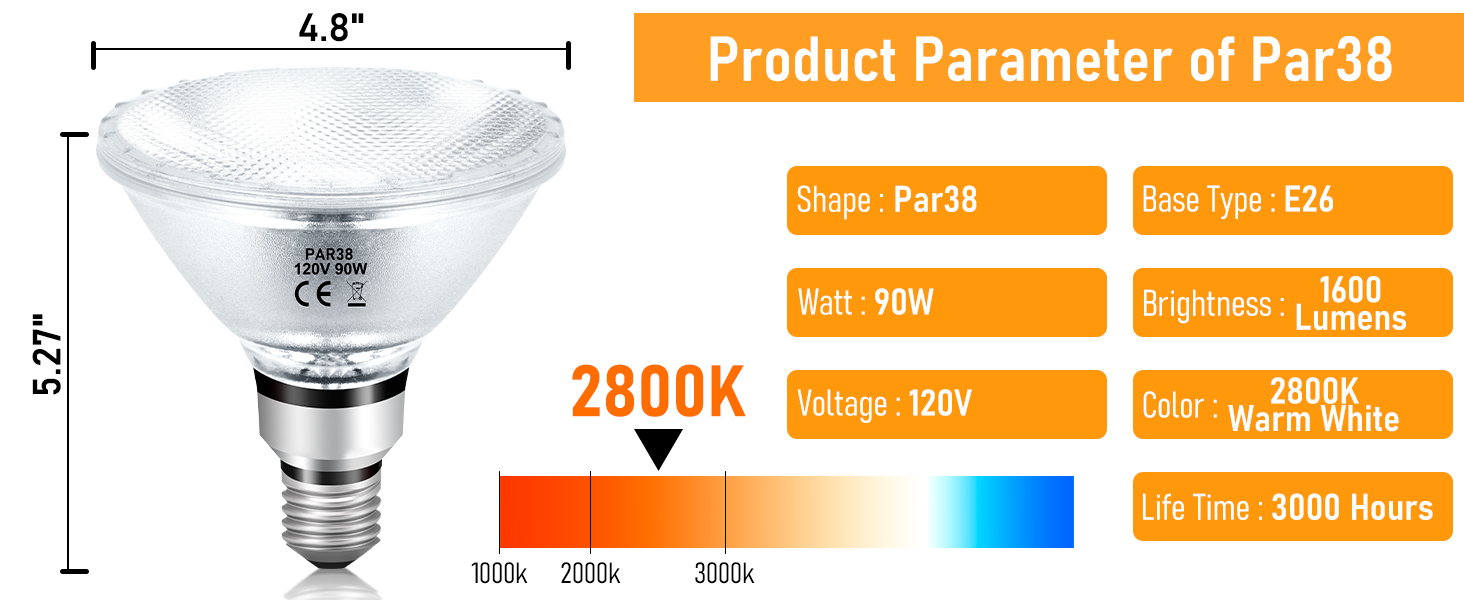
So, what makes the PAR38 so special? First, let’s decode the name. "PAR" stands for Parabolic Aluminized Reflector. Sounds technical, right? Think of it this way: it’s a bulb with a built-in mirror. The inside of the bulb is coated with aluminum in a parabolic shape, which reflects light forward in a controlled beam. The "38" refers to the diameter of the bulb, measured in eighths of an inch. So, 38 divided by 8 equals 4.75 inches. It’s a standard size, widely available, and fits most outdoor floodlight fixtures.
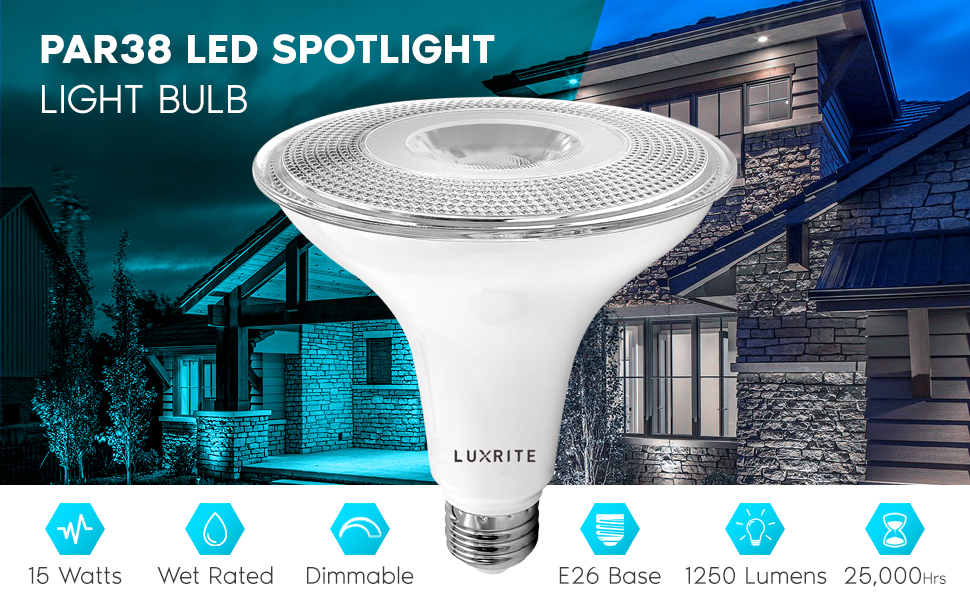
The magic lies in that reflector. Unlike a standard A19 bulb that sprays light in all directions (wasting half of it inside the fixture), a PAR38 directs light exactly where you want it. This efficiency means you get more usable lumens on the ground, not trapped in the housing. In 2026, LED PAR38s have become incredibly efficient. You can now get bulbs that produce 1,500 to 2,000 lumens while using only 15-20 watts of power. That’s bright. Like, really bright. And because the light is focused, it cuts through darkness better than a diffuse glow ever could.
Another key advantage is durability. PAR38 bulbs are built tough. They’re designed for outdoor use, with thick glass or polycarbonate lenses that resist impact and temperature changes. Many modern LED PAR38s come with an IP65 or IP67 rating, meaning they’re completely protected against dust and can handle heavy rain or even temporary submersion. This weatherproofing ensures that the bulb itself doesn’t become the weak link in your lighting chain. When you combine a directional beam with a rugged build, you get a bulb that stays bright and functional year after year, regardless of the weather.
Voltage Drop and Wiring: The Silent Brightness Killers
Let’s circle back to voltage drop, because it’s the number one reason people blame their bulbs when the real issue is the wire. If you’ve upgraded to bright PAR38 LEDs and they’re still dim, check your wiring. Low-voltage systems (usually 12V) are sensitive. If you’re using thin gauge wire (like 16 or 18 gauge) for long runs, the voltage drops significantly. By the time the power reaches the last light, it might only be getting 9 or 10 volts instead of 12. That 20-25% loss translates directly to dimmer light.
The fix here isn’t always rewiring the whole yard. Sometimes, you can adjust the taps on your transformer. Most modern transformers have multiple voltage outputs (11V, 12V, 13V, etc.). If your lights are at the end of a long run, try connecting them to the 13V or 14V tap. This compensates for the voltage loss in the wire, ensuring the bulbs get closer to their ideal 12V input. It’s a simple tweak that can make a night-and-day difference. Just don’t go too high, or you’ll burn out your LEDs prematurely.
Another wiring issue is bad connections. Corroded wire nuts or loose connectors create resistance, which kills voltage. In 2026, we recommend using waterproof wire connectors filled with dielectric grease. These seal out moisture and prevent corrosion, keeping the electrical flow smooth and consistent. If you’re seeing flickering along with dimness, it’s almost certainly a connection issue. Check every splice. Tighten them up. Replace any that look green or crusty. A solid connection is the backbone of a bright lighting system.
Choosing the Right PAR38 LED for 2026
Not all PAR38 bulbs are created equal. Walking down the lighting aisle (or scrolling online) can be overwhelming. Here’s what to look for in 2026. First, check the lumens, not the watts. Watts tell you how much energy it uses; lumens tell you how bright it is. For general outdoor floodlighting, aim for at least 1,200 lumens. For security or large areas, go for 1,500+. Don’t be shy. Brighter is better, especially if you’re dealing with existing voltage drop issues.
Next, consider the color temperature. This is measured in Kelvin (K). Older halogens were around 2700K, giving a warm, yellowish glow. Many early LEDs were 5000K+, which looked harsh and blue. In 2026, the sweet spot for outdoor residential lighting is 3000K. It’s warm enough to feel inviting but crisp enough to provide good visibility. Avoid anything above 4000K for your home exterior; it feels clinical and uninviting. Stick to 2700K-3000K for a cozy, high-end look.
Beam angle matters too. PAR38s come in different spreads: Flood (wide), Spot (narrow), and Wide Flood. For general yard illumination, a Flood beam (around 40-60 degrees) is versatile. It covers a good area without being too focused. If you’re highlighting a tree or architectural feature, go with a Spot beam (20-30 degrees). Make sure the bulb you choose matches the fixture’s intended purpose. Putting a narrow spot bulb in a wide-angle fixture wastes light, and vice versa. Read the package carefully.
Installation and Maintenance Tips for Lasting Brightness
You’ve bought the right bulbs. Now, let’s make sure they stay bright. Installation starts with clean fixtures. Before screwing in your new PAR38s, wipe down the inside of the fixture housing and the lens with a soft cloth. Remove any dead bugs, spiderwebs, or dirt buildup. This simple step can instantly boost perceived brightness by 10-15%. It’s free, it’s easy, and it makes a difference.
When installing, ensure the bulb is seated correctly. Loose bulbs can cause arcing or poor contact, leading to flickering or reduced output. Give it a gentle twist until it’s snug, but don’t overtighten. Also, check the fixture’s seal. If the gasket is cracked or missing, replace it. Moisture is the enemy. A tight seal keeps the inside dry and the lens clear. In 2026, many fixtures come with silicone gaskets that last longer than the old rubber ones. If yours looks brittle, swap it out.
Maintenance doesn’t stop at installation. Set a reminder to check your lights twice a year: once in spring and once in fall. Wipe down the lenses. Check for any new debris. Inspect the wiring for any signs of damage from lawn mowers or rodents. A little preventative care goes a long way. And if you notice one bulb is significantly dimmer than the others, replace it immediately. Don’t wait for it to burn out completely. Consistent brightness across all fixtures creates a cohesive, professional look.
Let’s talk about the impact. Imagine walking out to a yard that’s evenly lit, with no dark corners. The path is clear. The trees are highlighted. The house facade looks warm and welcoming. That’s the power of proper lighting. Homeowners who switch to high-quality PAR38 LEDs often report feeling safer. Crime deterrence is a real benefit; well-lit properties are less attractive to intruders. But it’s also about aesthetics. Good lighting adds curb appeal. It makes your home look cared for and valuable.
Consider the energy savings too. Replacing old 50-watt halogen PAR38s with 15-watt LED equivalents saves you 35 watts per bulb. If you have 10 outdoor lights, that’s 350 watts saved every night. Over a year, that adds up to significant money on your electric bill. In 2026, with energy costs still a concern, this isn’t just about brightness; it’s about smart spending. The LEDs pay for themselves in under two years, and then they keep saving you money for a decade or more.
There’s also the convenience factor. Modern LED PAR38s last 25,000 to 50,000 hours. That’s 10-20 years of normal use. You won’t be climbing ladders every few months to change burnt-out bulbs. It’s set it and forget it. This reliability reduces frustration and maintenance hassle. You get consistent performance, night after night. No more flickering. No more dim spots. Just reliable, beautiful light that enhances your life and your home. It’s a small upgrade with a massive payoff.
Fixing dim outdoor lights doesn’t have to be a complicated, expensive ordeal. Often, it starts with understanding the root causes: voltage drop, dirt, aging bulbs, and poor fixture seals. By switching to modern, high-lumen PAR38 LED bulbs, you address the efficiency and durability issues head-on. These bulbs, with their directional reflectors and weatherproof designs, are built to perform in 2026’s demanding outdoor environments.
Remember to check your wiring and transformer settings to ensure your bulbs are getting the power they need. Clean your fixtures regularly. Choose the right color temperature and beam angle for your specific needs. With these steps, you can transform your dark, dingy yard into a bright, secure, and inviting space. It’s not just about light; it’s about how your home feels. And in 2026, there’s no excuse for living in the shadows. Get those PAR38s in there, and let your home shine.