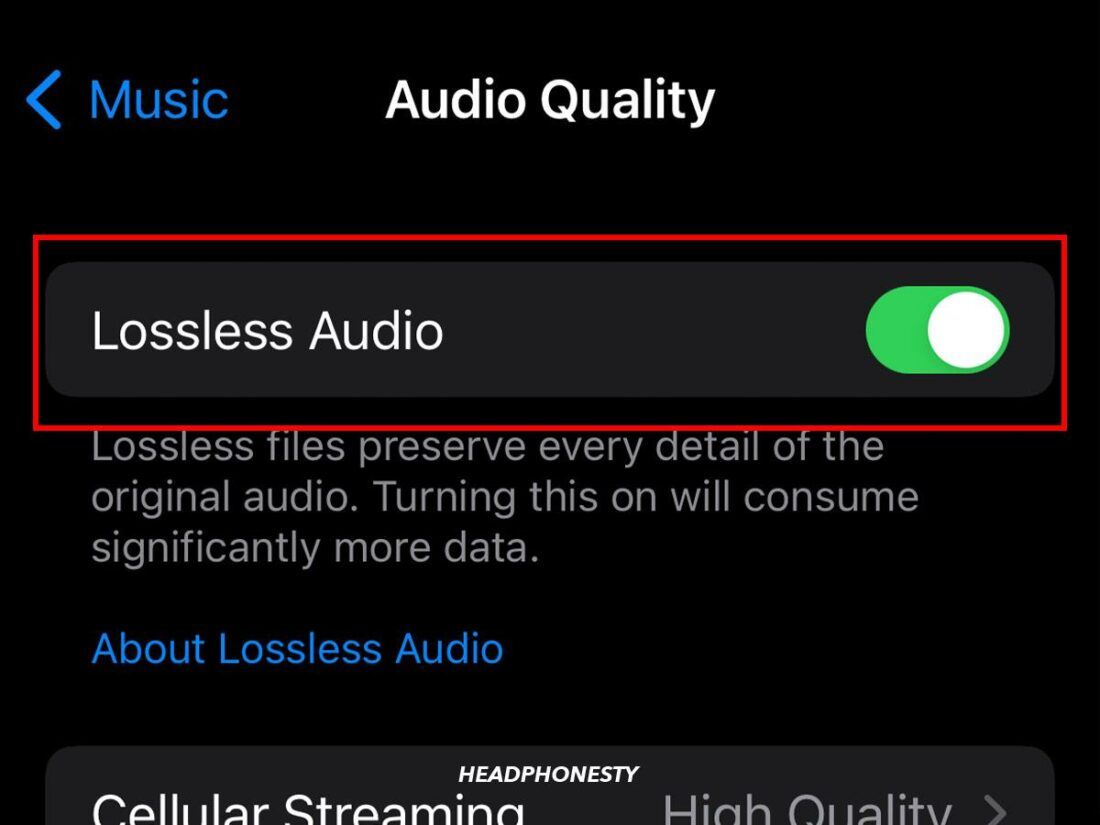
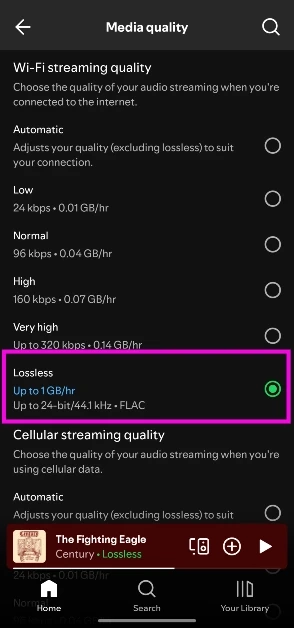
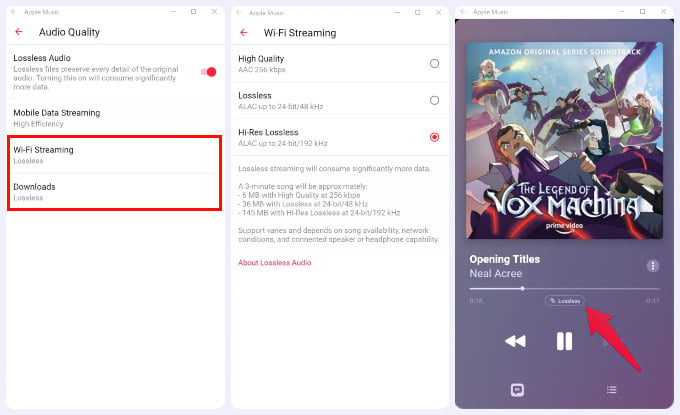
You’re scrolling through your favorite streaming app. It’s late on a Saturday night. You see that little "Hi-Res" or "Lossless" badge next to the album art. A tiny part of your brain lights up. You think, This is it. This is the real deal. You put on your best headphones, close your eyes, and wait for the musical epiphany. But then… nothing. Or maybe something? It’s hard to tell. Is that cymbal crash crispier? Is the bass tighter? Or are you just imagining it because you paid extra for the subscription tier?
We’ve all been there. The promise of perfect sound is seductive. It feels like we’re getting closer to the artist’s original intent. But here’s the uncomfortable truth that nobody in the marketing department wants to shout from the rooftops: your ears are tricky little liars. They don’t just process sound waves; they process expectations, memories, and even the price tag on your gear. In 2026, with spatial audio and AI-upscaling becoming standard, the line between what is real and what is perceived has never been blurrier. Let’s dig into why your brain might be playing tricks on you, and whether chasing those extra bits of data is actually worth the hassle.
The Biology of Limits
First, let’s talk about the hardware you were born with. Your ears are amazing, sure. They can detect a whisper from across a quiet room. But they aren’t infinite microphones. Human hearing generally tops out around 20 kHz (kilohertz). That’s the upper limit for most young people. As we age, that ceiling drops. By the time you hit your thirties or forties, you might not hear anything above 15 or 16 kHz. And guess what? Most of the "extra" data in lossless files lives in those ultra-high frequencies.
CD-quality audio (16-bit/44.1kHz) already captures everything up to 22.05 kHz. So, technically, it covers the entire range of human hearing. When you jump to 24-bit/192kHz, you’re capturing frequencies that dogs might appreciate, but you definitely won’t. Sure, some audiophiles argue that these ultrasonic frequencies affect the lower ones through some weird intermodulation distortion magic. But blind tests? They rarely back that up. For the vast majority of us, the biological receiver just isn’t built to pick up the difference.
Then there’s the dynamic range. CDs offer 96 decibels of dynamic range. That’s the difference between the quietest and loudest sounds. A jet engine is about 140 dB. A quiet library is 30 dB. So, 96 dB covers almost every realistic listening scenario. Unless you’re sitting in an anechoic chamber with studio monitors blasting at unsafe volumes, you aren’t going to hear the extra headroom that 24-bit audio provides. It’s like buying a Ferrari to drive in a school zone. The car is capable of more, but the environment limits you.
The Psychology of Expectation
Here is where it gets really interesting. Our brains are prediction machines. They don’t just passively receive information; they actively construct our reality. If you know you are listening to a high-resolution file, your brain primes itself to hear improvements. This is called confirmation bias, and it is powerful. In study after study, when listeners don’t know which track is which, their ability to distinguish between MP3s and WAV files drops significantly. Sometimes, it drops to chance levels.
Think about wine tasting. If someone tells you a bottle costs $100, you’ll likely describe it as complex and smooth. If they tell you it’s $10, you might call it harsh. The liquid is the same. The context changes the perception. Audio works the same way. When you see the "Lossless" icon, you expect clarity. So, when you hear a slightly brighter treble (maybe due to a different master or just random variation), your brain labels it as "high-res detail." It’s a placebo effect, but it feels real.
There’s also the effort justification principle. You spent money on expensive cables. You upgraded your DAC (Digital-to-Analog Converter). You subscribed to the premium tier. Your brain doesn’t want to admit that all that effort and cash resulted in zero audible change. So, it subconsciously tweaks your perception to validate your choices. You want to hear the difference, so you do. It’s not that you’re lying to yourself on purpose; it’s that your mind is trying to make sense of your actions.
The Gear Bottleneck
Even if your ears were perfect microphones and your brain was an objective analyzer, you’d still hit a wall: your equipment. In 2026, Bluetooth is better than ever. We have codecs like LC3plus and newer proprietary tech that squeeze incredible quality into wireless signals. But they are still compressed. To hear true lossless audio, you need a wired connection. Period. Wireless transmission simply doesn’t have the bandwidth yet to handle uncompressed 24-bit/192kHz streams without some form of compression.
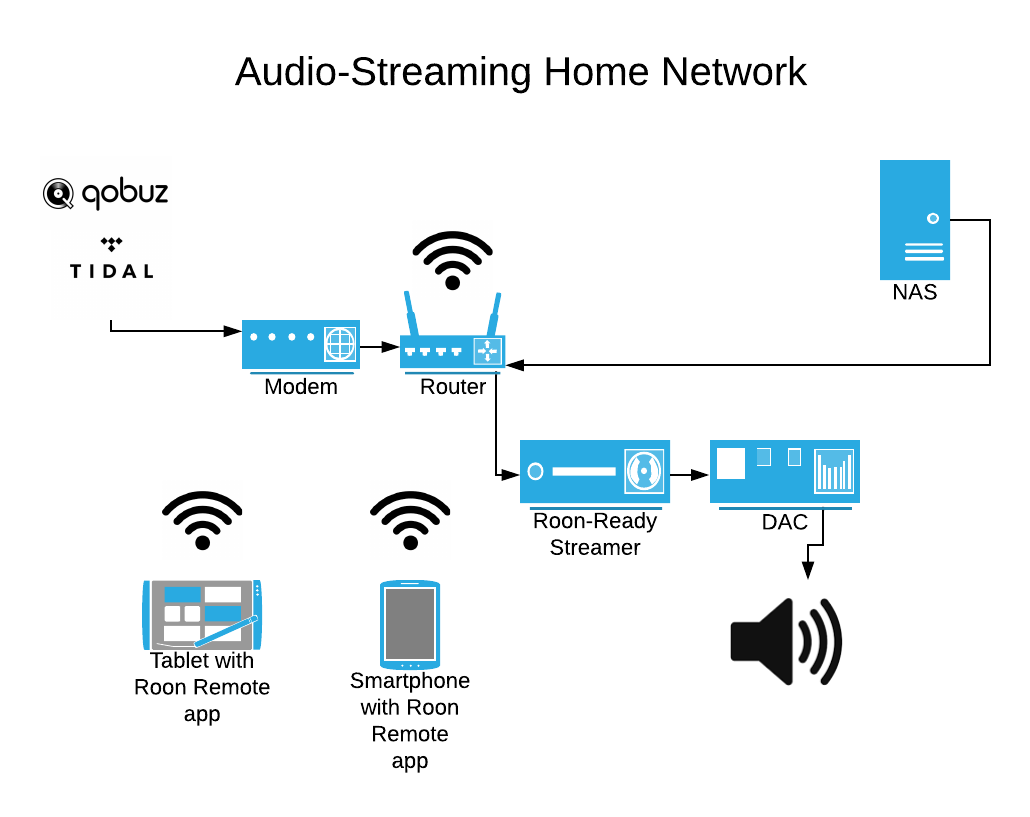
So, are you using wired headphones? Even then, the quality of your Digital-to-Analog Converter (DAC) matters. The little chip inside your phone or laptop that turns digital 1s and 0s into analog electricity is often the weak link. If it’s noisy or inaccurate, it doesn’t matter how pure the source file is. The garbage-in, garbage-out rule applies. You need a dedicated external DAC to really unlock the potential of lossless files, and even then, your amplifiers and speakers need to be up to the task.
Most consumer gear, no matter how pricey, isn’t designed for clinical accuracy. It’s designed to sound "good." Manufacturers tune headphones to have boosted bass or sparkling treble because that’s what sells. These colorations mask the subtle nuances that lossless audio supposedly reveals. If your headphones add a heavy bass boost, you won’t hear the delicate decay of a piano note in the mid-range. The gear itself is filtering out the very details you’re chasing.
The Mastering Reality
Here’s a secret that frustrates many audiophiles: the source matters more than the format. A well-mastered MP3 will always sound better than a poorly mastered lossless file. Mastering is the final step in music production, where engineers balance levels, EQ, and dynamics. In the modern era, many tracks are mastered to be loud and competitive, often crushing the dynamic range. This is known as the "Loudness War."
When a track is heavily compressed during mastering, there’s no dynamic detail left to recover. Whether it’s in FLAC or AAC, it will sound flat and fatiguing. The extra bits in a lossless file just preserve the artifacts of bad mastering with higher precision. You’re getting a high-definition picture of a blurry scene. It’s still blurry.
Furthermore, many "Hi-Res" releases are just upscaled versions of CD-quality masters. There’s no new information added. It’s like taking a small JPEG and blowing it up to poster size. You don’t get more detail; you just get bigger pixels. Unless the artist and engineer specifically recorded and mixed in high resolution (which is becoming more common, but isn’t universal), you aren’t getting the "studio experience." You’re getting a marketing label.
The Environment Factor
Where are you listening? Be honest. Are you in a soundproofed room with acoustic treatment? Or are you on a bus, in a gym, or walking down a busy street? Ambient noise is the enemy of detail. Background chatter, traffic hum, and air conditioning noise create a "noise floor" that masks subtle audio cues. In a noisy environment, the difference between 320kbps AAC and 1411kbps WAV is effectively zero. The noise drowns out the micro-details.
Even in a quiet home, room acoustics play a huge role. Reflections off walls, floors, and furniture cause standing waves and frequency cancellations. These physical phenomena distort the sound before it even reaches your ears. Without proper room treatment, your expensive speakers are fighting against physics. The subtle airiness of a vocal track might be cancelled out by a reflection from your window.
This is why car audio is such a tricky beast. Cars are terrible listening environments acoustically, yet people spend thousands on systems. The movement, the road noise, the glass surfaces—it all degrades the signal. Listening to lossless audio in a car is largely a waste of bandwidth. You might as well stream standard quality and save your data plan. The environment dictates the diminishing returns.
When It Actually Matters
So, is lossless audio a total scam? No. It’s not useless. There are specific scenarios where it shines. If you are a musician, producer, or audio engineer, you need lossless files. You need to hear every click, pop, and breath to make editing decisions. You need the headroom to process the audio without introducing artifacts. For creation, it’s essential.
For critical listening enthusiasts with high-end, wired setups in treated rooms, it can offer a marginal improvement. Some people, with trained ears and golden years (young age), can distinguish the transparency of a well-encoded lossless file from a heavily compressed one. It’s not about hearing ultrasonic frequencies; it’s about hearing the lack of compression artifacts in the audible range. Pre-echo and smearing in transient sounds (like drums) can be reduced.
Also, consider archival value. Lossless formats like FLAC or ALAC are perfect for storing your music library. They are future-proof. As playback technology improves, having the highest quality source ensures you can take advantage of it. If you buy a digital album, buying the lossless version means you never have to buy it again. It’s an investment in longevity, not just immediate gratification.
At the end of the day, audio is subjective. It’s about enjoyment, not metrics. If looking at that "Lossless" badge makes you happy, keep using it. There’s no shame in enjoying the ritual of high-fidelity listening. But don’t let it stress you out. Don’t feel guilty if you can’t tell the difference. You aren’t broken. Your ears are working exactly as they should.
Try this experiment: turn off the hi-res setting for a week. Listen to your favorite playlists on standard high-quality streaming (like 256kbps AAC or 320kbps Ogg Vorbis). Notice if you miss anything. Chances are, you won’t. You might even find you enjoy the music more because you’re focusing on the melody and lyrics, not the texture of the snare drum.
Use your ears, not your eyes. Trust your feelings, not the specs sheet. If it sounds good, it is good. In 2026, we have access to more music than any generation in history. Let’s not get so bogged down in the technicalities of delivery that we forget to dance. After all, music is meant to be felt, not analyzed. So go ahead, skip the upsell if you want. Your playlist—and your wallet—will thank you.