You walk into an electronics store or scroll through an online marketplace, and everything looks the same. A sleek black box. A bundle of cameras. Bold text screaming "4K Resolution" or "12MP Clarity." It feels simple, right? You buy the box with the most ports for the best price. But six months later, you’re staring at a frozen screen during a critical moment, or your hard drive is making that scary clicking sound because it’s working overtime.
Why does this happen? Because the spec sheet is lying to you. Well, not lying exactly. It’s just omitting the most important part. It’s like buying a car based on how shiny the paint is while ignoring the engine under the hood. In the world of Power over Ethernet (PoE) Network Video Recorders (NVRs), that engine is the encoder chipset. And almost nobody talks about it. Not the big review sites. Not the flashy YouTube unboxings. They focus on pixel counts and app interfaces. But the chipset? That’s where the magic happens. Or where it fails.
Let’s be honest. Security isn’t about having the prettiest dashboard. It’s about trust. It’s about knowing that when something goes wrong, the footage will be there. Clear. Usable. Reliable. The encoder chipset is the silent workhorse that makes this possible. It takes the raw data from your cameras and crushes it down into something your hard drive can handle without losing the details that matter. If you skip this part of the conversation, you’re gambling with your security. And that’s a bet you don’t want to make.
The Black Box Mystery
Most people think an NVR is just a storage device. A digital filing cabinet for video files. This is a huge misconception. An NVR is actually a complex computer dedicated to one task: processing video streams in real time. When a camera sends data to the recorder, it’s not sending a neat little MP4 file. It’s sending a massive, uncompressed stream of raw visual information. If you tried to save that raw data directly to a hard drive, your storage would fill up in hours. Maybe minutes.
This is where the encoder chipset steps in. It’s a specialized piece of silicon designed to compress video efficiently. Think of it like a translator who speaks both "high-definition video" and "hard drive space." The chipset analyzes every frame, deciding what information is essential and what can be discarded without noticeable loss. A face needs to stay sharp. The leaves on a tree in the background? Those can be compressed more aggressively. This process happens dozens of times per second, for every single camera connected to the system.
The problem is that manufacturers rarely disclose which chipset they are using. You’ll see terms like "H.265+" or "Smart Codec," but these are marketing labels, not hardware specifications. Two different NVRs can both claim H.265 support, but if one uses a high-end HiSilicon or Ambarella chip and the other uses a generic, low-power alternative, the performance difference will be night and day. One will handle motion smoothly; the other will artifact and blur when things get busy. Reviewers miss this because it’s hard to see on a spec sheet. You have to know where to look.
Compression Is Not Just About Space
We often talk about compression in terms of saving money on hard drives. And sure, that’s part of it. Better compression means you can store more days of footage on the same disk. But in 2026, compression is about intelligence. Modern encoder chipsets are tightly integrated with AI processing units. This is a shift that many older guides fail to capture. The chipset doesn’t just shrink the video; it helps the system understand it.
When a chipset supports advanced profiles like H.265 HEVC or the newer AV1 standards, it allows for something called Region of Interest (ROI) encoding. This means the encoder can allocate more bitrate to specific areas of the frame—like a doorway or a cash register—while reducing quality in static areas like the ceiling or floor. A cheap chipset treats every pixel equally. A good chipset prioritizes. This results in clearer images of faces and license plates, even when the overall bandwidth is limited.
But here’s the catch. Poor quality encoders struggle with this balancing act. If the chipset is overwhelmed, it might compress the important parts too much, leaving you with a muddy blob instead of a suspect’s face. Or, it might fail to reduce the background noise, causing your hard drive to thrash as it tries to write unnecessary data. This is why two systems with the same "4K" label can produce vastly different evidence quality. The reviewer sees a pretty picture on the demo unit. You get a grainy mess when it matters.
The Heat Factor and Longevity
Let’s talk about heat. It’s the silent killer of electronics, and encoder chipsets generate a lot of it. Video compression is mathematically intensive. It requires billions of calculations per second. High-performance chipsets are efficient, but they still run hot. Cheaper alternatives often cut corners on thermal management or use less efficient architectures that generate excess heat for the same amount of work.
Why does this matter to you? Because heat degrades components. An NVR is often tucked away in a closet, a attic, or a server rack with poor airflow. If the encoder chipset is running at its thermal limit 24/7, the lifespan of the entire unit drops. Capacitors dry out. Solder joints crack. The system becomes unstable. You might experience random reboots, dropped connections, or corrupted files. These aren’t always software bugs. Often, they’re hardware distress signals.
Reviewers typically test units for a few weeks in a climate-controlled studio. They don’t see what happens after two years of summer heat in a non-air-conditioned utility room. A robust encoder chipset, paired with proper heatsinking and thermal design, ensures consistency. It maintains performance even when the ambient temperature rises. When you’re choosing a system, look for reviews that mention long-term stability or industrial-grade components. If the review only talks about setup ease, they’re missing the durability story entirely.
AI Integration and Smart Detection
In 2026, "AI detection" is a buzzword slapped on every box. But not all AI is created equal. The effectiveness of person detection, vehicle recognition, or package theft alerts depends heavily on how well the encoder chipset works with the system’s neural processing unit (NPU). In many modern architectures, the encoding and AI analysis happen in parallel, sharing memory and resources.
If the encoder is inefficient, it hogs resources that should be used for AI analysis. This leads to false alarms. A shadow becomes a person. A swaying tree becomes a vehicle. Why? Because the system couldn’t process the data fast enough to distinguish between noise and signal. A high-quality chipset offloads the heavy lifting, allowing the AI to focus on accurate classification. This synergy is crucial for reducing alert fatigue. You want to be notified when it matters, not every time a cloud passes by.
Furthermore, some advanced chipsets support metadata embedding. This means the AI data (like "person detected at 10:00 AM") is stamped directly into the video stream during encoding. This makes searching through footage incredibly fast. Instead of watching hours of video, you can filter by "people" or "cars." But this feature requires precise synchronization between the encoder and the analytics engine. Cheap chipsets often lack this tight integration, forcing the system to do post-processing analysis, which is slower and less accurate.
Bandwidth Bottlenecks in Multi-Camera Setups
Here is a scenario that trips up many homeowners and small business owners. You buy a 16-channel NVR. You connect 16 high-resolution cameras. Everything works fine for a week. Then, you try to view all 16 cameras remotely on your phone while someone else is downloading a large file on your network. The video stutters. It freezes. You assume your internet is slow. But the bottleneck might be inside the NVR itself.
The encoder chipset has a maximum throughput limit. This is the total amount of data it can process across all channels simultaneously. Manufacturers often list the "incoming bandwidth" and "outgoing bandwidth," but they don’t explain how the chipset handles peak loads. A superior chipset can manage traffic spikes gracefully, prioritizing live viewing over recording if necessary, or adjusting compression dynamically to keep the stream flowing. A weaker chipset just chokes.
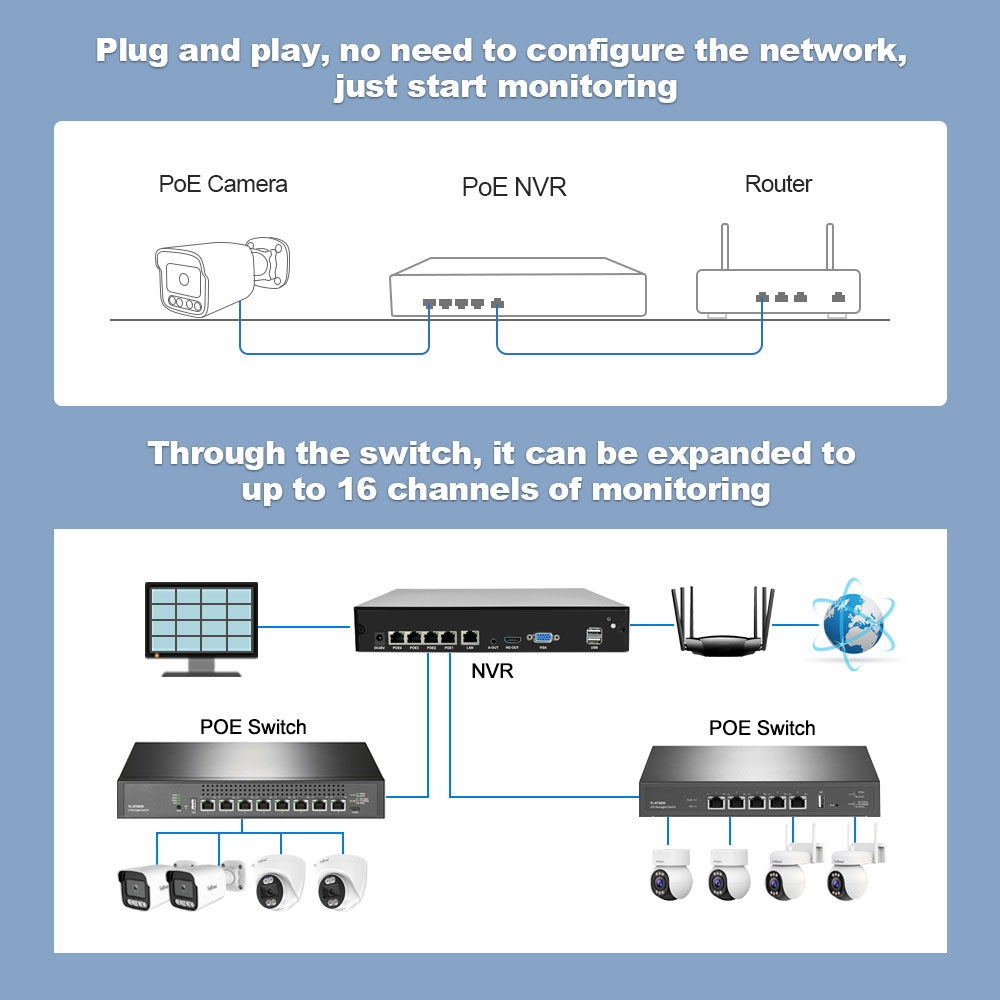
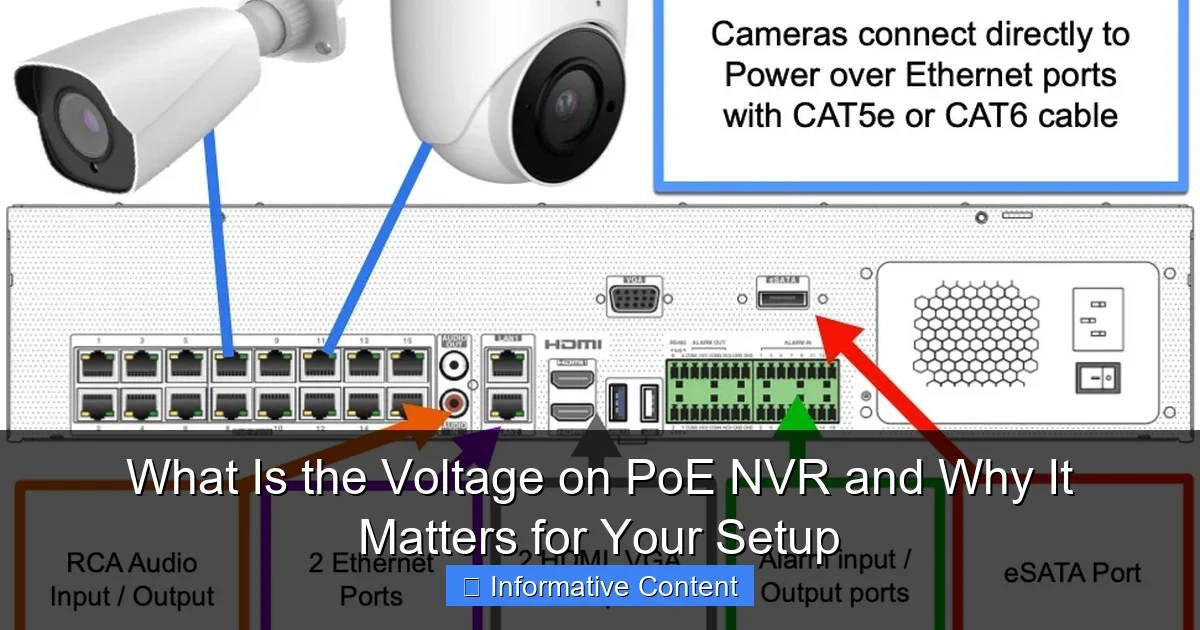
This is particularly important for PoE systems where the NVR acts as the switch. The data doesn’t just pass through; it’s ingested, processed, and written. If the encoder can’t keep up with the aggregate data rate of all 16 cameras, frames get dropped. You lose seconds of footage. In a security context, those seconds could be everything. Reviewers rarely stress-test the total bandwidth capacity. They plug in four cameras and call it a day. Don’t let their limited testing fool you. Consider your worst-case scenario, not their best-case demo.
So, how do you find a good encoder chipset when the manufacturer won’t tell you what’s inside? It requires a bit of detective work. First, look at the brand’s heritage. Companies that have been in the video surveillance game for decades (like Axis, Hanwha, or Hikvision’s higher-end lines) usually invest in proprietary or high-tier third-party chipsets. They have the R&D budget to optimize the software-hardware handshake. Newer, generic brands often off-the-shelf solutions that are "good enough" but not great.
Second, read the fine print on compression standards. If an NVR claims to support H.265+ or Smart H.265, it’s likely using a more capable chipset than one that only lists basic H.264. Look for mentions of "hardware-level decoding" or "dedicated video processing units." These are clues that the system has dedicated silicon for the task, rather than relying on the main CPU to do everything.
Third, check user forums and long-term reviews. Look for comments about "fan noise," "heat," or "stability under load." Real users will tell you if their NVR sounds like a jet engine or if it crashes when motion detection triggers. These are indirect indicators of chipset quality. A quiet, cool-running unit that handles multiple streams without lag is almost certainly powered by a robust encoder. Trust the community’s collective experience over the glossy marketing brochure.
Choosing the right PoE recorder isn’t about finding the cheapest box with the most ports. It’s about understanding the invisible engine that drives your security. The encoder chipset determines whether your footage is clear or cloudy, whether your system lasts two years or ten, and whether your AI alerts are helpful or annoying. By looking past the surface-level specs and focusing on the processing power underneath, you make a smarter investment. You buy peace of mind, not just plastic and metal. And in the end, isn’t that what security is really about?