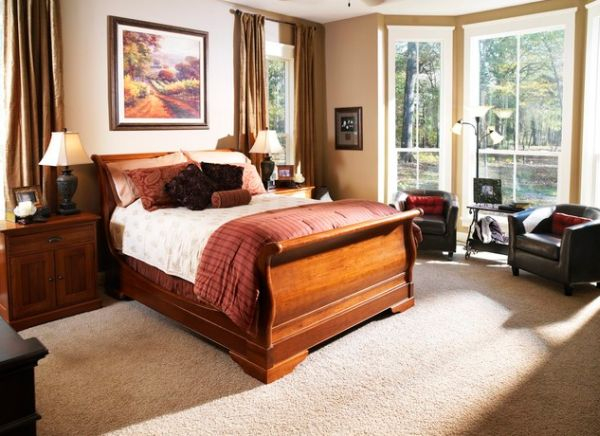
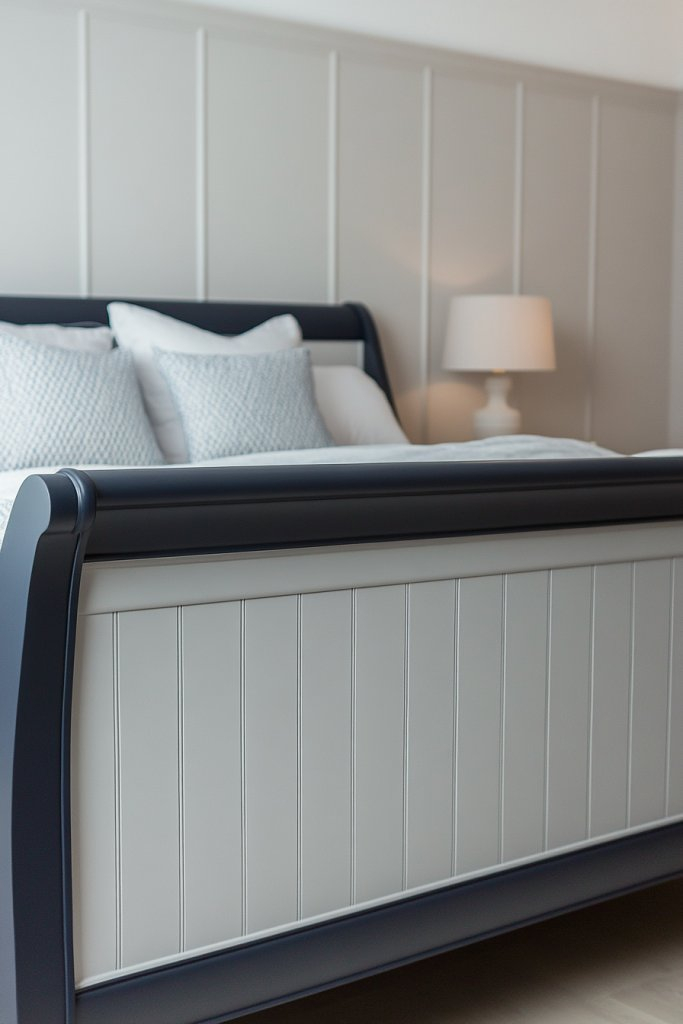
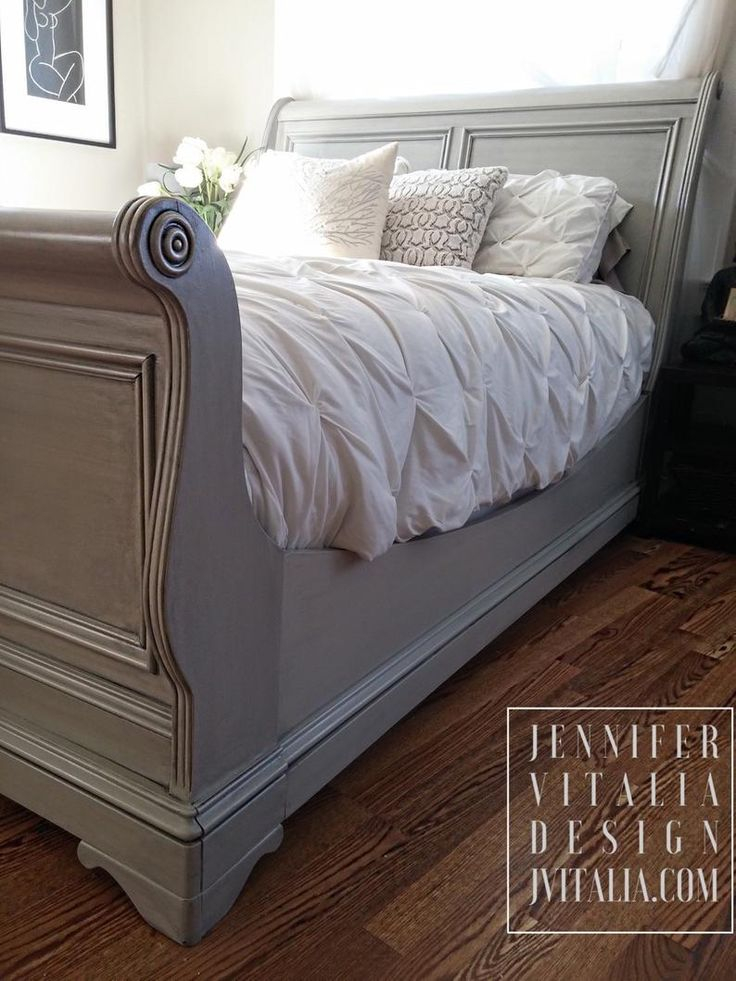
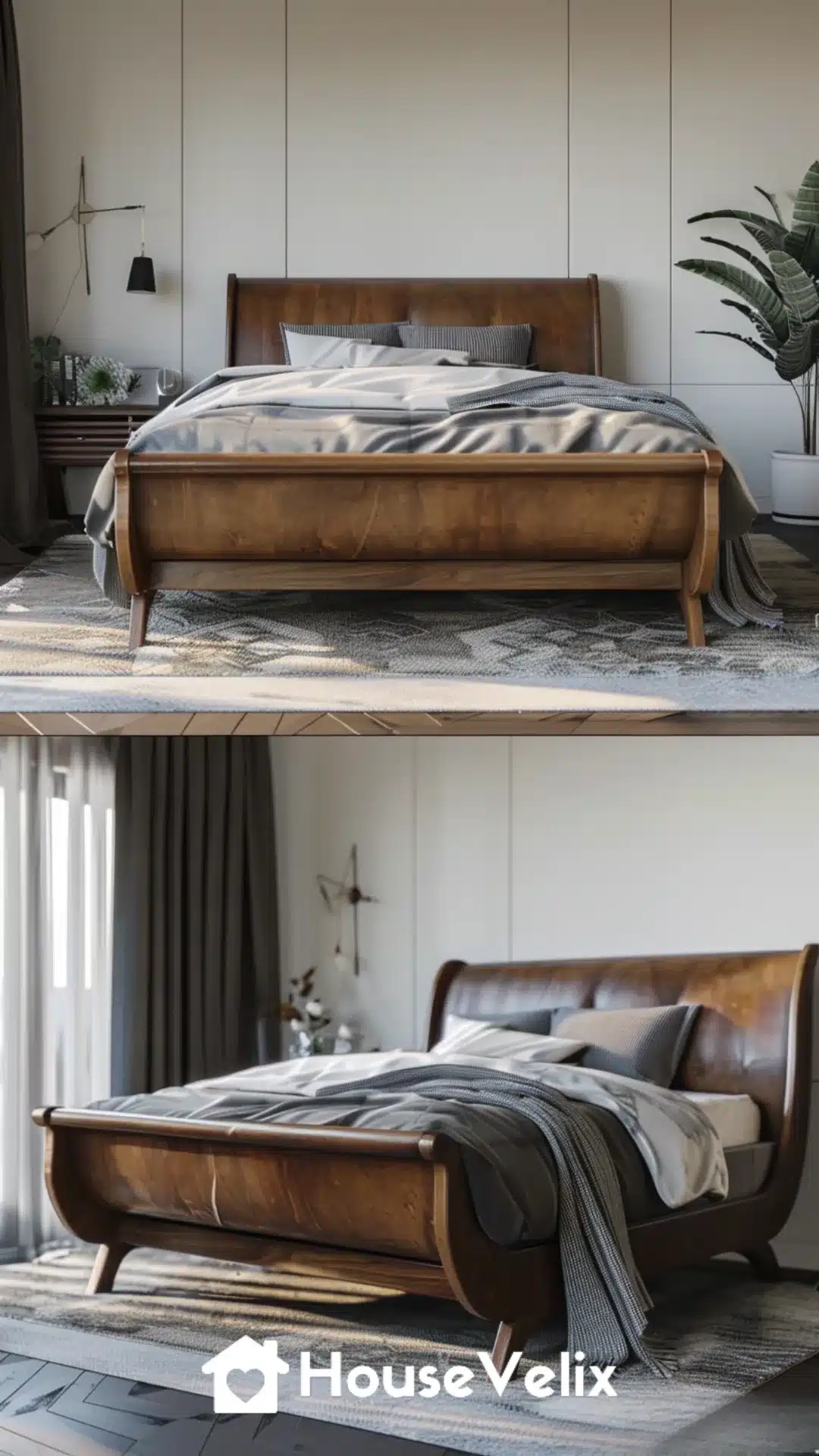
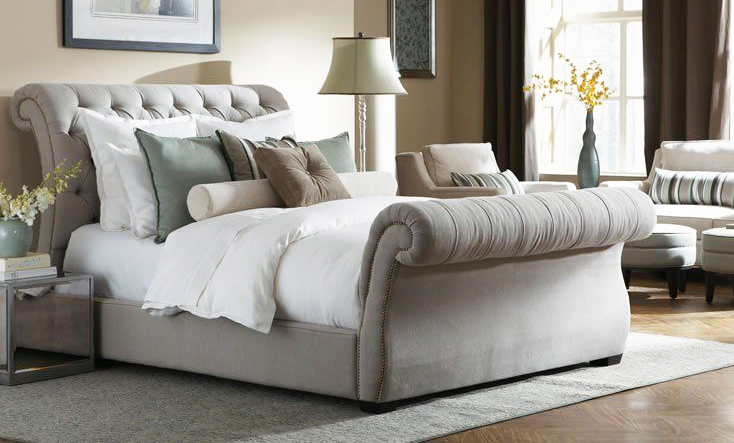
You know that feeling when you walk into a room and something just feels… off? Maybe the furniture is too big, or the layout is cramped. Often, it’s not the style of the piece that’s the problem. It’s the size. Specifically, the proportions. And nowhere is this more critical than with the sleigh bed. That curvy, classic silhouette that looks so romantic in catalogs can quickly turn into a bedroom bully if the dimensions aren’t right.
We’ve all been there. You fall in love with a bed frame online. The photos show it in a sprawling, sun-drenched loft with twelve-foot ceilings. You buy it. It arrives. And suddenly, your cozy master suite feels like a storage closet. The headboard looms. The footboard blocks the view. The scale is all wrong. In 2026, as homes continue to shift towards more efficient, multi-use spaces, getting these measurements right isn’t just about aesthetics. It’s about livability.
Designers have been whispering about this for years, but few people listen until it’s too late. The modern sleigh bed has evolved. It’s no longer just the heavy, dark wood monster from the 90s. Today’s versions are sleeker, lower, and often upholstered. But the core challenge remains: how do you keep that iconic curve without letting it dominate your room? The answer lies in understanding the hidden math of proportion. It’s not magic. It’s just knowing what to measure before you click "buy."
The Headboard Height Trap
Let’s start at the top. Literally. The headboard is the first thing you see when you walk in, and the last thing you see before you sleep. With traditional sleigh beds, the headboard was often towering—sometimes reaching six feet or more. It was meant to impress. But in modern bedrooms, especially those with standard eight-foot ceilings, a massive headboard creates visual claustrophobia. It pushes the ceiling down, making the room feel smaller than it actually is.
Interior designers in 2026 are pushing for a "visual breath" rule. Ideally, you want at least 12 to 18 inches of wall space visible above your headboard. This gap allows the eye to travel upward, maintaining the sense of height in the room. If your ceiling is eight feet high (96 inches), and your mattress sits about 25 inches off the floor, you have roughly 71 inches of vertical space left. A headboard that tops out at 50-55 inches from the floor is usually the sweet spot. Anything higher starts to feel oppressive.
But here’s the tricky part: the curve. Sleigh beds don’t have straight lines. The headboard rolls forward. This forward projection adds visual weight. Even if the height is correct, a headboard that curves out too aggressively can feel like it’s leaning over you. Look for models where the curve is subtle, or where the top rail is thinner. Some newer designs even feature a "broken" silhouette, where the curve is interrupted by a straight section or open space. This tricks the eye into perceiving less mass. It’s a small detail, but it makes a huge diference in how heavy the bed feels.
Also, consider your pillows. We’re stacking more pillows than ever these days. If your headboard is too low, your decorative shams might disappear behind it, looking messy. If it’s too high, you lose that cozy, enveloped feeling. Aim for a headboard that rises about 10-14 inches above your mattress surface. This provides enough back support for reading while keeping the profile sleek. Measure your current mattress height first. Don’t assume. A thick pillow-top mattress can throw off all your calculations by three or four inches.
The Footboard Dilemma
Now, let’s talk about the foot of the bed. This is where most people mess up. The footboard on a sleigh bed is iconic, but it’s also the biggest obstacle to good flow. In older designs, the footboard was nearly as tall as the headboard. This created a symmetrical, enclosed look. But in a modern context, it acts like a wall. It blocks sightlines. It makes the room feel shorter. And frankly, it’s uncomfortable if you like to sit at the edge of the bed to put on shoes.
The modern fix? Go low. Designers are favoring footboards that are no higher than the mattress top, or even slightly below it. This is often called a "low-profile" sleigh bed. By keeping the footboard under 25 inches, you maintain the curved aesthetic without creating a barrier. Your eyes can travel across the room, past the bed, to the window or the art on the far wall. This continuity makes the space feel larger and more open. It’s a simple trick, but it works every time.
If you absolutely love the high, sweeping curve of a traditional footboard, you need to pay attention to room length. A high footboard requires more clearance. You need at least three feet of walking space between the footboard and any opposing wall or furniture. If you have less than that, a high footboard will make the room feel like a corridor. It’s tight. It’s awkward. You’ll find yourself sidestepping around it every morning. In smaller rooms, consider a "semi-sleigh" design where the footboard is present but significantly scaled down, or even omitted entirely in favor of a simpler frame.
There’s also the issue of bedding. High footboards fight with duvets. When you make the bed, the heavy coverlet bunches up against the tall curve. It looks unkempt. Low footboards allow the bedding to drape naturally. This creates a softer, more inviting look. In 2026, the trend is towards relaxed, effortless elegance. A bed that looks like it requires military precision to make is out. A bed that looks soft and welcoming is in. The footboard height plays a surprising role in achieving that vibe.
Room Scale and the Golden Ratio
It’s not just about the bed itself. It’s about the bed in relation to the room. This is where the golden ratio comes in. You don’t need to be a mathematician to use it. Basically, the bed should occupy no more than one-third to one-half of the total floor space in a bedroom. If it takes up more than that, the room will feel crowded. No matter how beautiful the bed is, if there’s no room to breathe, it won’t look good.
Start by measuring your room. Let’s say you have a 12×14 foot bedroom. That’s 168 square feet. A standard king bed is roughly 6.3 feet wide by 7 feet long. That’s about 44 square feet. Add the frame, which might add 6-10 inches on each side. Now you’re looking at nearly 60 square feet of footprint. That’s about 35% of the room. That’s acceptable. But if you try to squeeze a California King into a 10×12 room, the bed will dominate. It will leave barely any room for nightstands or a dresser. The proportions will feel off.
Designers also look at the wall-to-bed ratio. The bed should not span the entire width of the wall it’s against. You want equal space on either side for nightstands and lamps. Ideally, the bed (including the frame) should be about two-thirds the width of the wall. This leaves room for balance. If the bed is too wide for the wall, it looks crammed. If it’s too narrow, it looks lost. This is why custom sizing is becoming more popular. People are realizing that standard sizes don’t always fit standard walls perfectly.
Don’t forget the vertical scale either. A massive bed in a room with low ceilings feels heavy. A delicate bed in a room with vaulted ceilings looks tiny. You need to match the volume of the furniture to the volume of the space. In 2026, with many new builds featuring higher ceilings, we’re seeing a return to slightly taller headboards. But in older homes with eight-foot ceilings, the low-and-wide aesthetic is still king. Know your room’s architecture. Work with it, not against it.
Material Weight and Visual Lightness
Proportion isn’t just about measurements. It’s about visual weight. A solid oak sleigh bed feels heavier than an upholstered one, even if they are the exact same size. The material changes how the eye perceives the bulk. Dark woods absorb light. They feel dense. Solid. Immovable. Light woods reflect light. They feel airy. Floating. This is crucial when you’re trying to balance a large piece of furniture in a small space.
Upholstered sleigh beds are having a major moment in 2026. Why? Because fabric softens the lines. It reduces the visual hardness of the curve. An upholstered headboard blends into the background more easily than a dark wood one. It feels less like a piece of furniture and more like a part of the room’s texture. This allows you to go slightly larger in size without the room feeling overwhelmed. The fabric absorbs the visual impact. It’s a cheat code for small bedrooms.
If you prefer wood, look for designs with open elements. Slats. Cutouts. Thin rails. These features allow light to pass through the frame. This breaks up the mass. A sleigh bed with a solid panel headboard will always look bigger than one with vertical slats, even if the outer dimensions are identical. The eye sees through the slats, registering less obstruction. This creates a sense of transparency. It’s a subtle effect, but it helps the bed feel lighter on its feet.
Color matters too. A white or light gray sleigh bed recedes. A black or espresso bed advances. If you have a small room, painting the bed frame the same color as the walls can make it almost disappear. This is a bold move, but it works. It minimizes the visual footprint. You get the shape without the bulk. Designers often use this trick in studio apartments or guest rooms where space is at a premium. It’s about camouflaging the proportion issues with color theory.
Clearance and Flow Dynamics
Let’s get practical. You can have the perfect bed, but if you can’t walk around it, it’s a failure. Clearance is key. The standard recommendation is 30 inches of walking space on each side of the bed and at the foot. This allows two people to pass each other comfortably. It allows you to open drawers on nightstands. It allows you to make the bed without hitting your knees on the wall.
In reality, many bedrooms can’t accommodate 30 inches on all sides. If you’re tight on space, prioritize the sides. You spend more time accessing the sides of the bed than the foot. You can get away with 24 inches at the foot if necessary, but try to keep 28-30 inches on the sides. This ensures you don’t feel trapped. It maintains a sense of flow. The room feels navigable. Easy.
Think about door swings too. Does your bedroom door hit the footboard? Does the closet door block access to the side of the bed? These are common oversights. Map out the swing arcs of all doors in the room. Ensure there’s no conflict. In 2026, sliding doors and pocket doors are becoming more popular in bedrooms specifically to save this clearance space. If you’re renovating, consider this. It can free up crucial inches that allow for a better-proportioned bed choice.
Also, consider the rug. A bed should sit on a rug that extends beyond the sides and foot. This anchors the bed. It defines the sleeping zone. If the rug is too small, the bed looks like it’s floating awkwardly. If the rug is too big, it overwhelms the floor space. The rug should extend at least 18-24 inches beyond the sides and foot of the bed. This adds another layer of proportion to consider. The bed, the rug, and the room must all harmonize. It’s a balancing act.
Sometimes, you’re stuck with a bed that’s not quite right. Maybe you inherited it. Maybe you bought it before you knew better. Don’t panic. There are styling tricks to mitigate proportion issues. You can’t change the dimensions, but you can change how they’re perceived. It’s about distraction and balance.
If the headboard is too tall, hang art above it. A large piece of art, centered and hung high, draws the eye up and away from the bulk of the headboard. It creates a vertical line that integrates the bed into the wall. Alternatively, use a tall floor lamp behind the bed. The vertical line of the lamp breaks up the horizontal mass of the headboard. It adds height without adding width.
If the footboard is too bulky, keep the bedding simple. Avoid heavy throws or complex folds at the foot of the bed. Let the lines be clean. A smooth duvet cover minimizes the visual clutter. You can also place a bench at the foot of the bed, but choose one that is lower than the footboard. This creates a tiered effect, which softens the transition. Don’t choose a bench that is the same height or taller. That just adds to the blockiness.
Lighting is another powerful tool. Use sconces on the wall instead of table lamps on nightstands. This clears the surface area. It makes the nightstands look smaller and less cluttered. It opens up the space around the bed. In 2026, wireless, battery-operated sconces are huge. They require no wiring. You can install them anywhere. This flexibility allows you to adjust the lighting to balance the bed’s proportions. Bright, upward-facing light can also make the ceiling feel higher, counteracting a tall headboard.
Finally, use mirrors. A mirror on the wall opposite the bed reflects the space. It doubles the visual depth. It makes the room feel larger. This helps counteract a bed that feels too big for the room. It’s an old trick, but it’s effective. Just make sure the mirror is positioned correctly. You don’t want to reflect a cluttered corner. Reflect the window or the open space. Enhance the best parts of the room. Distract from the proportional challenges.
Getting the proportions right on a modern sleigh bed is less about following strict rules and more about understanding how your eye moves through a space. It’s about balance. Harmony. Comfort. When the scale is right, the bed doesn’t just look good. It feels good. It becomes a sanctuary rather than an obstacle. So before you buy, measure twice. Think about the curve. Consider the weight. And remember, the best bed is the one that fits your life, not just your floor plan.