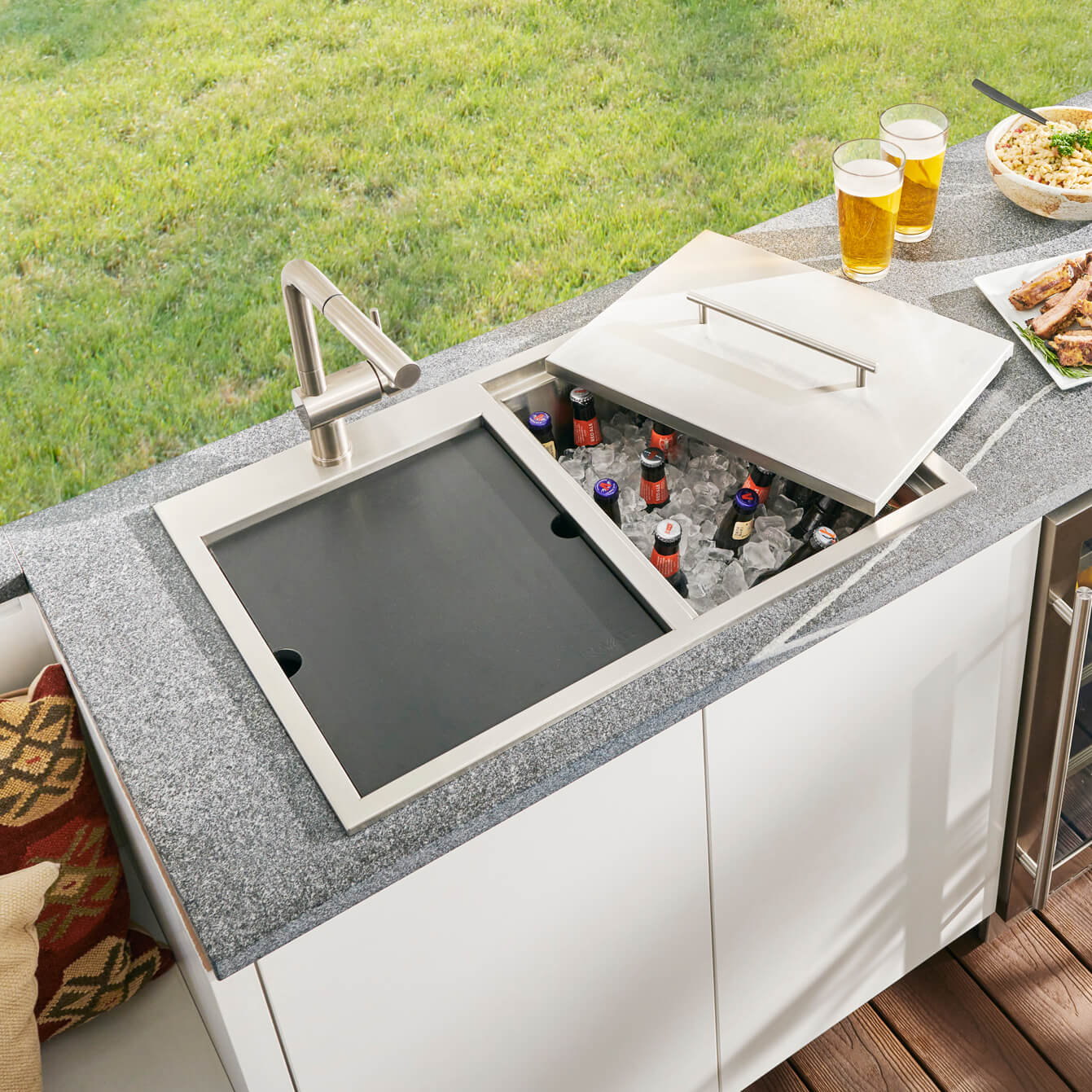
You’ve got the grill fired up. The steaks are sizzling. The sun is dipping low, casting that golden glow over your patio. It’s perfect. Until you turn on the tap to rinse off a plate and… nothing happens. Or worse, a slow, ominous drip starts pooling under the counter, turning your beautiful stone work into a muddy mess.
It happens more than you’d think. We spend hours picking out the perfect granite, debating between gas and charcoal, and choosing the right lighting. But the sink? That little basin often gets tossed in as an afterthought. A box to check. Big mistake.
In 2026, outdoor living isn’t just a trend; it’s a lifestyle. And the sink is the heart of that functionality. Get it wrong, and you’re not just dealing with a leak. You’re dealing with frozen pipes, ruined cabinetry, and a space you’re afraid to use. Let’s talk about where things go sideways, so you don’t have to learn the hard way.
Ignoring the Freeze Factor
Water expands when it freezes. It’s basic physics, but it’s the number one killer of outdoor plumbing. Many homeowners install a standard indoor faucet and pipe setup, thinking, "I’ll just turn it off in the winter." Sounds logical, right? Except water stays in the lines. And when that first hard frost hits in late autumn, that trapped water turns to ice, expands, and cracks your pipes from the inside out.
By spring, you’ve got a hidden leak behind your expensive stucco or stone veneer. The damage isn’t just the pipe; it’s the moisture wicking into your cabinet frames, causing rot and mold before you even notice the drip. In colder climates, this is non-negotiable. You need a freeze-proof hose bibb or a dedicated shut-off valve located inside your heated home, not just under the counter outside.
Don’t skimp on insulation either. Foam sleeves aren’t enough for harsh winters. Consider heat tape for exposed lines or, better yet, design your plumbing run so it drains completely when the main valve is closed. It’s a small detail during construction that saves a massive headache later. Trust me, chasing a leak through a solid masonry structure is nobody’s idea of a fun weekend project.
Skimping on Drainage Slope
Here’s a secret: gravity is your best friend, but only if you help it out. Indoor sinks rely on strong water pressure and precise P-trap engineering. Outdoor sinks? They deal with food particles, grease, sand, and leaves. If your drain line doesn’t have the proper slope—typically a quarter-inch drop for every foot of pipe—you’re asking for trouble.
Clogs become a weekly chore instead of a rare annoyance. Worse, standing water in the line can freeze in winter, creating an ice blockage that backs up sewage or dirty water into your sink basin. Imagine rinsing your hands and having gray water bubble back up. Not exactly the vibe you’re going for.
Many DIYers try to cut corners by running the drain line flat to avoid digging deeper or hitting existing utilities. Don’t do it. Take the time to dig the trench properly. If you can’t get the slope naturally, consider a macerating pump system, though these require electricity and maintenance. Proper grading ensures that everything flows away from your kitchen, keeping things sanitary and dry.
Choosing the Wrong Basin Material
That gorgeous stainless steel sink you loved in your indoor kitchen? It might not hold up outside. Standard 304-grade stainless can rust and pit when exposed to constant rain, humidity, and pool chemicals. In 2026, we’re seeing a shift toward marine-grade 316 stainless, which has higher nickel and molybdenum content to resist corrosion. It costs more, yes, but it lasts decades longer.
Alternatively, many homeowners are opting for granite composite or fireclay. These materials are tough, resistant to UV fading, and don’t show water spots as easily. But there’s a catch: weight. A heavy stone sink requires serious structural support. If you mount a 50-pound fireclay basin on a lightweight frame without proper bracing, you’ll see sagging countertops and cracked seams within a year.
Also, think about color. Dark sinks look sleek but show every speck of pollen and dust. Lighter hides dirt better but can stain from red wine or berry juices if not sealed properly. Test samples in your actual outdoor light before buying. What looks chic in the showroom might look dingy under your specific patio cover.
Forgetting the Splash Zone
You installed the sink. You turned on the water. And suddenly, you’re soaked. Why? Because you didn’t account for splash. Indoor sinks have walls and cabinets nearby to contain spray. Outdoor sinks are often open-air. A high-arc faucet looks dramatic, but it sends water flying everywhere if the basin isn’t deep enough or wide enough.
This isn’t just about getting wet. It’s about water damage to adjacent appliances. If your sink is too close to your grill or refrigerator, that overspray can cause electrical shorts, rust out burner tubes, or ruin the finish on your fridge doors. I’ve seen outdoor fridges corrode prematurely because they were constantly misted by a nearby sink faucet.
Keep at least 24 inches of clearance between your sink and any electrical or gas appliances. Use a faucet with a pull-down sprayer that has a "stream" setting, not just "spray." And choose a basin with a depth of at least 8 to 10 inches. Shallow bar sinks are fine for rinsing glasses, but terrible for washing platters or cleaning veggies. Think about how you’ll actually use it, not just how it looks in the catalog.
Neglecting Ventilation and Traps
Every sink needs a P-trap. It’s that U-shaped pipe under the drain that holds water to block sewer gases from coming up into your space. Without it, your outdoor kitchen will smell like a swamp. But here’s the twist: outdoor traps can evaporate faster than indoor ones due to wind and heat. If the water dries out, the seal is broken, and the smells return.
Some homeowners skip the vent pipe entirely to save money or complexity. Bad idea. Without proper venting, your sink will gurgle, drain slowly, and potentially suck the water out of the trap, breaking the seal again. In some jurisdictions, code requires an air admittance valve (AAV) if you can’t run a traditional vent stack through the roof.
Check your local building codes for 2026 updates. Many areas now have stricter rules about outdoor plumbing vents to prevent pest entry and odor issues. An AAV is a small, inexpensive device that lets air in but keeps smells and bugs out. It’s a tiny component that makes a huge difference in usability. Don’t let a $20 part ruin your $20,000 kitchen.
You ran a hot and cold line from the house. Great. But did you use the right piping? Copper is traditional, but it can corrode in certain soil conditions or if connected to dissimilar metals without proper dielectric unions. PEX (cross-linked polyethylene) is popular because it’s flexible and freeze-resistant to a degree, but it degrades in direct sunlight.
If your supply lines are exposed to UV rays, even for a short section, they will become brittle and crack. Always shield PEX with conduit or paint it with UV-resistant coating if it’s visible. Also, consider the water pressure. Outdoor lines are often longer, which can reduce pressure. If your flow is weak, your sink takes forever to fill, and your sprayer is useless.
Install a pressure regulator if your home’s water pressure is high (over 80 psi). High pressure stresses joints and faucets, leading to premature leaks. And don’t forget the shut-off valves. Put them in an accessible spot, preferably inside a weatherproof box. When a leak does happen—and it might—you want to be able to kill the water in seconds, not dig through landscaping to find a buried valve.
So, there you have it. The sink seems simple, but it’s a complex interplay of physics, materials, and planning. Getting it right means enjoying your outdoor space for years without worry. Getting it wrong means costly repairs and frustration.
Take your time. Plan the plumbing route carefully. Choose materials built for the elements. And remember, the goal is to make your life easier, not harder. A well-installed sink disappears into the background, letting you focus on the food, the friends, and the evening air.
Don’t rush this part. It’s the unsung hero of your outdoor kitchen. Treat it with respect, and it’ll serve you well. After all, the best outdoor kitchens aren’t just about the flashiest grill. They’re about the seamless flow of cooking, cleaning, and connecting. And that starts with a single, reliable drip-free faucet.