We’ve all been there. You’re three hours into a thousand-piece landscape of a misty mountain range. The edge pieces are sorted, the sky is coming together, and you feel that rare, quiet hum of satisfaction. Then, someone walks in and asks if they can eat dinner. Panic sets in. Do you risk the scatter? Do you spend twenty minutes carefully sliding cardboard under the half-finished image? Or do you just give up and shove it all back in the box, knowing you’ll likely never find the motivation to start again?
It doesn’t have to be this way. In 2026, the world of jigsaw puzzling has evolved far beyond the kitchen table scramble. Whether you’re a casual weekend puzzler or a serious hobbyist tackling 2000-piece monsters, the right equipment changes everything. It’s not just about having a place to put the pieces; it’s about creating a workflow that respects your time, your space, and your sanity. Choosing the right board isn’t a purchase; it’s an investment in your peace of mind.
Know Your Space (And Your Puzzle Size)
Before you even look at materials or features, you need to get honest about where this thing is going to live. This is the step most people skip, and it’s usually why their new gear ends up gathering dust in a closet. Measure your available surface area. Be realistic. If you only have a small corner of a desk, a massive wooden table with fixed legs isn’t going to work, no matter how beautiful it looks in the photos.
Consider the size of the puzzles you actually do. A board designed for a 500-piece puzzle will feel cramped and frustrating if you try to force a 1500-piece image onto it. Most standard boards now accommodate 1000 pieces comfortably, but if you’re into the larger formats, you need to look for "jumbo" or "extra-large" specifications. Check the dimensions of the assembled puzzle on the box, then add at least four to six inches on each side for sorting trays and elbow room. You’d be surprized how much space those loose pieces take up when you’re trying to find that one specific shade of blue.
Also, think about portability. Do you need to move your puzzle from the living room to the bedroom every night? If so, weight matters. A solid wood table might be sturdy, but if it weighs thirty pounds, you won’t want to lug it around. Lightweight ABS plastic or foldable felt mats might be better suited for a nomadic puzzling lifestyle. The goal is to reduce friction. If setting up your puzzle feels like a chore, you won’t do it.
Material Matters: Wood, Felt, and Plastic
Once you know the size, let’s talk about what the board is made of. This affects everything from how the pieces slide to how easy it is to clean. Wood is the classic choice for a reason. It’s durable, looks great in a home setting, and provides a solid, non-slip surface. High-quality wooden boards often come with a smooth finish that allows pieces to glide into place without catching. However, wood can be heavy and expensive. It’s also susceptible to warping if exposed to moisture, so keep it away from humid areas.
Felt surfaces are incredibly popular for good reason. The texture grips the puzzle pieces gently, meaning you can tilt or even roll up your puzzle without pieces falling off. This is a game-changer for people with limited space. Felt mats are usually lightweight, cheap, and easy to store. The downside? They can attract pet hair and lint like a magnet. If you have a cat, you’ll be picking fur off your sky section constantly. Plus, felt doesn’t offer the same rigid structure as wood, so large puzzles can sag if not supported properly.
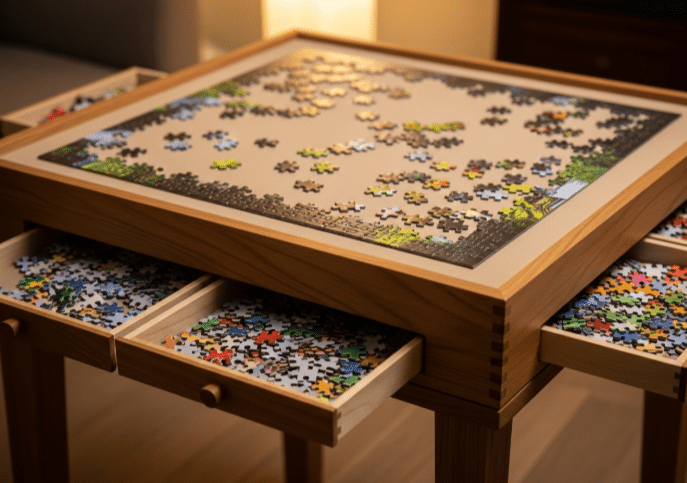
Then there’s ABS plastic and other synthetic materials. These are often found in modern, feature-rich puzzle tables. They’re easy to wipe clean, resistant to water damage, and can be molded into complex shapes with built-in drawers. Some people find plastic surfaces a bit too slippery, causing pieces to slide around unexpectedly, but many 2026 models have textured finishes to mitigate this. When choosing, think about your environment. Dusty house? Go with something easy to wipe. Pet owner? Maybe avoid felt. Want it to look like furniture? Wood is your friend.
The Feature Set: Drawers, Rotation, and Tilting
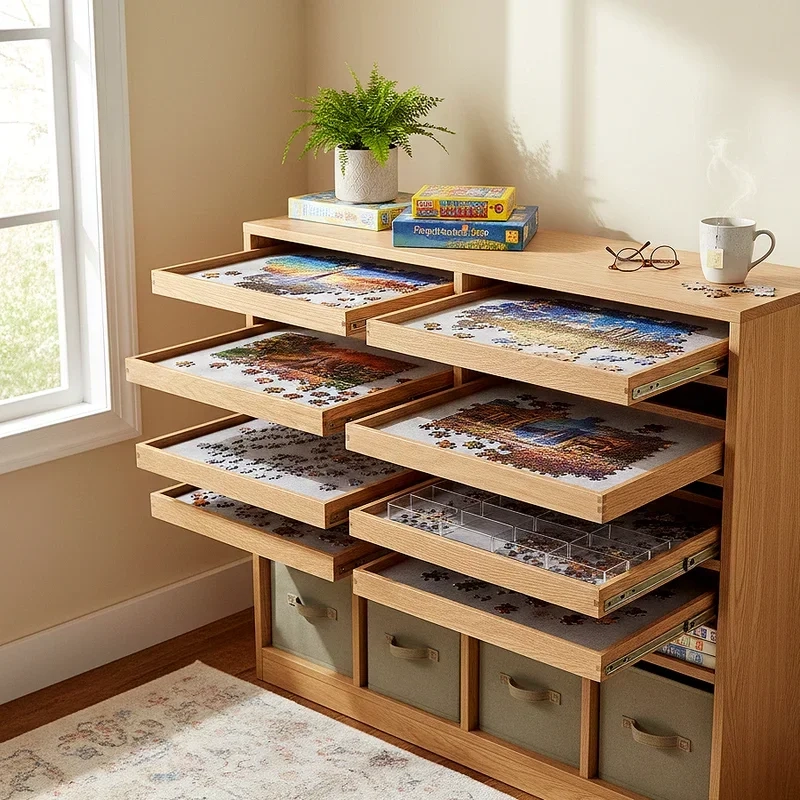
This is where things get fun. Modern puzzle boards aren’t just flat surfaces; they’re workstations. The most coveted feature is undoubtedly the built-in drawer system. Having four or more sliding drawers allows you to sort pieces by color, pattern, or shape while keeping them contained. No more messy piles taking over your entire dining table. Look for drawers that slide smoothly and have dividers you can adjust. The Bits and Pieces wooden board, for instance, is often cited as a top pick because its jumbo size and four sliding drawers create a self-contained ecosystem for your hobby.
Rotation is another feature that seems minor until you use it. Being able to spin your puzzle 360 degrees means you don’t have to awkwardly reach across the board to place a piece on the far side. It saves your shoulders and keeps the workflow fluid. If you’re working on a large puzzle, a rotating base is almost essential. Make sure the rotation mechanism is smooth and locks in place if needed. A wobbly spinner is more annoying than helpful.
Tilting stands are less common but invaluable for some. If you have back or neck issues, being able to angle your puzzle towards you can make long sessions much more comfortable. It also helps with visibility, especially for intricate details. However, tilting works best with secured pieces. If you’re using a felt mat, tilting might cause slides. If you’re using a wooden board with a lip or a plastic tray system, it’s generally safe. Consider your physical comfort. Puzzling should be relaxing, not a source of strain.
Portability vs. Permanence: The Storage Question
Let’s face it: not everyone has a dedicated puzzle room. For most of us, puzzling happens in multi-use spaces. This makes storage a critical part of the decision. Foldable boards are a huge trend in 2026. They collapse down to a fraction of their size, slipping easily under a bed or behind a sofa. Look for hinges that feel sturdy; cheap plastic hinges break after a few months of regular use. A good foldable board should snap open and lock securely so it doesn’t collapse mid-puzzle.
If you have a permanent spot, a fixed table might be worth the investment. These often double as nice pieces of furniture. Some even have leaves or extensions to adjust the size. But remember, permanence means commitment. You’re dedicating floor space or table space to this object. Make sure it fits your aesthetic and your life. A bulky wooden table might look great, but if it blocks traffic flow in your living room, you’ll resent it.
For the ultimate in portability, consider puzzle mats with tubes. You roll the puzzle up, slide it into a tube, and store it vertically. It’s not ideal for every session—unrolling and flattening takes time—but it’s unbeatable for long-term projects that need to be stored for weeks. Just be careful with the rolling process; creases can form if you’re not gentle. The key is matching the storage solution to your frequency of play. Daily puzzler? Get a board. Monthly puzzler? A mat or foldable option might suffice.
Matching the Board to Your Workflow
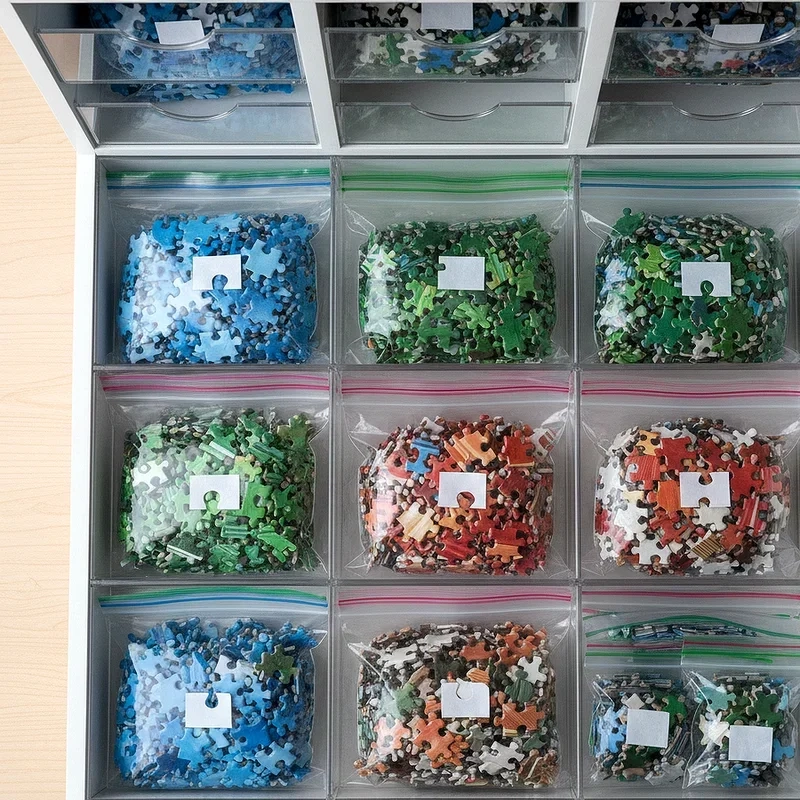
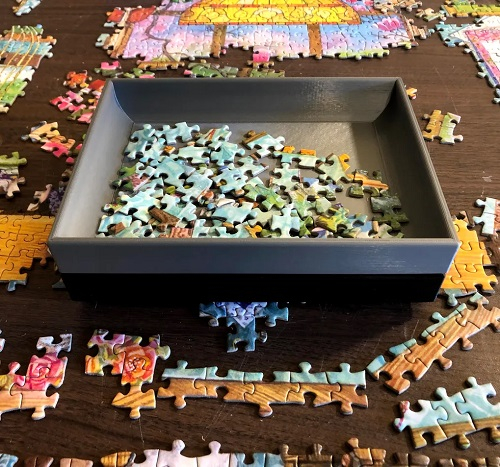
Your puzzling style dictates your gear. Are you a sorter? Do you spend the first hour organizing every piece by color before placing a single one? If so, you need surface area for sorting trays. Look for boards with wide borders or compatible tray systems. Some boards come with integrated sorting compartments, which keeps everything tidy but limits flexibility. Others prefer loose trays they can move around. Think about how you work. If you’re a "build-as-you-go" person who grabs pieces randomly, you might not need as much sorting space, but you’ll want a larger central area.
Speed matters too. If you’re racing against the clock or just enjoy the rapid-fire satisfaction of quick completions, a smooth, low-friction surface is key. Wood or smooth plastic works well here. If you’re a slow, meditative puzzler who savors each connection, texture might be more important. Felt provides a tactile experience that some find soothing. Also, consider lighting. Does your board have a rim that casts shadows? Some newer models include built-in LED strips or are designed to sit under task lighting without glare. Good lighting reduces eye strain and helps you spot those subtle color differences.
Don’t forget the social aspect. Do you puzzle alone or with family? If it’s a group activity, you need a board that’s accessible from all sides. A rotating table is perfect for this. If it’s a solo endeavor, you might prefer a board with a lip on one side to rest your arms or hold reference images. Your workflow is personal. There’s no right answer, only what works for you. Try to visualize your typical session. Where do your hands go? Where do the extra pieces pile up? What annoys you most about your current setup? Solve for those pain points.
Puzzle boards range from ten dollars for a basic felt mat to several hundred for a high-end wooden table with drawers and rotation. It’s easy to get sticker shock, but consider the cost per use. If you puzzle once a year, a cheap mat is fine. If you puzzle weekly, a quality board pays for itself in saved frustration and preserved pieces. Lost pieces are a hidden cost. A board with contained drawers prevents loss, extending the life of your puzzles. That’s value.
Look for durability. Read reviews specifically mentioning long-term use. Does the wood chip? Do the drawers stick after six months? Does the felt pill? In 2026, there are many mid-range options that offer great features without the premium price tag. ABS plastic boards with drawers often hit this sweet spot. They’re not as pretty as wood, but they’re functional and tough. Don’t assume expensive means better. Sometimes, a simple, well-made wooden board without bells and whistles is superior to a flashy plastic one with gimmicky features that break.
Also, consider DIY options. If you’re handy, building your own board can be rewarding and cost-effective. Plywood, felt, and some basic hardware can create a custom solution tailored exactly to your needs. There are plenty of guides online for this. But if you’re not inclined to build, stick to reputable brands. Check return policies. Trying a board out is the best way to know if it fits your workflow. If it feels wrong, send it back. Don’t settle for a tool that makes your hobby harder.
Choosing the right puzzle board is about more than just holding pieces. It’s about creating a space where you can focus, relax, and enjoy the process. It’s about respecting the time you invest in each image. Whether you choose a sleek rotating table, a cozy felt mat, or a sturdy wooden station, the best board is the one that disappears into the background, letting you lose yourself in the puzzle. So measure your space, think about your habits, and pick the tool that lets you play your way. Happy puzzling.