You know that feeling when you’re watching a space movie, and the blackness of space just looks… gray? It’s like someone turned on a dim nightlight in the corner of your living room. It ruins the immersion. For years, we’ve been told that projectors can’t do "true" black because they are literally shooting light onto a surface. If there’s any ambient light, or if the projector itself leaks light, that black becomes a muddy dark gray. But things have changed. A lot.
In 2026, the gap between a high-end TV and a premium ultra short throw (UST) projector is narrower than ever. We aren’t just talking about brightness anymore. We are talking about depth. That three-dimensional pop where shadows feel heavy and highlights sing. Achieving this isn’t just about buying the most expensive box on the shelf, though that helps. It’s about understanding the ecosystem. The screen, the room, the calibration, and the tech inside the lens. It’s a puzzle, sure, but it’s one you can solve. And when you do? It’s magic.
The Hardware Reality Check: Not All USTs Are Created Equal
Let’s start with the hard truth. You can’t squeeze blood from a stone, and you can’t get cinema-grade blacks from a budget UST designed for bright conference rooms. The engine matters. In recent showdowns, like the 2025 evaluations highlighted by industry reviewers, the difference between entry-level models and flagship units came down to contrast handling. Specifically, native contrast ratio and dynamic black support. These aren’t just marketing buzzwords. They are the mechanical and software limits of how well the projector can block light when it’s supposed to be off.
Take the Valerion VisionMaster Max, for instance. Reviews from RTINGS.com in 2026 pointed to it as a top contender specifically because it prioritizes black levels and depth. Why? Because it uses advanced laser light sources and sophisticated optical engines that can dim specific zones of the image much more effectively than older lamp-based or simpler laser systems. Then you have the Samsung Premiere LPU9D, which pushes into the $6000 range. At that price point, you are paying for precision. The ability to distinguish between a dark charcoal suit and a pitch-black background is what separates the pros from the amateurs.
But here is the catch. Even the best hardware has limits. A projector with 3,000 lumens, which is considered a sweet spot for mixed lighting conditions according to experts at Son-Video, will struggle to produce deep blacks if it’s blasting full power in a white room. The hardware provides the potential, but it doesn’t guarantee the result. You need to look for specs like "dynamic iris" or "local dimming" capabilities in the laser source. These features allow the projector to physically restrict light output during dark scenes, boosting the contrast ratio significantly. Without this, you are fighting an uphill battle from minute one.
The Screen Is Half the Battle (Actually, More Like 80%)
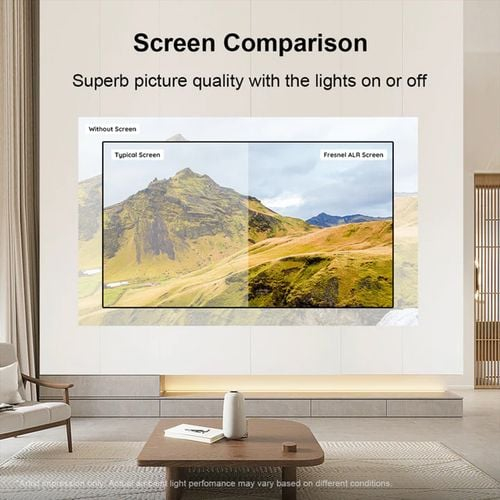
If you take one thing away from this article, let it be this: the screen is more important than the projector for black levels. I know, it sounds counterintuitive. You bought the fancy laser projector, so surely that’s the star of the show? Nope. With USTs, the screen is the filter that decides what light gets reflected back to your eyes and what gets absorbed. Standard white screens are terrible for USTs in any room with windows or lights. They reflect everything, including the ambient light hitting the screen from above. That’s why your blacks look washed out.
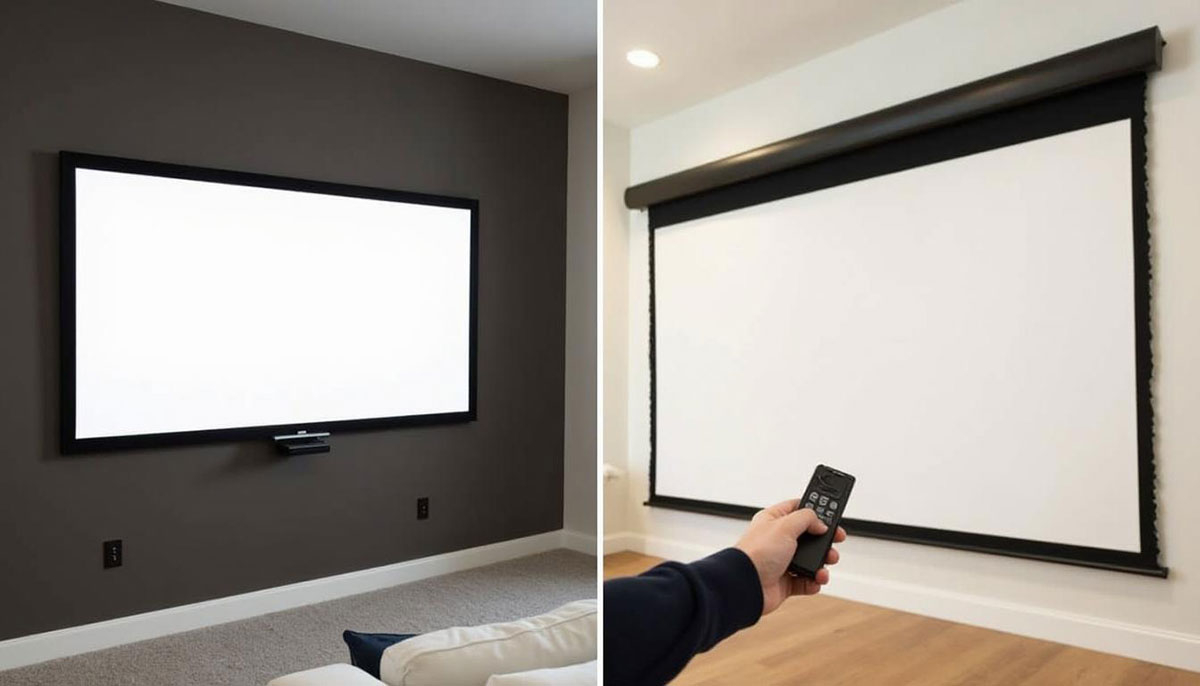
Enter the CLR (Ceiling Light Rejecting) screen. These are specialized surfaces with microscopic structures—often tiny ridges or grooves—that are angled to reflect the light coming from the UST projector (which sits below the screen) directly toward the viewer, while absorbing or scattering light coming from above (like ceiling lights or windows). In 2026, the quality of these screens has improved dramatically. Brands are offering better gain control and wider viewing angles. But not all CLR screens are equal. Some are too aggressive, causing a "sparkle" effect or hotspots. Others are too dull, killing the brightness you paid for.
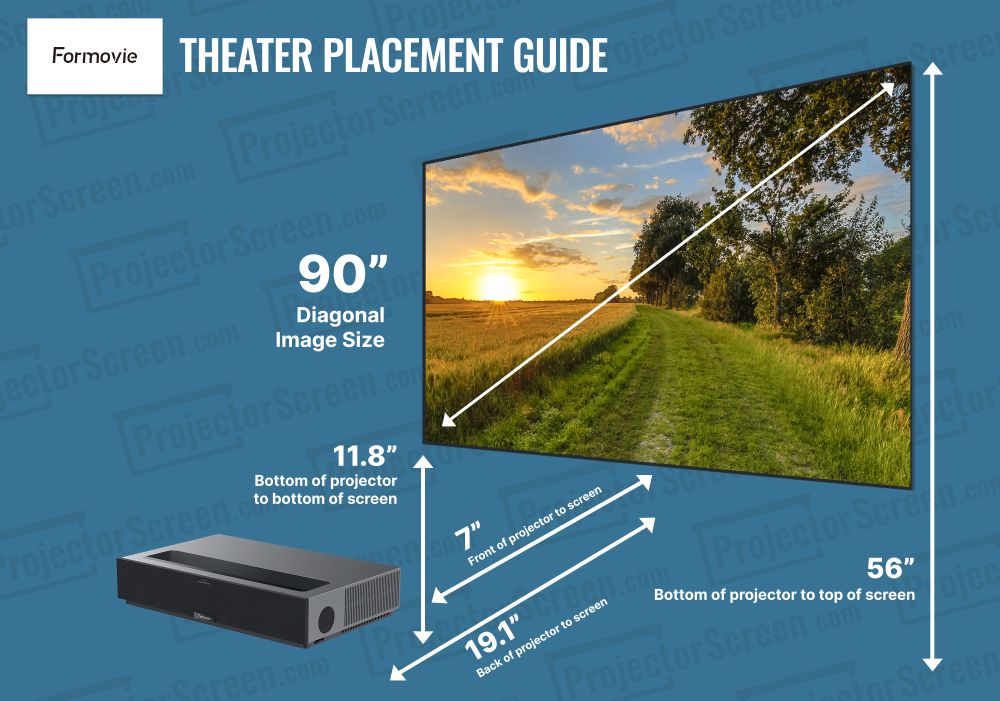
The key is matching the screen to your environment. If you have a dedicated dark room, you might actually prefer a high-gain white screen because there is no ambient light to reject, and you want every lumen the projector can throw. But for 90% of us living in real homes with lamps and windows, a high-quality ALR (Ambient Light Rejecting) or CLR screen is non-negotiable. As noted in guides from Awol Vision, understanding the throw ratio and how it interacts with the screen’s rejection angle is critical. If the screen isn’t aligned perfectly with the projector’s light path, you lose contrast. It’s a delicate dance, but getting it right transforms the image from "watchable" to "wow."
Room Control: The Invisible Variable
We often underestimate the power of the room itself. You can have the best projector and the best screen, but if your walls are painted bright white and you have a glossy floor, you are sabotaging your black levels. Light bounces. It’s physics. When the projector shoots light at the screen, some of it scatters. If it hits a white wall, it bounces back onto the screen, lifting the black floor. This is called "ambient light contamination," and it’s the silent killer of contrast. In 2026, with projectors getting brighter (2,500 to 3,500 lumens being the common range), this bounce-back is even more potent.
So, what do you do? You don’t need to turn your living room into a cave. But you do need to manage reflections. Start with the wall behind the screen. Paint it a dark, matte color. Charcoal, dark navy, or even black. Matte is crucial because gloss reflects light; matte absorbs it. This simple change can deepen your perceived black levels significantly. Next, look at the floor. If you have hardwood or tile, consider a large, dark rug in front of the projection area. This stops light from bouncing off the floor and up onto the bottom of the screen, which is often where USTs struggle most with uniformity.
Lighting control is also part of this equation. Bias lighting—LED strips placed behind the screen—can help. It sounds weird, adding light to improve black, but it works by increasing the perceived contrast. Your eyes adjust to the brighter background, making the screen’s blacks appear deeper by comparison. Just keep it subtle. You don’t want it washing out the image. The goal is to create a controlled environment where the only light hitting the screen is from the projector, and the only light entering your eyes from the dark parts of the image is… well, nothing. That’s the dream.
Calibration Secrets: Unlocking Hidden Depth
Out of the box, most projectors are set to "Vivid" or "Standard" mode. These modes are designed to look impressive in a brightly lit showroom, not to deliver accurate cinematic blacks. They crank up the brightness and cool down the color temperature, which often results in raised black levels and crushed details. To get true blacks, you need to calibrate. And no, you don’t necessarily need to hire a professional with a $5,000 meter, although that’s ideal. You can do a lot with just your eyes and some patience.
Start by switching to "Cinema," "Movie," or "Filmmaker" mode. These presets are usually closer to the industry standard (D65 white point) and have more conservative brightness settings. From there, dive into the picture settings. Look for "Black Level" or "Brightness." Lower it until the dark bars in a movie just barely disappear into the frame, but not so low that you lose shadow detail. It’s a fine line. Then, check the "Contrast" or "White Level." Set it high enough for punchy highlights, but watch out for clipping—where bright details just become a blob of white.
Dynamic tone mapping is another feature to explore, especially if you are watching HDR content. Modern USTs in 2026, like those supporting Dolby Vision, use dynamic metadata to adjust the brightness and contrast scene-by-scene, or even frame-by-frame. Ensure this is enabled. It allows the projector to optimize the black levels for each specific shot. A dark cave scene will get deeper blacks, while a sunny beach scene will get brighter highlights. It’s like having a cinematographer tweaking the image in real time. Don’t ignore the gamma settings either. A gamma of 2.4 is standard for dark rooms and provides richer, deeper blacks than 2.2, which is better for brighter environments.
The Laser Advantage: Why New Tech Matters
Why are we talking so much about lasers? Because the light source defines the ceiling of your performance. Older lamp-based projectors struggled with black levels because the lamp was always on, always bright. You could dim it electronically, but the physical light output was constant. Lasers change this. They can be modulated incredibly fast. This means the light source itself can dim or brighten almost instantly in response to the image content. This is what enables those high dynamic contrast ratios we see in specs sheets.
In 2026, we are seeing the maturation of triple-laser technology. By using separate red, green, and blue lasers, manufacturers can achieve a wider color gamut and, crucially, better control over light output. When a scene is dark, the laser diodes can reduce their power output significantly, resulting in a truer black because less stray light is being generated in the first place. This is different from just blocking light with an iris; it’s about not creating the excess light to begin with. It’s cleaner. It’s more efficient. And it leads to those deep, inky blacks that make stars in a night sky look like pinpricks rather than fuzzy dots.
However, laser tech isn’t perfect. Some early laser projectors suffered from "speckle," a grainy texture caused by the coherent nature of laser light. Most high-end models in 2026 have solved this with diffusers and processing, but it’s something to be aware of if you are looking at older used models. Also, heat management is key. Lasers generate heat, and if the cooling system is noisy or inefficient, it can affect performance over long sessions. The best systems, like those found in the higher-end Samsung or Hisense models, integrate the laser engine with robust thermal management to ensure consistent black level performance without throttling.
Common Pitfalls and How to Avoid Them
Even with the right gear, things can go wrong. One of the most common mistakes is improper alignment. UST projectors are sensitive. If the projector is tilted even slightly, or if it’s not centered perfectly with the screen, you can get uneven brightness and poor black uniformity. One corner might look great, while the other looks washed out. Use the manufacturer’s alignment tools, but don’t rely solely on digital keystone correction. Digital correction processes the image and can degrade quality. Physical alignment—getting the projector level and square to the screen—is always superior.
Another pitfall is ignoring the source material. You can’t get deep blacks from a low-bitrate streaming stream that’s heavily compressed. Compression artifacts often manifest as banding in dark areas or macroblocking in shadows. If you are serious about black levels, try to use high-quality sources. Blu-rays, 4K UHD discs, or high-bitrate streaming services (like Apple TV+ or Disney+ with IMAX Enhanced) make a huge difference. The data rate matters. More data means more detail in the shadows, which allows the projector’s processing to work its magic.
Finally, don’t forget maintenance. Dust is the enemy of optics. A dusty lens or internal mirrors can scatter light, reducing contrast and creating a hazy image. Keep your UST clean. Wipe the lens gently with a microfiber cloth. Ensure the air filters are clean so the cooling system works efficiently. Over time, lenses can also shift slightly due to thermal expansion and contraction. Periodically checking your focus and alignment ensures you are getting the sharpest, highest-contrast image possible. It’s small stuff, but it adds up.
So, why go through all this trouble? Why worry about screen gain, wall paint, and gamma curves? Because when you get it right, it’s transformative. There is a visceral emotional connection to a well-projected image. It’s not just about seeing the picture; it’s about feeling it. The tension in a thriller is heightened when the shadows are truly dark. The beauty of a landscape documentary is amplified when the colors pop against a void-like background. It brings the cinema experience home, not just in size, but in soul.
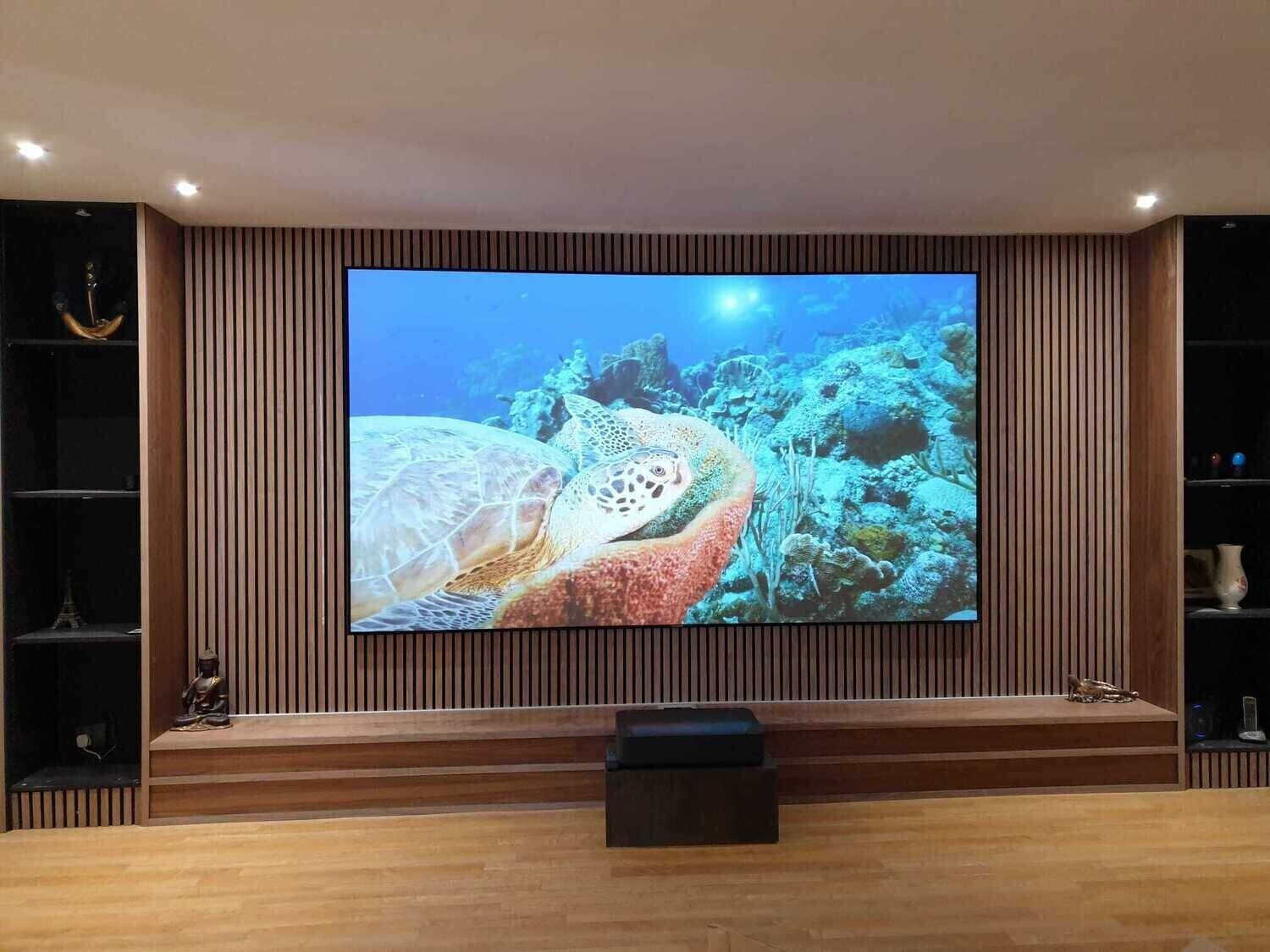
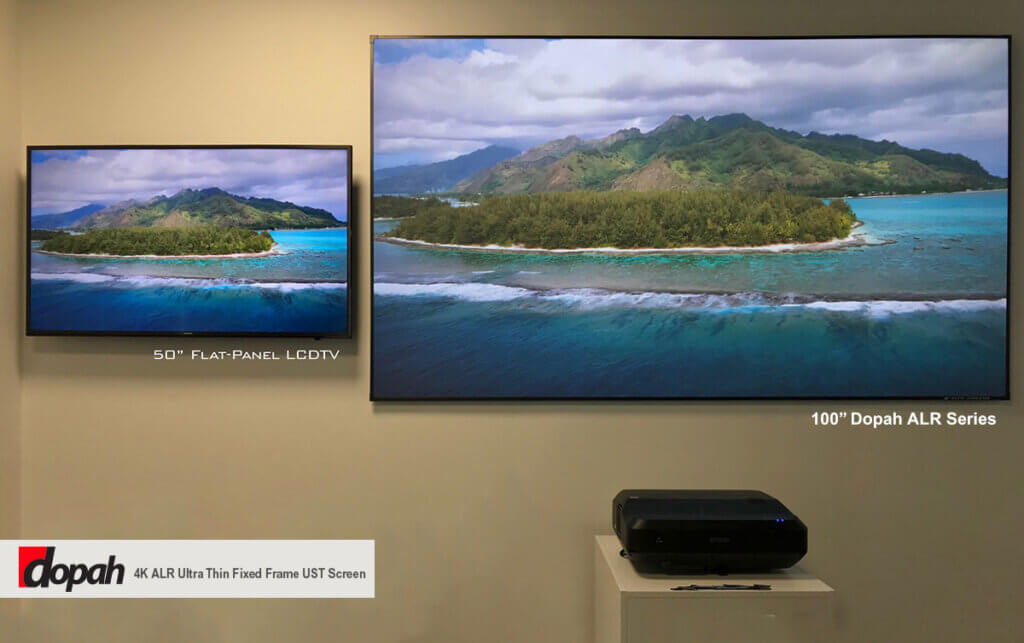
In 2026, the technology is finally catching up to the ambition. We have projectors like the Valerion VisionMaster Max and the Samsung Premiere LPU9D that are capable of stunning performance. We have screens that actually reject light instead of just reflecting it. And we have a better understanding of how to set these systems up. The barrier to entry is still high—both in cost and knowledge—but the reward is a viewing experience that flat-panel TVs, even the best OLEDs, struggle to match in terms of sheer scale and immersion.
It’s not about perfection. It’s about progress. You might not get laboratory-perfect black levels in your living room. But you can get close enough that you forget you are looking at a projection. You just get lost in the story. And isn’t that what we are all chasing? The magic of the movies, right there in your home, without the compromises of the past. So take your time. Tweak those settings. Paint that wall. And enjoy the dark.